


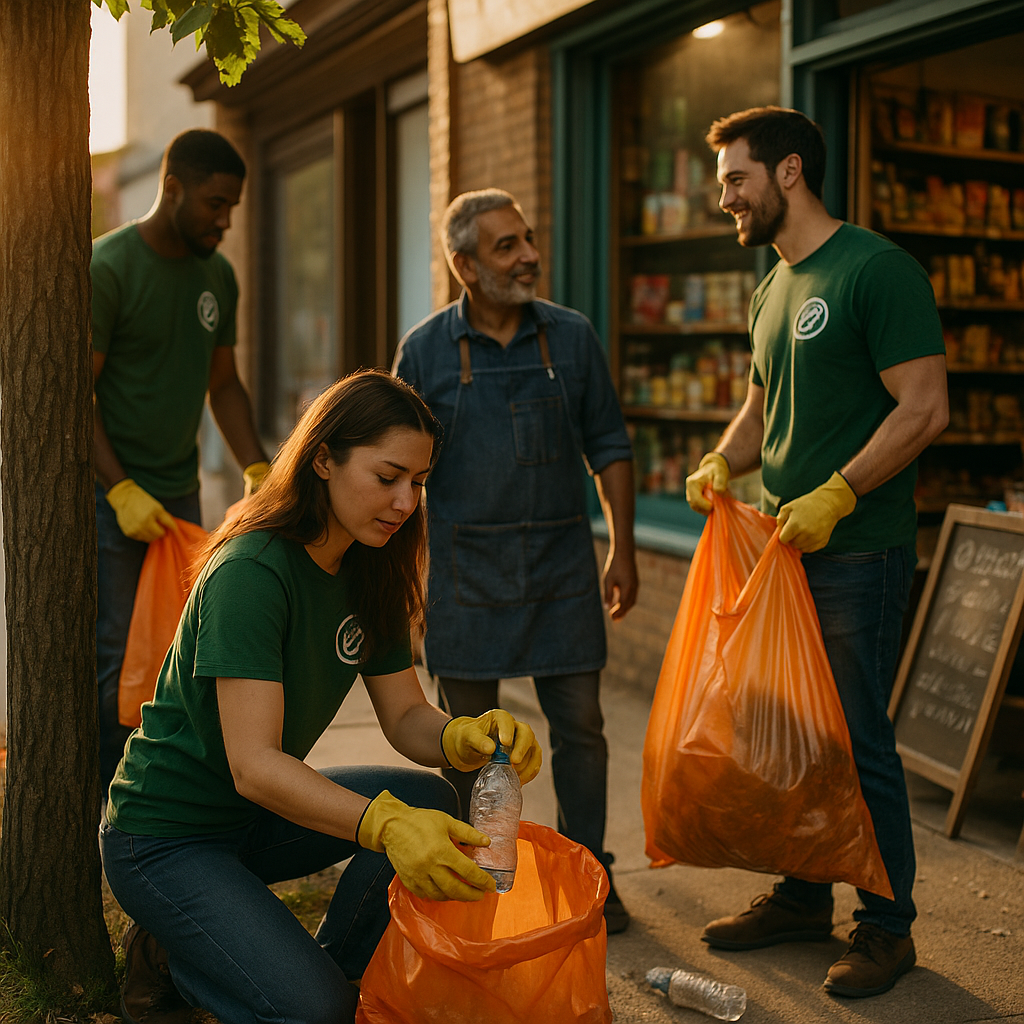
Case Study: How A CPG Brand Used Hyper-Local ESG Initiatives To Win Loyalty has become a practical blueprint for brands that want measurable impact without vague promises. In 2025, shoppers expect proof, communities expect partnership, and regulators expect traceability. This case study breaks down what worked, what it cost, and how results were verified—so you can apply the same playbook. Ready to see loyalty built block by block?
Hyper-local ESG initiatives: Why “local” became the loyalty multiplier
In 2025, the “trust gap” in sustainability is no longer theoretical. Consumers are exposed to constant environmental claims, and many have learned to discount broad statements that lack specifics. Hyper-local ESG initiatives cut through this noise because they connect a brand’s actions to places customers recognize: their neighborhoods, schools, waterways, and waste systems.
Hyper-local programs tend to outperform national campaigns on three loyalty drivers:
- Relevance: Customers can see the impact where they live, which makes outcomes feel personal rather than promotional.
- Verification: Local partners—municipalities, nonprofits, retailers—can validate actions and outcomes.
- Participation: People are more willing to join programs (returns, cleanups, donations) when the effort is convenient and culturally aligned.
Importantly, “hyper-local” does not mean small. It means modular: a brand can replicate a proven operating model across cities while keeping each program grounded in local needs, language, and infrastructure.
This case study follows a mid-sized CPG brand that moved from generic ESG messaging to a localized operating system built around measurable waste reduction, community health, and responsible sourcing—then used those results to strengthen repeat purchase and retailer relationships.
CPG brand loyalty: The baseline problem and the measurable goal
Brand profile (anonymized): A shelf-stable beverage and snack company selling through grocery, convenience, and e-commerce, with strong distribution in 12 metro areas. The brand had high trial rates driven by promotions, but loyalty was fragile: shoppers switched easily when price or placement changed.
Challenge: The brand’s prior ESG strategy was centralized and content-led—annual reports, broad carbon commitments, and national donations. It earned occasional praise but did not materially improve retention or willingness to pay.
What the leadership team changed: They reframed ESG from “communications” to “customer value.” Instead of asking, “What can we claim?” they asked, “What local problems can we help solve in a way shoppers can verify and participate in?”
Primary loyalty objective: Increase repeat purchase in priority zip codes where the brand had strong distribution but inconsistent repurchase. Retailers pushed for proof that brand marketing would drive category growth, not just awareness.
ESG objective: Build a program that delivered verifiable local outcomes while reducing operational risk in packaging and sourcing. The brand set internal targets around:
- Packaging recovery: Increase post-consumer packaging collection and reduce contamination in targeted neighborhoods.
- Community benefit: Fund local initiatives tied directly to health and food access.
- Supplier resilience: Support regional suppliers with training and multi-year commitments where feasible.
To avoid “impact theater,” the team required each initiative to have a clear baseline, a measurement method, and a partner who could validate progress. That decision later became central to consumer trust and retailer buy-in.
Local sustainability programs: The strategy—pick fewer places, go deeper
The brand rejected a nationwide rollout. Instead, it chose three pilot metros where it could align distribution, retailer support, and community partners. Selection criteria included: high sales potential, existing recycling infrastructure (even if imperfect), and willingness of municipalities or nonprofits to share data.
Program architecture (three pillars):
- Packaging loop: Improve collection and sorting outcomes for the brand’s packaging formats in those metros.
- Community nutrition: Support local food access programs tied to the brand’s product use occasions (breakfast, after-school, on-the-go).
- Local procurement and jobs: Increase spend with nearby co-packers and ingredient suppliers when it reduced transport emissions and improved supply reliability.
How they made it hyper-local (not generic): Each city received a tailored plan based on how waste was managed locally, what community organizations needed most, and which retailers dominated the neighborhood shopping pattern. For example, one metro focused on multifamily housing recycling contamination, while another focused on public-space litter near transit corridors.
Participation design: The brand created “micro-actions” customers could complete in under five minutes—returning packs at partner retail locations, scanning QR codes to fund neighborhood grants, or joining local cleanup events run by trusted nonprofits.
Answering a common follow-up question: “Isn’t this expensive?” The brand treated pilots as performance marketing plus risk reduction. Budgets came from a blend of shopper marketing funds, packaging R&D, and CSR—then were reallocated based on measurable outcomes, not impressions.
ESG marketing for consumer packaged goods: Turning proof into trust without overclaiming
The brand knew that better programs could still fail if messaging felt like self-congratulation. So it built communications around evidence and third-party validation.
What they said (and didn’t say):
- They avoided absolutes: No “100% sustainable” language, no vague “eco-friendly” claims without context.
- They specified geography: “In these neighborhoods” and “in partnership with these local organizations,” which reduced skepticism.
- They used plain-language metrics: Pounds collected, contamination reduced, meals funded, volunteer hours—plus what the numbers meant operationally.
Channels that performed: On-pack QR codes and in-store shelf tags outperformed broad social campaigns because shoppers encountered them at decision time. Retailers appreciated that messaging stayed within compliance guardrails and reduced the risk of misleading claims.
How they built EEAT into the program:
- Experience: Local events and store-based activations let customers see the work, meet partners, and participate.
- Expertise: The brand appointed an internal ESG program lead with supply chain and packaging background—not only a communications role—so decisions stayed practical.
- Authoritativeness: Municipal waste departments and established nonprofits provided partner statements and verified reporting.
- Trust: The brand published a simple methodology page explaining what was measured, how often, and what could not be measured yet.
Answering a likely follow-up: “How do you avoid greenwashing accusations?” The brand used a “show your work” approach: share baselines, define boundaries, and report limitations. When an early pilot underperformed due to contamination issues, the brand publicly explained the cause and the fix. That transparency increased, rather than reduced, trust.
Community-based ESG campaigns: Execution details—partners, incentives, and operations
Hyper-local initiatives succeed or fail on operational details. The brand focused on partner selection, incentives that didn’t distort behavior, and tight execution with retailers.
Partner model:
- Municipal/hauler alignment: In each metro, the brand aligned with the local recycling or waste authority to understand what materials were actually recyclable in practice.
- Nonprofit delivery: Community organizations ran cleanups, education, and food access programming. They were paid for outcomes and staffing, not “exposure.”
- Retail activation: Two top retailers per metro agreed to co-promote the program with endcap placements tied to participation goals.
Incentives that built loyalty without backlash:
- Neighborhood grants: Customers scanned a code after purchase to direct micro-grants to local projects (school gardens, pantry fridges, park cleanups). This kept the value community-focused rather than purely transactional.
- Limited-edition local packs: Packaging featured neighborhood artwork and included transparent impact updates. This created collectability and pride without inflating claims.
- Retailer matching: In some locations, retailers matched grant totals when stores hit participation targets, strengthening retailer-brand collaboration.
Operational changes that made the program real:
- Packaging adjustments: The brand improved label adhesives and updated on-pack disposal instructions to reduce contamination in the specific facilities serving pilot zip codes.
- Route optimization: Where local co-packers were viable, the brand shifted production closer to demand centers to reduce transport and improve in-stock reliability.
- Staff training: Field teams and merchandisers received a simple “impact FAQ” to answer shopper questions accurately, avoiding exaggerated statements.
Answering a likely follow-up: “What if local infrastructure can’t handle your packaging?” The brand treated this as a product and packaging roadmap input. In one metro, the brand paused certain claims until it confirmed end-market pathways, then invested in education and local collection improvements before scaling messages.
Measuring ESG impact: Results, KPIs, and what actually drove repeat purchase
To connect ESG to loyalty, the brand combined consumer, retail, and operational metrics. It avoided vanity KPIs and prioritized measures that could be audited or validated.
Measurement approach:
- Baseline first: The brand established pre-pilot baselines in each metro using retailer loyalty-card insights (where available), third-party panel data, and partner operational data on waste streams.
- Control vs. test: Matched similar zip codes without activations to estimate incremental lift.
- Partner verification: Nonprofits and municipal partners provided monthly reporting and signed validation statements for public summaries.
KPIs tracked across the funnel:
- Loyalty: Repeat purchase rate, purchase frequency, and share of wallet in pilot zip codes.
- Retail performance: Velocity per store per week, out-of-stock rate, and promotional efficiency (lift per dollar).
- Participation: QR scans post-purchase, event attendance, and grant votes.
- Impact: Material collected, contamination reduction where measurable, meals funded or distributed, and volunteer hours—reported with boundaries and assumptions.
What drove loyalty most:
- Visible local proof: Customers responded to neighborhood-specific updates (“Your store funded X”) more than corporate sustainability statements.
- Convenience: Participation that required minimal extra effort improved engagement and reduced drop-off.
- Retailer reinforcement: When store staff understood the program and signage was consistent, repeat purchase increased more reliably.
Business outcomes (directional, anonymized): In pilot metros, the brand saw meaningful improvements in repeat purchase and store velocity relative to controls, alongside operational gains such as fewer packaging-related customer complaints and improved in-stock performance where local production was added. Retailers expanded shelf space in participating stores because the program delivered measurable category engagement, not just brand storytelling.
Answering a likely follow-up: “How long before you see results?” The brand observed early participation signals within weeks, but loyalty movement required multiple purchase cycles. Operational changes (packaging tweaks, supply shifts) delivered slower but more durable benefits.
Conclusion: Hyper-local ESG works when it is built like an operating system, not a campaign. This CPG brand won loyalty by focusing on a few metros, partnering with credible local organizations, and measuring outcomes shoppers could verify. The takeaway for 2025 is simple: tie ESG to local proof, remove participation friction, and publish your methodology. Loyalty follows when communities can see results.
FAQs: Hyper-local ESG and CPG loyalty
-
What counts as a hyper-local ESG initiative for a CPG brand?
A program designed for specific neighborhoods or zip codes, delivered with local partners, and measured with local data. It should address a local need (waste, food access, jobs) and connect to how the product is sold and used in that community.
-
How do hyper-local ESG initiatives increase brand loyalty?
They make impact tangible and verifiable, increase customer participation through convenience, and strengthen retailer relationships through store-level engagement—leading to higher repeat purchase and lower switching when pricing or promotions change.
-
How can a brand avoid greenwashing in local sustainability programs?
Use specific claims with boundaries, publish baselines and methods, rely on third-party partner validation, and openly report what did not work and what is being improved. Avoid vague terms like “eco-friendly” without evidence.
-
What KPIs should a CPG company track to connect ESG to loyalty?
Repeat purchase rate, purchase frequency, store velocity, out-of-stocks, participation rates (QR scans, returns, event sign-ups), and verified impact metrics (collection volumes, contamination reduction, meals funded). Use test/control comparisons where possible.
-
Do hyper-local ESG campaigns require large budgets?
Not necessarily. Start with a pilot in a few high-potential metros, fund it using a mix of shopper marketing and operational budgets, and scale only the elements that show measurable loyalty lift and verified impact.
-
How do you choose the right local partners?
Select partners with operational credibility, transparent reporting, and community trust. Align incentives by paying for staffing and outcomes, not publicity, and ensure partners can validate results for public reporting.