


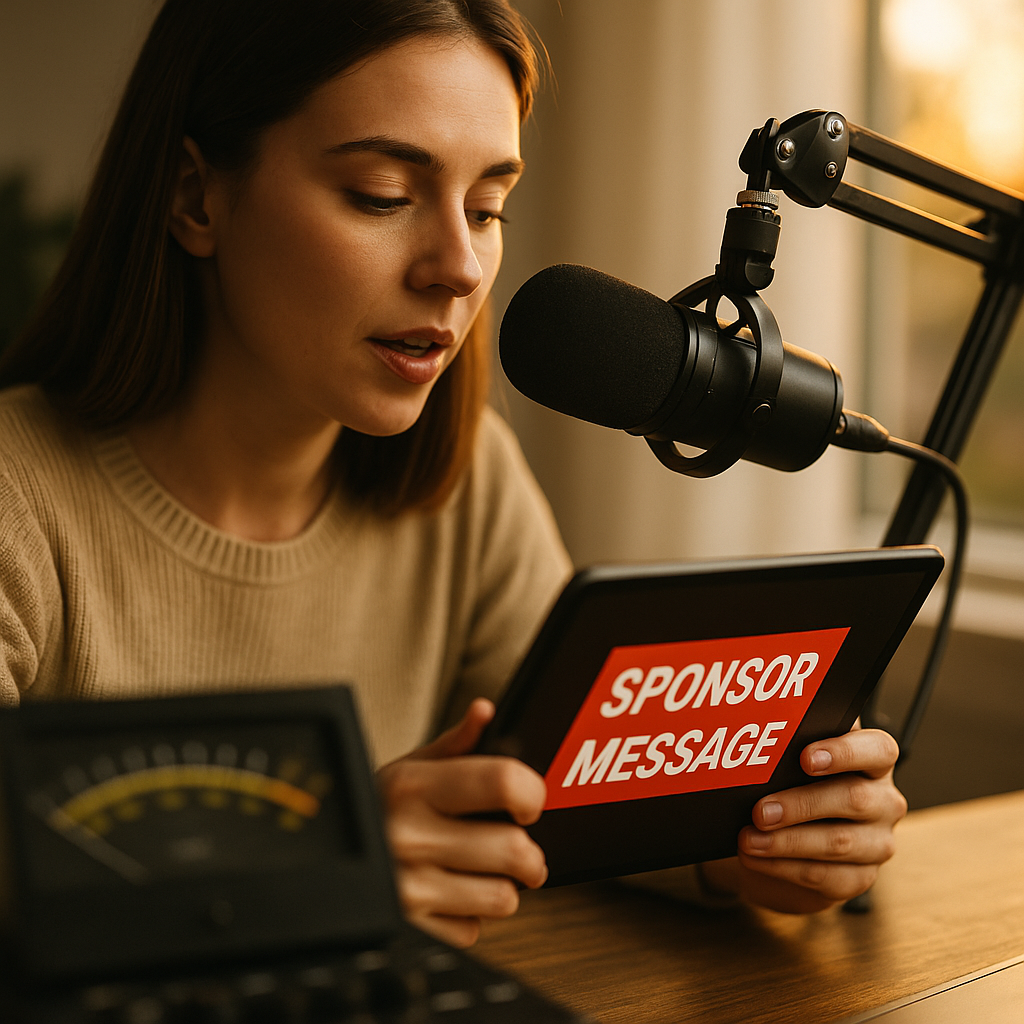
California’s Commercial Advertisement Loudness Mitigation (CALM) Act obligations don’t disappear because a creator shot your sponsored content on an iPhone. If your brand’s sponsored posts are being distributed across streaming and social platforms to California audiences, your compliance team has an audio problem worth solving now.
Why Audio Compliance Is a Brand Compliance Problem, Not Just a Broadcast Problem
Most brand compliance teams think of loudness regulation as something the TV networks handle. That was accurate when content flowed through a handful of broadcast gatekeepers. It is not accurate when a creator with 800,000 subscribers drops your 60-second sponsored segment into a YouTube or Hulu mid-roll slot, or when your content gets picked up for connected TV (CTV) distribution by a streaming partner.
California’s AB 2943 (which extended CALM Act-aligned loudness standards to streaming and on-demand platforms operating in the state) drew a line that many brand legal teams have yet to fully operationalize. The Federal CALM Act mandated that commercials match the average volume of the programming they accompany, measured using the Advanced Television Systems Committee’s A/85 standard. California’s legislation extended that expectation into the streaming ecosystem. Platforms distributing to California residents are now responsible for ensuring content they carry meets loudness specifications. That responsibility flows upstream to brands, especially when your sponsored content is the loud element.
Audio loudness violations don’t just create regulatory exposure. They create negative viewer experiences that measurably reduce ad recall and brand favorability — two metrics your media team is already tracking.
The practical implication: if a creator delivers a sponsored asset that peaks at -6 LUFS and the surrounding programming sits at -14 LUFS, your brand’s name is attached to an abrupt, jarring volume spike that streaming platforms are increasingly flagging, throttling, or rejecting outright.
What the ATSC A/85 Standard Actually Requires
LUFS (Loudness Units relative to Full Scale) is the measurement unit you need your creative ops team to understand. The ATSC A/85 standard sets a target integrated loudness of -24 LUFS for broadcast, with a true peak maximum of -2 dBTP. Streaming platforms have adapted this slightly. YouTube targets -14 LUFS for normalized playback. Spotify sits at -14 LUFS. Apple Music normalizes to -16 LUFS. Hulu and other AVOD platforms are converging on -24 LUFS for ad inventory, aligning with broadcast standards because they’re selling mid-roll inventory against long-form programming.
Here’s the gap: most creators mix their content for raw impact, not platform normalization. A creator who produces beauty tutorials doesn’t think in LUFS. They think in engagement. Their audio is often compressed, loud, and punchy because that’s what sounds good on a phone speaker in a noisy environment. Drop that same audio into a CTV mid-roll slot at -6 LUFS and it will blast the viewer, triggering immediate negative association with your brand.
Dynamic range is the secondary concern. A/85 compliance isn’t just about average loudness. It also governs the dynamic range between the quietest and loudest moments in a segment. Creator content, especially lifestyle and entertainment formats, often has extreme dynamic variation: whispering intro, then a sudden product reveal shout. That range creates compliance problems even when average LUFS is acceptable.
Building the Audit Protocol: What Brand Compliance Teams Should Implement
This is where most brand teams need to do real operational work. A verbal brief to creators saying “please match our audio standards” is not an audit protocol. Here’s what an enforceable process looks like.
Step 1: Establish measurable specs in your creator contracts. Your sponsorship agreements need to specify target integrated loudness (LUFS), maximum true peak (dBTP), and acceptable dynamic range. Don’t leave this to interpretation. If you want -14 LUFS with a -1 dBTP ceiling for social distribution and -24 LUFS with -2 dBTP for streaming/CTV, write those numbers in. Contract restructuring for creators is an area many brand legal teams are actively revisiting, and audio specifications belong in that revision cycle.
Step 2: Require delivery of a loudness-normalized master. When a creator submits their sponsored asset, require them to deliver a file that has been loudness-normalized using a tool like Loudness Meter, iZotope RX, or Adobe Audition’s Match Loudness feature. These tools are accessible and inexpensive. The creator doesn’t need to be an audio engineer. They need to run the file through a standardized process before delivery.
Step 3: Run your own verification pass before approval. Your brand’s content review team (or your agency partner) should verify every sponsored asset using platform-standard loudness metering. Tools like FFmpeg with the EBU R128 filter can batch-process files for free. Paid options like NUGEN Audio‘s VisLM or Dolby’s broadcast tools offer more granular reporting for teams managing high asset volumes.
Step 4: Flag and remediate before platform submission. Any asset that fails loudness specs should trigger a remediation workflow, not just a rejection. Give the creator clear, specific feedback (e.g., “Your integrated loudness measured -8.3 LUFS; target is -14 LUFS; please reprocess and resubmit”). A rejection without specifications just creates friction and delays.
Step 5: Maintain a platform-specific specification matrix. Your compliance team should maintain a living document mapping platform targets. YouTube, Hulu, Peacock, Paramount+, Instagram Reels, TikTok, and LinkedIn all have different normalization behaviors. What passes on YouTube may not meet Hulu’s ad inventory specs. This matrix needs to be updated as platforms revise their standards, which they do with some regularity.
The California Distribution Question: Who Bears the Risk
If your sponsored content is being distributed by a streaming platform to California users and it violates loudness standards, the platform bears primary regulatory exposure under California’s framework. But platforms are not passive about this. Hulu, YouTube, and connected TV aggregators are increasingly rejecting or automatically normalizing ad content that doesn’t meet specs. Automatic normalization sounds like a solution. It isn’t.
When a platform auto-normalizes a loud file, it often introduces audio artifacts, reduces perceived quality, and can distort the creator’s voice or your brand’s audio identity. If your brand has a sonic identity (a logo sound, a jingle, a specific voiceover), platform-side normalization can degrade it in unpredictable ways. You lose control of how your brand sounds to the consumer.
There’s also an indemnification question. Many platforms are now including audio compliance provisions in their ad serving agreements, which means if your content causes a viewer complaint or regulatory action in California, the contractual language may push liability back toward the brand. Your legal team should review your platform agreements with this lens.
For brands running multi-market campaigns, this compounds quickly. If you’re running the same creator asset across California streaming, Texas broadcast, and Australian social, you need to understand the loudness requirements for each destination. Cross-border compliance frameworks are increasingly covering audio alongside data privacy and disclosure requirements.
Creator Education: The Practical Conversation to Have
Most creators won’t know what LUFS means. That’s fine. Your job isn’t to turn them into audio engineers. Your job is to make compliance easy enough that they don’t resist it.
Provide a one-page spec sheet with every sponsorship brief. Include the target LUFS for each destination platform, a recommended tool or plugin (free options like the Youlean Loudness Meter are sufficient for most creator workflows), and a sample file they can compare against. If your creator roster includes high-volume partners producing weekly sponsored content, consider building a simple loudness check into your asset management system. Platforms like Frame.io can be configured with custom review workflows that flag files not meeting technical specifications before they even reach your creative reviewer.
When framed as “here’s how to make sure your content doesn’t get rejected by the platform,” most creators respond constructively. This is also worth addressing in your creator education materials alongside FTC disclosures. If you’re already investing in creator compliance training around FTC disclosure requirements, audio spec training can be added to the same onboarding module with minimal additional effort.
The creators who move fastest into CTV and premium streaming distribution will be the ones who already meet broadcast technical standards. Brands that help their creator partners get there build a competitive advantage in premium inventory access.
Consider also the role of your media agency. If your agency is buying CTV inventory and trafficking creator-produced assets into those placements, they should be running pre-flight technical checks as a standard service. If they’re not, that’s a gap worth addressing in your agency scope of work. A structured risk audit framework for creator programs should include technical delivery standards alongside legal and disclosure compliance.
Finally, stay current with FTC guidelines as the agency continues to extend its oversight into digital and streaming advertising. California’s regulatory activity tends to precede federal adoption, and the CALM Act extension trajectory suggests loudness standards for digital platforms will become a national enforcement priority within the next regulatory cycle. Brands that operationalize now will be ahead of it. Those that treat it as a broadcasting-only problem won’t be.
Your immediate next step: pull the last five creator-produced sponsored assets you distributed to streaming or social, run them through a free LUFS meter, and document where they landed relative to platform targets. That data will tell you how large your compliance gap actually is, and give you the business case to invest in the workflow fixes described above.
FAQs
What is the CALM Act and does it apply to creator-produced sponsored content?
The Commercial Advertisement Loudness Mitigation (CALM) Act is a U.S. federal law that requires television commercials to match the average volume of the programming they accompany, measured using the ATSC A/85 loudness standard. California has extended similar loudness requirements to streaming and on-demand platforms operating in the state. If creator-produced sponsored content is distributed as an advertisement within streaming programming to California audiences, it falls within the scope of these requirements, even if it was not produced in a traditional broadcast environment.
What LUFS target should brand compliance teams use for creator-produced ads?
The target varies by platform. YouTube normalizes playback to approximately -14 LUFS. AVOD and CTV platforms like Hulu typically require -24 LUFS integrated loudness with a -2 dBTP true peak maximum, aligning with broadcast standards. Social platforms like TikTok and Instagram apply their own normalization but targeting -14 LUFS provides a reasonable cross-platform baseline. Your compliance team should maintain a platform-specific matrix and update it regularly, as platforms revise their technical specifications.
What tools can brands use to verify audio loudness in creator-delivered assets?
Free options include FFmpeg with the EBU R128 loudness filter and the Youlean Loudness Meter plugin, which works inside most major DAWs and video editing applications. Professional-grade tools include NUGEN Audio’s VisLM and iZotope RX, which offer more detailed reporting for teams managing high asset volumes. Adobe Audition includes a built-in Match Loudness feature. For team-level review workflows, Frame.io can be configured to flag assets that don’t meet technical delivery specs before they reach creative approval.
Who bears legal responsibility if creator-produced sponsored content violates California’s loudness standards?
Primary regulatory exposure sits with the streaming platform distributing the content to California users. However, most major platforms are addressing this through ad serving agreements that include indemnification language pushing liability toward the advertiser if non-compliant content is submitted. Additionally, platforms may automatically normalize non-compliant audio, which can degrade brand audio identity. Brands should review their platform ad agreements and ensure creator contracts include enforceable audio delivery specifications to manage this risk.
Should audio loudness specifications be included in creator contracts?
Yes. Sponsorship agreements and creator contracts should specify target integrated loudness in LUFS, maximum true peak in dBTP, and acceptable dynamic range for each distribution destination. Vague language like “please match our audio standards” is not enforceable and creates ambiguity at the delivery review stage. If you are distributing the same creator asset across multiple platforms with different loudness targets, the contract should specify requirements by platform or require delivery of multiple platform-specific masters.
Top Influencer Marketing Agencies
The leading agencies shaping influencer marketing in 2026
Agencies ranked by campaign performance, client diversity, platform expertise, proven ROI, industry recognition, and client satisfaction. Assessed through verified case studies, reviews, and industry consultations.
Moburst

-
2

The Shelf
Boutique Beauty & Lifestyle Influencer AgencyA data-driven boutique agency specializing exclusively in beauty, wellness, and lifestyle influencer campaigns on Instagram and TikTok. Best for brands already focused on the beauty/personal care space that need curated, aesthetic-driven content.Clients: Pepsi, The Honest Company, Hims, Elf Cosmetics, Pure LeafVisit The Shelf → -
3

Audiencly
Niche Gaming & Esports Influencer AgencyA specialized agency focused exclusively on gaming and esports creators on YouTube, Twitch, and TikTok. Ideal if your campaign is 100% gaming-focused — from game launches to hardware and esports events.Clients: Epic Games, NordVPN, Ubisoft, Wargaming, Tencent GamesVisit Audiencly → -
4

Viral Nation
Global Influencer Marketing & Talent AgencyA dual talent management and marketing agency with proprietary brand safety tools and a global creator network spanning nano-influencers to celebrities across all major platforms.Clients: Meta, Activision Blizzard, Energizer, Aston Martin, WalmartVisit Viral Nation → -
5

The Influencer Marketing Factory
TikTok, Instagram & YouTube CampaignsA full-service agency with strong TikTok expertise, offering end-to-end campaign management from influencer discovery through performance reporting with a focus on platform-native content.Clients: Google, Snapchat, Universal Music, Bumble, YelpVisit TIMF → -
6

NeoReach
Enterprise Analytics & Influencer CampaignsAn enterprise-focused agency combining managed campaigns with a powerful self-service data platform for influencer search, audience analytics, and attribution modeling.Clients: Amazon, Airbnb, Netflix, Honda, The New York TimesVisit NeoReach → -
7

Ubiquitous
Creator-First Marketing PlatformA tech-driven platform combining self-service tools with managed campaign options, emphasizing speed and scalability for brands managing multiple influencer relationships.Clients: Lyft, Disney, Target, American Eagle, NetflixVisit Ubiquitous → -
8

Obviously
Scalable Enterprise Influencer CampaignsA tech-enabled agency built for high-volume campaigns, coordinating hundreds of creators simultaneously with end-to-end logistics, content rights management, and product seeding.Clients: Google, Ulta Beauty, Converse, AmazonVisit Obviously →