


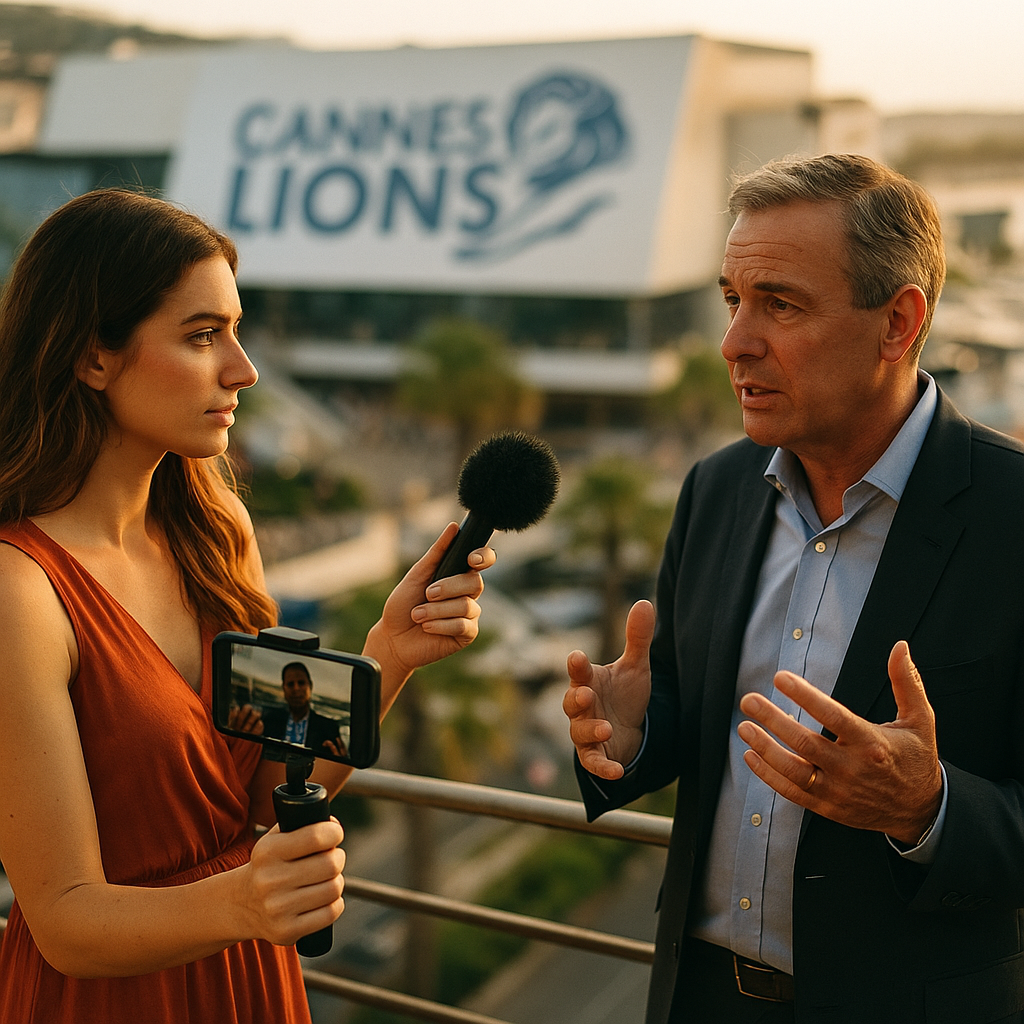
When top creators walk the Palais steps at Cannes Lions, it is not a PR moment. It is a structural signal. The influencer-as-channel model is collapsing, and brand CMOs who still treat creator relationships as media buys are already behind.
From Vendor to Voice: What Cannes Lions Tells Us About Creator Status
Cannes Lions is not a trend conference. It is where the advertising industry ratifies structural shifts. Agencies, holding companies, and Fortune 500 CMOs use the Croisette as a measuring stick for where real creative and commercial power sits. When creators started appearing not just in panels but in award categories, client briefings, and strategy sessions, that was the industry saying something out loud.
The shift had been building for years. IAB data pegs the creator economy at $44 billion in brand investment annually, with spending on long-form creator partnerships growing faster than traditional influencer activation. (For a deeper look at what that figure means for your rates and contracts, see our breakdown of IAB creator economy rates.) That money does not move toward vendors. It moves toward partners.
What Cannes now reflects is that brands are no longer just buying audience access. They are buying creative judgment, cultural credibility, and distribution architecture that no agency team can fully replicate internally.
Creators are not a line item in the media plan. They are the media plan. Brands that have not updated their operating model to reflect this are running a 2019 playbook in a 2026 marketplace.
Why “Influencer as Channel” Is a Category Error
The channel framing made sense when reach was the primary variable. Pay a creator, get impressions, measure CPM. Simple. Clean. Wrong.
That model assumed the brand held creative authority and the creator held distribution. The platforms have fundamentally inverted this. On TikTok and YouTube, algorithmic reach is earned by content quality, not bought by follower count. A creator with 200,000 subscribers who produces a genuinely useful, culturally resonant video will outperform a 2 million follower account running a scripted brand spot every single time. The algorithm rewards authenticity signals, not production budgets.
This means creative judgment is now a distribution variable. And that changes the entire strategic equation for CMOs. If your creator’s creative decisions directly determine whether your campaign reaches 80,000 people or 8 million, you are not managing a media channel. You are co-producing editorial content with someone who has real skin in the game. Our analysis of creators as distribution nodes explores exactly how this rewiring changes campaign architecture.
Cannes Lions accelerates this recognition because it puts creative currency and commercial currency in the same room. When a creator’s campaign wins a Lion, the industry cannot maintain the polite fiction that creators are execution-level resources.
What Strategic Partnership Actually Requires Operationally
Here is where most brands stall. The CMO acknowledges the shift intellectually. The procurement team still sends a three-page usage rights clause with a flat fee and a 72-hour content approval window. Nothing changes.
Genuine creator-as-partner operating models require four concrete structural upgrades:
- Contract architecture that reflects enterprise-level value exchange. Creators are now negotiating for IP ownership, revenue share, and sequel rights. Standard influencer contracts do not cover this. Full-stack media contracts are the new baseline for serious partnerships.
- Brief design that invites creative input, not just execution. The traditional creative brief is a one-way document. Strategic partnerships require a co-creation framework where the creator shapes the concept alongside the brand team. See how co-creation brief architecture changes the dynamic in practice.
- Budget allocation that reflects distribution ROI, not just production cost. The industry still massively underfunds distribution relative to content creation. If a creator produces a high-quality asset and the brand puts zero paid amplification behind it, the strategic partnership logic breaks down immediately.
- Internal organizational capability to manage strategic creator relationships. Some brands have started hiring Chief Creator Officers or equivalent roles. This is not a vanity hire. It reflects the reality that creator relationships at this level require dedicated relationship management, legal coordination, and creative integration at a senior level. The CCO hire trend is a direct response to this operational gap.
The Cannes Effect on Creator Pricing and Negotiating Power
Let’s be direct about something CMOs need to hear: Cannes validation accelerates creator rate inflation. When the industry’s most prestigious festival signals that creator work is award-worthy, creator representatives and studios use that as leverage in renewal conversations. This is rational behavior, not opportunism.
Brands that built genuine partnership infrastructure before this pricing shift happened are now holding long-term agreements that look like significant cost advantages. Brands that ran transactional campaigns and are now trying to rebuild relationships with top creators are paying discovery premiums on top of already-inflated market rates. For a clear view of where creator rate inflation is heading and how to structure deals around it, the procurement calculus has changed significantly.
The Cannes Lions festival also draws platform investment decisions into sharper focus. YouTube, Meta, and TikTok all activate heavily at Cannes, and the signals they send about creator monetization features, algorithm changes, and brand partnership tools ripple through budget planning cycles for the following 12 months. CMOs attending Cannes are not just there for awards night. They are there for the commercial intelligence.
Trust Infrastructure Is the Real Strategic Asset
Attention is abundant. Trust is scarce. This is the cleaner way to frame why creator partnerships have moved from marketing tactics to strategic assets.
A creator who has built a genuine audience relationship over years holds something no brand can manufacture internally: earned credibility at scale. Sprout Social data consistently shows that consumers trust creator recommendations significantly more than branded content, particularly in categories like personal finance, health, and technology. That trust differential is not a soft metric. It converts differently at every stage of the funnel.
When Cannes CMOs talk about attention versus trust, they are grappling with the same question. Our coverage of how CMOs are reframing attention as trust infrastructure captures this conversation directly from the Croisette. The conclusion CMOs keep landing on is that you cannot buy trust. You have to borrow it from someone who has already earned it.
This is why the most sophisticated brands at Cannes are not talking about creator campaigns. They are talking about creator programs. Multi-year, multi-touch, co-owned initiatives where creator identity and brand identity are genuinely intertwined. That is a different investment thesis entirely.
The brands winning creator partnerships in this environment are the ones who asked “what can we build together?” before they asked “what does it cost?”
The AI Variable Nobody Is Talking About Loudly Enough
There is a complicating factor that Cannes brought into sharp relief: AI-generated content is flooding every distribution channel simultaneously. eMarketer projects continued acceleration in AI content volume across social platforms, which makes authentic human creator voice more scarce and more valuable, not less.
Brands that are investing in genuine creator relationships now are hedging against the signal-to-noise problem that AI content saturation creates. When every brand can produce unlimited polished content at near-zero marginal cost, the differentiator becomes the human credibility layer. Creators provide that layer. This is why creator content investment is now being discussed in the context of AI search and answer layers, not just social reach.
Cannes Lions has formally recognized the tension between AI production efficiency and human creative standards, and the industry’s response has not been to eliminate human creative input but to designate it as the premium tier. For creators, that is a significant structural advantage going forward. For brands, it is a clear signal about where long-term value resides in the content supply chain.
What Forward-Looking Brands Are Actually Doing
The CMOs leaving Cannes with clear action items are not debating whether the creator-as-strategic-partner model is real. They are operationalizing it. That means auditing existing creator relationships for partnership potential, restructuring contract templates through legal teams familiar with entertainment industry standards (see how creator contracts are adopting entertainment standards), and building internal measurement frameworks that go beyond CPM to capture trust-weighted audience quality and long-term brand equity contribution.
They are also allocating meaningful budget to creator economy distribution, not just production. A landmark creator collab that no one sees because distribution budget was cut in Q3 is not a partnership. It is a missed opportunity with excellent creative.
The practical accountability layer matters too. CMOs need dashboards that tie creator investments to downstream revenue indicators, not just vanity metrics. Our framework for creator budget accountability metrics is a useful starting point for teams building that reporting infrastructure. You cannot manage what you cannot measure, and the creator-as-partner model demands a higher measurement standard than the influencer-as-channel model ever required.
Start with one flagship creator relationship and build it to genuine partner depth before scaling. That proof of concept will do more for internal buy-in than any Cannes case study deck.
Frequently Asked Questions
What does “creator as strategic partner” actually mean for a CMO’s budget?
It means shifting from one-off activation fees to longer-term equity arrangements that may include revenue sharing, IP co-ownership, and multi-year retainers. Budget lines move from media buying into partnership development, and the measurement framework shifts from impression-based to brand equity and pipeline contribution metrics. Expect per-creator investment to increase while the total number of creator relationships you actively manage may decrease.
How is the Cannes Lions festival influencing creator pricing and contract terms?
Cannes validation gives creators and their representatives concrete industry precedent to justify higher rates and better contract terms, including approval rights, IP ownership, and performance bonuses. When creator work wins Lions, it becomes part of a creator’s professional portfolio and leverage in renewal negotiations. Brands that establish long-term agreements before peak Cannes attention cycles tend to lock in better commercial terms.
Is the creator-as-partner model only viable for large enterprise brands?
No. The structural logic applies at any scale, but the execution differs. Mid-market brands often find that micro and nano creator partnerships deliver the same trust-transfer benefit at a fraction of the cost, particularly when the creator’s audience is tightly aligned with a specific product category. The key is moving from transactional thinking to relationship thinking regardless of budget tier.
How does AI content generation affect the value of human creator partnerships?
AI content saturation actually increases the scarcity premium on authentic human creator voice. As every brand gains access to unlimited AI-generated content at low cost, the differentiating signal becomes human credibility and genuine audience relationships, which only real creators can provide. Forward-looking brands are treating human creator partnerships as a hedge against algorithmic commoditization of AI content.
What internal organizational changes support a creator-as-partner operating model?
Leading brands are creating dedicated creator partnership functions, sometimes under a Chief Creator Officer or VP of Creator Strategy. These roles coordinate legal, creative, and commercial dimensions of creator relationships at a level that traditional influencer marketing managers are not scoped to handle. Alongside org changes, contract templates, brief processes, and measurement frameworks all require updating to reflect the higher-stakes nature of strategic creator partnerships.
Top Influencer Marketing Agencies
The leading agencies shaping influencer marketing in 2026
Agencies ranked by campaign performance, client diversity, platform expertise, proven ROI, industry recognition, and client satisfaction. Assessed through verified case studies, reviews, and industry consultations.
Moburst

-
2

The Shelf
Boutique Beauty & Lifestyle Influencer AgencyA data-driven boutique agency specializing exclusively in beauty, wellness, and lifestyle influencer campaigns on Instagram and TikTok. Best for brands already focused on the beauty/personal care space that need curated, aesthetic-driven content.Clients: Pepsi, The Honest Company, Hims, Elf Cosmetics, Pure LeafVisit The Shelf → -
3

Audiencly
Niche Gaming & Esports Influencer AgencyA specialized agency focused exclusively on gaming and esports creators on YouTube, Twitch, and TikTok. Ideal if your campaign is 100% gaming-focused — from game launches to hardware and esports events.Clients: Epic Games, NordVPN, Ubisoft, Wargaming, Tencent GamesVisit Audiencly → -
4

Viral Nation
Global Influencer Marketing & Talent AgencyA dual talent management and marketing agency with proprietary brand safety tools and a global creator network spanning nano-influencers to celebrities across all major platforms.Clients: Meta, Activision Blizzard, Energizer, Aston Martin, WalmartVisit Viral Nation → -
5

The Influencer Marketing Factory
TikTok, Instagram & YouTube CampaignsA full-service agency with strong TikTok expertise, offering end-to-end campaign management from influencer discovery through performance reporting with a focus on platform-native content.Clients: Google, Snapchat, Universal Music, Bumble, YelpVisit TIMF → -
6

NeoReach
Enterprise Analytics & Influencer CampaignsAn enterprise-focused agency combining managed campaigns with a powerful self-service data platform for influencer search, audience analytics, and attribution modeling.Clients: Amazon, Airbnb, Netflix, Honda, The New York TimesVisit NeoReach → -
7

Ubiquitous
Creator-First Marketing PlatformA tech-driven platform combining self-service tools with managed campaign options, emphasizing speed and scalability for brands managing multiple influencer relationships.Clients: Lyft, Disney, Target, American Eagle, NetflixVisit Ubiquitous → -
8

Obviously
Scalable Enterprise Influencer CampaignsA tech-enabled agency built for high-volume campaigns, coordinating hundreds of creators simultaneously with end-to-end logistics, content rights management, and product seeding.Clients: Google, Ulta Beauty, Converse, AmazonVisit Obviously →