


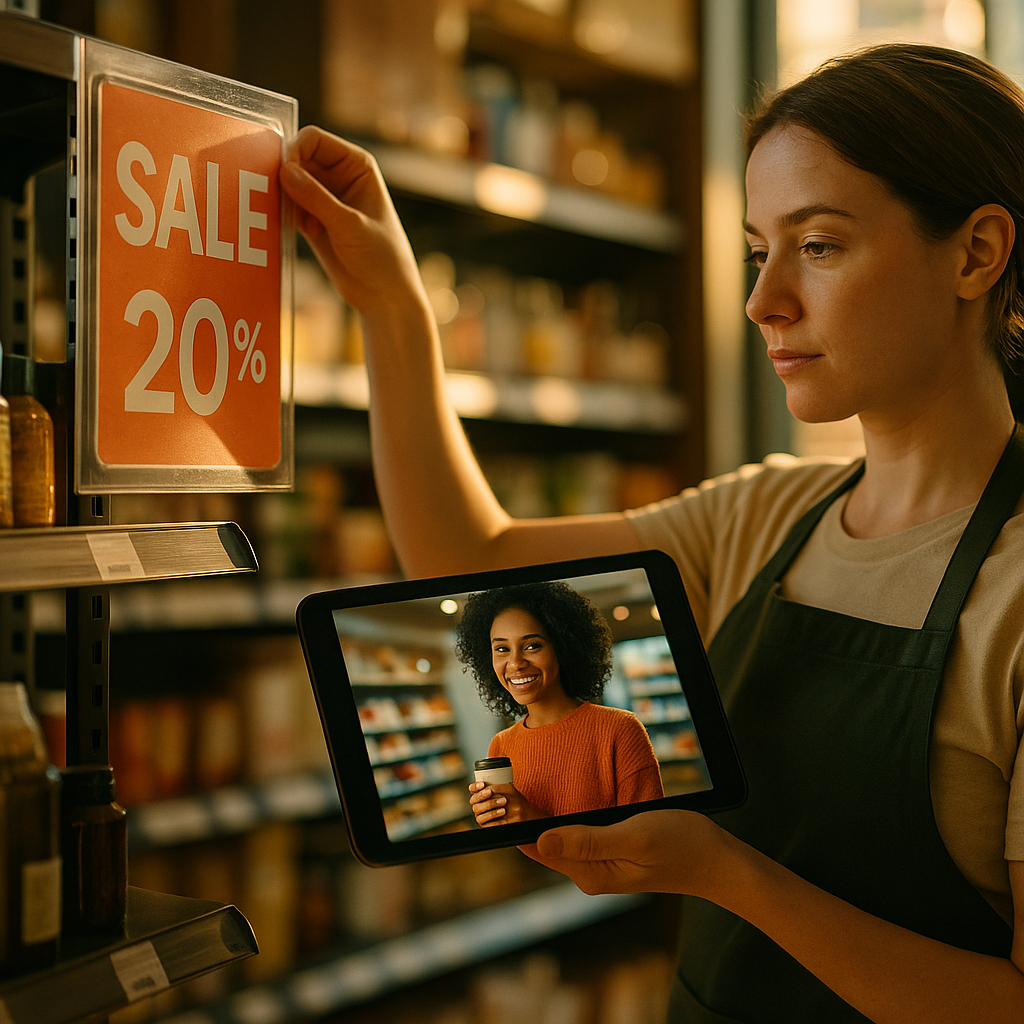
In 2025, many brands still rely on flyers and catalogs, even as shoppers spend more time on short-form platforms and product videos. This Case Study: A Retailer’s Successful Transition from Print to Video shows how one mid-sized retailer replaced costly print cycles with a measurable video engine across paid, owned, and in-store screens. The playbook is replicable—if you know where to start.
Print marketing decline: why shoppers moved to video
Retailers once used print to control the message: fixed layouts, predictable distribution, and clear seasonal drops. But shopper behavior changed faster than print could. Product discovery now happens in feeds, search results, creator content, and “how it looks on me” videos. Print can still support brand presence, yet it struggles to do what modern shoppers expect: see products in motion, understand use cases, and compare options quickly.
Our featured retailer—BrightHome, a regional home and lifestyle chain with 48 stores and a growing eCommerce channel—saw the gap clearly in customer research. Shoppers wanted:
- Faster answers (size, fit, setup, real-world appearance)
- Confidence signals (demonstrations, reviews, staff recommendations)
- More timely promotions than a monthly or quarterly print cycle could deliver
At the same time, leadership faced a hard constraint: print costs kept rising while attribution stayed fuzzy. BrightHome’s marketing director could describe reach and distribution, but not which pages drove sales or which audience segments responded. Video promised measurable performance—if executed with discipline.
Video marketing strategy: goals, constraints, and the business case
BrightHome didn’t start by “making videos.” It started by rewriting the strategy around three business outcomes:
- Increase product page conversion for top categories (storage, small furniture, kitchen tools)
- Grow store traffic for weekly promotions and seasonal resets
- Reduce cost per incremental sale compared with print-led campaigns
To ensure credibility and internal alignment, the team built a business case in plain language, using only metrics executives already trusted: margin, inventory turn, store traffic, and online conversion rate. The marketing team also documented constraints:
- Lean production capacity (two designers, one videographer contractor, no studio)
- Many SKUs with frequent assortment changes
- Brand consistency requirements across channels
- Compliance needs for pricing claims and promotional disclosures
Instead of replacing print overnight, BrightHome ran a structured transition. Print would remain for high-intent audiences in limited runs, while video became the primary storytelling and conversion tool. This reduced risk, protected store teams from sudden change, and created a clean test environment to prove impact.
To follow Google’s helpful content principles, BrightHome focused on utility over hype: each video had a clear job (explain, compare, demonstrate, reassure), a defined audience, and an owner accountable for performance.
Content production workflow: building a repeatable video pipeline
The breakthrough came from treating video like a product system, not a creative one-off. BrightHome built a pipeline that store associates, merchandisers, and marketing could all support.
1) A “video-first” brief template
Every shoot started with a one-page brief:
- Customer question (“Will this shelf hold heavy appliances?”)
- Proof points (weight rating, materials, warranty, dimensions)
- Demonstration steps (unbox, assemble, load test, styling)
- Compliance notes (pricing dates, disclaimers, safety)
- Distribution plan (product page, paid social, email, in-store)
2) A modular shoot approach
Rather than producing long, expensive videos, BrightHome captured modular assets in one session:
- One 30–45 second hero demo
- Three to five 10–15 second cutdowns for ads and stories
- Five to eight micro-clips (close-ups, features, before/after)
- One staff tip clip to add expertise and trust
This approach kept production efficient and ensured every product had enough variations for testing. It also made localization easy: different voiceovers and captions could be swapped without reshooting.
3) Store associate expertise as an EEAT advantage
BrightHome realized its strongest differentiator wasn’t cinematic video; it was knowledge. The company trained select associates as on-camera “category guides.” Their role was not to act, but to explain: how a drawer glide feels, why a material choice matters, what to check before mounting, and common mistakes customers make.
To reinforce trust, videos included:
- Clear disclosures for promotions and limited-time offers
- Accurate measurements shown on screen
- Safety notes for installation and weight limits
4) A lightweight asset management system
BrightHome organized every clip by SKU, category, and use case (e.g., “small-space,” “renter-friendly,” “under $50”). This improved speed for future campaigns and prevented the common failure mode of “we have video, but we can’t find it.”
Omnichannel distribution: social, email, product pages, and in-store screens
Print used to be the single source of truth for promotions. BrightHome replaced that role with a distribution map that connected video to real shopping moments.
Product pages (conversion)
BrightHome prioritized product detail pages for its top-selling SKUs. Videos answered the questions that typically cause hesitation: size scale, assembly effort, capacity, and finish appearance under real lighting. The team placed a short video above the fold and added supporting clips lower on the page for deeper research.
Paid social and short-form platforms (discovery)
The retailer built two consistent formats:
- “3 reasons” demos for new arrivals
- Problem/solution videos (clutter, tight spaces, organization)
Creative was designed for sound-off viewing with strong captions, quick proof points, and a single call to action. Each ad set tested one variable at a time: hook, offer, or audience. This disciplined testing replaced the guesswork that made print evaluation difficult.
Email and SMS (activation)
Instead of linking to PDF circulars, BrightHome embedded animated previews and linked to landing pages featuring video-first product collections. The team used segmentation based on category interest and past purchases, so customers received fewer messages—but more relevant ones.
In-store screens (decision support)
Print signage remained for essentials like pricing and aisle navigation, but video moved to key decision points: furniture displays, storage walls, and seasonal features. Short “how it works” loops reduced associate interruptions and increased customer confidence—especially for assembly-heavy items.
Search visibility (helpful content)
BrightHome aligned video topics with high-intent queries: “how to choose,” “how to install,” and “best for small spaces.” The goal wasn’t to chase vanity views; it was to show up when shoppers needed help. This created a library of practical content that also improved internal linking and browsing behavior.
Measurement and attribution: KPIs that proved the shift from print to video
BrightHome’s leadership agreed early: video would be judged by business outcomes, not likes. The analytics lead built a measurement framework spanning brand, performance, and operations.
Core KPIs
- Online conversion rate for video-enabled product pages vs. non-video pages
- Return on ad spend (ROAS) for video ads vs. static creative
- Store traffic lift during video-led weekly promotions
- Average order value for bundles featured in demos
- Return rate changes for products with clear “what you get” videos
Attribution approach
Because retail journeys are messy, BrightHome used a blended approach:
- Platform reporting for creative testing and short-term optimization
- Incrementality tests on selected regions to compare video-heavy vs. print-heavy exposure
- Holdout groups in email to confirm lift from video-first sends
- POS promo codes and QR scans to connect in-store actions to campaigns
What they learned quickly
- Videos that demonstrated a product in 10 seconds often beat longer explainers in paid social.
- On product pages, a clear assembly demonstration reduced pre-purchase friction and lowered support inquiries.
- “Staff picks” content improved trust, especially when associates explained trade-offs, not just benefits.
By keeping measurement practical and repeatable, BrightHome earned executive confidence. That confidence mattered more than any single metric because it unlocked budget reallocation away from large print runs.
Change management and team training: how the retailer made it stick
Most transitions fail because of people, not platforms. BrightHome treated the shift from print to video as an operating change across merchandising, stores, and marketing.
Clear ownership
- Merchandising owned product priorities and proof points.
- Marketing owned creative standards, publishing, and campaign testing.
- Store leaders owned in-store execution and associate participation.
Training that respected store realities
Associates didn’t get long workshops. They got short playbooks:
- How to explain a product in two sentences
- How to capture stable footage with a phone
- What not to claim (pricing, durability, competitor comparisons)
- How to handle customer questions that arise from videos
Brand safety and accuracy
BrightHome created an approval checklist for compliance and customer trust:
- Verify measurements, included parts, and color naming
- Confirm promotional terms and dates
- Include safety guidance where relevant
- Ensure accessibility basics: readable captions and clear visuals
Budget reallocation without disruption
The finance team didn’t accept “video is the future” as a reason to cut print. BrightHome phased spending: each reduction in print volume was tied to demonstrated performance from video-led campaigns. This kept the transition rational and prevented a backlash from teams who relied on print calendars.
FAQs: transitioning from print to video in retail
How long does it take a retailer to replace print with video?
Most retailers succeed with a phased approach. Start by replacing the most time-sensitive print elements (weekly promos and product highlights) with video, then reduce larger print runs after video performance is proven across paid, owned, and in-store channels.
What types of retail videos perform best when replacing print circulars?
Short demos, before/after transformations, “3 reasons to buy,” and quick comparison videos typically outperform polished brand films because they answer shopping questions fast and support direct conversion.
Do we need a studio and professional crew to make effective retail video?
No. A repeatable workflow, accurate product information, strong lighting, clear captions, and credible presenters matter more than high-end production. Many retailers build a reliable pipeline using modular shoots and trained staff experts.
How do you measure ROI when customers shop both online and in-store?
Use a blended measurement plan: platform testing for creative optimization, incrementality tests by region or audience, holdout groups for email, and store-level tracking via promo codes, QR scans, and traffic patterns.
Will switching to video hurt customers who prefer print?
It can if you cut print abruptly. Keep limited print for high-value segments or key seasons while ensuring video content is accessible, easy to find, and available in-store through screens or QR-linked landing pages.
What is the biggest mistake retailers make when moving from print to video?
Creating videos without a defined job. Every video should map to a customer question and a distribution point—product pages for conversion, social for discovery, email for activation, and in-store for decision support.
BrightHome’s transition worked because it treated video as a measurable retail system, not a creative experiment. By building a repeatable production workflow, distributing content where decisions happen, and tying budget shifts to clear KPIs, the team reduced reliance on print without losing promotional momentum. The takeaway is simple: start with customer questions, prove lift with disciplined testing, and scale only what you can measure.