


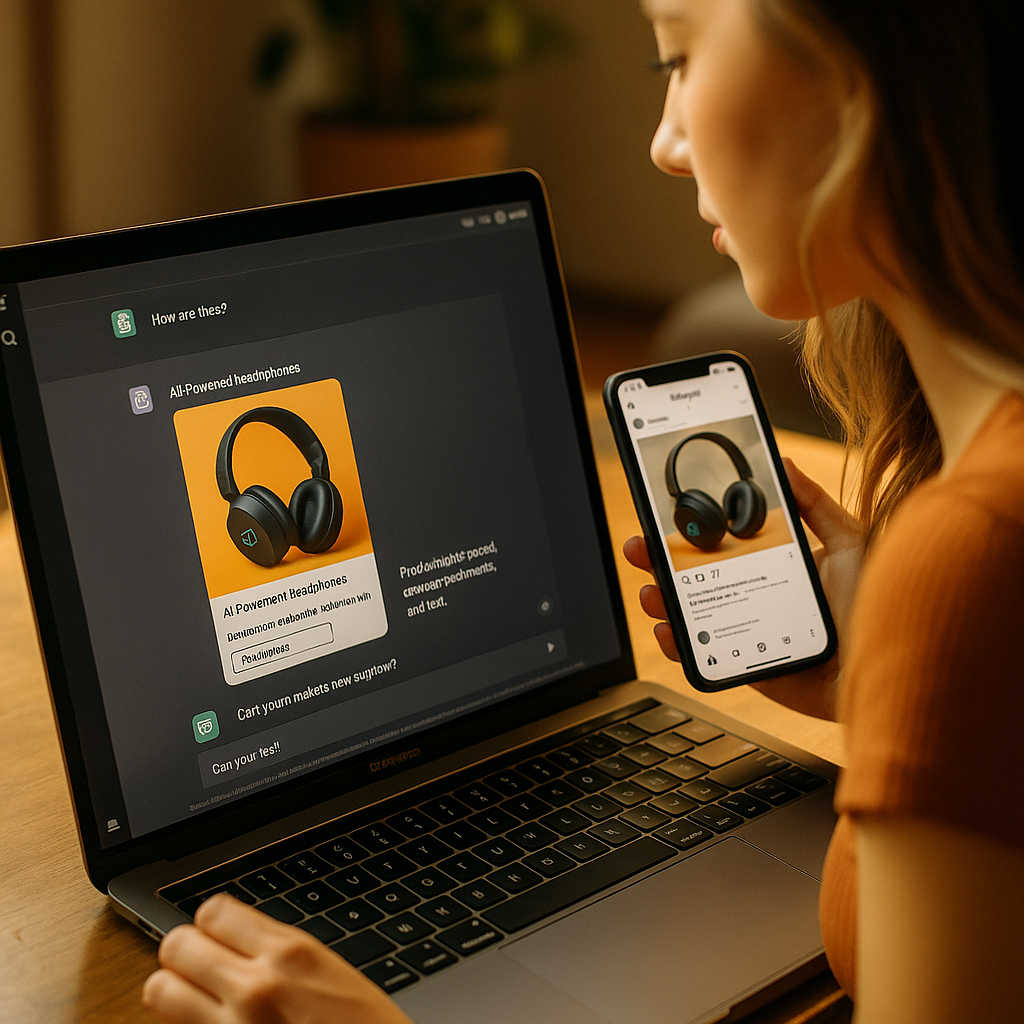
ChatGPT Now Drives Purchase Decisions — Is Your Creator Strategy Ready?
OpenAI’s ChatGPT processes over 400 million weekly active queries, and a growing share of those are product-related. With OpenAI rolling out its click-based ad model, the race to structure creator participation in ChatGPT’s ad environment is no longer hypothetical. It’s operational. Brands that move early will lock in favorable economics. Those who wait will pay a premium to catch up.
Why ChatGPT’s Ad Model Changes the Creator Equation
Traditional influencer marketing has always operated on a spectrum between awareness and conversion. You paid a creator for a post, hoped the audience engaged, and then tried to measure whether downstream sales materialized. Attribution was messy. Everyone knew it.
ChatGPT’s click-based ad environment flips that model. When a user asks ChatGPT for a product recommendation — “best running shoes for flat feet” or “top CRM for agencies under 50 people” — and the response includes a sponsored link, that click carries enormous intent. This isn’t someone scrolling past a Reel. This is someone actively seeking a solution and trusting an AI to curate it.
Click-based ads inside conversational AI represent the highest-intent advertising surface since paid search. Brands need to treat creator involvement here with the same rigor they apply to Google Ads — not the looser frameworks they use for social sponsorships.
The implications for creator programs are immediate. Creators who have built topical authority — the ones whose content, reviews, and recommendations have trained or influenced the models — now sit at a strategic intersection. Their content shapes AI outputs. Their audiences validate AI recommendations. And if OpenAI allows creator-affiliated links or referral structures within its ad products, the commission layer becomes real.
Evaluating Which Creators Actually Move the Needle in AI-Driven Discovery
Not every influencer matters in this channel. That’s the uncomfortable truth.
The creators who hold value in a ChatGPT ad environment aren’t necessarily the ones with the largest followings. They’re the ones whose content has been indexed, cited, or pattern-matched by large language models. Think about it: a creator with 40,000 YouTube subscribers who publishes exhaustive, long-form product comparisons in a specific niche likely carries more weight in an LLM’s training data than a lifestyle creator with 2 million Instagram followers posting aesthetic flat-lays.
Here’s how to evaluate creators for this channel:
- Content depth and specificity: Does the creator produce detailed, information-rich content that AI models would likely surface? Long-form reviews, comparison guides, and tutorial content all score high.
- Topical authority: Is the creator consistently associated with a product category? A creator who covers skincare ingredients across 200 videos has built a semantic footprint that matters to LLMs.
- Cross-platform citation: Is their content referenced on forums, Reddit threads, and niche publications? These signals feed into the training and retrieval pipelines of models like GPT.
- Audience trust metrics: Beyond engagement rates, look at comment quality, repeat viewership, and community sentiment. When ChatGPT recommends a product and a user cross-references it against a creator’s review, trust is the conversion lever.
If you’re already running creator partnerships at scale, add an “AI discoverability” layer to your vetting criteria. This isn’t optional anymore.
Structuring Compensation: Flat Fees Won’t Cut It
The classic flat-fee sponsorship doesn’t map well to a click-based ad environment. If ChatGPT is generating commissions on clicks, your creator compensation model needs to reflect performance — while still being attractive enough to secure top-tier talent.
Consider a hybrid structure:
- Base retainer for content creation: Pay creators to produce the deep, authoritative content that feeds AI models. This is the “training data” investment. Think of it as your SEO budget reimagined for LLMs.
- Click-based commission layer: When a creator’s affiliated link or branded content surfaces in ChatGPT’s ad responses, pay a per-click or per-conversion commission. This aligns incentives directly.
- Authority bonuses: Reward creators whose content demonstrably appears in or influences AI-generated recommendations. Tools like Semrush and emerging AI visibility platforms are beginning to track brand mentions in LLM outputs — use these to measure creator impact.
One mistake to avoid: treating this like affiliate marketing from 2015. Affiliate programs historically pushed creators toward clickbait and thin content. In a conversational AI environment, the model rewards depth, accuracy, and trustworthiness. Your compensation structure should too.
The FTC’s disclosure guidelines also apply here. If a creator has a financial relationship with your brand and their content influences AI-generated ad placements, that relationship needs to be transparent. The regulatory framework is still catching up, but proactive disclosure protects both sides.
What About Attribution?
This is the question keeping performance marketing leads up at night. And honestly, it should be.
Attribution in ChatGPT’s ad environment is fundamentally different from attribution in social or search. When a user clicks a sponsored recommendation inside a chat conversation, the click path doesn’t follow traditional UTM logic cleanly. The user might have been influenced by three prior messages in the same conversation. They might have seen a creator’s YouTube review last week, then asked ChatGPT about the product today.
OpenAI’s ad reporting tools are still nascent. As of early reports from eMarketer, the initial advertiser dashboard offers click-level data but limited view-through or multi-touch attribution. That means brands need to build their own attribution bridges — at least for now.
Practical steps:
- Use unique landing pages or coupon codes for ChatGPT-sourced traffic so you can isolate conversion data.
- Cross-reference ChatGPT-driven clicks with creator content calendars. Did a creator publish a review the same week you saw a spike in ChatGPT referral clicks? That’s signal, not coincidence.
- Invest in post-purchase surveys that ask “How did you first learn about us?” and include “AI assistant / ChatGPT” as an option. Simple, but wildly underused.
Brands that build proprietary attribution models for AI-driven discovery channels now will have a compounding data advantage over competitors who wait for OpenAI to solve attribution for them.
Operational Playbook: Getting Started Without Overcommitting
You don’t need to overhaul your entire influencer program overnight. But you do need a pilot.
Start with three to five creators in your highest-intent product categories. Choose creators who already produce search-friendly, authoritative content. Brief them specifically on creating content optimized for AI retrieval: detailed product comparisons, FAQ-style breakdowns, and use-case walkthroughs. This type of content mirrors the way micro-influencer syndicates have been driving outsized ROI in niche verticals.
Run the pilot for 90 days. Measure not just clicks and commissions, but also:
- Brand mention frequency in ChatGPT responses (test manually and with monitoring tools)
- Creator content’s ranking in traditional search alongside AI visibility
- Cost per acquisition compared to your existing paid search and social benchmarks
If the economics work — and early signals from brands testing Google’s AI Overviews ads suggest CPAs can be 15-30% lower than traditional search — then scale the program by expanding your creator roster and deepening content investments.
Also consider how this fits within your broader channel strategy. Brands already investing in niche newsletter sponsorships understand the value of high-intent, trust-based channels. ChatGPT’s ad environment is the next logical extension of that same principle.
The Risk Nobody’s Talking About
Here’s the risk: platform dependency. We’ve seen this movie before with Facebook organic reach, Google algorithm updates, and TikTok’s uncertain regulatory future. If OpenAI changes its ad model, tweaks how it surfaces sponsored content, or adjusts revenue-sharing terms with creators, your economics could shift overnight.
Mitigation isn’t complicated, but it requires discipline. Own your data. Build direct relationships with creators outside of any single platform. Ensure the content created for AI optimization also lives on your owned properties — your blog, your YouTube channel, your email list. The content should serve multiple channels, not just one AI product’s ad inventory.
And diversify. The brands that thrive aren’t the ones who bet everything on one channel. They’re the ones who build a portfolio of high-intent touchpoints and connect them with a unified creator strategy.
Your Next Move
Audit your top 20 creator partners this week and score them on AI content authority. Identify the five who produce the deepest, most search-relevant content in your category — then pitch them a 90-day pilot that blends retainer fees with click-based commissions tied to ChatGPT’s ad environment. The brands that build this muscle now will own the highest-intent discovery channel of the next decade.
Frequently Asked Questions
What are ChatGPT click-based ads and how do they work for brands?
ChatGPT click-based ads are sponsored placements within OpenAI’s conversational AI interface. When users ask product-related questions, brands can appear as recommended options with clickable links. Advertisers pay per click, similar to paid search, but within a conversational context that carries exceptionally high purchase intent.
How should brands choose creators for ChatGPT ad campaigns?
Brands should prioritize creators with deep topical authority, long-form informational content, and cross-platform citations rather than just follower count. Creators whose reviews, comparisons, and tutorials are likely indexed by large language models will have the most influence on AI-generated product recommendations.
What compensation model works best for creators in AI-driven ad environments?
A hybrid model combining a base retainer for content creation, click-based or conversion-based commissions, and authority bonuses for measurable AI visibility performs best. This structure incentivizes depth and accuracy over clickbait while aligning creator and brand financial interests.
How do you measure attribution for ChatGPT ad clicks?
Use unique landing pages, dedicated coupon codes, and post-purchase surveys that include AI assistant referral options. Cross-reference click spikes with creator content publishing schedules. OpenAI’s reporting tools are still developing, so building proprietary attribution models gives brands an early data advantage.
Are FTC disclosure rules applicable to creator content that influences AI ad placements?
Yes. If a creator has a material financial relationship with a brand and their content influences AI-generated sponsored recommendations, FTC disclosure guidelines require transparency about that relationship. Brands should implement proactive disclosure policies even as specific regulatory guidance for AI ad environments continues to evolve.
Top Influencer Marketing Agencies
The leading agencies shaping influencer marketing in 2026
Agencies ranked by campaign performance, client diversity, platform expertise, proven ROI, industry recognition, and client satisfaction. Assessed through verified case studies, reviews, and industry consultations.
Moburst

-
2

The Shelf
Boutique Beauty & Lifestyle Influencer AgencyA data-driven boutique agency specializing exclusively in beauty, wellness, and lifestyle influencer campaigns on Instagram and TikTok. Best for brands already focused on the beauty/personal care space that need curated, aesthetic-driven content.Clients: Pepsi, The Honest Company, Hims, Elf Cosmetics, Pure LeafVisit The Shelf → -
3

Audiencly
Niche Gaming & Esports Influencer AgencyA specialized agency focused exclusively on gaming and esports creators on YouTube, Twitch, and TikTok. Ideal if your campaign is 100% gaming-focused — from game launches to hardware and esports events.Clients: Epic Games, NordVPN, Ubisoft, Wargaming, Tencent GamesVisit Audiencly → -
4

Viral Nation
Global Influencer Marketing & Talent AgencyA dual talent management and marketing agency with proprietary brand safety tools and a global creator network spanning nano-influencers to celebrities across all major platforms.Clients: Meta, Activision Blizzard, Energizer, Aston Martin, WalmartVisit Viral Nation → -
5

The Influencer Marketing Factory
TikTok, Instagram & YouTube CampaignsA full-service agency with strong TikTok expertise, offering end-to-end campaign management from influencer discovery through performance reporting with a focus on platform-native content.Clients: Google, Snapchat, Universal Music, Bumble, YelpVisit TIMF → -
6

NeoReach
Enterprise Analytics & Influencer CampaignsAn enterprise-focused agency combining managed campaigns with a powerful self-service data platform for influencer search, audience analytics, and attribution modeling.Clients: Amazon, Airbnb, Netflix, Honda, The New York TimesVisit NeoReach → -
7

Ubiquitous
Creator-First Marketing PlatformA tech-driven platform combining self-service tools with managed campaign options, emphasizing speed and scalability for brands managing multiple influencer relationships.Clients: Lyft, Disney, Target, American Eagle, NetflixVisit Ubiquitous → -
8

Obviously
Scalable Enterprise Influencer CampaignsA tech-enabled agency built for high-volume campaigns, coordinating hundreds of creators simultaneously with end-to-end logistics, content rights management, and product seeding.Clients: Google, Ulta Beauty, Converse, AmazonVisit Obviously →