


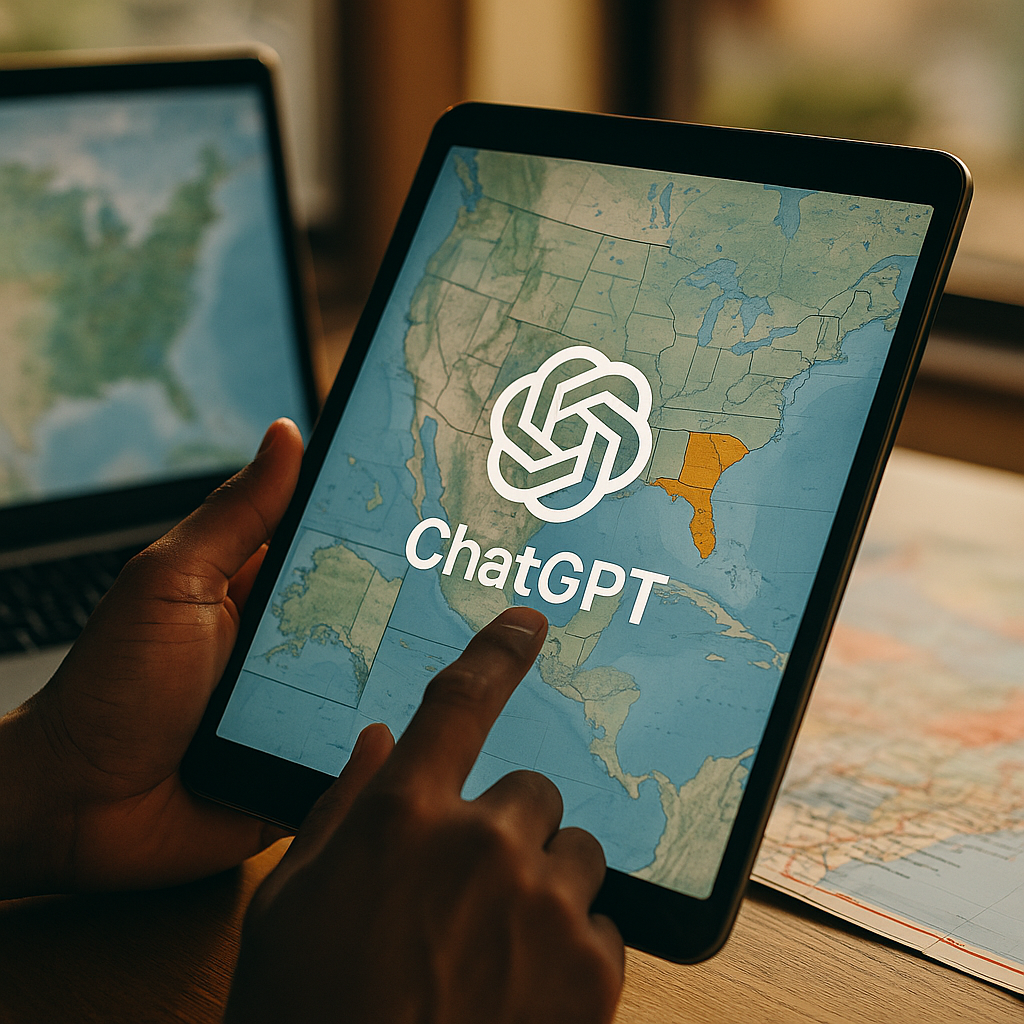
OpenAI is now selling ads. If that sentence doesn’t stop you mid-scroll, consider this: ChatGPT surpassed 400 million weekly active users in early 2026, and the platform is beginning to surface sponsored placements inside conversational responses. For brand strategists evaluating ChatGPT ads geographic targeting, the window to build a defensible early position is narrow and closing fast.
What OpenAI’s Ad Product Actually Is (And What It Isn’t)
Let’s be precise. OpenAI’s emerging ad format is not display advertising. It’s not pre-roll. It’s a click-based product appearing within or adjacent to AI-generated responses, triggered by user intent signals rather than keyword bids in the traditional sense. Think of it as sponsored retrieval: a brand’s product or content surfaces when the model determines it’s contextually relevant to a user’s query.
That distinction matters enormously for how you budget and benchmark. Your cost-per-click comparisons to Google Search or Meta’s feed ads are starting points, not anchors. The intent quality on ChatGPT queries is arguably higher than most paid search environments because users are asking complete, specific questions rather than issuing fragmented keyword strings.
Early signals from OpenAI’s ad beta suggest click-through rates on contextually matched placements significantly outperform display benchmarks — a pattern consistent with what brands saw when Google first introduced Shopping ads inside organic results.
The creator-adjacent angle is where it gets interesting for influencer program managers. OpenAI has signaled that publisher and creator content will inform some response generation, meaning branded creator assets could eventually factor into how sponsored responses are constructed or ranked. That’s not confirmed architecture yet, but it’s a strategic implication worth modeling now.
Geographic Targeting: What the Early Mechanics Reveal
OpenAI’s initial geo-targeting layer is coarser than what brand teams are used to. Country and regional-level targeting appears to be the current granularity, with city-level or DMA-level precision not yet publicly confirmed in the product’s beta documentation. For national brands running broad awareness campaigns, that’s fine. For regional retailers, QSR franchises, or healthcare networks with market-specific compliance requirements, it creates a real operational gap.
Compare this to Google Ads geo-targeting, which allows radius targeting down to a single mile, or Meta’s geo capabilities that can isolate zip codes with layered demographic filters. OpenAI’s current offering is a step back in precision. The strategic question isn’t whether to wait for better targeting, it’s whether the intent quality compensates for the targeting bluntness during this early phase.
For brands with established GEO infrastructure already built around AI search visibility, the transition into paid placements on ChatGPT is more natural. Your structured data, schema implementation, and AI-readable content architecture become inputs that may influence how the model retrieves and presents sponsored content. Brands without that foundation are paying for clicks while their organic AI visibility remains weak.
Regional Campaign Architecture: Building for Imprecision
Here’s the practical challenge. If you’re a brand operating across multiple regional markets, each with different pricing, inventory, regulatory language, or franchisee relationships, coarse geo-targeting forces you to either run lowest-common-denominator creative or build parallel campaigns for each region at a cost structure that may not pencil out yet.
The smarter approach is to treat ChatGPT ads as an upper-funnel regional signal layer right now, not a precision conversion driver. Use country or broad regional targeting to generate intent signals and collect early performance data. Then route that traffic to geo-specific landing experiences that do the localization work downstream. This separates the targeting limitation from the conversion experience, which is where you have full control.
- Tiered market approach: Designate two or three priority regions where you’re willing to run at lower efficiency to gather benchmark data. Don’t spread budget evenly across all markets.
- Downstream geo-routing: Ensure landing pages or product feeds dynamically serve regional content based on IP detection, since the ad platform may not do that work for you.
- Creative localization at the asset level: Build modular creative that swaps regional references, offers, or compliance language rather than rebuilding entire campaigns per market.
- Attribution pre-work: Set up view-through and multi-touch attribution before launch. ChatGPT ad clicks will not behave like paid search clicks in your existing models. Reviewing AI attribution frameworks before you scale spend here is non-negotiable.
The Creator-Adjacent Placement Question
Why does this matter specifically to influencer program managers? Because OpenAI has explicitly discussed partnerships with publishers and content creators as part of its data and monetization strategy. If creator-produced content influences model responses, and sponsored placements surface within those responses, then the creator briefs you’re writing today may eventually shape the context in which your paid placements appear.
This isn’t speculative brand safety theater. It’s a structural content dependency. A creator who produces authoritative, AI-readable content about your product category could become an informal signal booster for your ChatGPT ad relevance score. The brands that understand this are already thinking about creator content optimization for AI as a paid media input, not just an organic play.
The risk, conversely, is that creator content associated with your brand produces signals that conflict with your paid placement targeting. If a creator’s audience is heavily concentrated in a region where your ChatGPT geo-targeting isn’t active, or where your product isn’t available, you’re generating intent that you can’t capture. That’s a budget efficiency problem worth mapping now.
Brands that align creator content strategy with AI ad placement targeting will have a measurable efficiency advantage over those treating organic and paid AI channels as separate workstreams.
Compliance and Brand Safety in AI-Generated Ad Context
This is not optional reading. When your ad appears inside a conversational AI response, the surrounding context is dynamically generated. Unlike a static publisher page where brand safety tools can scan the surrounding content before serving an impression, ChatGPT’s response environment is generated in real time. Your ad could appear adjacent to a response that touches sensitive topics, political content, or factually contested information.
OpenAI has stated it will implement content controls and brand safety filters, but the mechanics of those filters are not yet publicly detailed at the granularity that enterprise brand teams require. Before committing significant regional budgets, get written documentation from OpenAI’s ad sales team on exclusion categories, negative keyword equivalents, and response-context controls. Treat this the same way you’d treat a new programmatic exchange onboarding: verify before you spend. The FTC’s guidance on sponsored content disclosure applies here, and the dynamic generation environment makes disclosure implementation more complex, not less.
For brands in regulated industries, healthcare, financial services, legal, the compliance bar is even higher. Country-level geo-targeting that bleeds across regulatory jurisdictions is a real exposure. A financial services ad served in a market where your product isn’t licensed, simply because geo-targeting defaulted to a broad regional bucket, is a compliance incident waiting to happen.
How to Evaluate OpenAI Ads Against Your Existing Channel Mix
Most marketing teams approaching this will make the mistake of treating ChatGPT ads as a search channel substitute. It’s more accurate to model it as a high-intent discovery channel with paid social-like uncertainty on placement context. Run it alongside, not instead of, your existing paid search spend during any test phase.
Evaluation criteria should include: cost per qualified visit (not just CPC), downstream conversion rates segmented by region, brand safety incident rate, and creative fatigue patterns. Because the ad product is click-based and contextually triggered, you’ll also want to track whether clicks are coming from informational queries or transactional queries. That distinction will shape how you allocate creative formats. Reference eMarketer’s benchmarks on AI-assisted search conversion rates as a starting calibration point.
For teams already running incrementality testing on AI-driven campaigns, apply the same holdout methodology here. Don’t let the novelty of the channel suspend your standard performance rigor. OpenAI’s ad product deserves the same skeptical evaluation framework you’d apply to any emerging channel, including documented test budgets, clear success thresholds, and a defined decision timeline for scaling or pausing.
The governance side matters too. Your AI creative and data policies need to explicitly cover ChatGPT ad placements before your media team starts buying. Teams that have already built out AI creative governance structures will adapt faster. Those running on informal approval processes will find the dynamic context of AI-generated placements creates new brand risk exposure they’re not equipped to manage.
One external benchmark worth tracking: Statista’s AI advertising market projections through 2028 show conversational AI ad spend growing at a faster rate than display or social, which underscores why getting your evaluation framework right now matters more than moving fast.
Your immediate next step: Before your next budget cycle, map your current regional campaign architecture against ChatGPT’s available geo-targeting tiers, identify the compliance gaps in markets where coarse targeting creates regulatory exposure, and brief your creator partnerships team on how AI-readable content may become a paid placement signal. That’s not future-proofing. That’s table stakes for 2026 media planning.
Frequently Asked Questions
What is ChatGPT’s ad format and how does it differ from traditional paid search?
ChatGPT’s emerging ad product is a click-based format where sponsored content surfaces within or adjacent to AI-generated conversational responses, triggered by contextual relevance rather than traditional keyword bids. Unlike Google Search ads, which match against specific search terms, ChatGPT ads are served based on the model’s assessment of what’s contextually relevant to a user’s full-sentence query. This means intent signals are typically higher quality, but placement context is more dynamic and less predictable than static search result pages.
How precise is ChatGPT’s geographic targeting for regional campaigns?
As of early 2026, ChatGPT’s geo-targeting operates at country and broad regional levels, without confirmed city-level, DMA-level, or radius-based precision. This is significantly coarser than Google Ads or Meta’s geo capabilities. Brands with regional compliance requirements or franchise market structures should build downstream geo-routing into landing experiences to compensate for the platform’s targeting limitations during this phase.
How does creator content relate to ChatGPT ad placements?
OpenAI has pursued content partnerships with publishers and creators, meaning creator-produced content may influence how the model retrieves and contextualizes responses, including sponsored ones. Brands whose creators produce authoritative, AI-readable content about relevant product categories may benefit from stronger contextual relevance signals for their paid placements. This makes creator content strategy a potential input to paid AI media performance, not just an organic channel.
What brand safety risks should marketing teams assess before running ChatGPT ads?
Because ChatGPT responses are dynamically generated, ad placements can appear alongside content that is contextually unpredictable. Unlike programmatic display environments where brand safety tools scan static page content before serving, ChatGPT’s real-time generation environment makes pre-serve scanning more complex. Marketers should request written documentation of OpenAI’s exclusion categories, content controls, and negative context filters before committing regional budgets, and apply the same onboarding diligence they would use for a new programmatic exchange.
Should ChatGPT ads replace or supplement existing paid search budgets?
ChatGPT ads should supplement, not replace, existing paid search spend during any test phase. The channel behaves more like a high-intent discovery placement with paid social-level contextual uncertainty than a direct substitute for Google Search. Run parallel campaigns with holdout testing, track cost per qualified visit and regional conversion rates, and set clear performance thresholds before deciding to scale or pause spend on the platform.
Top Influencer Marketing Agencies
The leading agencies shaping influencer marketing in 2026
Agencies ranked by campaign performance, client diversity, platform expertise, proven ROI, industry recognition, and client satisfaction. Assessed through verified case studies, reviews, and industry consultations.
Moburst

-
2

The Shelf
Boutique Beauty & Lifestyle Influencer AgencyA data-driven boutique agency specializing exclusively in beauty, wellness, and lifestyle influencer campaigns on Instagram and TikTok. Best for brands already focused on the beauty/personal care space that need curated, aesthetic-driven content.Clients: Pepsi, The Honest Company, Hims, Elf Cosmetics, Pure LeafVisit The Shelf → -
3

Audiencly
Niche Gaming & Esports Influencer AgencyA specialized agency focused exclusively on gaming and esports creators on YouTube, Twitch, and TikTok. Ideal if your campaign is 100% gaming-focused — from game launches to hardware and esports events.Clients: Epic Games, NordVPN, Ubisoft, Wargaming, Tencent GamesVisit Audiencly → -
4

Viral Nation
Global Influencer Marketing & Talent AgencyA dual talent management and marketing agency with proprietary brand safety tools and a global creator network spanning nano-influencers to celebrities across all major platforms.Clients: Meta, Activision Blizzard, Energizer, Aston Martin, WalmartVisit Viral Nation → -
5

The Influencer Marketing Factory
TikTok, Instagram & YouTube CampaignsA full-service agency with strong TikTok expertise, offering end-to-end campaign management from influencer discovery through performance reporting with a focus on platform-native content.Clients: Google, Snapchat, Universal Music, Bumble, YelpVisit TIMF → -
6

NeoReach
Enterprise Analytics & Influencer CampaignsAn enterprise-focused agency combining managed campaigns with a powerful self-service data platform for influencer search, audience analytics, and attribution modeling.Clients: Amazon, Airbnb, Netflix, Honda, The New York TimesVisit NeoReach → -
7

Ubiquitous
Creator-First Marketing PlatformA tech-driven platform combining self-service tools with managed campaign options, emphasizing speed and scalability for brands managing multiple influencer relationships.Clients: Lyft, Disney, Target, American Eagle, NetflixVisit Ubiquitous → -
8

Obviously
Scalable Enterprise Influencer CampaignsA tech-enabled agency built for high-volume campaigns, coordinating hundreds of creators simultaneously with end-to-end logistics, content rights management, and product seeding.Clients: Google, Ulta Beauty, Converse, AmazonVisit Obviously →