


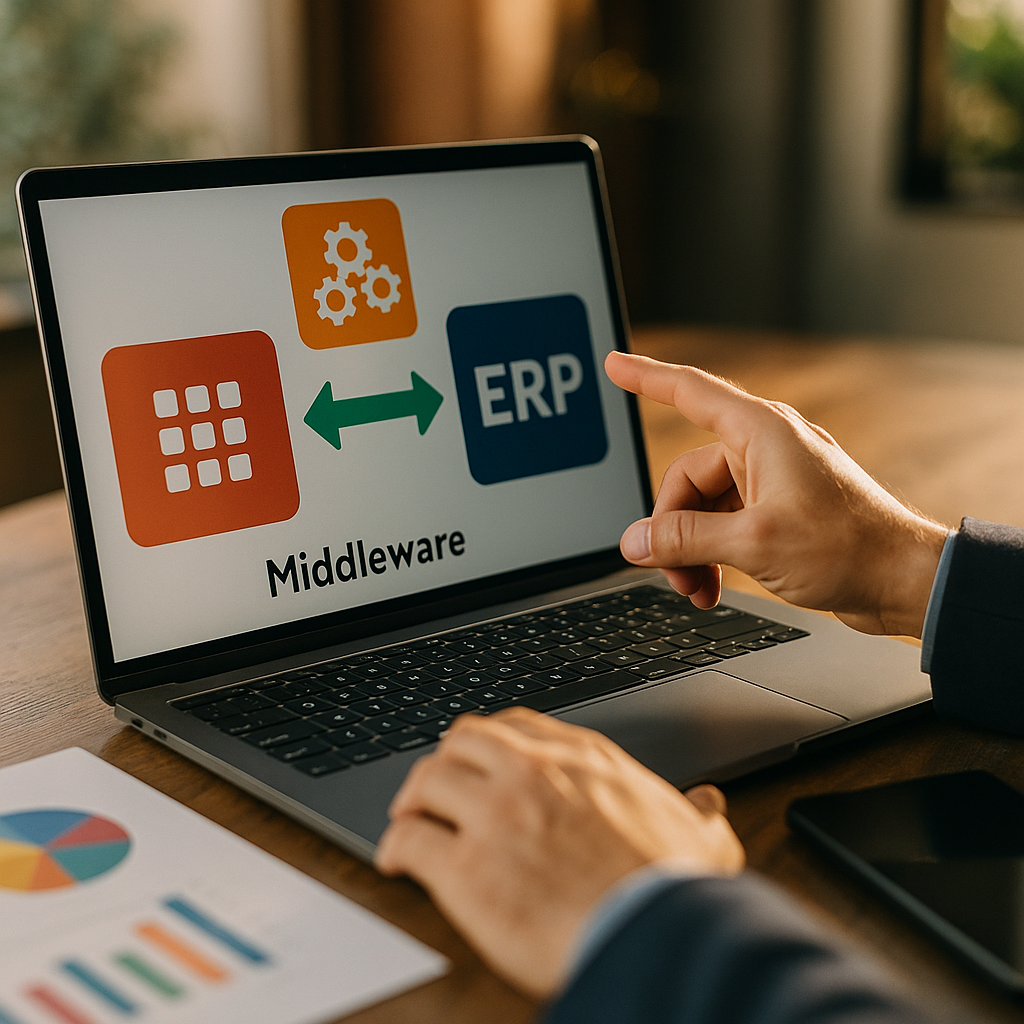
In 2025, marketing leaders want unified customer data without disrupting finance, inventory, or fulfillment. Comparing middleware solutions for connecting MarTech stacks to internal ERPs helps teams choose an integration layer that is secure, scalable, and maintainable. The right middleware reduces manual work, improves attribution, and speeds reporting while keeping ERP governance intact—so what should you evaluate first?
Integration middleware for MarTech-ERP: clarify your use cases and data flows
Before you compare products, define what “connected” means for your business. Most integration failures happen because teams pick a tool before they map the flows, owners, and outcomes. Start with a short list of concrete scenarios and specify which system is the system of record for each data domain.
Common MarTech-to-ERP integration use cases:
- Lead-to-cash visibility: link campaign and channel data to quotes, orders, invoices, and renewals for accurate ROI and CAC reporting.
- Account enrichment: push ERP account hierarchies, billing status, credit flags, and customer segments into CRM/marketing automation for targeting and suppression.
- Product, pricing, and availability sync: update catalog, pricing tiers, and inventory signals to power personalization and reduce failed promotions.
- Consent and preference orchestration: propagate consent state (opt-in/out, purpose, region) so marketing actions respect policy and audit requirements.
- Revenue operations automation: create cases, tasks, or notifications when payment status, returns, or service events occur.
Answer these questions upfront: Is the integration mostly batch (hourly/daily) or event-driven (real time)? How many endpoints will you connect now versus in 12–18 months? Do you need one-way data movement or true bi-directional synchronization? What data must never leave your network boundary? Establishing these constraints makes the rest of the comparison objective instead of political.
iPaaS for ERP integration: when speed and breadth of connectors matter
An integration platform as a service (iPaaS) typically offers a cloud-based environment with prebuilt connectors, visual workflow builders, and managed runtime. For many teams, iPaaS is the fastest route to connecting marketing automation, CRM, CDP, analytics, and support systems to an ERP.
Where iPaaS fits best:
- Many SaaS endpoints: you rely on multiple marketing and sales tools and want reusable connectors.
- Rapid iteration: marketing ops and rev ops need to adjust mappings and workflows without heavy engineering cycles.
- Standard patterns: sync contacts/accounts, push campaign responses, move order summaries, and reconcile IDs.
Key evaluation criteria for iPaaS:
- ERP connectivity model: does it support your ERP’s APIs, IDocs, BAPIs, OData, JDBC, file drops, or message queues without brittle custom code?
- Data transformation depth: look for robust mapping, schema evolution handling, and support for complex hierarchies (accounts, bill-to/ship-to, line items).
- Reliability controls: retry policies, idempotency support, dead-letter queues, replay, and end-to-end monitoring.
- Security posture: private networking options, customer-managed keys, secrets vault integration, and granular role-based access.
- Governance: versioning, approvals, environment promotion (dev/test/prod), and audit trails for compliance.
Likely follow-up question: Can iPaaS handle “real-time” ERP events? Many can, but confirm the full path: ERP event emission (or CDC), middleware ingestion, transformation, and delivery to MarTech with measured latency. If your ERP cannot publish events, you may be stuck polling, which changes what “real time” realistically means.
ESB vs iPaaS: when centralized architecture and long-lived integrations dominate
An enterprise service bus (ESB) is a more centralized integration architecture, often deployed on-premises or in a controlled cloud environment. ESBs traditionally excel at complex enterprise integrations, strict governance, and shared service mediation across many internal applications.
Choose an ESB-style approach when:
- Internal system density is high: many legacy apps and custom services must interoperate with the ERP.
- Policy enforcement is strict: you need consistent authentication, authorization, throttling, and transformation across the enterprise.
- Complex orchestration: multi-step business processes span procurement, fulfillment, finance, and customer communications.
ESB vs iPaaS comparison points:
- Time to value: iPaaS typically wins for fast MarTech connectivity; ESB can require more design and governance setup.
- Operating model: ESB often demands a dedicated integration team; iPaaS can enable a broader ops audience with guardrails.
- Change management: ESB centralization can reduce duplication but may introduce queues of requests if governance is heavy.
Practical guidance: If your organization already runs an ESB successfully, extending it to MarTech can be sensible—especially when you can expose stable, well-documented services to marketing systems. If you do not have that maturity, adopting an ESB solely for MarTech-ERP connectivity can slow progress and inflate total cost of ownership.
API management and integration: building secure, reusable ERP-facing services
API management is not a full middleware replacement, but it becomes essential when you want to standardize how MarTech tools and internal teams consume ERP-related data and actions. In 2025, the most resilient pattern is often “API-first ERP access,” where middleware exposes productized services rather than letting each tool integrate directly with the ERP.
What API management adds:
- Consistency: standardized endpoints like /customers, /orders, /invoices, with predictable contracts.
- Security controls: OAuth, mTLS, IP allowlists, scopes, and token lifetimes aligned with least privilege.
- Traffic management: quotas, throttling, caching, and circuit breakers to protect ERP performance.
- Lifecycle governance: versioning, deprecation policies, developer portals, and usage analytics.
Where middleware fits around APIs: You may still use iPaaS or an ESB behind the API layer to handle transformations, enrichment, and routing. The API gateway becomes the controlled “front door” for MarTech access, reducing one-off integrations that are hard to audit and harder to change.
Likely follow-up question: Should marketing tools call ERP APIs directly? Usually no. A thin service layer (sometimes called an “experience API” or “integration API”) shields the ERP from high-volume, bursty MarTech traffic and provides stable contracts that survive ERP upgrades.
Event-driven middleware and CDC: enabling near-real-time customer and order signals
Marketing and customer experience teams increasingly depend on timely operational signals: order shipped, payment failed, backorder created, contract renewed. Event-driven middleware uses message brokers and streaming patterns so systems react to changes rather than waiting for scheduled jobs.
Core components you may compare:
- Message broker or streaming platform: publish/subscribe topics for order, customer, inventory, and invoice events.
- Change data capture (CDC): capture database-level changes when ERP events are not readily available, then publish them as normalized events.
- Schema governance: schema registry, compatibility checks, and controlled evolution to prevent breaking downstream consumers.
- Consumer design: idempotent processing, replay support, and dead-letter handling for operational resilience.
Benefits for MarTech-ERP connectivity:
- Fresher segmentation: suppress “at-risk” accounts instantly (billing hold, credit issues) and reduce wasted spend.
- Operationally-aware journeys: trigger messages based on real fulfillment states, not assumptions.
- Reduced ERP load: downstream systems consume event streams instead of frequently querying the ERP.
Watch-outs: Event-driven systems require discipline: clearly defined event contracts, ownership, and monitoring. Also, “near-real-time” must be proven with end-to-end measurements, not just broker latency. Ask vendors how they support replay, deduplication, and exactly-once semantics in practice for your ERP and MarTech endpoints.
Middleware selection criteria for MarTech stacks: a practical comparison checklist
Once you understand the major solution categories, use a structured checklist to compare candidates fairly. This reduces the risk of picking a tool that looks strong in demos but fails under real data volume, security requirements, or operational constraints.
1) Security and compliance fit
- Network connectivity options (VPN, private link, VPC/VNet peering) and whether ERP traffic stays off the public internet.
- Encryption in transit and at rest, key management approach, and secrets handling.
- Audit logs, admin controls, and separation of duties for marketing ops vs platform admins.
- Data residency needs and how the vendor supports them.
2) Data model and identity resolution
- Support for complex objects: orders with line items, returns, subscriptions, multi-currency invoicing.
- Master data strategy: how do you handle customer IDs across ERP, CRM, CDP, and eCommerce?
- Deduplication and survivorship rules: what happens when records conflict?
3) Reliability and observability
- End-to-end monitoring with correlation IDs across steps and systems.
- Replay, backfill, and reprocessing tools for missed or failed data.
- Defined SLAs, incident response transparency, and operational runbooks.
4) Build vs configure
- What percentage can be implemented with configuration vs custom code?
- Support for CI/CD, automated testing, and environment promotion.
- Availability of SDKs and extensibility points for edge cases.
5) Performance and cost realities
- Throughput limits, concurrency handling, and batch size constraints.
- Pricing model alignment: per connector, per task, per message, per data volume, or per runtime.
- Hidden costs: premium connectors, additional environments, logging retention, and support tiers.
6) Vendor maturity and support (EEAT)
- Documented reference architectures for ERP + MarTech scenarios, not just generic integration examples.
- Clear security documentation, third-party attestations, and transparent change management.
- Support responsiveness, professional services depth, and partner ecosystem.
How to run a proof of value in 2025: Pick one revenue-impacting flow (for example, “order status to customer journey triggers”) and one governance-heavy flow (for example, “consent and suppression list sync”). Validate mapping complexity, error handling, and observability. Require measurable outcomes: latency, error rate, time to deploy changes, and effort to troubleshoot.
FAQs about MarTech-ERP middleware
What is the best middleware for connecting a MarTech stack to an ERP?
The best choice depends on your constraints. iPaaS is often best for fast deployment across many SaaS tools, ESB-style platforms fit centralized enterprise governance, API management is essential for controlled access, and event-driven middleware is best when timely operational signals matter. Use a proof of value tied to two real use cases to decide.
Do we need real-time integration between MarTech and ERP?
Not always. Real time is most valuable for operational triggers (shipping, billing status, cancellations) and for suppressing spend quickly. If your main goal is weekly ROI reporting, scheduled batch loads may be sufficient. Confirm the business decision that changes based on timeliness before paying for always-on streaming.
How do we prevent the ERP from being overloaded by marketing systems?
Use a service layer and traffic controls: caching, rate limiting, asynchronous processing, and event streams. Avoid letting every MarTech tool query the ERP directly. Middleware should support throttling, queuing, and backpressure so marketing spikes do not impact order processing.
What data should never be synced from ERP into MarTech?
Exclude sensitive financial details and regulated personal data unless there is a clear, approved use case. Sync derived attributes instead of raw fields when possible (for example, “customer is on billing hold” rather than detailed credit notes). Apply least privilege, purpose limitation, and retention rules.
How do we handle identity matching across ERP, CRM, CDP, and marketing automation?
Establish a canonical customer identifier strategy and define survivorship rules. Middleware should support consistent key mapping, reference tables, and reconciliation processes. For accounts with multiple entities (bill-to/ship-to), model hierarchies explicitly to prevent attribution and suppression mistakes.
What is CDC and when is it appropriate for ERP integrations?
Change data capture reads database changes and turns them into events or incremental updates. It is useful when ERP APIs or event frameworks cannot provide the needed signals efficiently. Use CDC carefully with strong governance, filtering, and schema control to avoid exposing unnecessary data.
How long should it take to integrate MarTech with an ERP?
A focused initial integration can be delivered in weeks if endpoints are accessible, requirements are clear, and governance is aligned. Timeline increases with custom ERP constraints, data quality issues, and complex approval processes. The fastest teams start with one high-value flow and standardize patterns before scaling.
Connecting MarTech to ERP systems in 2025 requires more than picking a popular tool; it requires aligning architecture to business outcomes, security boundaries, and operational realities. iPaaS often wins for speed, ESB-style platforms suit centralized governance, API management controls access, and event-driven patterns enable timely signals. Choose middleware by proving reliability, observability, and cost on real workflows—then scale confidently.