


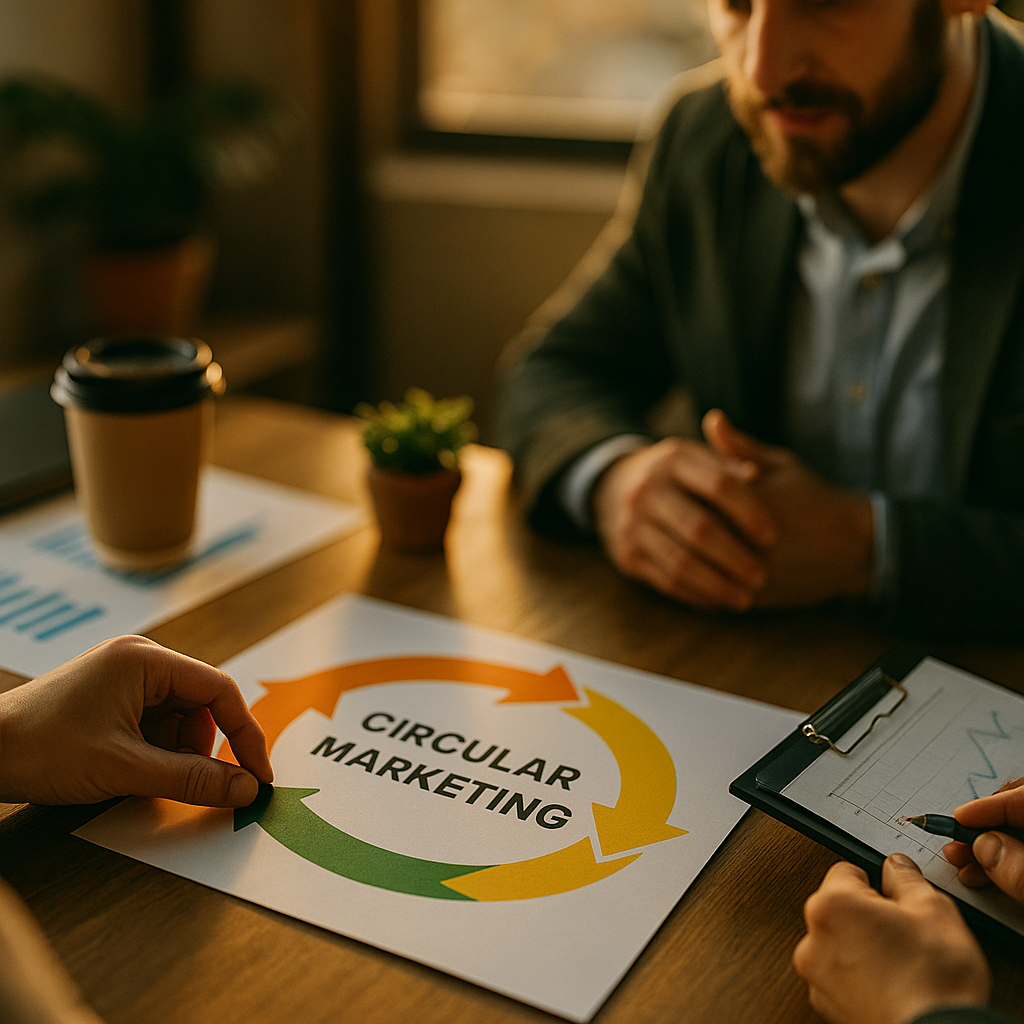
In 2026, brands face sharper scrutiny around waste, sourcing, and product claims. Circular marketing responds by shifting attention from one-time sales to long-term value, repair, reuse, and recovery. Paired with product life storytelling, it helps companies prove impact instead of merely promising it. The result is stronger trust, better retention, and more resilient growth. How can brands do this credibly?
Why circular economy branding is becoming a core growth strategy
Circular practices have moved from sustainability reports into the center of brand strategy. Customers, regulators, investors, and retail partners now expect businesses to explain what materials they use, how products are made, how long they last, and what happens when they reach the end of their useful life. Brands that cannot answer those questions risk losing trust quickly.
Circular economy branding is the discipline of communicating how a business reduces waste and keeps materials in use for longer through design, maintenance, refurbishment, resale, refill, recycling, and take-back systems. It is not a cosmetic layer added after a campaign is built. It should reflect actual operating choices across sourcing, packaging, fulfillment, customer support, and post-purchase programs.
The commercial logic is clear. Circular models can lower acquisition pressure by increasing repeat purchases, memberships, trade-ins, and service revenue. They can also reduce reputational risk because they replace vague sustainability language with more specific claims customers can verify. When a brand tells a believable product life story, it gives buyers practical reasons to choose it: durability, repairability, lower total cost of ownership, and easier disposal or return.
In 2026, this matters even more because buyers are more fluent in spotting greenwashing. They want proof, not polished promises. That is why the strongest brands now connect marketing to product design, operations, and customer experience. If the business model remains linear, the messaging will eventually fail. If the model is genuinely becoming circular, marketing can translate that progress into relevance and loyalty.
How product lifecycle storytelling builds trust across the customer journey
Product lifecycle storytelling gives customers a clear narrative from origin to next life. Instead of treating a product as a static object on a product page, this approach frames it as a sequence of decisions and outcomes: material selection, manufacturing standards, logistics, usage guidance, repair options, resale value, recovery pathways, and recycling or remanufacturing possibilities.
This kind of storytelling works because it answers the buyer’s most important questions before they ask them:
- What is this made from? Explain the materials and why they were chosen.
- How was it produced? Describe manufacturing standards, energy choices, labor safeguards, and quality controls.
- Will it last? Show expected lifespan, warranty terms, and maintenance guidance.
- Can it be repaired or upgraded? Share spare parts availability, repair networks, or modular design details.
- What happens when I no longer need it? Offer take-back, trade-in, refill, donation, resale, or recycling options.
Good product life storytelling does not read like a manifesto. It is concrete, useful, and easy to verify. It appears in product pages, packaging, onboarding emails, retail signage, customer support scripts, loyalty programs, and post-purchase communications. It also uses plain language. If a claim requires several disclaimers to make sense, it probably needs to be rewritten or dropped.
From an EEAT perspective, this storytelling format is powerful because it demonstrates experience and expertise. A brand can show what it has actually changed, what trade-offs it made, what standards it follows, and where it is still improving. That level of specificity increases authoritativeness and trustworthiness far more than generic claims such as “eco-friendly” or “planet positive.”
For example, a footwear brand might explain that a shoe uses a replaceable insole, stitched rather than glued construction in key stress zones, and a trade-in credit after a defined wear period. A beauty brand might explain refill compatibility, the recycled content of packaging, and exactly which components must be separated before curbside recycling. These are not abstract values statements. They are decision aids.
Using sustainable brand messaging without slipping into greenwashing
Sustainable brand messaging only works when it is disciplined. Many brands still overstate progress, use broad environmental language without evidence, or highlight a minor improvement while ignoring a larger impact area. That weakens customer confidence and can create legal and regulatory exposure.
To avoid that trap, marketers should follow a few practical rules:
- Lead with specifics. Replace “sustainable materials” with exact percentages, material names, certifications where relevant, and limitations.
- Define the scope. Clarify whether the claim applies to one product line, one region, one package component, or the entire business.
- Explain the trade-offs. If a refill system reduces packaging but increases transport complexity, say so and explain why the net result still matters.
- Show the system, not just the symbol. A recyclable package is not enough if most customers do not have access to the right recycling stream.
- Avoid absolute claims. Words like “zero impact” or “fully sustainable” are usually indefensible.
- Update claims regularly. A statement that was accurate a year ago may no longer reflect current operations or regulations.
Helpful content also acknowledges what customers need to do. If a product is reusable only under certain conditions, explain those conditions. If a take-back program is available only in certain markets, make that visible. If a repair requires authorized service, provide clear access information. Trust increases when a brand is honest about practical limitations.
This is where internal collaboration matters. Marketing teams should work with product, legal, compliance, procurement, and customer care to build a claims review process. The goal is not to slow communication down. The goal is to make sure every statement can be defended with documentation and customer-facing proof. In 2026, that level of rigor is no longer optional.
Designing customer retention marketing around repair, refill, and resale
Customer retention marketing becomes stronger when brands stop treating the sale as the end of the relationship. Circular models naturally create more touchpoints after purchase: care reminders, replacement parts, refill subscriptions, maintenance content, resale support, trade-in credits, warranty extensions, and take-back offers. Each of these touchpoints can deepen loyalty while extending product value.
This changes the economics of retention. Instead of relying only on discounts or new-product launches to bring customers back, brands can create service-based reasons to return. That often leads to better margins and stronger trust because the interaction is based on utility, not urgency.
Consider the retention opportunities inside a circular model:
- Repair programs keep products in use longer and reduce returns driven by minor defects.
- Refill systems encourage repeat purchases with less packaging and more predictable demand.
- Trade-in and resale options lower the barrier to the next purchase while keeping products in circulation.
- Care education improves product performance and reduces disappointment caused by misuse.
- Loyalty credits for returns reward responsible behavior and improve recovery rates.
To make these programs work, the messaging must be simple and timed correctly. Customers should know at checkout what support exists later. They should receive care guidance shortly after delivery, not months later when a problem appears. They should see trade-in value before a product loses relevance. And they should not have to search multiple pages to find return or repair instructions.
Brands also need measurement. Useful metrics include repeat purchase rate, refill adoption, repair request completion, trade-in participation, resale conversion, recovery rate, average product lifespan, and customer service resolution time. These metrics help marketing teams understand whether circular messaging is driving behavior or just attracting attention.
When done well, retention becomes a proof point for circular marketing. A brand is not simply telling customers it values longevity. It is building systems that make longevity convenient.
How supply chain transparency content supports credibility and search visibility
Supply chain transparency content is one of the most effective ways to support both EEAT and SEO. Search engines increasingly reward content that is useful, specific, and grounded in real-world expertise. Customers respond the same way. If your website helps people understand sourcing, manufacturing, certifications, shipping choices, and end-of-life options, it can rank for high-intent queries while also reducing purchase hesitation.
The key is to structure content around real user needs, not internal terminology. A buyer may search for “how to recycle refill pouch,” “is this jacket repairable,” or “where are these headphones made.” Helpful content answers those questions directly with context and next steps.
Strong transparency content often includes:
- Material explainers that compare options and define recycled, recyclable, compostable, bio-based, or regenerated inputs accurately.
- Factory and sourcing pages that describe where products are made and what standards apply.
- Care and repair guides that extend product life and reduce unnecessary replacement.
- Packaging disposal instructions that explain separation, local variation, and alternative return options.
- Impact methodology pages that show how the brand calculates emissions, waste reduction, or recycled content claims.
For EEAT, authorship and review matter. Content should be reviewed by people with direct knowledge of operations, such as sustainability leads, product engineers, materials specialists, or compliance teams. Where relevant, link claims to third-party standards, certifications, or public methodology notes. This demonstrates that the content is not only persuasive but informed.
For SEO, use language people actually search for. “Monomaterial packaging” may be correct, but many customers will search “easier to recycle packaging.” Use both where appropriate. Include FAQs on product pages and help center pages to capture long-tail searches and reduce friction. Keep pages updated as programs expand or policies change. Freshness matters when claims relate to active business practices.
Building a circular content strategy that turns proof into performance
A strong circular content strategy connects brand narrative, performance marketing, product education, and customer support. It starts with one principle: every claim should map to a customer action or business capability. If the brand says a product is built to last, the site should include care instructions, warranty details, and repair access. If the brand promotes refillability, the reorder flow should be frictionless and visible.
The most effective strategy usually follows this framework:
- Audit the product life story. Document every stage of the product journey and identify what evidence exists for each claim.
- Prioritize the highest-value proof points. Focus first on details that influence conversion and trust, such as durability, repairability, refill savings, or take-back convenience.
- Create modular content assets. Turn the same verified proof into product page copy, ads, email flows, retail messaging, and customer support macros.
- Build post-purchase journeys. Use onboarding, care, refill reminders, and trade-in prompts to keep the story active after the sale.
- Measure behavior, not just engagement. Track whether content increases repairs, refills, returns to program, repeat purchases, and lower churn.
Brands should also prepare for skepticism. Customers may ask whether a take-back program actually leads to reuse, whether a recycled material affects quality, or whether shipping a returned item cancels out environmental benefits. These are fair questions. The right response is not defensiveness. It is clear explanation backed by current evidence and practical guidance.
Another important point is accessibility. Circular messaging should not be buried in a sustainability microsite. It belongs wherever people make decisions: product detail pages, comparison charts, checkout pages, packaging inserts, and support centers. It should also be understandable to someone who is interested in product value, not only environmental impact. Durability, maintenance, and resale value matter to many customers regardless of their sustainability stance.
Ultimately, circular marketing performs best when it helps people make better choices with less effort. It removes uncertainty, clarifies long-term value, and shows what the brand will do after the transaction. That is what makes product life storytelling commercially effective as well as ethically stronger.
FAQs about circular marketing and product life storytelling
What is circular marketing?
Circular marketing is the practice of promoting products and services in ways that support reuse, repair, refill, refurbishment, resale, and responsible recovery. It shifts messaging away from one-time consumption and toward long-term product value and ongoing customer relationships.
What is product life storytelling?
Product life storytelling explains a product’s full journey, from materials and manufacturing to use, maintenance, and end-of-life options. It helps customers understand durability, care needs, repair access, and what happens when they are finished with the product.
How is circular marketing different from traditional sustainability marketing?
Traditional sustainability marketing often focuses on broad environmental claims. Circular marketing is more operational and specific. It highlights systems such as take-back, repair, refill, modular design, and resale, showing how the product remains useful for longer and how materials stay in circulation.
Why does product life storytelling matter for SEO?
It creates useful, specific content that matches real search intent. Customers search for care instructions, repair options, material details, recycling steps, and trade-in policies. Answering those questions clearly can improve rankings, engagement, and conversion.
How can brands avoid greenwashing in circular campaigns?
Use precise claims, define the scope, explain trade-offs, and support statements with accessible proof. Avoid vague terms and absolute promises. Review content with legal, product, and sustainability teams before publishing.
Which industries benefit most from circular marketing?
Apparel, beauty, electronics, home goods, packaged goods, automotive, and furniture all benefit because they can extend product life through repair, refill, resale, upgrades, or material recovery. Any category with repeat use or disposal complexity can gain value from circular messaging.
What metrics should marketers track?
Track repeat purchase rate, refill subscription uptake, repair completion, trade-in participation, resale conversion, recovery rate, average product lifespan, customer satisfaction, and support volume related to care or disposal questions. These metrics show whether circular content is changing behavior.
Do customers really care about product end-of-life details?
Yes, especially when the information is practical. Customers want to know how to maintain value, avoid waste, and dispose of products correctly. Clear end-of-life guidance also reduces confusion and builds trust at the moment when many brands usually go silent.
Circular marketing and product life storytelling are no longer niche ideas in 2026. They give brands a practical way to prove durability, transparency, and responsibility across the full customer journey. The clearest takeaway is simple: connect every claim to real systems, useful content, and post-purchase support. When brands show how products live, last, and return, trust and long-term growth follow.