


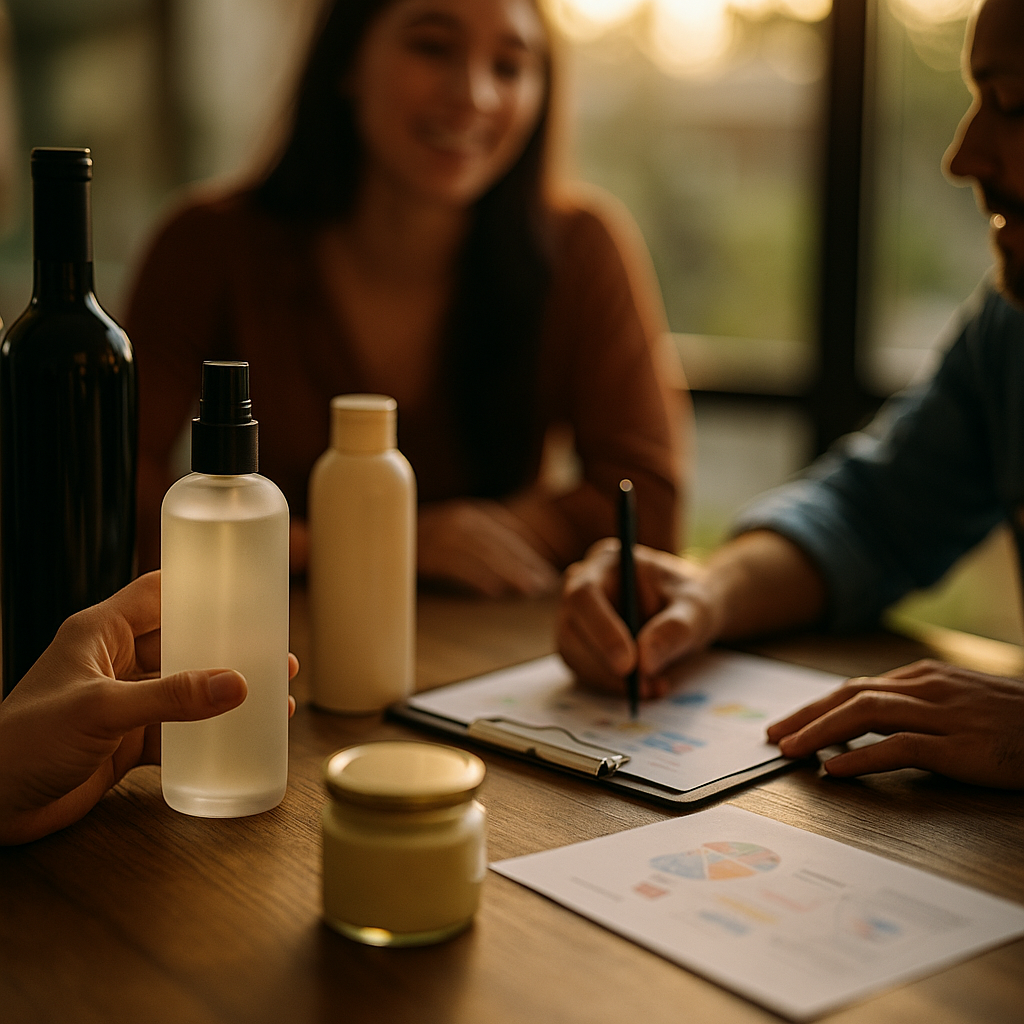
The Shift Toward Co-Creation Communities In High-End CPG Markets is reshaping how premium brands innovate, build trust, and protect margin in 2025. Instead of relying on one-way storytelling, luxury-leaning consumer packaged goods brands invite real customers into product design, testing, and launch decisions. This approach changes loyalty from passive preference to shared ownership—so what does it take to do it well?
Luxury CPG co-creation: why premium brands are moving from audiences to collaborators
High-end CPG used to operate on a familiar formula: exceptional ingredients, elevated packaging, selective distribution, and aspirational brand narratives. That formula still matters, but it is no longer enough to sustain premium pricing and long-term loyalty. Consumers with high willingness to pay are also high-information shoppers—they compare formulas, evaluate sourcing claims, and expect brands to act quickly on feedback.
Co-creation in luxury CPG is the structured practice of involving consumers (and often experts) in the design, refinement, and storytelling of products—before and after launch. It differs from basic “social listening” because it includes shared decision-making, transparent iteration, and clear value exchange.
Several forces make co-creation especially attractive in premium categories:
- Trust as a purchase driver: Premium shoppers scrutinize efficacy, safety, and sustainability claims. Co-creation produces visible proof of listening and accountability.
- Higher expectations for personalization: Luxury buyers want fit-for-me benefits (skin feel, fragrance profile, functional outcomes), which co-creation can surface faster than traditional research cycles.
- Lower tolerance for “misses”: In high-end price tiers, a failed launch is expensive and reputationally damaging. Co-creation de-risks by validating demand early.
- Community-led differentiation: When products carry a community’s fingerprints—ingredient choices, sensorial notes, formats—competitors can copy features, but not the origin story and relationship.
In practice, premium co-creation also strengthens brand discipline. It forces teams to define what is non-negotiable (quality thresholds, brand aesthetic, safety standards) and what is flexible (scents, textures, limited editions, accessories, bundles, rituals). That clarity helps premium brands evolve without diluting luxury cues.
Premium CPG community strategy: what co-creation communities look like in 2025
Co-creation communities in high-end CPG are not “everyone, all the time.” They are curated groups with clear roles, governed processes, and well-defined incentives. The strongest programs look less like a comment section and more like a product studio with members.
Common community models include:
- Invitation-only creator panels: 200–2,000 vetted members who participate in concept tests, scent/texture feedback, and usage diaries.
- Tiered loyalty communities: Customers unlock access to beta drops, maker notes, and behind-the-scenes formulation updates as they progress.
- Expert-led councils: Dermatologists, perfumers, chefs, material scientists, sustainability advisors, or mixologists provide authority and help validate claims.
- Retailer-partner communities: Premium retailers host joint communities where members test exclusives, driving sell-through and reducing returns.
Where communities live depends on control and intimacy. Many premium brands use a dedicated platform or private portal for research-grade feedback and compliance, while keeping a complementary public layer on social channels for discovery. In 2025, brands also use lightweight “micro-communities” around specific launches, such as limited editions or seasonal collections, then graduate top contributors into an ongoing cohort.
How membership works matters as much as platform choice. The best programs clearly answer:
- Who gets in? Define the mix: loyalists, category switchers, aspirational buyers, and critical evaluators who raise the bar.
- What do members do? Specify activities (surveys, live testing sessions, prototype reviews, ritual-building workshops).
- What do they get? Early access, personalization, direct contact with formulators, exclusive pricing on betas, or recognition.
- What do you do with their input? Show “you said, we did” updates that document decisions and tradeoffs.
This structure prevents a common failure mode: asking for opinions without acting on them. Premium consumers interpret that as theater, and they disengage quickly.
Customer-led product innovation: turning member insight into premium-grade launches
Co-creation communities create value only when feedback becomes decisions. High-end CPG teams need an operating system that translates qualitative passion and quantitative signals into formulation, packaging, and merchandising outcomes.
A practical co-creation workflow for premium launches typically includes:
- 1) Opportunity framing: Brand defines the problem and constraints (e.g., “fragrance-free but sensorial,” “plastic-free without compromising shelf appeal,” “high-protein without aftertaste”).
- 2) Concept sprints: Members react to multiple concepts with clear tradeoffs: benefits, texture or taste, application ritual, and price band.
- 3) Prototype testing: Small-batch samples go to members with structured diaries. Premium categories benefit from repeated-use feedback, not first impressions alone.
- 4) Claims and proof alignment: If the community requests “visible results,” the brand pairs that demand with appropriate substantiation and compliant messaging.
- 5) Pre-launch validation: Members help choose final scent, shade range, pack format, and bundle logic. This reduces SKU sprawl.
- 6) Post-launch iteration: Community feedback informs batch improvements, education content, and next releases.
Answering a likely question: Does co-creation mean customers run the brand? No. The brand remains the editor-in-chief. The community provides signal and language—what people notice, how they describe it, and what tradeoffs they accept. The brand’s job is to translate that into a cohesive product and an on-brand experience.
In premium CPG, the most useful insights are often sensorial and ritual-based: how a product feels, smells, pours, foams, or dissolves; what “luxury” means in the moment of use; and what the unboxing communicates. Communities excel here because they generate rich comparisons to alternatives already in the customer’s home.
To keep innovation premium-grade, brands should build in “quality gates” that cannot be voted away: safety standards, allergen controls, stability testing, supplier audits, and materials performance. When a community suggests a change that conflicts with these gates, explain why and offer alternatives. Transparency is part of the luxury experience now.
Brand authenticity and trust: using EEAT to make co-creation credible in high-end CPG
Co-creation can strengthen trust, but it can also backfire if it looks performative or if claims outrun evidence. In 2025, premium shoppers expect brands to demonstrate credibility through Experience, Expertise, Authoritativeness, and Trustworthiness (EEAT)—not just polished visuals.
How to embed EEAT into co-creation:
- Experience: Highlight real usage insights from members—what changed after two weeks, what improved after a formula tweak—without exaggeration.
- Expertise: Involve qualified professionals where appropriate (e.g., cosmetic chemists, food scientists, dermatology advisors) and explain their role in plain language.
- Authoritativeness: Publish clear methodologies: sample sizes, testing conditions, and what feedback was collected. This signals rigor.
- Trustworthiness: Disclose incentives, gifting, and review policies. Separate paid endorsements from community participation.
Premium brands also need to protect the integrity of community input. That means avoiding overly leading questions, ensuring diverse participation, and preventing “superfans only” bias that can produce overly positive feedback and poor market fit.
Answering another likely question: Can co-creation replace traditional research? It can reduce dependence on slow, expensive cycles, but it should not fully replace foundational research for safety, compliance, and scalability. The strongest approach combines community insight with lab validation, retail data, and controlled testing.
Finally, document your decision-making. A simple, recurring format works well:
- What we tested
- What we learned
- What we changed
- What we kept (and why)
This “maker’s log” content also performs well in search because it answers specific queries with concrete information, not hype.
High-end CPG loyalty programs: incentives, economics, and retaining premium positioning
Co-creation communities affect the economics of premium CPG in two ways: they can lower launch risk and increase lifetime value, but they also create costs (samples, moderation, platform, analysis, shipping, and service). The goal is not to build the biggest community—it is to build the most valuable one.
Smart incentive design protects premium positioning:
- Access beats discounts: Early drops, limited prototypes, atelier sessions, and personal consultations feel luxurious and preserve price integrity.
- Recognition is a currency: Credit contributors in product pages, packaging inserts, or community spotlights (with consent).
- Offer meaningful control: Let members influence choices that matter to them—scent direction, texture, pack ergonomics, bundle configurations.
- Keep guardrails: Avoid letting incentives bias feedback. If gifting occurs, ask for structured reviews and disclose it.
Retention mechanics that work in premium:
- Ritual-building content: Members co-create routines (how to layer products, pairing recommendations, storage tips), increasing usage and repurchase.
- Service-led community moments: Live Q&As with experts and product makers reduce pre-purchase anxiety and post-purchase regret.
- Limited-edition cadence: Use the community to validate small runs that create excitement without bloating the core line.
To maintain luxury cues, ensure the community experience matches the product experience: clean design, quick responses, high-quality samples, and precise language. Premium buyers notice operational sloppiness, and it weakens the perception of quality.
Data privacy and governance: protecting members while scaling co-creation communities
Co-creation requires data: preferences, diaries, sometimes photos, and occasionally sensitive information (skin concerns, dietary needs). In high-end CPG, trust is a competitive advantage, so privacy and governance are not legal afterthoughts—they are brand assets.
Governance essentials for 2025:
- Consent by design: Collect only what you need, explain why, and let members opt out of specific activities without losing membership.
- Clear data boundaries: Separate community research data from advertising audiences unless members explicitly agree.
- Security and access control: Limit internal access to identifiable data; use role-based permissions.
- Moderation standards: Protect members from harassment, health misinformation, and unsafe DIY advice—especially in beauty, wellness, and infant-related categories.
- IP clarity: State how ideas are used, whether contributors are credited, and what happens if an idea becomes a product feature.
Answering a practical question: How do you scale without losing intimacy? Use a hub-and-spoke model: keep a core council small and high-touch, then run time-boxed “campaign cohorts” for specific launches. This preserves depth of feedback while expanding reach.
When governance is strong, brands can confidently integrate community insights into cross-functional decision-making—R&D, regulatory, supply chain, merchandising, and customer care—without creating risk or confusion.
FAQs: Co-creation communities in high-end CPG
-
What is a co-creation community in premium CPG?
A co-creation community is a curated group of customers and often experts who participate in structured activities such as concept testing, prototype trials, ritual development, and feedback sessions that influence real product and experience decisions.
-
Which high-end CPG categories benefit most from co-creation?
Beauty and personal care, fragrance, functional nutrition, premium beverages, and home care benefit strongly because sensorial preferences, routines, and packaging ergonomics drive repeat purchases and differentiation.
-
How do brands prevent co-creation from diluting luxury positioning?
Prioritize access-based rewards over discounts, keep quality gates non-negotiable, curate membership, and deliver a community experience that matches premium service standards—fast, precise, and respectful of members’ time.
-
How big should a co-creation community be?
Start small enough to manage rigorously (often a few hundred engaged members) and expand through launch-specific cohorts. The right size is driven by decision needs: prototype capacity, segment coverage, and how quickly you can act on insights.
-
What metrics matter most for co-creation success?
Track time-to-validated concept, prototype satisfaction after repeated use, repurchase and retention among members versus non-members, return rates, review quality, and the percentage of launch decisions directly informed by community input.
-
How do brands handle privacy and consent in co-creation programs?
Use explicit consent, minimize data collection, separate research data from advertising by default, disclose incentives, and enforce strong moderation and access controls. Treat privacy as part of the premium trust proposition.
Co-creation communities are now a practical advantage in premium CPG: they reduce innovation risk, deepen loyalty, and turn brand promises into shared proof. The winning approach in 2025 is curated, governed, and action-oriented—customers contribute insight, experts add rigor, and the brand edits with discipline. Build the system, close the feedback loop, and your next launch won’t just sell—it will belong.