


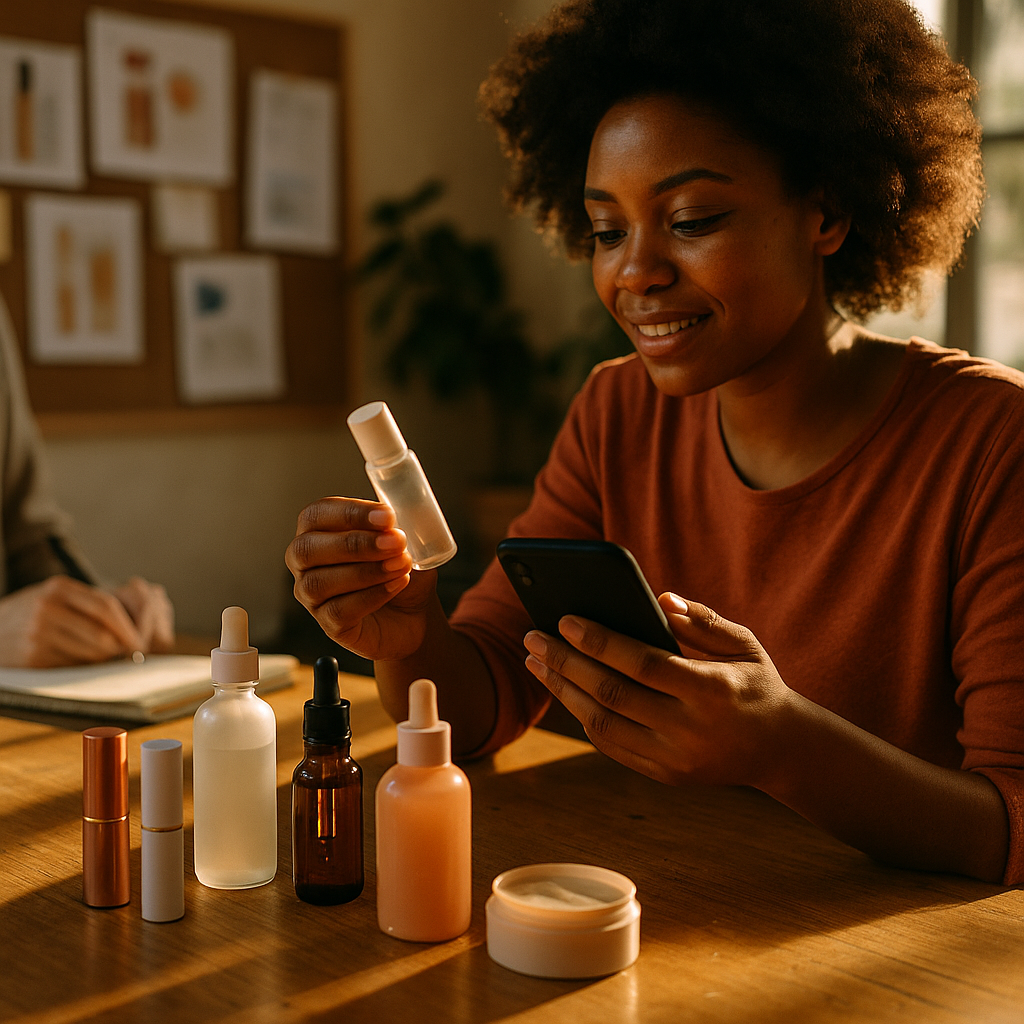
In 2025, beauty brands win faster when they stop guessing and start listening. This case study shows how one mid-sized skincare company used community-led R&D to turn everyday customer feedback into a high-performing product that sold out repeatedly. You’ll see the exact system, safeguards, and launch playbook that made it work—and how to apply it before your next release.
Community-led product development: the brand, the goal, and the constraints
Brand profile: “Lumin & Loam,” a digitally native skincare brand with a loyal customer base and modest retail presence. Its hero product was a gentle cleanser, but growth had flattened as competitors crowded the category with similar claims.
Business goal: Launch one new product within nine months that could become a repeat-purchase staple, not a limited-edition novelty. The team targeted a formula that improved barrier comfort while staying friendly to reactive skin.
Constraints: The brand had a small R&D budget, limited lab bandwidth, and strict compliance requirements (ingredient substantiation, claims reviews, stability, and safety). Leadership also required that any community involvement protect privacy and avoid turning development into a popularity contest.
The insight that changed the brief: Support tickets and returns data showed a recurring theme: customers liked “glow” products but stopped using them after irritation. The team reframed the opportunity from “brighter skin” to “visible radiance with barrier-first comfort.” That pivot set the stage for a community program built around problems, not hype.
Reader takeaway: Before you ask a community what they want, define what your business needs, what you can safely claim, and what your lab can realistically execute. Community input works best when it sharpens constraints instead of erasing them.
Customer feedback loop in beauty: how the community was recruited and structured
Lumin & Loam created a “Skin Council” to capture structured feedback without biasing results toward the loudest voices. The goal was to collect repeatable signals and tie them to measurable product requirements.
Recruitment approach:
- Segmentation: They invited customers by skin sensitivity, climate, age range, and routine complexity (minimalist vs. multi-step). This reduced the risk of optimizing for a single demographic.
- Verified purchase gating: Applicants had to be verified customers or opted-in email subscribers with a clear consent flow. This improved data quality and helped prevent competitor interference.
- Incentives: Participants received early access and product credits—no cash payments. The brand’s legal team preferred this structure to reduce perceived endorsement pressure.
Structure that kept it usable:
- Two-tier community: 2,000 members in a broad insight panel (surveys, concept votes) and 180 members in a test cohort (diaries, photo logs, controlled usage).
- Monthly “signal reviews”: A cross-functional group (R&D, customer support, regulatory, and growth) reviewed insights together, so decisions didn’t get trapped in one department.
- Question design rules: The team avoided leading questions (“Do you love vitamin C?”) and instead asked about outcomes and tradeoffs (“What stops you from using brightening products daily?”).
What they measured beyond opinions: irritation triggers, texture preferences, pilling frequency with SPF/makeup, tolerance windows, and willingness to repurchase at different price points. These metrics translated cleanly into formulation and packaging requirements.
Answering the likely question—won’t this slow you down? Not if you set cadence and scope. The brand time-boxed each phase and limited the community’s role to inputs, while R&D retained final decision-making.
Beauty brand co-creation: turning insights into a testable product brief
After six weeks of structured input, the team compiled a product brief that was specific enough for the lab and clear enough for marketing—without making claims they couldn’t support.
Top community insights (what people actually needed):
- Barrier reassurance matters more than maximum strength: Members wanted a “brightening” product that felt soothing and didn’t force them to pause retinoids or acids.
- Texture is a deal-breaker: Greasy finishes reduced adherence, especially in humid climates and under sunscreen.
- Packaging affects trust: Many panelists associated droppers with oxidation risk and mess; they preferred airless pumps for actives.
- Routine compatibility wins: Pilling under sunscreen and makeup was a common reason for abandonment.
The product brief (translated into requirements):
- Format: lightweight serum-cream hybrid that layers under SPF
- Target outcomes: visible radiance and smoother look, with “calm skin” positioning
- Tolerance goal: designed for daily use, including for self-identified sensitive skin
- Packaging: airless pump; opaque to reduce light exposure
- Claims guardrails: appearance-based language (“looks brighter,” “supports the skin barrier”) until substantiation was complete
How they avoided the co-creation trap: The brand did not ask the community to “pick ingredients.” Instead, it asked them to prioritize tradeoffs (speed vs. comfort, fragrance vs. fragrance-free, matte vs. dewy) and to evaluate prototypes against usage scenarios (with sunscreen, in dry air, post-workout).
EEAT practice: Every insight was paired with a data source (survey item, support ticket tag, return reason, or diary log) and stored in a decision log that recorded who approved the direction and why. This documentation later strengthened claims reviews and internal alignment.
Consumer testing for skincare: prototypes, safety, and evidence without overclaiming
The R&D team developed three prototypes and ran a staged testing plan designed to minimize risk and produce credible evidence for marketing—without drifting into medical claims.
Prototype strategy:
- Prototype A: maximum “glow” feel, highest active load (rejected later due to higher sting reports)
- Prototype B: balanced active level with barrier-supporting components and a satin finish (ultimately selected)
- Prototype C: ultra-minimal, comfort-first (performed well on tolerance but under-delivered on visible radiance)
Testing stages (what they did and why):
- Safety and stability first: Standard safety assessment, compatibility checks with packaging, and accelerated stability screening before any wide sampling. This prevented expensive rework.
- Controlled home-use test: The 180-person cohort followed a defined routine window, tracked daily reactions, and recorded compatibility with sunscreen and makeup.
- Claims substantiation: The brand used a mix of consumer perception data and instrumental/clinical-style measures through third-party partners where appropriate. Marketing claims were finalized only after results were reviewed by regulatory.
How they handled adverse reactions: Participants had clear stop-use rules, a direct line to support, and an escalation pathway to a safety assessor. The brand also tracked “silent churn” signals—people who stopped logging—then followed up to understand whether the issue was irritation, dislike, or life circumstances.
Answering the likely question—can community testing bias results? Yes, if you rely only on superfans. Lumin & Loam reduced bias by including “skeptical” users (those who previously returned glow products), controlling instructions, and comparing results across segments. They also separated community excitement from final claims: testimonials were treated as qualitative input, not proof.
EEAT practice: The brand published a plain-language “How we tested” summary on the product page, including the number of participants, usage duration, and what the results do and do not mean. This improved trust and reduced returns.
Go-to-market strategy for beauty launches: preorders, storytelling, and retention
The product launched as “Radiance Reset Barrier Serum” with a promise aligned to the community’s real pain point: glow that doesn’t punish sensitive skin.
Launch plan (community to customer pipeline):
- Waitlist with transparency: The brand opened a waitlist and explained what “barrier-first radiance” meant, including who should patch test and what ingredients were avoided.
- Preorder with production thresholds: Preorders helped forecast demand and reduce inventory risk. The brand capped early batches to protect quality and prevent fulfillment failures.
- Creator education, not scripts: Partner creators received the testing summary and routine guidance rather than rigid talking points. This reduced exaggerated claims and improved compliance.
Community storytelling that didn’t feel manufactured:
- Decision log highlights: The brand shared three “we changed this because you told us” moments (airless pump choice, satin finish, and sunscreen-layering tests) with supporting context.
- Routine pathways: They published “if you use retinoids,” “if you’re acne-prone,” and “if you’re fragrance-sensitive” routines. This answered follow-up questions before support tickets spiked.
What made it a best-seller: The product didn’t just spike—it retained. The team built retention into the go-to-market plan with replenishment reminders based on average usage, a mini size for travel/patch testing, and a “pair it with SPF” bundle that matched the pilling-avoidance insight.
Commercial outcome (reported internally): The first two batches sold out quickly, repurchase rate beat the brand’s previous new-product average, and customer support contacts per order decreased due to better expectation-setting and routine guidance.
Scaling community-led innovation: governance, tools, and repeatable processes
After the launch, the brand formalized community-led innovation so it could scale without compromising safety, privacy, or speed.
Governance (how they kept it responsible):
- Privacy by design: Minimal personal data collection, clear consent, and opt-out options. Photos were optional and stored separately from identifiers.
- Regulatory checkpoints: Claims and ingredient communications were reviewed before community posts went live, reducing misinformation risk.
- Conflict-of-interest policy: Participants disclosed if they worked for competitors, retail partners, or ingredient suppliers.
Tools and workflows (how they kept it efficient):
- Tagging taxonomy: Support tickets, reviews, and community feedback used the same tags (sting, pilling, fragrance, dryness, breakout). This made trends easy to quantify.
- “Insight to requirement” template: Every signal had to map to a product decision (formula, packaging, usage instructions, claim wording) or it didn’t make the roadmap.
- Post-launch loop: The Skin Council continued for 90 days after launch to catch issues early and guide small improvements (like pump dosage tuning and clearer layering instructions).
Answering the likely question—what if the community asks for something you can’t do? The team used a clear framework: “Not now” (cost or timeline), “Not safe” (tolerance risk), or “Not compliant” (claims/regs). They explained the decision respectfully and offered alternatives, which preserved trust even when requests were declined.
EEAT practice: The brand made the process auditable: who decided, what evidence they used, and what tradeoffs they accepted. This internal discipline protected consumers and the brand’s reputation.
FAQs
What is community-led R&D in beauty?
Community-led R&D is a structured approach where a brand uses customer input—surveys, diaries, testing cohorts, and support data—to shape product requirements and validate prototypes. The community informs decisions, while qualified R&D, safety, and regulatory teams control formulation, testing standards, and claims.
How do you avoid “design by committee” when co-creating products?
Define non-negotiables first (safety, compliance, cost, timeline). Ask the community to prioritize problems and tradeoffs, not to select ingredients. Use a decision log that ties each insight to a measurable requirement, then let R&D make final calls based on performance and risk.
How many community members do you need for useful insights?
You can start with a few hundred for directional insights and 50–200 for structured home-use testing, depending on segmentation needs. The key is representativeness and disciplined data collection, not the biggest possible group.
Can community testing replace clinical or instrumental testing?
No. Community feedback is valuable for usability, tolerance signals, and routine compatibility, but it does not replace appropriate safety assessments or substantiation for performance claims. Use community testing to guide prototypes and messaging, then validate claims with suitable third-party methods.
What data should a beauty brand collect to support EEAT?
Collect documented feedback sources (surveys, tagged support tickets, review analysis), structured test logs, adverse-event handling records, and clear claims substantiation summaries. Publish plain-language testing information and avoid promises that exceed the evidence.
How do you keep community-led programs compliant and ethical?
Use transparent consent, minimize personal data, provide stop-use guidance, and have an escalation pathway for reactions. Review claims and ingredient communications before publishing. Disclose incentives and avoid pressuring participants to post endorsements.
Community-led R&D works when you treat customers as a source of disciplined evidence, not applause. In this case, Lumin & Loam built a structured council, translated insights into a tight brief, tested prototypes responsibly, and launched with transparent claims and routine guidance. The takeaway is simple: create a repeatable feedback system, document decisions, and let safety and substantiation lead.