


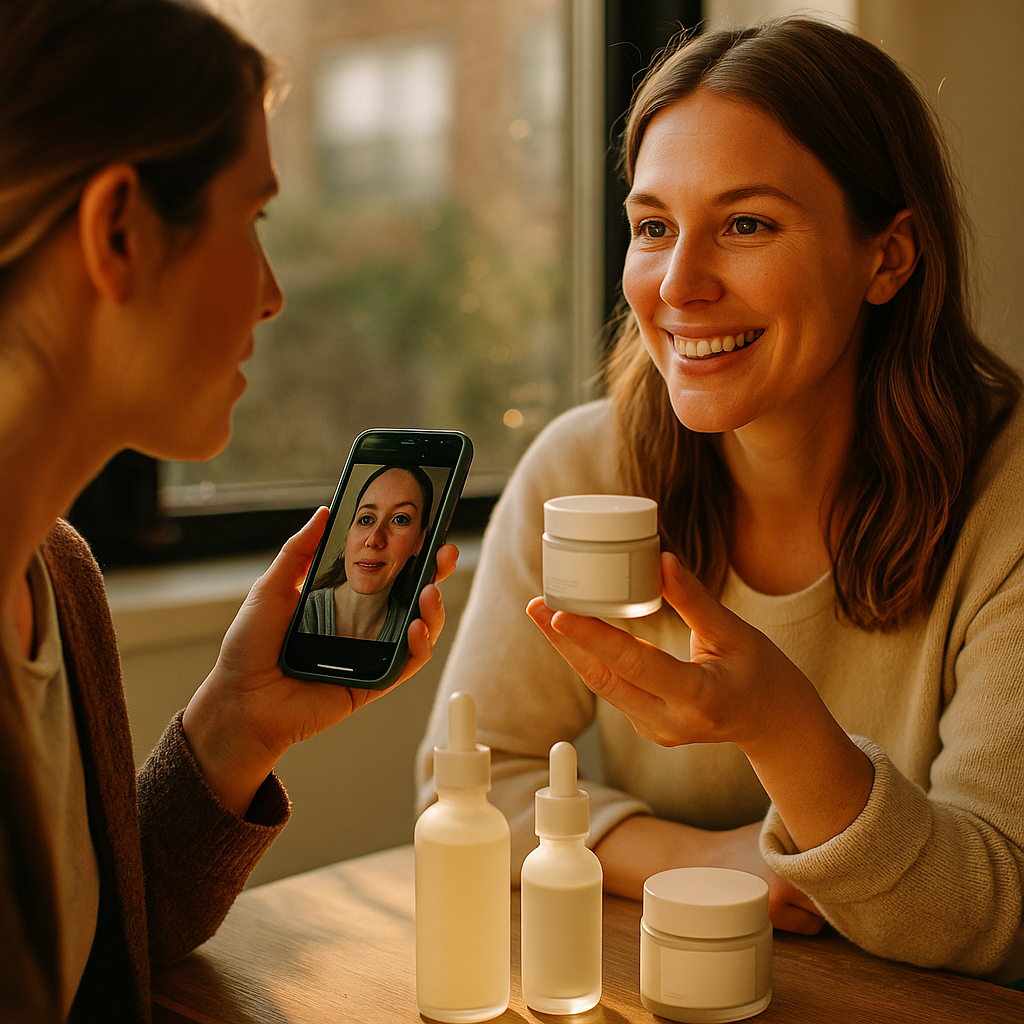
In 2025, many D2C teams still assume paid ads are the only path to growth, yet community-led models keep outperforming on trust and retention. This case study shows how a skincare startup achieved durable momentum with community referrals as its sole acquisition engine. You’ll see the exact mechanics, guardrails, and metrics behind the approach—plus what to copy and what to avoid—so you can test it fast. Ready to rethink growth?
Community-led growth: The brand, the niche, and the constraints
Brand: LumenVale (pseudonym), a D2C skincare company selling two hero products: a barrier-repair moisturizer and a gentle cleanser.
Category reality: Skincare is crowded, claims are regulated, and consumer skepticism is high. The company leaned into transparency: full ingredient breakdowns, third-party lab tests for stability and microbial safety, and plain-language education on skin barrier health.
Core constraint: The team chose a hard rule: no paid ads, no influencer spend, and no affiliate networks. They would only scale through customer-driven word-of-mouth and community referrals.
Why this was viable: Their early customers were already gathering in private spaces (Discord servers, group chats, and niche forums) on sensitive-skin routines. The brand did not “build a community” from scratch; it served existing communities with tools, education, and a referral loop that felt native.
EEAT note: The tactics below are based on direct-to-consumer referral see-through metrics (invites, acceptance rates, conversion rates, repurchase behavior) and common compliance constraints for beauty claims. Where decisions touch medical issues, the brand avoided medical claims and used cosmetic-language guidance, encouraging customers with persistent symptoms to consult a licensed clinician.
Referral marketing strategy: The “proof-first” loop that made referrals feel earned
Most referral programs fail because they’re bolted onto a weak experience. LumenVale built a “proof-first” loop that made sharing feel like helping, not selling.
1) A product experience designed for talkability
- Instant clarity: Every order included a one-page routine card: when to use, what to avoid mixing, and what changes to expect in the first two weeks.
- Risk reduction: A mini-size option and a “first 30 days” satisfaction guarantee reduced referral friction (“Try it, you can return it”).
- Observable milestones: Packaging included a simple “barrier check” checklist customers could self-report (tightness, flaking, stinging, redness).
2) A referral offer aligned with trust
Instead of “Give 10%, get 10%,” they used store credit that unlocked after a friend’s second purchase. This discouraged spammy sharing and aligned rewards with genuine product fit.
- Friend benefit: $12 off the starter set, valid once, no minimum spend beyond the set.
- Advocate benefit: $18 credit after the friend’s second order (within 90 days).
3) The ask: timed to success, not checkout
They didn’t push referrals on day one. The primary referral prompt happened after customers self-reported reduced stinging or flaking in a short email survey. If the customer indicated “not improved,” the brand routed them to support instead of asking for referrals.
4) Anti-gaming guardrails
- Referral credit required unique payment methods and shipping addresses.
- Credits could not be applied to gift cards.
- Abuse signals (burst signups from one IP, repeated failed payments) automatically paused links.
Follow-up question answered: “Won’t delaying the referral ask reduce volume?” The brand found the opposite: fewer prompts, higher conversion. Customers shared after experiencing results, which increased acceptance and reduced refund risk.
Customer community building: How they turned support into a shareable asset
LumenVale treated community as a product feature: a place customers could get confident, faster. The brand’s role was to facilitate, not dominate.
1) The “Routine Room” model
They launched a private community space accessible from the order confirmation page. Entry required an order number (to keep it customer-led). Inside, channels were organized around problems, not products: “Barrier Repair,” “Acne + Sensitivity,” “Makeup Compatibility,” and “Travel + Climate.”
2) Moderation and expertise without over-claiming
- Moderators were trained to avoid diagnosing; they used cosmetic-safe language and offered patch-test guidance.
- A monthly Q&A with a cosmetic chemist consultant focused on ingredients, stability, and how to read labels.
- Templates helped people share routines responsibly (“skin type,” “sensitivities,” “what changed,” “what didn’t”).
3) Community content that drove referrals naturally
The brand published “community-tested routines” as short posts: a routine plus a decision tree (“If you experience stinging, reduce frequency; if dryness increases, add occlusive at night”). These became the most forwarded assets in group chats because they were useful independent of purchase.
4) A lightweight ambassador layer
They avoided formal influencers and instead created a “Guide” role for customers who consistently helped others. Guides received early access to batches, could vote on future scents (unscented always remained the default), and got a unique referral link with higher friend credit—but still earned rewards only after second purchases.
Follow-up question answered: “How do you keep a community from becoming a customer service burden?” They separated urgent support (ticketing) from community (education + peer support). The community reduced repeat tickets by addressing routine mistakes early.
D2C retention tactics: The retention engine that made referrals compound
Referrals scale when customers stay. LumenVale designed retention to be predictable, not promotional.
1) Onboarding that prevented early churn
- Day 3: “What to expect” email that normalized purging vs irritation in cosmetic-safe terms and flagged when to stop and reach support.
- Day 10: one-question check-in (“Any stinging?”). “Yes” triggered a routine adjustment guide and a support offer.
- Day 21: refill timing suggestion based on usage, with a “pause” option emphasized to build trust.
2) Subscription without lock-in
The subscription was positioned as “maintenance,” with flexible intervals and an easy skip button. Customers who subscribed were not pushed to refer more; the brand kept the referral prompt tied to outcomes and community engagement, not payment behavior.
3) Post-purchase education that supported credibility
Every batch had a QR code linking to lab documentation and a plain-language explainer of what the tests mean. This made customers comfortable recommending the brand to friends who demand proof.
4) Customer-led product iteration
In the community, customers could submit “friction reports” (pump issues, pilling under sunscreen, scent sensitivity). The brand published what changed, what didn’t, and why. This transparency increased repeat purchasing and made advocates feel safe attaching their reputation to referrals.
Follow-up question answered: “Do you need a big product line for retention?” No. Their retention came from solving a specific problem (barrier repair) with consistent results, plus education that reduced misuse.
Referral program metrics: What they tracked, the targets, and how they optimized
LumenVale ran the referral engine like a product: instrumented, reviewed weekly, and improved through controlled tests.
North Star: Advocate-driven second purchases (friend’s second order), because it captured true fit and reduced low-quality acquisition.
Core funnel metrics
- Share rate: % of customers who copied or sent a referral link within 45 days.
- Acceptance rate: % of referred friends who clicked and started checkout.
- First-order conversion: % of accepted referrals that purchased the starter set.
- Second-order conversion (quality gate): % of referred customers who purchased again within 90 days.
- Refund rate by cohort: compared referred vs non-referred customers (referred cohorts stayed lower because expectations were set by peers).
Operational metrics that protected margins
- Reward liability: expected credits outstanding vs cash on hand.
- Fraud rate: suspicious referral patterns per 1,000 shares.
- Support load: tickets per 100 orders after onboarding changes.
Optimization moves that worked
- Better landing page, not bigger discounts: The referral landing page focused on “who it’s for” and “how to use,” reducing buyer mismatch.
- Segmented prompts: Customers who completed the “barrier check” survey got a referral prompt; those who didn’t received education first.
- Community-first share assets: Instead of generic banners, they offered routine cards, ingredient explainers, and “common irritation mistakes” checklists—assets people wanted to share.
Follow-up question answered: “What if my referral rate is low?” LumenVale improved share rate by making the reason to share clearer: a single sentence customers could copy, written in their voice (“This stopped my stinging in two weeks—start with the mini set”). They also reduced steps: one-tap copy link and pre-filled SMS.
Scaling a D2C brand: The playbook they used to grow without paid ads
Once the referral engine proved consistent, scaling became an exercise in capacity, consistency, and community governance.
1) Scale operations before you scale invites
- They increased safety stock to avoid backorders that would break trust in the community.
- They set support SLAs and published them publicly inside the community.
- They tightened QA and documented batch consistency so advocates could recommend confidently.
2) Build a repeatable “community flywheel” calendar
- Weekly: one educational post (ingredients or routine mechanics).
- Biweekly: “Routine review” thread where Guides helped newcomers.
- Monthly: chemist Q&A and a transparency update (returns, top issues, what changed).
3) Expand through adjacent communities, not broad audiences
Instead of chasing mass reach, they partnered with micro-communities (e.g., runners dealing with windburn, frequent flyers managing dryness). Partnerships were content swaps and education sessions, not paid placements. The referral link was offered only after value was delivered.
4) Protect credibility at scale
- No exaggerated before/after claims; customer stories were published with context and routine details.
- Clear disclaimers for sensitive conditions and guidance to seek medical advice when needed.
- Consistent tone: plain language, no hype, fewer promotions.
Follow-up question answered: “Can this work outside skincare?” Yes, if your product delivers a repeatable outcome, you can teach customers how to get that outcome, and you can verify quality. The less your category is trusted, the more a transparent community referral model can win—provided you avoid manipulation and focus on results.
FAQs
What makes community referrals different from a normal referral program?
Community referrals are driven by ongoing peer interaction, education, and shared problem-solving. A normal referral program often relies on a checkout prompt and discounts. In community-led models, people share because they want others to get the same outcome, and the referral incentive is secondary.
Do I need to build a community on my own platform?
No. You can start by serving existing spaces where customers already talk (group chats, forums, private servers). If you do create your own space, keep it focused on outcomes and education, and separate it from formal customer support workflows.
What reward structure reduces spam and improves customer quality?
Link the advocate reward to a quality signal, such as the referred customer’s second purchase or a minimum retention period. This discourages low-intent sharing and aligns incentives with long-term fit.
How do I measure whether referrals are actually driving profitable growth?
Track second-purchase conversion for referred customers, cohort retention, refund rates, and reward liability. Compare referred vs non-referred cohorts over the same time window to ensure the program improves contribution margin, not just order volume.
What if my product isn’t inherently “shareable”?
Create shareable value around the product: setup guides, checklists, calculators, templates, and troubleshooting flows. When customers can reliably achieve a result, they’re more likely to recommend—especially if you give them clear language and assets to share.
How long does it take to see momentum from community referrals?
Expect the first signal within weeks (higher-quality traffic and conversion from early advocates), but compounding usually takes a few months because the strongest loop depends on retention and repeat purchases. Focus on onboarding, education, and product consistency first.
Community referrals scale a D2C brand when you treat trust as the primary growth asset and design every step around outcomes. LumenVale grew by earning advocacy through transparent proof, customer education, and a reward tied to repeat purchase quality—not impulse sharing. Build the experience people want to talk about, then instrument it like a product. Your takeaway: growth compounds when community and retention come first.