


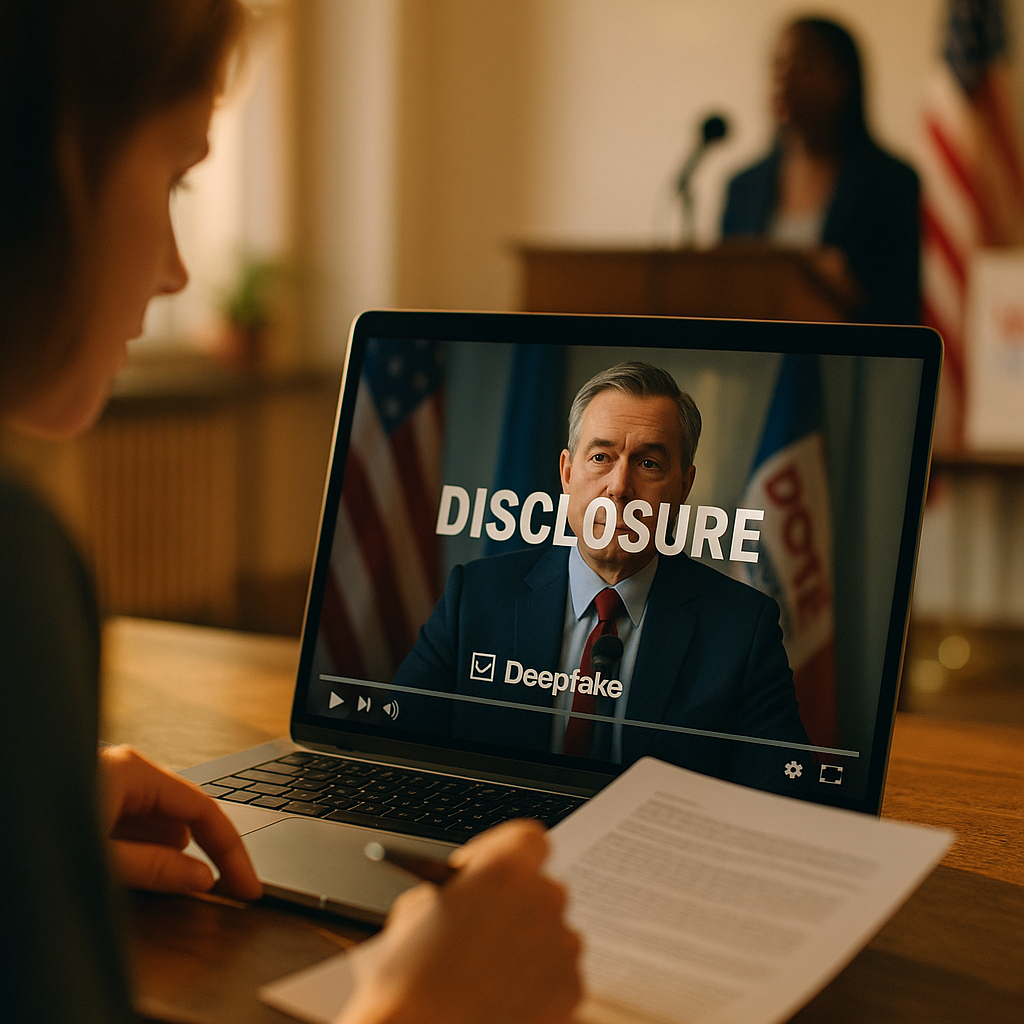
Compliance Rules for Deepfake Disclosure in Global Advocacy Campaigns are changing fast in 2025, as synthetic media moves from novelty to mainstream persuasion. Advocacy teams now face overlapping laws, platform policies, and donor expectations that demand clear labeling, verifiable provenance, and responsible creative choices. This guide translates complex obligations into practical steps you can implement across regions, channels, and partners—before a single asset goes live.
Deepfake disclosure laws by jurisdiction
Global advocacy campaigns rarely operate inside one legal system. A video created in one country can be edited in another and published everywhere. That distribution reality makes “where is this regulated?” the first compliance question.
Start with a jurisdiction map. Build a simple matrix listing every target country (and any country where you have staff, vendors, or servers), then note: (1) whether synthetic or manipulated media is regulated, (2) whether disclosure is required, (3) who is liable (publisher, creator, sponsor, platform), and (4) enforcement risk (elections, public health, security contexts).
Expect three common regulatory patterns.
- Mandatory labeling requirements for AI-generated or materially edited audio/video in political or civic contexts.
- Misrepresentation and fraud standards that apply even without AI-specific language, especially where identity, endorsements, donations, or official statements are implied.
- Consumer protection and unfair practice rules that treat deceptive media as a misleading communication, particularly when fundraising is involved.
Operational implication: if your campaign includes election-adjacent content, emergency guidance, or sensitive geopolitical issues, treat disclosure as a baseline requirement even in countries without explicit “deepfake” statutes. Regulators and courts often apply existing deception, defamation, impersonation, and privacy frameworks to synthetic media.
Draft a “highest-standard” policy. Advocacy organizations reduce risk by adopting one global rule that meets the strictest likely requirements: prominent disclosure, clear sponsor identification, and documented proof of what was synthetic, how it was made, and why it was used.
AI-generated content labeling standards
Disclosure works only when people can notice it, understand it, and connect it to the specific content that is synthetic. Labeling standards vary, but practical best practice has converged.
Make the disclosure unmissable. Place it where attention naturally goes: early in the video, within the first moments of audio, and in the caption or description. If the content is reshared without its caption, the on-media label still travels.
Use plain-language labels. Avoid technical phrases such as “GAN-generated” or “synthetic composite” unless you also provide a simple explanation. A useful format is:
- What: “This video includes AI-generated imagery/voice.”
- Why: “Dramatization to illustrate a real scenario.”
- What is real: “Facts cited are sourced; no real person is depicted.”
Match label strength to manipulation level. If you used AI only for cleanup (noise reduction) and did not alter meaning, a lighter disclosure may be appropriate in some contexts. If you altered identity, speech, or events, you need prominent disclosure and stronger guardrails.
Include sponsor clarity for advocacy. In global advocacy, the “who paid for this” question can matter as much as “is this synthetic.” Ensure your disclosures also point to the responsible organization and, where required, local legal entity details.
Answer likely follow-ups inside the asset. Viewers often ask: “Is this a real person?” “Did they say this?” “Is the scene real?” Provide short, direct clarifications in the description and link to a transparency page with sourcing notes.
Platform policies for synthetic media
Even if your disclosure satisfies the law, platforms can remove content or limit distribution for policy violations. Advocacy campaigns often rely on major social platforms, video hosts, and ad networks, each with their own synthetic-media rules.
Assume platforms require two things: (1) disclosure, and (2) restrictions on harmful use cases (impersonation, manipulated speech in political contexts, or content likely to mislead about real-world events).
Build a “channel-ready” checklist. Before publishing, confirm:
- On-media labeling: visible in the video frames and/or audible in audio content when feasible.
- Metadata and settings: any “AI-generated” toggles or disclosure fields completed in the upload flow.
- Ad policies: whether synthetic media is restricted in paid political or issue ads, including additional identity verification.
- Appeals package: a folder with your script, sources, consent forms, and provenance logs to expedite reinstatement if flagged.
Coordinate with partners and influencers. A common compliance failure happens when a partner reposts your video but removes captions or overlays. Add distribution terms that prohibit removing disclosure and require maintaining the same labeling across edits, crops, or translations.
Prepare for localization. If you translate disclosures, keep the meaning consistent across languages. Use locally understood terms for “AI-generated,” and avoid euphemisms that reduce clarity.
Consent and rights management for deepfakes
Disclosure is not a substitute for rights. You can transparently label a deepfake and still violate privacy, publicity, copyright, or data protection rules. Advocacy groups also carry reputational obligations beyond legal minimums.
Get explicit, written consent for identifiable people. If a real person’s face, voice, or name is used (even as a “look-alike”), obtain a consent release that covers:
- Use of likeness and voice, including AI training and synthetic generation
- Territory (global), duration, and channels (organic, paid, broadcast, partner use)
- Right to edit, localize, and repurpose
- Withdrawal terms and practical takedown procedures
Use “no real person depicted” designs when possible. Advocacy storytelling often can use composite, fictional, or non-identifiable characters. This reduces consent risk and lowers harm if content is misused.
Control source materials. Treat voice samples, facial scans, and training data as sensitive. Limit access, encrypt at rest, and require vendors to delete materials after delivery unless a documented retention purpose exists.
Watch for copyright and performer rights. AI-generated music, stock footage, and voice models can still trigger licensing conflicts. Verify that your vendors can grant the rights you need, and document the license chain in your campaign file.
Answer the donor and public trust question. If you are fundraising, state clearly whether the deepfake is a dramatization. Avoid any implication that a real victim, official, or public figure personally endorsed the message unless that is true and documented.
Audit trails and documentation for EEAT
In 2025, trust is a compliance asset. Strong documentation supports legal defensibility, platform appeals, and public credibility. It also aligns with Google’s EEAT expectations for transparency and accountability in high-stakes topics.
Create a “synthetic media dossier” per asset. Keep a structured record that includes:
- Purpose statement: why synthetic media was used and what risk it addresses (e.g., safety, anonymity, reconstruction)
- Script and claims log: each factual claim with a source reference and review sign-off
- Creation log: tools used, prompts or production notes, and what was generated vs. real
- Disclosure placements: screenshots/timecodes showing where labels appear
- Consent and rights: releases, licenses, and vendor warranties
- Review and approvals: legal, comms, and regional sign-off with dates and responsible roles
Adopt provenance where feasible. Use cryptographic signing or provenance metadata workflows offered by your production tools to help demonstrate authenticity and edits. Even when viewers never see the data, it helps in disputes and takedown requests.
Run a pre-mortem. Before launch, ask: “How could this be misunderstood, reframed, or weaponized?” Then adjust disclosure language, add context, or choose an alternative creative approach.
Publish a transparency page. For major advocacy pushes, host a page that explains: what is synthetic, what is factual, how sources were verified, and how audiences can report concerns. This reduces confusion and signals responsible intent.
Cross-border risk mitigation for advocacy campaigns
Global advocacy introduces higher stakes: political sensitivity, personal safety, and misinformation spillover. Compliance should therefore be built into campaign design, not added at the end.
Use a tiered risk model. Classify each asset as low, medium, or high risk based on:
- Political context (elections, protests, policy votes)
- Potential for identity deception (officials, journalists, activists)
- Impact on safety (incitement, panic, targeted harassment)
- Distribution scale and paid amplification
Set non-negotiables for high-risk content. For high-risk assets, require: prominent on-media disclosure, senior approvals, fact-check documentation, and a rapid response plan with a named incident lead.
Coordinate local counsel and cultural reviewers. A disclosure phrase that is clear in one region can read as evasive or confusing in another. Local reviewers can flag unintended implications, particularly around identity, religion, and conflict.
Build a takedown and correction protocol. Decide in advance:
- Who monitors comments and reports
- When to pause ads or disable sharing
- How to issue corrections or clarifications
- How to preserve evidence for investigations
Keep creative alternatives ready. If a platform blocks the deepfake version, you can swap to an illustrated, documentary, or text-led variant without losing momentum.
FAQs
Do we always need to disclose AI use in advocacy content?
In 2025, disclosure is the safest default for any AI-generated or materially manipulated audio/video used in advocacy, especially when it could affect public opinion or behavior. Even where not explicitly mandated, disclosure reduces deception risk and supports platform compliance.
What counts as a “deepfake” for compliance purposes?
Treat it broadly: any synthetic or manipulated media that could cause a reasonable viewer to believe a real person said or did something they did not, or that a real event occurred as shown. Many rules focus on material deception, not the specific technology.
Where should the deepfake label appear?
Use a layered approach: on-media text (and audible disclosure for audio-only where practical), plus caption/description disclosure and any platform-specific AI labels. The goal is that disclosure survives reposts and partial sharing.
Can we deepfake a public figure if we disclose it?
Disclosure alone may not protect you. You still face impersonation, defamation, publicity rights, and election-related restrictions depending on jurisdiction and context. Use legal review and consider safer alternatives such as satire formats with unmistakable framing or non-identifiable composites.
How do we handle partner reposts without losing compliance?
Add contractual distribution rules: partners must keep disclosures intact, cannot crop out labels, must not alter meaning, and must include the same caption disclosure in their language. Provide pre-rendered versions with baked-in labels.
What documentation should we keep if we’re challenged?
Maintain a synthetic media dossier: scripts, sources, tool logs, what was generated vs. real, disclosure timecodes, consent/licensing, approvals, and a record of where and when it was published. This supports legal defense, platform appeals, and public transparency.
Deepfake disclosure compliance in 2025 requires more than a small label: it demands a cross-border plan that aligns laws, platform rules, and ethical expectations. Map jurisdictions, use prominent plain-language disclosures, secure consent and licenses, and keep audit-ready documentation for every asset. When in doubt, adopt the highest standard and design for transparency—because trust is the campaign outcome you cannot afford to lose.