


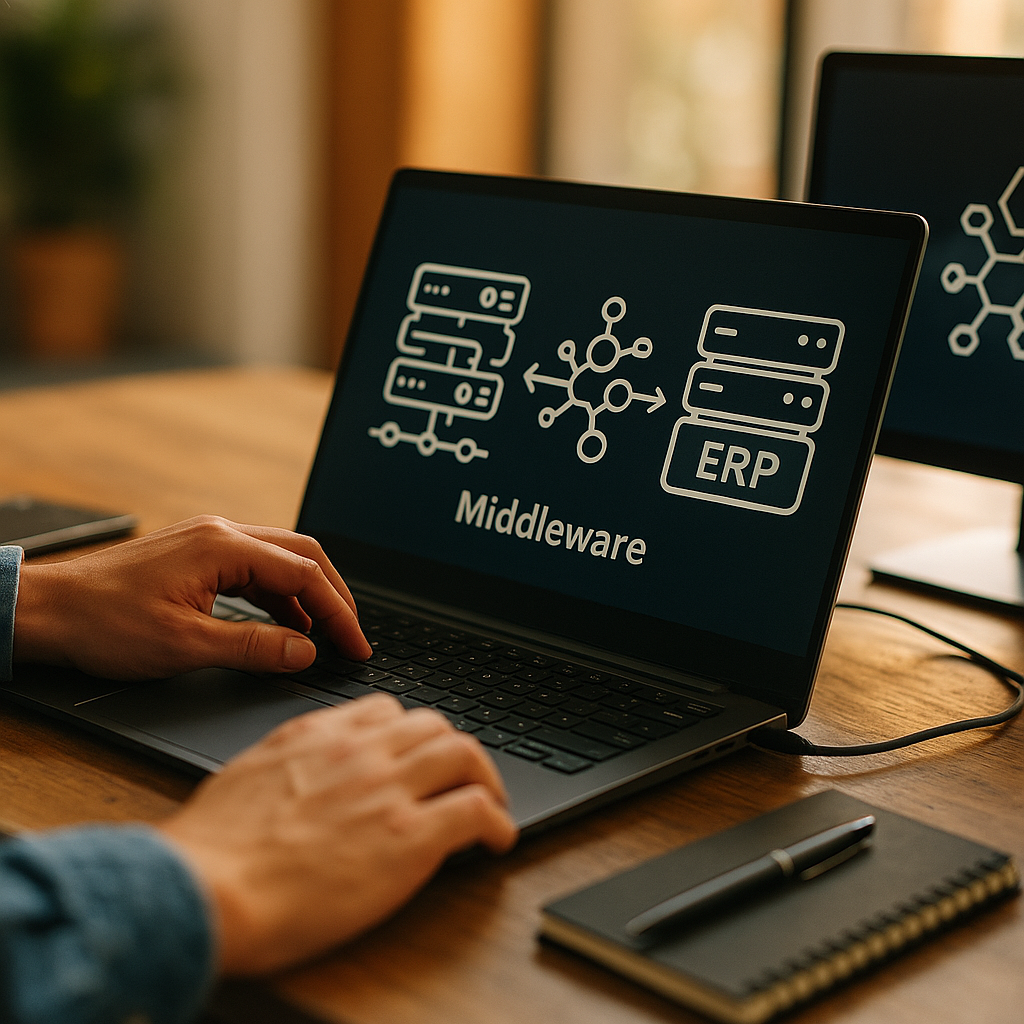
Comparing Middleware Solutions For Connecting MarTech Stacks To Internal ERPs is now a board-level concern because customer experiences depend on accurate, real-time data. In 2025, teams must connect CRM, marketing automation, CDPs, analytics, and commerce tools to finance, inventory, and order systems without breaking governance. The right middleware reduces risk, accelerates launches, and improves attribution—so which approach fits your stack?
iPaaS middleware for MarTech-ERP integration
Integration Platform as a Service (iPaaS) products are the most common “connective tissue” between MarTech and ERP because they combine connectors, orchestration, transformations, scheduling, and monitoring in one managed service. If your team needs to ship integrations quickly across many SaaS tools, iPaaS often delivers the fastest time to value.
Where iPaaS shines
- Prebuilt connectors: Typical catalogs include CRM, marketing automation, ad platforms, data warehouses, and major ERPs. This reduces custom API work.
- Low-code orchestration: Visual workflow builders let integration specialists iterate faster, while still supporting advanced scripting when needed.
- Operational tooling: Built-in retries, alerting, run history, and error queues improve reliability for revenue-critical flows like “order-to-campaign” or “quote-to-renewal.”
- Managed scaling: You offload runtime operations to the vendor, which can be valuable if internal platform engineering is limited.
Trade-offs to test early
- Connector limitations: Some “connectors” cover only common endpoints, not the custom objects or edge cases your ERP requires.
- Cost at scale: Pricing based on tasks, runs, or throughput can spike once you move from batch to near-real-time.
- Complexity ceilings: Very complex transformations, custom auth, or high-volume streaming may push you toward a more developer-centric platform.
Follow-up you will ask: “Can iPaaS handle real-time?” Often yes, but validate latency, webhook support, concurrency limits, and error handling for your specific endpoints. For ERPs, also validate how the platform deals with rate limits and long-running jobs.
API management platforms for ERP connectivity
API management is the right lens when the problem is not only “connect these tools” but “productize ERP data safely for many consumers.” Instead of point-to-point connections, you create stable, governed APIs that MarTech applications (and future tools) can consume with consistent security and contracts.
Where API management shines
- Governance and security: Centralized authentication, authorization, rate limiting, IP allowlisting, and threat protection reduce ERP exposure.
- Versioning and lifecycle: You can evolve integrations without breaking downstream marketing workflows.
- Developer experience: Portals, documentation, and analytics help internal teams adopt ERP data confidently.
- Observability: API analytics reveal which MarTech systems call which endpoints, error rates, and latency bottlenecks.
Trade-offs to plan for
- More engineering up front: You need API design, standards, and ownership. That investment pays off when many teams rely on ERP data.
- Not a full integration suite by itself: API management often pairs with integration runtimes, message brokers, or iPaaS for orchestration.
Follow-up you will ask: “Do we need this if we already have an iPaaS?” If multiple MarTech tools and partners consume ERP data, API management adds durable governance. If you only have a few internal connections, iPaaS alone may be enough—until security reviews and scale force a more formal API layer.
Event-driven integration with message brokers
If you need timely updates across systems—orders, inventory, customer status, entitlements—event-driven integration is often the most resilient pattern. Message brokers and event streaming platforms decouple producers (ERP, commerce) from consumers (MarTech stack), reducing the blast radius when one system slows down.
Where event-driven shines
- Near-real-time data: Push events as they happen instead of polling, enabling more accurate personalization and lifecycle campaigns.
- Resilience: Consumers can fall behind without losing data, provided you design retention and replay properly.
- Extensibility: New MarTech tools can subscribe to existing topics without changing ERP code.
- Better auditability: An event log supports debugging and governance when you treat events as a system of record for changes.
Trade-offs to manage
- Schema governance: You must define event contracts, version them, and prevent breaking changes.
- Operational maturity: Streaming requires monitoring, capacity planning, and incident response across partitions, lag, and consumer health.
- Data consistency: You must design for eventual consistency, idempotency, and deduplication—especially for finance-related ERP events.
Follow-up you will ask: “Is event-driven overkill for marketing?” Not when your marketing depends on stock availability, fulfillment status, renewals, or account health. It becomes essential when customer trust and revenue are tied to accurate timing, not just data presence.
ETL/ELT and reverse ETL tools for analytics activation
Some organizations connect MarTech to ERP primarily to enable reporting, attribution, forecasting, and segmentation. In those cases, ETL/ELT pipelines and reverse ETL can be the most practical approach: extract ERP and MarTech data into a warehouse or lake, model it, and then sync curated audiences and attributes back to operational tools.
Where ETL/ELT shines
- Single source of truth: Warehousing supports consistent definitions for revenue, customer lifetime value, pipeline stages, and product hierarchies.
- Performance isolation: Heavy reporting queries run in analytics infrastructure, not on ERP.
- Activation: Reverse ETL pushes vetted fields (like “next renewal date” or “high-margin customer”) into CRM and marketing automation.
- Governed transformation: You can validate business logic and lineage more rigorously than in ad hoc point integrations.
Trade-offs to understand
- Latency: Batch loads can limit real-time experiences unless you add streaming or incremental loads.
- Data privacy scope: Centralizing data increases the need for access controls, masking, and retention policies.
- Complexity of identity: Matching ERP accounts, CRM contacts, and web identities requires careful resolution logic.
Follow-up you will ask: “Will this replace direct integrations?” Not fully. ETL/ELT is excellent for analytics and segmentation, but transactional flows—like order status updates triggering customer communications—often need iPaaS or event-driven messaging.
Custom integration and ESB architecture trade-offs
Custom integration code and enterprise service buses (ESBs) still appear in mature enterprises, especially where ERP customization is deep, compliance is strict, or latency and control requirements are non-negotiable. Developer-built services can deliver exact-fit integrations, but they also create long-term ownership responsibilities.
Where custom/ESB shines
- Maximum control: You can tailor authentication, transformations, and error handling precisely to ERP constraints.
- Performance tuning: Custom runtimes can optimize throughput and reduce latency for high-volume workloads.
- Compliance alignment: Some organizations prefer self-managed components for data residency, auditability, and change control.
Risks and hidden costs
- Maintenance burden: Every API change, vendor update, and security patch becomes your responsibility.
- Key-person risk: Knowledge concentrates in a few engineers unless you invest in documentation and runbooks.
- Slower iteration: Marketing teams often need faster experimentation than custom backlogs allow.
Follow-up you will ask: “How do we avoid building a brittle web of point integrations?” Standardize on canonical data models, enforce contracts, and centralize observability. Even with custom code, treat integrations as products with owners, SLAs, and a roadmap.
Selection criteria: security, governance, latency, and total cost
Middleware selection fails when it focuses on features instead of outcomes. Use a scorecard tied to your business goals: faster campaign launches, fewer customer experience defects, better revenue reporting, and lower operational risk. In 2025, security and governance must be first-class requirements because MarTech often touches regulated or sensitive customer data.
Key criteria to compare across solutions
- Data security: Support for SSO, least-privilege access, secret management, encryption in transit/at rest, and audit logs.
- Governance: Versioning, approval workflows, lineage, and change management for schemas and transformations.
- Latency needs: Classify use cases into real-time (minutes/seconds), near-real-time, and batch. Match tooling accordingly.
- Reliability: Built-in retries, dead-letter queues, idempotency patterns, replay capabilities, and clear incident diagnostics.
- Connector depth: Validate ERP objects, custom fields, pagination, delta queries, and support for webhooks or change data capture.
- Scalability: Throughput limits, concurrency, quotas, and how the platform handles spikes from campaigns or end-of-quarter ERP activity.
- Observability: End-to-end tracing, log correlation, data quality checks, and business-level monitoring (for example, “orders synced per hour”).
- Total cost of ownership: Licensing plus integration build time, ongoing support, and the cost of failures (missed emails, wrong offers, finance reconciliation).
Practical decision pattern
- Choose iPaaS when speed, breadth of SaaS connectors, and manageable governance are your top priorities.
- Add API management when ERP data must be safely reused across many tools and teams.
- Adopt event-driven messaging when timeliness and resilience matter more than simple batch sync.
- Use ETL/ELT + reverse ETL when analytics consistency and audience activation are the main goals.
- Build custom services when constraints demand it, but only with strong standards, documentation, and operational ownership.
Follow-up you will ask: “Can we mix approaches?” Yes, and many organizations should. A common architecture is: events for operational changes, ETL/ELT for analytics, reverse ETL for activation, and API management for secure access—all monitored with unified observability.
FAQs about MarTech and ERP middleware
What is the difference between integrating MarTech to ERP vs. CRM to ERP?
CRM-to-ERP typically focuses on sales and finance workflows (quotes, invoices, renewals). MarTech-to-ERP adds customer engagement needs like lifecycle triggers, product availability for promotions, consent-aware messaging, and attribution. The MarTech side also changes more frequently, so middleware must support rapid iteration without weakening governance.
Which data should never be pushed from ERP into MarTech tools?
Avoid syncing sensitive fields that do not directly support customer experience or measurement, such as full payment details, unnecessary identifiers, or internal finance notes. Use data minimization, tokenize where possible, and enforce role-based access. If you need customer value signals, share derived attributes (for example, segments or scores) instead of raw financial records.
How do we handle identity matching between ERP customers and marketing audiences?
Define a canonical customer key strategy. Many teams use a master customer ID in the warehouse plus mapping tables for ERP account IDs, CRM IDs, and email/phone identifiers. Implement deterministic matching first, then controlled probabilistic methods if needed. Document match rules and monitor match rates as a data quality KPI.
What are common failure points in MarTech-ERP integrations?
Frequent issues include mismatched field definitions (for example, “customer status”), API rate limits, silent connector changes, missing idempotency causing duplicates, and inadequate monitoring. Mitigate them with contract testing, schema versioning, retries with backoff, dead-letter handling, and dashboards tied to business outcomes.
How do we prove ROI for middleware investments?
Measure cycle time to launch integrations, incident rates, data freshness, and downstream revenue impacts such as reduced churn from accurate renewal messaging or fewer support contacts from incorrect order updates. Also quantify the cost of manual reconciliation avoided and engineering hours saved through reuse and standardized connectors.
Do we need real-time integration for all MarTech use cases?
No. Prioritize real-time for experiences that lose value with delay, such as order confirmation journeys, inventory-based promotions, fraud holds, or entitlement changes. Use batch for stable attributes and reporting where hourly or daily freshness is acceptable. Segmenting use cases by latency prevents overspending on always-on real-time pipelines.
How should we run vendor evaluations without bias?
Create a short proof-of-value that uses your real ERP objects, a representative MarTech destination, and your security requirements. Score vendors on connector completeness, error handling, monitoring, performance, and the clarity of operational ownership. Include stakeholders from marketing ops, finance/ERP owners, security, and data governance to prevent late-stage blockers.
Choosing middleware in 2025 is less about picking a single tool and more about aligning patterns to outcomes. Use iPaaS for speed, API management for governed reuse, event-driven messaging for resilient real-time updates, and ETL/ELT for consistent analytics with activation. The takeaway: map your use cases by latency, risk, and ownership, then select the smallest set of platforms that scales.