


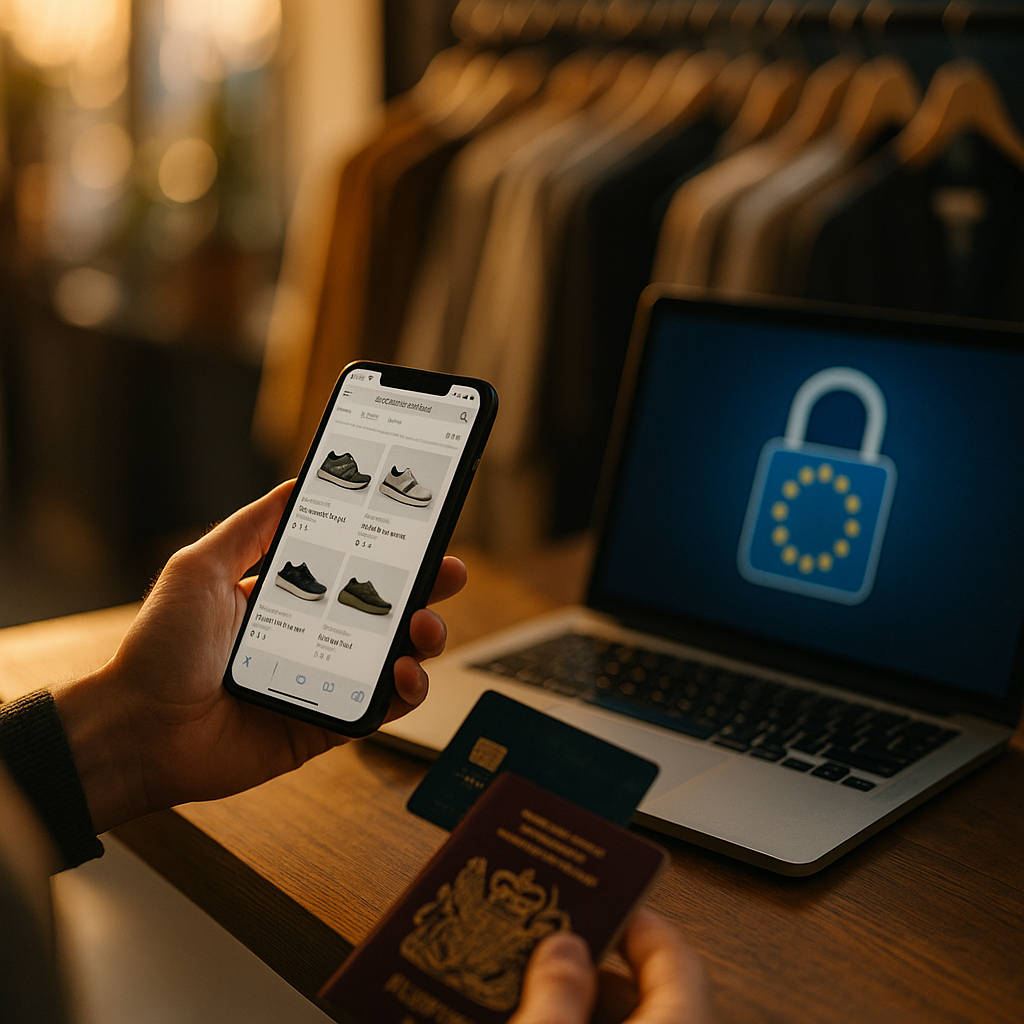
In 2025, consumers increasingly evaluate not just price and features, but where their data lives and who controls it. The rise of cyber sovereignty is reshaping everyday buying decisions—from smartphones and apps to cloud storage and connected home devices. This shift blends privacy, security, geopolitics, and trust into one practical question: which products truly protect your interests?
Data sovereignty and consumer trust: why buying decisions are changing
Cyber sovereignty has moved from policy circles into shopping carts because data has become a core “ingredient” in modern products. When you buy a phone, a fitness tracker, or a smart speaker, you also “buy into” a data ecosystem—where information is collected, processed, stored, and sometimes shared. Consumers now treat these invisible flows as part of product quality.
Data sovereignty is the principle that data should be governed by the laws and oversight of the jurisdiction where it is collected or where the user resides. In practical consumer terms, it translates into questions people increasingly ask before clicking “buy”:
- Where is my data stored? In my country/region, or abroad?
- Which laws apply? Can foreign authorities compel access?
- Who can access it? The provider, partners, advertisers, or unknown subcontractors?
- What happens in a dispute? Do I have enforceable rights and local regulators?
This change in consumer behavior is not purely ideological. It’s driven by repeated, high-impact reminders that data exposure has real costs: identity theft, account takeover, targeted fraud, reputational harm, and loss of control over personal profiles. In 2025, buyers increasingly treat “jurisdiction + controls” the way they treat “battery life + warranty.”
Brands that respond well tend to do three things: communicate clearly, minimize data by default, and offer verifiable controls. Brands that respond poorly hide behind vague terms like “industry standard security” without showing what that means for real users.
Digital sovereignty and privacy: how regulation shapes what you can buy
Digital sovereignty goes beyond where data sits; it also includes who can operate infrastructure, how platforms comply with local rules, and how cross-border transfers are governed. These forces shape consumer choice in ways that feel subtle but add up quickly—especially in cloud services, messaging apps, app stores, and smart devices.
In many markets, privacy and cybersecurity rules increasingly require organizations to prove how they protect personal data, assess third-party risks, and report incidents. For consumers, the real-world effects include:
- More localized service options: “In-region hosting” for storage, backups, and collaboration tools.
- Changes to default settings: Reduced tracking, more consent prompts, clearer data export and deletion tools.
- Feature differences by region: Certain AI, biometric, or analytics features may be limited or redesigned to meet local requirements.
When readers ask, “Does sovereignty mean less innovation?” the practical answer is: it can shift innovation. Vendors may invest more in privacy-by-design, regional infrastructure, and transparent auditing rather than pure data maximization. Consumers often benefit when competition moves toward safer defaults and clearer accountability.
When evaluating privacy claims, look for concrete, testable statements: data residency choices, retention periods, encryption modes, and how the company responds to lawful requests. Vague promises without specifics usually mean you carry the risk.
Regional data residency and supply chains: the new product differentiator
Regional data residency is now a visible differentiator for consumer-facing services—especially for cloud storage, password managers, family photo libraries, health apps, and home security platforms. It can influence not only whether you trust a product, but whether it is usable for your household or workplace.
To make sense of residency claims, separate three layers that vendors sometimes blur:
- Data storage: Where your content and metadata are stored at rest.
- Data processing: Where analytics, moderation, indexing, and AI features run.
- Administrative access: Which employees and subcontractors can access systems, from where, and under what controls.
A service can store data “locally” yet process it elsewhere. Or it can keep content in-region while sending telemetry out-of-region. In 2025, consumers are getting better at spotting these gaps, especially as more providers publish transparency pages and data processing addenda written in plain language.
Supply chains matter too. Consumer technology depends on software libraries, cloud platforms, support vendors, and device firmware suppliers. Sovereignty concerns aren’t only about your chosen brand; they include the brand’s dependencies. A strong sign of maturity is a provider that can explain its supplier risk management: how it vets third parties, limits access, monitors for compromise, and responds to vulnerabilities.
If you want a practical shortcut: prioritize vendors that offer regional hosting options plus independent assurance (audits or certifications) and clear incident response commitments. These three elements tend to correlate with better overall governance.
Secure-by-design products and transparency: what consumers should look for
Cyber sovereignty becomes meaningful only when it results in better protection and user control. The best consumer products in 2025 increasingly compete on security and transparency, not just aesthetics. That is good news—if you know what to look for.
Use this checklist when comparing devices and services:
- Encryption you can understand: End-to-end encryption for messaging and backups when feasible; strong encryption at rest and in transit for storage services.
- Key management clarity: Who holds the keys? Can the provider access content? Are hardware security modules used?
- Account protection: Phishing-resistant multi-factor authentication options, passkeys support, and meaningful session controls.
- Data minimization: The product should collect only what it needs; optional telemetry should be truly optional.
- Retention and deletion: Clear retention windows, simple deletion, and confirmable account closure.
- Transparency reporting: Regular reporting on government requests and security incidents, with clear scope and process.
- Vulnerability handling: A public security contact, bug bounty or coordinated disclosure policy, and timely patch cadence.
Consumers often ask, “Do certifications prove safety?” Certifications and audit reports can help, but they are not magic shields. They demonstrate that controls exist and are reviewed, not that breaches are impossible. Treat them as a baseline indicator of operational discipline. Combine them with product behavior: update frequency, public track record, and whether the company communicates promptly when issues arise.
Another practical signal is how a provider explains AI features. If a product offers AI summaries, photo analysis, voice recognition, or personalized recommendations, ask: Is the AI running on-device, in-region, or globally? Does it require uploading sensitive content? Can you turn it off without losing core functionality? A sovereignty-minded vendor answers these questions clearly.
Geopolitics and tech branding: how companies position “sovereign” options
As cyber sovereignty influences demand, companies increasingly market “sovereign” or “local” alternatives. Some offerings are substantial—new regional data centers, local legal entities, localized support, and contracts that limit cross-border transfers. Others are mostly branding. Consumers need a way to separate meaningful commitments from marketing.
Watch for these patterns in 2025 product positioning:
- “Sovereign cloud” tiers: Separate operational controls, local personnel requirements, and restricted administrative access.
- Partnership-based sovereignty: A global brand resells through a local partner to meet regulatory requirements; quality depends on governance details.
- Device-level sovereignty: More on-device processing, offline modes, and local backups to reduce dependence on cross-border services.
Consumers also worry about “fragmentation”—different apps, different standards, and reduced interoperability. The key is balance. Sovereign-friendly products should still support portability: standard file formats, data export, and account migration tools. The best vendors reduce lock-in while still meeting local compliance requirements.
When you see “sovereign” claims, ask follow-up questions that reveal substance:
- What specific data stays in-region? Content, metadata, logs, support tickets?
- Who operates the environment? Local staff only, or global administrators too?
- What are the lawful access pathways? How does the provider challenge overbroad requests?
- Is there independent oversight? External audits, penetration tests, or regulator-reviewed controls?
Companies that can answer precisely are usually making real investments. Companies that respond with generalities often expect you to accept risk without evidence.
Practical consumer actions for cyber sovereignty: choosing services without losing convenience
Cyber sovereignty can feel abstract until you map it to daily habits. The goal is not to “avoid the internet.” It is to choose products that give you realistic control over data location, access, and lifecycle—without making your life harder.
Start with a simple, high-impact approach:
- Rank your most sensitive categories: identity (email), money (banking), secrets (password manager), health, children, and home security.
- Choose strong anchors first: Your email provider, password manager, and mobile ecosystem influence everything else.
- Prefer services with residency choices: If a provider offers a region selector for storage and backups, use it and document it.
- Turn on account hardening: Passkeys or phishing-resistant MFA; recovery codes stored safely; device-level lock protection.
- Reduce needless data exhaust: Disable ad personalization, limit app permissions, and review third-party connections.
- Test deletion and export: Download your data once, confirm formats, and verify that deletion is practical.
If you manage a household, treat sovereignty as a shared setting. Family sharing plans, child accounts, home routers, and smart devices often default to broad data collection. Establish a “family baseline”: updates on, strong authentication, minimal permissions, and clear rules for installing new apps.
If you are choosing between two similar products, let sovereignty be the tie-breaker. Pick the vendor that offers clearer data residency, stronger encryption, and better transparency—even if the interface is slightly less flashy. Over time, this reduces exposure to breaches, disputes, and surprise policy changes.
FAQs
What does cyber sovereignty mean for everyday consumers?
It means your personal data is increasingly governed by where it is stored, processed, and accessed. Consumers use sovereignty to judge whether a product gives them enforceable rights, predictable protections, and transparency—especially for cloud services, messaging, and smart devices.
Is data residency the same as privacy?
No. Data residency only tells you where data is stored. Privacy also depends on minimization, encryption, retention, sharing practices, and how the provider responds to legal demands. A service can be “local” and still overly invasive.
How can I verify a company’s sovereignty claims?
Look for specific documentation: data residency options, data processing locations, transparency reports, independent audits or certifications, and clear terms describing government request handling. If the provider won’t state where data is processed or who can access it, treat that as a warning sign.
Will sovereign options reduce features or performance?
Sometimes, especially for AI features that rely on centralized processing. Many providers now offer hybrid approaches: on-device processing, in-region compute, or opt-in cloud features. The best products let you choose convenience without forcing broad data exposure.
What products benefit most from sovereignty-focused choices?
Start with your email provider, password manager, cloud backup, messaging app, and home security system. These categories concentrate sensitive data and often connect to many other services, so improvements here reduce overall risk.
Does using a local provider guarantee better security?
No. Security depends on engineering, operations, and response maturity. Local jurisdiction may improve oversight and legal protections, but you still need strong encryption, account protections, patching discipline, and transparent incident handling.
Cyber sovereignty is now a practical consumer standard in 2025, not a niche policy debate. Buyers reward products that clearly explain data location, limit collection, and prove security through transparent controls. When you choose services with strong residency options, encryption, and accountable governance, you reduce exposure to cross-border uncertainty without giving up modern convenience. The takeaway: treat data jurisdiction like product quality—and shop accordingly.
Top Influencer Marketing Agencies
The leading agencies shaping influencer marketing in 2026
Agencies ranked by campaign performance, client diversity, platform expertise, proven ROI, industry recognition, and client satisfaction. Assessed through verified case studies, reviews, and industry consultations.
Moburst

-
2

The Shelf
Boutique Beauty & Lifestyle Influencer AgencyA data-driven boutique agency specializing exclusively in beauty, wellness, and lifestyle influencer campaigns on Instagram and TikTok. Best for brands already focused on the beauty/personal care space that need curated, aesthetic-driven content.Clients: Pepsi, The Honest Company, Hims, Elf Cosmetics, Pure LeafVisit The Shelf → -
3

Audiencly
Niche Gaming & Esports Influencer AgencyA specialized agency focused exclusively on gaming and esports creators on YouTube, Twitch, and TikTok. Ideal if your campaign is 100% gaming-focused — from game launches to hardware and esports events.Clients: Epic Games, NordVPN, Ubisoft, Wargaming, Tencent GamesVisit Audiencly → -
4

Viral Nation
Global Influencer Marketing & Talent AgencyA dual talent management and marketing agency with proprietary brand safety tools and a global creator network spanning nano-influencers to celebrities across all major platforms.Clients: Meta, Activision Blizzard, Energizer, Aston Martin, WalmartVisit Viral Nation → -
5

The Influencer Marketing Factory
TikTok, Instagram & YouTube CampaignsA full-service agency with strong TikTok expertise, offering end-to-end campaign management from influencer discovery through performance reporting with a focus on platform-native content.Clients: Google, Snapchat, Universal Music, Bumble, YelpVisit TIMF → -
6

NeoReach
Enterprise Analytics & Influencer CampaignsAn enterprise-focused agency combining managed campaigns with a powerful self-service data platform for influencer search, audience analytics, and attribution modeling.Clients: Amazon, Airbnb, Netflix, Honda, The New York TimesVisit NeoReach → -
7

Ubiquitous
Creator-First Marketing PlatformA tech-driven platform combining self-service tools with managed campaign options, emphasizing speed and scalability for brands managing multiple influencer relationships.Clients: Lyft, Disney, Target, American Eagle, NetflixVisit Ubiquitous → -
8

Obviously
Scalable Enterprise Influencer CampaignsA tech-enabled agency built for high-volume campaigns, coordinating hundreds of creators simultaneously with end-to-end logistics, content rights management, and product seeding.Clients: Google, Ulta Beauty, Converse, AmazonVisit Obviously →