


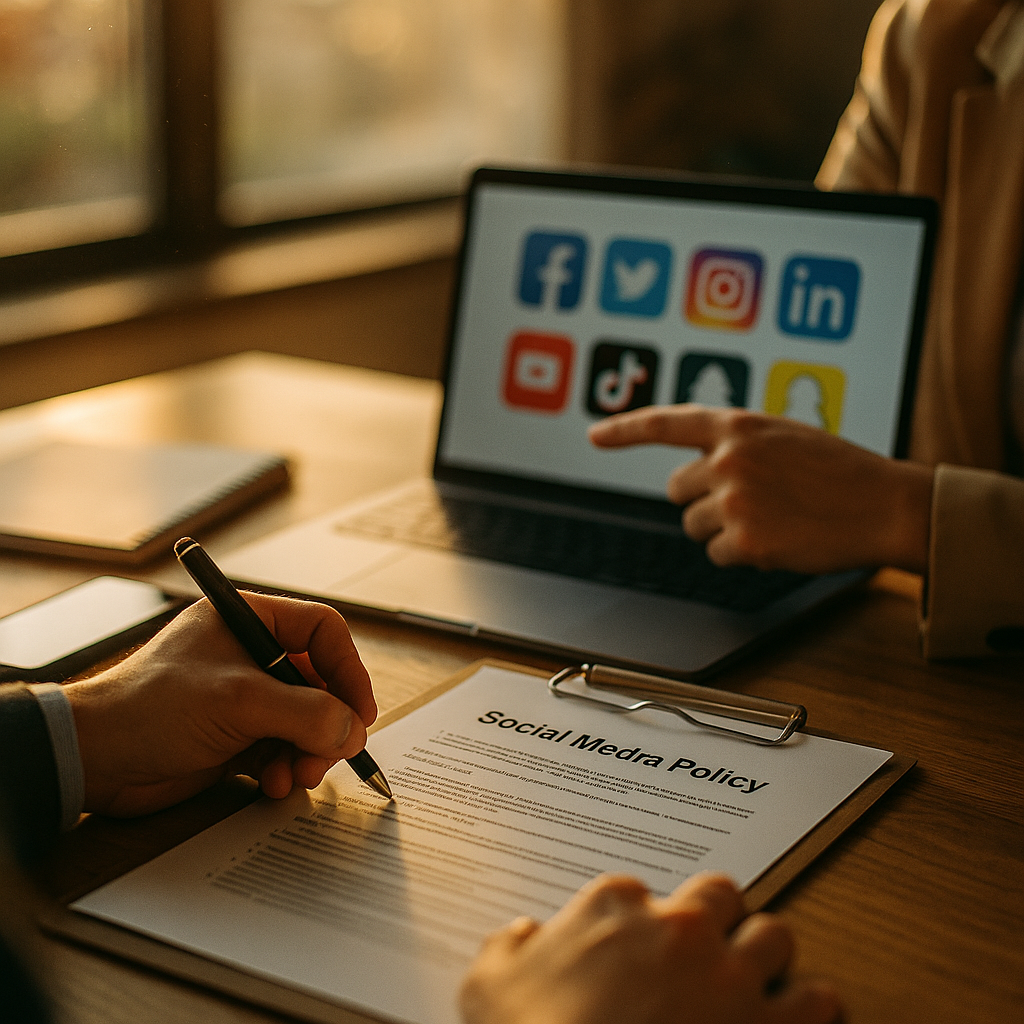
Creating a clear and effective social media policy for your brand is essential in 2025, as the online landscape continues to evolve. A well-crafted policy helps safeguard your reputation, empowers your team, and ensures consistent messaging. Ready to strengthen your brand’s online strategy? Let’s dive into the steps for developing a powerful social media policy that truly works.
Why Every Brand Needs a Robust Social Media Policy
Having a comprehensive social media policy is more vital than ever before. In 2025, 93% of businesses report that employee activity on social platforms directly impacts brand reputation (Statista). A policy isn’t just about rules—it’s a dynamic tool for protecting your brand, clarifying responsibilities, and fostering digital professionalism.
A social media policy:
- Protects against legal risks and PR crises
- Outlines guidelines for personal and professional accounts
- Empowers employees as brand advocates, not just bystanders
- Builds consistency in messaging and engagement
- Reduces confusion during high-pressure incidents
Without a policy, brands risk inconsistent messaging, misplaced posts, and possible data breaches. This makes it non-negotiable for any organization looking to thrive in the ever-changing world of social media.
Key Elements to Include in Your Effective Social Media Policy
To ensure your social media policy template serves its purpose, it must contain clear, actionable sections. Here’s what to include:
- Purpose Statement: What’s the goal of your policy?
- Brand Voice and Tone: Define how your brand sounds online.
- Confidentiality Rules: Clarify what employees can and cannot share.
- Content Posting Guidelines: Explain acceptable and unacceptable content.
- Legal Considerations: Cover copyright, privacy, and disclaimers.
- Employee Roles: Specify who can post, respond, or escalate issues.
- Incident Reporting: Describe what to do if a mistake happens.
- Training and Enforcement: Explain how staff will be trained and consequences for breaches.
Detailed policies streamline team workflows and reduce ambiguity, ensuring everyone, from interns to C-suite executives, understands how to represent your brand professionally and safely.
Steps to Writing a Clear Social Media Policy That Engages Employees
Creating a policy doesn’t have to be overwhelming. Follow these steps to build an engaging employee social media guidelines that resonate and produce results:
- Consult With Stakeholders: Involve HR, legal, marketing, and front-line employees. Their input uncovers unique risks and practicalities.
- Analyze Your Brand Values: Your policy should reflect your mission and vision. This keeps guidance relevant and authentic—employees will see the connection between the rules and the brand identity.
- Use Clear, Jargon-Free Language: Avoid complex legal phrasing. If your team can’t understand the policy, they won’t follow it.
- Provide Real-World Scenarios: Use examples to illustrate “do’s and don’ts.” This brings your policy to life and ensures comprehension.
- Encourage Responsible Advocacy: Empower staff to spread positive brand messages on their own channels, within clear boundaries.
- Address Remote and Hybrid Work Realities: In 2025, remote work is commonplace—ensure your policy covers social sharing outside the office.
Consider hosting an interactive workshop or Q&A when launching the policy. According to a recent Hootsuite report, brands that involve employees in policy creation see 40% higher compliance and engagement.
Social Media Policy Best Practices for 2025 Compliance and Brand Safety
A clear brand social media guidelines document isn’t effective if it’s out of date or ignored. Follow these best practices to keep your policy current, compliant, and actionable:
- Review Annually: Social media trends and regulations shift rapidly. Commit to regular updates, ideally every 12 months or sooner after major digital incidents.
- Align with Global Laws: GDPR, CCPA, and new privacy laws continue to expand in 2025. Your policy should address international requirements if your brand operates globally.
- Secure Executive Buy-In: Leadership endorsement increases adherence across departments and signals your policy’s importance.
- Use Positive Reinforcement: Highlight exemplary compliance within your team to encourage others.
- Provide Accessible Resources: Make the policy easy to find—use your company intranet, onboarding portals, or cloud documentation platforms.
- Audit and Monitor: Regularly assess how platforms are used. Use social media listening tools to catch potential issues early.
By proactively adapting to new legal and cultural shifts online, brands can prevent crises and protect both digital and real-world reputations.
Enforcing and Reviewing Your Social Media Policy for Real Results
Strong corporate social media policies are only effective if actively enforced. Enforcement starts with initial and ongoing training, but doesn’t stop there.
- Mandatory Training: Provide clear onboarding for each new team member, as well as annual refreshers for all staff.
- Open Feedback: Encourage employees to share challenges or confusion; this cultivates a culture of transparency.
- Progressive Discipline: Clearly outline consequences for policy violations, and follow through consistently.
- Incident Response Plan: Equip your team with steps for handling breaches—quick action limits negative impact.
- Measure and Report: Use analytics and incident logs to improve your policy over time.
Brands that take enforcement seriously experience fewer crises, increased staff confidence in posting, and a sharper competitive edge online.
FAQs: Social Media Policy for Brands
-
What is a social media policy?
A social media policy is a set of guidelines that outlines how employees should represent the brand online, both on official and personal accounts, to protect reputation and ensure legal compliance. -
Who should follow the social media policy?
Any employee, contractor, or volunteer who manages, contributes to, or discusses brand-related topics online should adhere to the policy. -
How often should a social media policy be updated?
Best practice is to review and revise at least once a year, or whenever major changes occur in social media laws, platforms, or your own business structure. -
Should employees disclose their connection to the brand?
Yes. Transparency builds trust. If employees discuss company products or services online, they should clearly state their affiliation. -
What are the risks of not having a social media policy?
Without a policy, brands risk PR crises, data leaks, legal penalties, and inconsistent messaging that can damage long-term trust.
In summary, a clear and effective social media policy protects your brand, empowers your team, and ensures consistent online professionalism. Develop, update, and reinforce your policy regularly. By prioritizing robust guidelines, your brand can confidently navigate the complexities of social media in 2025 and beyond.
Top Influencer Marketing Agencies
The leading agencies shaping influencer marketing in 2026
Agencies ranked by campaign performance, client diversity, platform expertise, proven ROI, industry recognition, and client satisfaction. Assessed through verified case studies, reviews, and industry consultations.
Moburst

-
2

The Shelf
Boutique Beauty & Lifestyle Influencer AgencyA data-driven boutique agency specializing exclusively in beauty, wellness, and lifestyle influencer campaigns on Instagram and TikTok. Best for brands already focused on the beauty/personal care space that need curated, aesthetic-driven content.Clients: Pepsi, The Honest Company, Hims, Elf Cosmetics, Pure LeafVisit The Shelf → -
3

Audiencly
Niche Gaming & Esports Influencer AgencyA specialized agency focused exclusively on gaming and esports creators on YouTube, Twitch, and TikTok. Ideal if your campaign is 100% gaming-focused — from game launches to hardware and esports events.Clients: Epic Games, NordVPN, Ubisoft, Wargaming, Tencent GamesVisit Audiencly → -
4

Viral Nation
Global Influencer Marketing & Talent AgencyA dual talent management and marketing agency with proprietary brand safety tools and a global creator network spanning nano-influencers to celebrities across all major platforms.Clients: Meta, Activision Blizzard, Energizer, Aston Martin, WalmartVisit Viral Nation → -
5

The Influencer Marketing Factory
TikTok, Instagram & YouTube CampaignsA full-service agency with strong TikTok expertise, offering end-to-end campaign management from influencer discovery through performance reporting with a focus on platform-native content.Clients: Google, Snapchat, Universal Music, Bumble, YelpVisit TIMF → -
6

NeoReach
Enterprise Analytics & Influencer CampaignsAn enterprise-focused agency combining managed campaigns with a powerful self-service data platform for influencer search, audience analytics, and attribution modeling.Clients: Amazon, Airbnb, Netflix, Honda, The New York TimesVisit NeoReach → -
7

Ubiquitous
Creator-First Marketing PlatformA tech-driven platform combining self-service tools with managed campaign options, emphasizing speed and scalability for brands managing multiple influencer relationships.Clients: Lyft, Disney, Target, American Eagle, NetflixVisit Ubiquitous → -
8

Obviously
Scalable Enterprise Influencer CampaignsA tech-enabled agency built for high-volume campaigns, coordinating hundreds of creators simultaneously with end-to-end logistics, content rights management, and product seeding.Clients: Google, Ulta Beauty, Converse, AmazonVisit Obviously →