


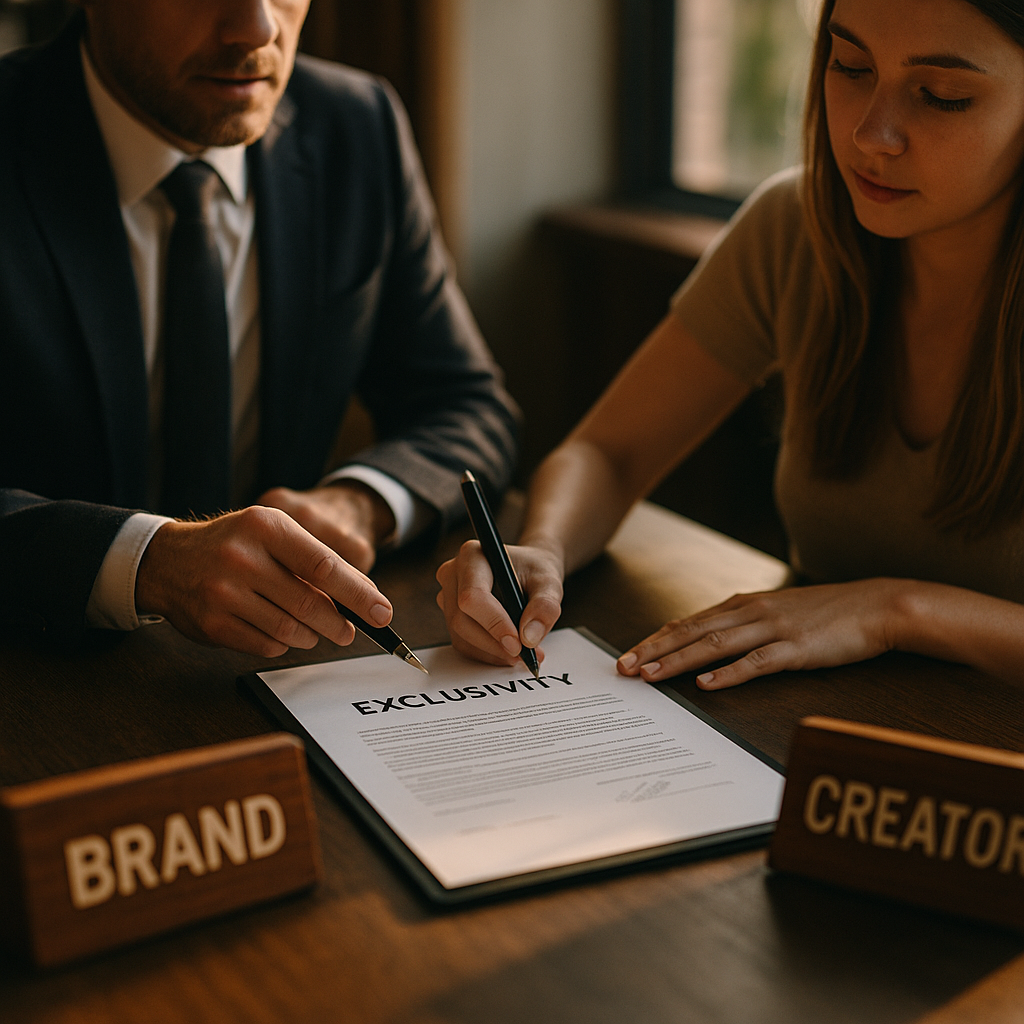
Striking the perfect balance in an exclusivity clause can be challenging for both brands and creators. A well-crafted exclusivity clause fosters trust while protecting each party’s interests. In today’s fast-evolving influencer marketing landscape, knowing how to write an exclusivity clause that’s fair to both brands and creators is absolutely crucial—let’s explore what truly makes a clause equitable.
Understanding What an Exclusivity Clause Entails
An exclusivity clause is a contractual provision preventing creators from promoting a competitor’s products or services for a specific period and market. This agreement empowers brands to maximize campaign investment and ensures creators retain clear boundaries on commitments. Transparency is critical: both parties should fully understand the scope, limits, and rationale behind the clause before signing.
Brands seek exclusivity to enhance campaign effectiveness and avoid dilution of their message. For creators, however, exclusivity can impact their earning potential and collaborations. According to a 2024 creator economy survey by Influencer Marketing Hub, over 65% of creators now negotiate the length and breadth of exclusivity, favoring flexibility and compensation that matches the constraint.
Defining Scope: Product Categories and Geographical Reach
Defining the scope is a fundamental step in drafting a fair exclusivity clause. Product categories should be specific—naming competitors or defining terms like “skincare brands” or “video streaming platforms” helps set clear boundaries.
- Product/Service categories: Specify exactly what types of products or services are included in the restriction. Broad terms often lead to confusion and disputes.
- Named competitors: Whenever possible, list which brands or companies fall under the exclusivity umbrella.
- Geographical limits: Restrict exclusivity to relevant markets instead of a blanket worldwide clause. A campaign targeting Europe, for instance, shouldn’t bind a creator in the U.S. unnecessarily.
Both parties benefit from clear and reasonable boundaries. Vague or overly broad language can lead to resentment or even legal challenges down the road. Start with mutual discussion and ensure the clause is as granular as practical.
Determining a Fair Time Frame for Exclusivity
Time constraints are often the most negotiated aspect of exclusivity agreements. For a clause to be fair, the time period must match the campaign’s scale and impact—not just arbitrary dates. Recent trends in influencer deals show most standard exclusivity periods range from 30 to 90 days post-campaign, with longer durations commanding higher compensation.
- Start date and trigger: Clarify when exclusivity begins. Is it after the first post, the final deliverable, or campaign launch?
- Duration: Determine the shortest period needed for the brand’s marketing goals. Prolonged restrictions increase the cost and limit creator opportunities.
- Extensions: If extensions are possible, outline terms and review them together before renewing.
Creators should avoid open-ended or automatic renewal clauses. Brands should explain why a lengthier period is needed if requesting it. Transparent discussion up-front prevents confusion and creates a sense of partnership.
Nailing Down Compensation: Paying for Loss of Opportunity
Compensation is where fairness becomes tangible. Exclusivity limits a creator’s ability to earn from other brands, so remuneration should reflect the scale of the restriction. In 2025’s creator-led economy, industry standards often include a premium fee—sometimes 15-30% above standard rates—when exclusivity clauses extend beyond 30 days or cover broad categories.
- Base fee: Establish clear deliverable payments first.
- Exclusivity premium: Add a separate exclusivity fee that escalates with wider scope or longer terms.
- Bonus incentives: If exclusivity significantly limits future work or targets a key market, consider one-off bonuses or performance incentives.
For long-term partnerships, brands can offer non-monetary perks like first-look opportunities for future launches. Creators should calculate potential lost earnings against exclusivity fees to ensure fair compensation. Document all compensation terms, including timelines for payment.
Structuring Dispute and Exception Clauses
No matter how carefully you draft, disputes can arise. A well-written clause anticipates potential issues, providing a road map for resolution. Include clear language on:
- Permitted exceptions: Allow creators to continue with prior committed partnerships or promote generic products not listed in the agreement. For example, “all beverage brands” might overwhelm a food creator’s options—be specific.
- Dispute resolution: Agree to mediation or a defined arbitration process before legal escalation. Set out communication protocols for flagging concerns early.
- Force majeure and changes: Consider how unexpected events may require renegotiation—and spell out how the parties will handle amendments.
Building in exception and dispute language upholds a sense of fairness and encourages a solution-driven outlook for both brands and creators.
Best Practices for Collaboration and Clarity
Even the best exclusivity clauses can fail if communication breaks down. The key to a successful, mutually beneficial clause is collaboration and clarity at every stage. Here are best practices endorsed by legal and industry experts in 2025:
- Open negotiation: Encourage both parties to share their concerns, deal-breakers, and business needs early in the conversation.
- Plain language: Avoid legal jargon. Draft clauses in everyday language to prevent confusion.
- Document everything: All agreements should be in writing, signed digitally when possible, and stored securely for reference.
- Review and update: Regularly review contract language against evolving guidelines and industry trends—especially for long-term or recurring partnerships.
- Respect autonomy: Both brands and creators retain autonomy and have a say in drafting and reviewing the final language. This balance sets the foundation for lasting, successful relationships.
By following these practices, both brands and creators foster trust, ensure legal compliance, and set expectations that drive better outcomes.
FAQs: Exclusivity Clauses in 2025
-
What is a standard exclusivity period in 2025 influencer contracts?
Most exclusivity periods range from 30 to 90 days post-campaign, though this varies by industry and deal size. Always clarify the logic behind the time frame in negotiation.
-
Can a creator refuse an exclusivity clause?
Yes. Creators may negotiate or decline exclusivity clauses, especially if they impose unreasonable limits. Open dialogue with the brand is essential to find common ground.
-
How is exclusivity fee calculated?
Fees are typically based on lost opportunity—adding 15-30% above standard rates is a common practice. Broader categories, longer time frames, or major brand restrictions may command higher fees.
-
Should exceptions be included in every exclusivity clause?
Yes. Exceptions protect existing creator relationships and clarify ambiguous categories. Both parties should agree on any exceptions before signing.
-
Are exclusivity clauses legally binding?
Yes, if documented and agreed by both parties. However, ambiguous or unfair clauses may not hold up in legal disputes, highlighting the importance of specificity and transparency.
To summarize, learning how to write an exclusivity clause that’s fair to both brands and creators requires clarity, honest negotiation, and thoughtful compensation. By prioritizing open communication and specific language, both parties can forge partnerships based on trust and shared success.
Top Influencer Marketing Agencies
The leading agencies shaping influencer marketing in 2026
Agencies ranked by campaign performance, client diversity, platform expertise, proven ROI, industry recognition, and client satisfaction. Assessed through verified case studies, reviews, and industry consultations.
Moburst

-
2

The Shelf
Boutique Beauty & Lifestyle Influencer AgencyA data-driven boutique agency specializing exclusively in beauty, wellness, and lifestyle influencer campaigns on Instagram and TikTok. Best for brands already focused on the beauty/personal care space that need curated, aesthetic-driven content.Clients: Pepsi, The Honest Company, Hims, Elf Cosmetics, Pure LeafVisit The Shelf → -
3

Audiencly
Niche Gaming & Esports Influencer AgencyA specialized agency focused exclusively on gaming and esports creators on YouTube, Twitch, and TikTok. Ideal if your campaign is 100% gaming-focused — from game launches to hardware and esports events.Clients: Epic Games, NordVPN, Ubisoft, Wargaming, Tencent GamesVisit Audiencly → -
4

Viral Nation
Global Influencer Marketing & Talent AgencyA dual talent management and marketing agency with proprietary brand safety tools and a global creator network spanning nano-influencers to celebrities across all major platforms.Clients: Meta, Activision Blizzard, Energizer, Aston Martin, WalmartVisit Viral Nation → -
5

The Influencer Marketing Factory
TikTok, Instagram & YouTube CampaignsA full-service agency with strong TikTok expertise, offering end-to-end campaign management from influencer discovery through performance reporting with a focus on platform-native content.Clients: Google, Snapchat, Universal Music, Bumble, YelpVisit TIMF → -
6

NeoReach
Enterprise Analytics & Influencer CampaignsAn enterprise-focused agency combining managed campaigns with a powerful self-service data platform for influencer search, audience analytics, and attribution modeling.Clients: Amazon, Airbnb, Netflix, Honda, The New York TimesVisit NeoReach → -
7

Ubiquitous
Creator-First Marketing PlatformA tech-driven platform combining self-service tools with managed campaign options, emphasizing speed and scalability for brands managing multiple influencer relationships.Clients: Lyft, Disney, Target, American Eagle, NetflixVisit Ubiquitous → -
8

Obviously
Scalable Enterprise Influencer CampaignsA tech-enabled agency built for high-volume campaigns, coordinating hundreds of creators simultaneously with end-to-end logistics, content rights management, and product seeding.Clients: Google, Ulta Beauty, Converse, AmazonVisit Obviously →