


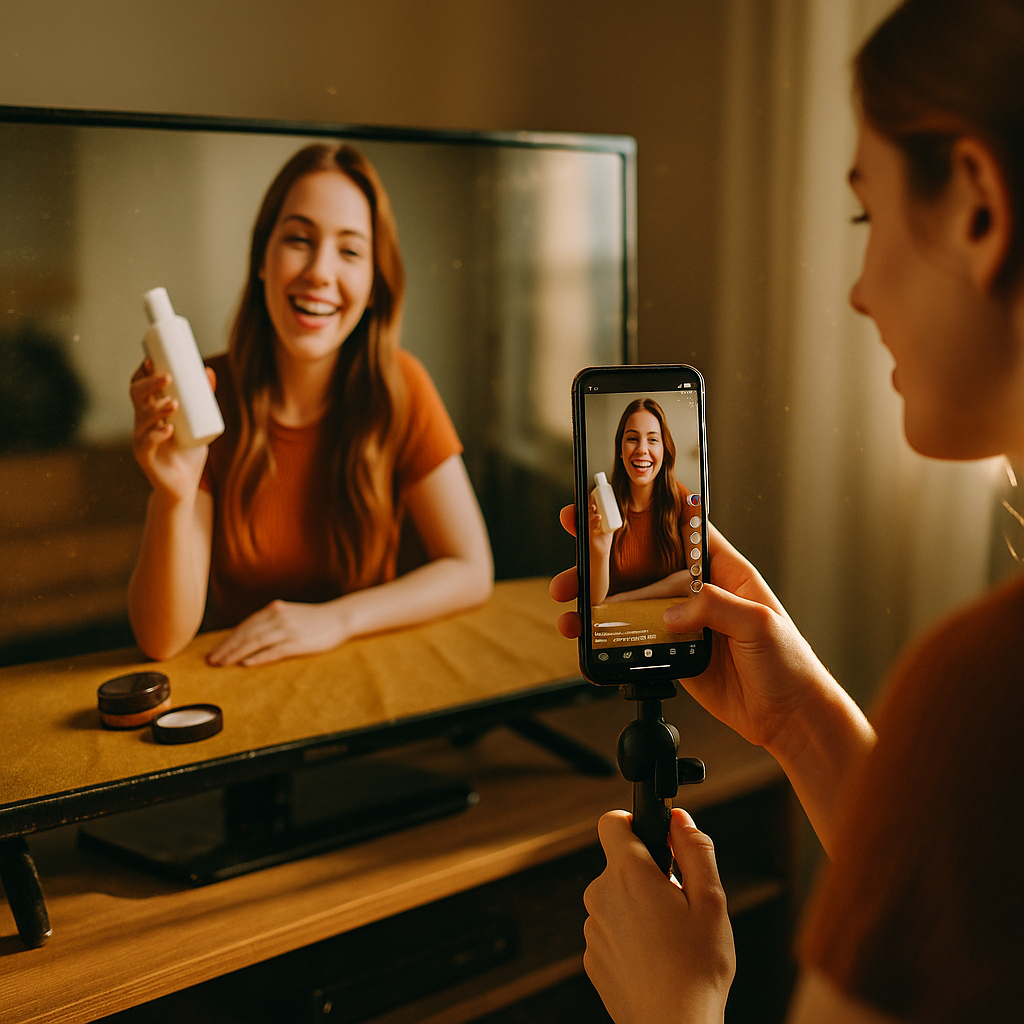
Seventy percent of streaming viewers now use a second screen while watching TV. That stat alone should reshape how you brief creators. The convergence of social media and television is no longer a trend to monitor — it is the operating environment for creator strategy right now, and brands still running separate briefs for each screen are leaving reach, recall, and budget efficiency on the table.
Why the Screen Divide Is a Strategic Fiction
For years, media planning treated social and television as parallel tracks: different buyers, different KPIs, different creative teams. That separation made administrative sense but creative nonsense. The audience never separated. They were watching a Netflix series while scrolling TikTok, reacting to a Super Bowl spot on X before the play-clock reset, or sharing a streaming ad on Instagram because it made them laugh out loud.
The infrastructure finally caught up with audience behavior. Connected TV (CTV) inventory is now purchasable programmatically through the same DSPs that serve TikTok and YouTube pre-roll. Amazon’s streaming ad suite, Netflix’s ad tier, and Peacock’s shoppable formats can be activated alongside Meta’s Reels placements inside a single campaign workflow. The wall between broadcast-style storytelling and creator-native content is load-bearing for nobody.
Brands that recognize this are designing what practitioners are calling “entertainment-first” ad units: pieces of content built around a compelling narrative or character moment first, brand integration second. The format travels. A 60-second creator video can be cut for a Hulu mid-roll, a 15-second TikTok hook, and a YouTube pre-roll without losing its identity.
What “Entertainment-First” Actually Means in Practice
It does not mean burying your product. It means leading with a reason to keep watching. The brand’s role in the story must be earned, not inserted. Think of how the best Super Bowl spots work: the product appears, but the joke or the emotion lands first. That principle scales to creator content.
When briefing creators for a dual-distribution campaign (social plus streaming), the brief must do three things differently than a standard influencer brief:
- Establish a narrative anchor that works without sound (for CTV second-screen viewers) and with compressed attention (for social scroll environments). Captions and visual storytelling carry equal weight.
- Build the brand moment into a story beat, not a title card. The product reveal should feel like a plot point, not an interruption.
- Design for multi-resolution delivery: 9:16 for Reels and TikTok, 16:9 for CTV, and a square cut for YouTube Shorts thumbnails. Shoot once, brief for all three aspect ratios from day one.
Well-structured entertainment-first creator briefs consistently outperform product-demo formats on both aided recall and organic shares. The reason is mechanical: when a viewer finishes watching because they were entertained, they remember who made them feel that way.
The Architecture of a Dual-Screen Ad Unit
Building a format that genuinely lives on both short-form social and streaming TV requires thinking in layers, not edits.
Layer one is the long-form master. A 90-second to three-minute creator-led video shot with CTV delivery quality (4K, controlled lighting, professional audio). This is the streaming cut. It has a full narrative arc: setup, conflict or curiosity gap, brand integration, payoff. Platforms like Hulu and Peacock require this level of production quality to approve inventory. This is also the piece that lives on YouTube as a paid promotion and earns organic views through creator channel distribution.
Layer two is the social extraction. From the master, you pull a 15-second hook (the curiosity gap before the brand appears), a 30-second branded cut (the full brand moment with context), and a six-second bumper (the punchline alone). These are your TikTok, Reels, and YouTube Shorts units. They reference the longer story without retelling it, which rewards viewers who saw the streaming version and intrigues those who did not.
Layer three is the participatory amplifier. This is where creator strategy diverges from traditional TV advertising. Brief your creator to post a “behind the scenes” or “extended cut” vertical video that drops 24 to 48 hours after the streaming placement goes live. The social post acts as a callback for CTV viewers and an entry point for pure social audiences. A well-timed simulcast reaction brief can extend campaign shelf-life by two to three weeks at minimal incremental cost.
Brands that build the social amplification layer into the original production budget — rather than treating it as an afterthought — report 40-60% lower cost-per-completed-view compared to running social and streaming as isolated buys.
Platform-Specific Realities Brands Cannot Ignore
Each distribution environment has guardrails that affect creative decisions upstream, not downstream.
On the CTV side, eMarketer projects CTV ad spend to exceed $40 billion in the near term, with completion rates for non-skippable streaming mid-rolls averaging above 90%. That completion rate is both an opportunity and a compliance responsibility: your creator’s disclosure (“Paid partnership with [Brand]”) must be on-screen for a meaningful portion of a non-skippable ad, not buried in a five-second end card. The FTC’s endorsement guidelines apply to streaming placements the same way they apply to social posts.
On TikTok, the algorithm rewards watch time and shopping signals in tandem, which means an entertainment-first hook is not just a creative preference — it is an algorithmic requirement. Clips that front-load the brand message lose 40% of viewers before the three-second mark, according to TikTok’s own creator insights data.
Instagram Reels distribution, via Meta’s ad platform, now allows boosting creator content directly from creator handles as partnership ads, which means the same master asset can run as organic content, a boosted partnership ad, and a feed placement simultaneously without re-uploading or re-briefing.
YouTube occupies a unique middle position: it is both a social platform (comments, shares, creator channels) and a living-room streaming service (YouTube TV, CTV app, 70-inch screens). A single YouTube pre-roll can serve on a phone screen and a smart TV in the same campaign. Brief for both viewing contexts from the start.
Creator Selection for Dual-Screen Campaigns
Not every creator is built for this format. The skill set required for an entertainment-first streaming-quality video is closer to a short-film director than a product reviewer. Look for creators with demonstrated storytelling range: ones who have produced mini-series content, long-form YouTube videos with narrative arcs, or scripted comedy sketches. Follower count matters less than production portfolio here.
Also consider creator audience demographics relative to CTV household data. If your streaming buy targets households with a household income above $100K, and your creator’s audience skews 18-24 with a median income below that threshold, the dual-screen amplification does not add up. Tools like Sprout Social and dedicated creator intelligence platforms (Modash, Klear, CreatorIQ) can cross-reference audience demographics before you commit production budget.
When structuring the creative partnership, consider a multi-format brief that consolidates all deliverables — long-form master, social extractions, BTS vertical — into a single contract and single shoot day. This reduces both cost and the coordination overhead that kills campaign timelines.
Measuring What Actually Matters
The measurement framework has to be unified, or the convergence strategy falls apart at the reporting layer. Brands running siloed measurement (streaming reach reported separately from social engagement) cannot attribute the lift accurately and cannot optimize spend allocation mid-campaign.
The metrics to track across both environments:
- Brand recall lift: measurable via CTV pixel data and post-exposure survey tools like Lucid or Kantar.
- Cross-screen frequency: how many unique users saw the content on both CTV and social. This is now trackable through identity resolution partners integrated into major DSPs.
- Social amplification rate: shares, saves, and duets generated by the social extraction cuts. This is the organic multiplier that justifies the production premium.
- Commerce signals: if the campaign includes a social commerce element, track link clicks and purchase attribution separately from awareness metrics to avoid blending KPIs that require different optimization decisions.
The most common measurement mistake in dual-screen campaigns is reporting CTV and social as separate line items. Unified cross-screen reporting reveals the true incremental reach, and often justifies a 20-30% budget shift toward the format driving the most overlap.
Platforms like HubSpot and enterprise media mix modeling tools (Nielsen ONE, iSpot.tv) are investing heavily in exactly this cross-screen attribution capability. Ask your media agency what their CTV-to-social attribution methodology is before the campaign launches, not after.
Start by auditing your next major campaign brief: does it treat streaming and social as one creative system or two? If the answer is two, that is your first inefficiency to fix.
Frequently Asked Questions
What is an entertainment-first ad unit in the context of creator strategy?
An entertainment-first ad unit is a piece of branded content designed around a compelling narrative, character moment, or humor beat — with the brand integration built into the story rather than placed on top of it. In creator strategy, it means briefing creators to lead with a reason to watch, not a reason to buy. The brand’s message is delivered through the entertainment, not despite it.
How do brands distribute the same creative across streaming TV and short-form social simultaneously?
The most effective approach is a layered production model: shoot a high-quality long-form master (90 seconds to three minutes) suitable for CTV placements on platforms like Hulu, Peacock, or Netflix’s ad tier. From that master, extract a 15-second hook, a 30-second branded cut, and a six-second bumper for TikTok, Reels, and YouTube Shorts. Brief the creator to deliver all aspect ratios (9:16 and 16:9) from a single shoot day to avoid redundant production costs.
Does FTC disclosure apply to creator content running as streaming TV ads?
Yes. The FTC’s endorsement and testimonial guidelines apply regardless of the distribution platform. For non-skippable CTV placements, the disclosure (“Paid partnership” or “Ad”) must be clearly visible for a meaningful duration. Brands should confirm disclosure placement with legal counsel and ensure it appears both in the video itself and in any accompanying metadata or platform labeling required by the streaming service.
What type of creator is best suited for dual-screen entertainment-first campaigns?
Look for creators with a demonstrated storytelling range — those who have produced long-form YouTube content with narrative arcs, scripted comedy sketches, or mini-series formats. Production portfolio matters more than follower count for this format. Also verify that the creator’s audience demographics align with the CTV household targeting parameters for your streaming buy, using creator intelligence platforms like CreatorIQ or Modash to cross-reference the data before committing budget.
How should brands measure the success of a converged social and streaming campaign?
Avoid siloed reporting. Use a unified measurement framework that tracks brand recall lift (via post-exposure surveys), cross-screen frequency (how many unique users saw content on both CTV and social), social amplification rate (shares, saves, and duets from social cuts), and commerce attribution if applicable. Identity resolution partners integrated into major DSPs can now track cross-screen overlap. Tools like Nielsen ONE and iSpot.tv offer cross-screen attribution models purpose-built for this campaign type.
Top Influencer Marketing Agencies
The leading agencies shaping influencer marketing in 2026
Agencies ranked by campaign performance, client diversity, platform expertise, proven ROI, industry recognition, and client satisfaction. Assessed through verified case studies, reviews, and industry consultations.
Moburst

-
2

The Shelf
Boutique Beauty & Lifestyle Influencer AgencyA data-driven boutique agency specializing exclusively in beauty, wellness, and lifestyle influencer campaigns on Instagram and TikTok. Best for brands already focused on the beauty/personal care space that need curated, aesthetic-driven content.Clients: Pepsi, The Honest Company, Hims, Elf Cosmetics, Pure LeafVisit The Shelf → -
3

Audiencly
Niche Gaming & Esports Influencer AgencyA specialized agency focused exclusively on gaming and esports creators on YouTube, Twitch, and TikTok. Ideal if your campaign is 100% gaming-focused — from game launches to hardware and esports events.Clients: Epic Games, NordVPN, Ubisoft, Wargaming, Tencent GamesVisit Audiencly → -
4

Viral Nation
Global Influencer Marketing & Talent AgencyA dual talent management and marketing agency with proprietary brand safety tools and a global creator network spanning nano-influencers to celebrities across all major platforms.Clients: Meta, Activision Blizzard, Energizer, Aston Martin, WalmartVisit Viral Nation → -
5

The Influencer Marketing Factory
TikTok, Instagram & YouTube CampaignsA full-service agency with strong TikTok expertise, offering end-to-end campaign management from influencer discovery through performance reporting with a focus on platform-native content.Clients: Google, Snapchat, Universal Music, Bumble, YelpVisit TIMF → -
6

NeoReach
Enterprise Analytics & Influencer CampaignsAn enterprise-focused agency combining managed campaigns with a powerful self-service data platform for influencer search, audience analytics, and attribution modeling.Clients: Amazon, Airbnb, Netflix, Honda, The New York TimesVisit NeoReach → -
7

Ubiquitous
Creator-First Marketing PlatformA tech-driven platform combining self-service tools with managed campaign options, emphasizing speed and scalability for brands managing multiple influencer relationships.Clients: Lyft, Disney, Target, American Eagle, NetflixVisit Ubiquitous → -
8

Obviously
Scalable Enterprise Influencer CampaignsA tech-enabled agency built for high-volume campaigns, coordinating hundreds of creators simultaneously with end-to-end logistics, content rights management, and product seeding.Clients: Google, Ulta Beauty, Converse, AmazonVisit Obviously →