


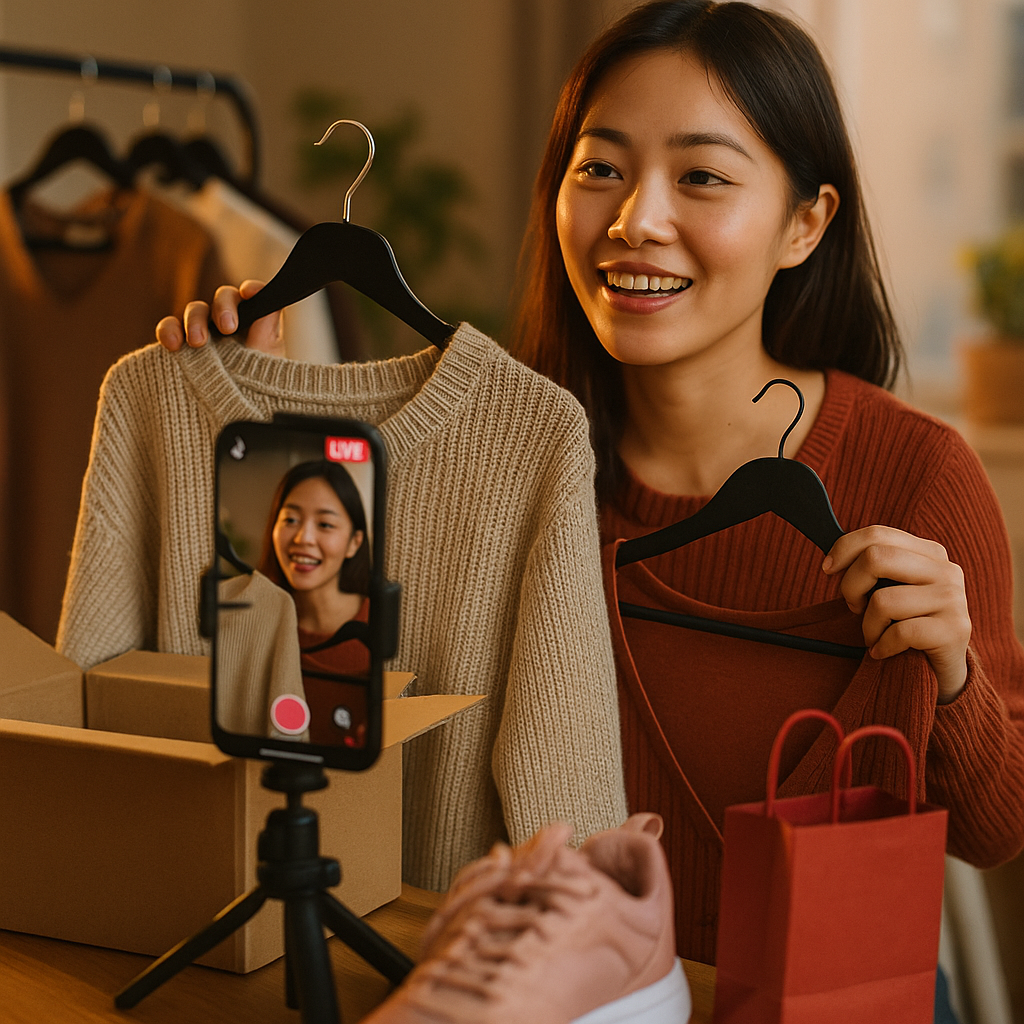
Brands running TikTok organic livestream commerce are doubling sales in a single day — without paid amplification. The mechanism is real, repeatable, and almost entirely dependent on how well you brief your creator. Here’s what the brief needs to contain.
Why Organic LIVE Still Outperforms Paid for Commerce Discovery
TikTok’s LIVE algorithm operates on different signals than its short-form For You Page. It prioritizes simultaneous viewer count, comment velocity, and product interaction rate — not follower counts or ad spend. That means a creator with 80,000 followers can outperform a brand’s paid placement if the session is structured correctly. TikTok’s own commerce data shows LIVE sessions generate purchase intent at rates up to 3x higher than static product posts.
The implication for brand strategists: organic LIVE is one of the last genuinely algorithm-democratic formats on any major platform. But it only works if the creator knows exactly how to run the session.
TikTok’s LIVE algorithm rewards session structure, not audience size. A mid-tier creator with a well-briefed 60-minute event can reach more non-followers than a macro influencer running an unscripted session.
The Brief Is the Product
Most brand teams treat the creator brief for a LIVE event as an afterthought — a bulleted list of talking points attached to a product sample. That’s a mistake that costs conversions. The brief for a TikTok organic LIVE is a production document. It should specify session architecture, not just product features.
Start with the session arc. A high-performing organic LIVE follows a predictable structure: a hook window (first 90 seconds), a credibility build (minutes 2 through 8), a product demonstration loop (repeated every 10 to 12 minutes), and urgency moments timed to comment surges. If you want the platform to surface your session to non-follower audiences, the algorithm needs to see engagement density early. That means the brief must tell the creator exactly what to do in the first 90 seconds to spike comments — not just “be engaging.”
Concrete brief language works better than vague direction. Instead of “introduce the product naturally,” write: “Open by asking viewers to comment their skin type. Hold the product up. Don’t name it yet. Wait for 20+ comments before pivoting to the product reveal.” That instruction creates comment velocity. Comment velocity triggers distribution. Distribution brings non-followers. Non-followers convert.
Algorithm Triggers Your Brief Must Engineer
There are four LIVE algorithm signals your brief needs to activate deliberately:
- Concurrent viewer growth rate. The algorithm measures whether your viewer count is climbing or flat. Brief the creator to run a pre-LIVE countdown story and a pinned comment strategy to bring existing followers in early — you need that initial viewer base to seed growth.
- Comment velocity. Open-ended questions beat product pitches every time. Your brief should script specific “comment bait” moments, ideally every 3 to 4 minutes. “Drop a 🔥 if you’ve tried this before” is a tested format that consistently spikes comment rates.
- Product click-through rate. If you’re using TikTok Shop product pins, the algorithm tracks how often viewers tap pinned products during a session. Brief the creator to pin and re-pin the product at specific intervals and to verbally direct attention to the pin at least once every 8 minutes.
- Session duration. Sessions under 30 minutes rarely earn significant non-follower distribution. Plan for 60 to 90 minutes minimum, with a structured content loop so the creator isn’t improvising after minute 20.
For deeper context on how watch-time mechanics work across TikTok’s algorithm, the framing in TikTok watch-time briefs applies directly to LIVE session planning.
Creator Selection Criteria Most Brands Get Wrong
Follower count is the wrong primary filter. For organic LIVE commerce, you want creators with a demonstrated LIVE completion rate and an audience that comments, not just watches. Pull a creator’s LIVE analytics before signing any agreement. Specifically, look at: average concurrent viewers as a percentage of total followers (a healthy ratio is 1 to 3%), comment-to-viewer ratio (above 0.15 per viewer per minute is strong), and prior LIVE session length.
Niche authority matters more than reach. A skincare creator with 45,000 followers who regularly runs 75-minute LIVE sessions with high comment density will outperform a lifestyle macro with 500,000 followers who goes live sporadically for 15 minutes. The algorithm has already learned what the niche creator’s audience does during a LIVE. It will extrapolate that behavior to lookalike audiences — which is exactly how non-follower reach compounds.
Cross-reference this with conversion-focused briefing approaches covered in TikTok Shop creator briefs to validate your creator selection criteria against actual commerce outcomes.
The 24-Hour Sales Window: How to Maximize Post-LIVE Revenue
The organic LIVE itself is not the only revenue moment. TikTok clips your LIVE automatically into short-form replays, and those replays continue to circulate on the For You Page for 24 to 48 hours post-session. This is where the second sales wave happens — and most brands leave it completely unmanaged.
Your brief must include post-LIVE instructions. Brief the creator to clip the highest-engagement moments (product demonstrations with visible comment spikes) and post them as standard TikTok videos within 2 hours of the LIVE ending. These clips inherit social proof from the original session. The product pin carries over. The algorithm treats them as fresh content with built-in credibility signals.
Brands running this clip-and-post protocol are consistently seeing 30 to 50% of their total LIVE-attributed revenue arrive in the 24-hour window after the session ends — not during it. That changes how you measure success. Don’t evaluate the LIVE in isolation. Track a 48-hour attribution window.
The post-LIVE clip strategy is where most brands leave money behind. A 60-second cut of your best product demo moment, posted within two hours of the session, can match or exceed in-session conversion revenue.
Compliance and Disclosure Inside a LIVE Session
This is where brand legal teams and creator teams frequently collide. FTC guidelines require material connection disclosure in real time during sponsored LIVE sessions — not just in a bio link or a pre-session caption. Your brief must tell the creator exactly how and when to disclose: verbally, at the start of the session, after every product demonstration, and at session re-entry points when new viewers join.
TikTok’s own LIVE commerce policies layer on top of FTC requirements. Review both before finalizing the brief. A compliance failure during a high-traffic LIVE session carries reputational and legal risk that far outweighs any short-term revenue gain. Build the disclosure language into the brief script, not as a footnote.
For brands also running paid formats alongside organic LIVE, the targeting and disclosure mechanics differ significantly. The platform comparison on creator briefs covers those distinctions across TikTok and Instagram.
What a Production-Ready Brief Actually Contains
To summarize the document structure your team should build:
- Session goal and KPIs: Define success metrics upfront (concurrent viewers, comment rate, product click-throughs, GMV target).
- Session arc with timestamps: Hook window, credibility segment, demo loops, urgency moments, close.
- Scripted comment triggers: Minimum 5 to 7 specific prompts the creator can use verbatim or adapt.
- Product pin schedule: When to pin, unpin, and re-pin each product, with verbal callouts scripted.
- Pre-LIVE promotion checklist: Countdown story, pinned comment, any cross-platform teaser.
- Post-LIVE clip protocol: Which moments to clip, when to post, caption direction, attribution tracking setup.
- Disclosure script: Exact language for opening, mid-session, and re-entry disclosures.
Brands already running structured TikTok Shop programs should also audit their omnichannel commerce integration to ensure LIVE-attributed revenue is captured correctly across all touchpoints. If your attribution model only tracks in-app purchases during the session window, you’re underreporting LIVE’s actual contribution to revenue.
According to eMarketer, livestream commerce is projected to account for a growing share of social commerce revenue globally, with Southeast Asian market behavior continuing to set the pace for Western platform adoption. The window to build organic LIVE competency before it becomes a paid-to-play format is narrowing. Brands that develop repeatable briefing systems now will hold a structural advantage over competitors learning it reactively.
One final operational note: Sprout Social’s analytics suite now includes TikTok LIVE session data for business accounts, which makes post-session auditing significantly faster. Use it to benchmark creator performance across sessions and refine your brief after each event.
The brief template above is not a creative constraint. It is a conversion system. Audit your current creator brief against it, identify the gaps, and close them before your next LIVE event.
Frequently Asked Questions
How long should a TikTok organic LIVE session be to earn non-follower distribution?
A minimum of 60 minutes is required for the algorithm to meaningfully surface the session to non-follower audiences. Sessions between 60 and 90 minutes with consistent engagement density perform best for organic commerce discovery. Shorter sessions rarely generate enough algorithmic signal for broad distribution.
Can small creators (under 50,000 followers) drive significant sales through TikTok LIVE?
Yes, and often more effectively than macro creators for niche product categories. TikTok’s LIVE algorithm prioritizes engagement signals over follower counts. A creator with 30,000 to 50,000 highly engaged followers and a track record of long LIVE sessions can reach more qualified non-follower buyers than a larger creator with passive audience behavior.
What is the most important metric to track during a TikTok organic LIVE for commerce?
Concurrent viewer growth rate is the primary algorithmic signal, but for commerce outcomes, product pin click-through rate is the most actionable metric. It directly reflects purchase intent and tells you whether your creator’s product demo moments are connecting with the audience in real time.
How should FTC disclosures be handled during a branded LIVE session?
The FTC requires verbal disclosure of any material connection in real time. Creators must disclose at the start of the session, after each product demonstration, and when new viewers enter the stream. Written disclosure in the caption or bio is not sufficient on its own. Build the exact disclosure language into the creator brief as scripted lines, not optional guidance.
How do you attribute revenue from post-LIVE clips to the original LIVE session?
Use TikTok Shop’s affiliate link and product pin attribution, which persists through clips posted from the original LIVE. Set a 48-hour attribution window rather than a same-session window, and tag all post-LIVE clips with the same campaign UTM parameters used during the session. This ensures the full revenue cycle is captured in your reporting.
Top Influencer Marketing Agencies
The leading agencies shaping influencer marketing in 2026
Agencies ranked by campaign performance, client diversity, platform expertise, proven ROI, industry recognition, and client satisfaction. Assessed through verified case studies, reviews, and industry consultations.
Moburst

-
2

The Shelf
Boutique Beauty & Lifestyle Influencer AgencyA data-driven boutique agency specializing exclusively in beauty, wellness, and lifestyle influencer campaigns on Instagram and TikTok. Best for brands already focused on the beauty/personal care space that need curated, aesthetic-driven content.Clients: Pepsi, The Honest Company, Hims, Elf Cosmetics, Pure LeafVisit The Shelf → -
3

Audiencly
Niche Gaming & Esports Influencer AgencyA specialized agency focused exclusively on gaming and esports creators on YouTube, Twitch, and TikTok. Ideal if your campaign is 100% gaming-focused — from game launches to hardware and esports events.Clients: Epic Games, NordVPN, Ubisoft, Wargaming, Tencent GamesVisit Audiencly → -
4

Viral Nation
Global Influencer Marketing & Talent AgencyA dual talent management and marketing agency with proprietary brand safety tools and a global creator network spanning nano-influencers to celebrities across all major platforms.Clients: Meta, Activision Blizzard, Energizer, Aston Martin, WalmartVisit Viral Nation → -
5

The Influencer Marketing Factory
TikTok, Instagram & YouTube CampaignsA full-service agency with strong TikTok expertise, offering end-to-end campaign management from influencer discovery through performance reporting with a focus on platform-native content.Clients: Google, Snapchat, Universal Music, Bumble, YelpVisit TIMF → -
6

NeoReach
Enterprise Analytics & Influencer CampaignsAn enterprise-focused agency combining managed campaigns with a powerful self-service data platform for influencer search, audience analytics, and attribution modeling.Clients: Amazon, Airbnb, Netflix, Honda, The New York TimesVisit NeoReach → -
7

Ubiquitous
Creator-First Marketing PlatformA tech-driven platform combining self-service tools with managed campaign options, emphasizing speed and scalability for brands managing multiple influencer relationships.Clients: Lyft, Disney, Target, American Eagle, NetflixVisit Ubiquitous → -
8

Obviously
Scalable Enterprise Influencer CampaignsA tech-enabled agency built for high-volume campaigns, coordinating hundreds of creators simultaneously with end-to-end logistics, content rights management, and product seeding.Clients: Google, Ulta Beauty, Converse, AmazonVisit Obviously →