


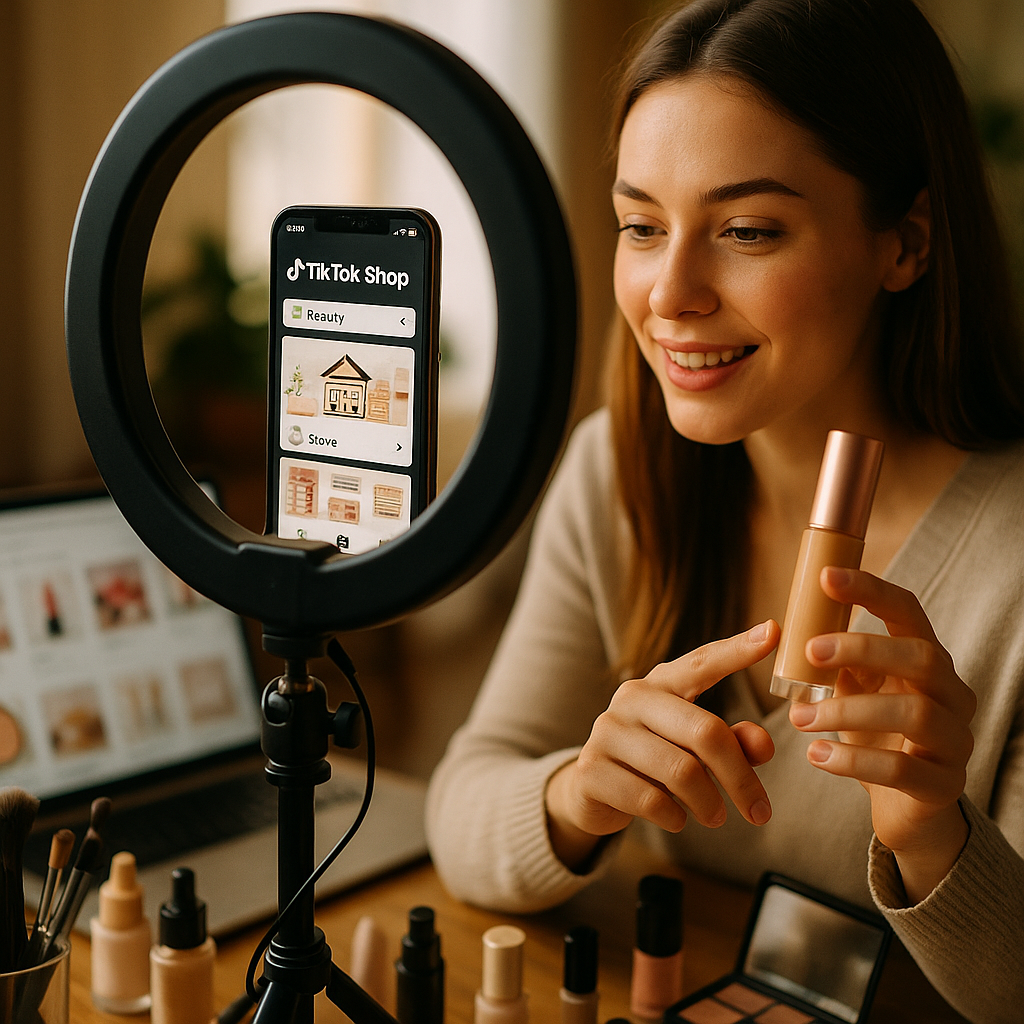
Beauty Brands That Skip TikTok Shop Are Leaving Revenue on the Table
TikTok Shop now drives over $20 billion in annual GMV, and beauty is its single largest category. Business of Fashion’s forward analysis makes the case plainly: brands without a structured TikTok Shop presence are not just missing a trend, they are ceding ground to competitors who have figured out how discovery, trust, and purchase collapse into a single 60-second scroll. The question for brand strategists is not whether to be there. It’s how to build a machine that converts.
Why This Moment Is Different From Every Other Platform Bet
Most platform pivots in beauty marketing have been gradual. TikTok Shop is not. The infrastructure that separates casual presence from serious revenue includes a storefront, a creator affiliate program, a product feed, and an inventory sync that all have to work together. Brands that treat TikTok Shop as a campaign add-on rather than a commerce channel are consistently underperforming against those that have embedded it into their core commerce stack.
The Business of Fashion analysis flags something that many brand teams underweight: the algorithm does not treat content from Shop-enabled accounts the same way it treats standard creator posts. Products attached to Shop listings get distribution signals that standard posts simply do not. This means storefront architecture is not just a UX decision. It is an algorithmic one.
Brands that have integrated TikTok Shop into their full commerce stack, syncing inventory, enabling creator affiliate links, and optimizing storefronts for native browse behavior, are outconverting brands with larger organic followings that have not made the structural investment.
Storefront Design: Stop Thinking Like a Website, Start Thinking Like a Feed
Most beauty brand storefronts on TikTok Shop are under-optimized because teams are designing them like product pages rather than like content. Thumbnails that work on a Shopify PDP do not perform in a TikTok Shop browse environment where a user is mid-scroll, emotionally primed from three back-to-back tutorials.
The structural priorities for storefront design are:
- Hero product clarity: Lead with one to three SKUs that have the highest creator content volume. Do not try to showcase the full catalog in the storefront header. Confusion kills conversion.
- Social proof stacking: TikTok Shop displays creator video counts per product. Brands should architect their affiliate programs to concentrate early creator seeding on a short list of hero SKUs so that social proof metrics are visible and compelling before scaling creator count.
- Mobile-native thumbnail design: Product images need to be legible at 80x80px. Most beauty brand asset libraries are built for DTC, not for a native commerce feed. Art direction for TikTok Shop thumbnails should be handled as a separate creative brief.
- Collection architecture: Group products in collections that mirror how creators talk about them, not how your internal category taxonomy is structured. “Lip liner dupes under $12” outperforms “Lip Liners” as a collection label when the intent environment is TikTok.
There is also a compliance angle here. Product claims in storefront copy are subject to FTC guidelines, and TikTok has its own prohibited content policies for cosmetics and skincare. Brand legal teams need to review storefront copy with the same rigor they apply to advertising. Enforcement on TikTok Shop is accelerating.
Creator Commission Architecture: The Structure Determines the Behavior
This is where most beauty brands leave the most money on the floor. The standard approach is to set a flat commission rate, open the affiliate program, and hope creators find your products. That approach produces inconsistent volume and zero strategic leverage over which products get featured.
A tiered commission architecture changes creator behavior because it changes incentives. The framework that is producing the best results across beauty categories right now looks like this:
- Base tier (all accepted creators): 10-12% on all SKUs. This is the floor that keeps the program broadly competitive.
- Priority SKU tier: 18-22% on the two or three products you want to build velocity on. This creates a financial incentive for creators to feature specific products without requiring a paid partnership.
- Performance tier: Bonus structure triggered at GMV thresholds (e.g., an additional 3% on all sales once a creator crosses $5,000 in attributed monthly GMV). This retains your best-performing affiliates and rewards volume without paying for it upfront.
For brands working with both organic affiliates and paid creator partnerships, understanding how to brief creators for watch time and conversions simultaneously is the operational skill that separates programs that scale from ones that plateau. The brief structure for a Shop-integrated video is fundamentally different from a standard awareness brief.
One structural decision brands frequently get wrong is treating micro-creators as interchangeable. On TikTok Shop, a creator with 18,000 followers and a highly engaged audience in the “skintok” niche will often outconvert a macro-influencer with 500,000 followers. The conversion happens because of trust, not reach. The commission architecture should reflect this: see the breakdown on micro vs. macro budget ROI for the spending logic.
Product Catalog Integration: The Operational Work Nobody Wants to Talk About
Here is the unsexy truth: the brands dominating TikTok Shop beauty have invested in the backend. Product catalog integration with TikTok’s Ads Manager and Shop infrastructure requires clean, synchronized data feeds. Inventory mismatches create out-of-stock errors that surface in creator videos mid-campaign, destroying conversion windows that took weeks to build.
Minimum viable catalog hygiene for TikTok Shop includes:
- Real-time inventory sync (not daily batch updates).
- Variant-level SKU mapping so that a creator pinning a specific shade or size routes to the correct PDP, not a generic product page.
- Optimized product titles and descriptions for TikTok’s native search, which has different keyword behavior than Google Shopping or Amazon.
- Pricing consistency checks that flag discrepancies between your DTC site, Amazon, and TikTok Shop before they go live. Price parity issues erode brand authority fast.
Brands using platforms like Shopify benefit from native TikTok Shop connector apps that handle feed management, but the connector is only as good as the underlying product data. Garbage in, garbage out.
The catalog also feeds TikTok’s AI-driven product recommendations, which are increasingly surfacing Shop products in For You page content even when users are not actively searching. For brands working on AI curation and creator programs, catalog quality directly affects how frequently the algorithm recommends products. Poor attribute data means the AI cannot match your SKUs to relevant content contexts.
A well-structured TikTok Shop catalog is not just a backend task. It is an algorithmic asset. Every attribute you get right improves the probability that your products surface in AI-driven recommendations, browse feeds, and creator search results.
Connecting Shop Performance to Full-Funnel Brand Strategy
TikTok Shop does not exist in isolation. The brands extracting the most value from it are using Shop performance data, specifically which SKUs are converting, which creator content types produce the highest add-to-cart rates, and which collections are being browsed but not purchased, to inform decisions across the full marketing stack. That data is feeding paid creative testing, DTC merchandising strategy, and Amazon listing optimization simultaneously.
For brands also managing omnichannel commerce integration, TikTok Shop attribution data is becoming a primary signal, not a supplementary one. The platforms that understand purchase intent in beauty are no longer the same ones they were three years ago.
Cross-platform strategy matters here too. If you are running creator content on TikTok Shop and Instagram simultaneously, the briefing requirements are different for each. Understanding those brief differences at the platform level prevents wasted spend and creative misalignment. One brief does not fit both channels, and beauty brands that assume it does consistently see weaker Instagram conversion from TikTok-native content.
External benchmarks from eMarketer show social commerce penetration in beauty accelerating faster than any other CPG category. The brands building operational infrastructure now are establishing a compounding advantage: better catalog data feeds better AI recommendations, which drives more creator discovery, which builds more social proof, which increases conversion rate, which justifies higher commission budgets.
Start with the commission architecture this week. Define your priority SKU tier, set the bonus threshold, and communicate both to your current creator roster before expanding affiliate recruitment. That single change will reorient creator behavior toward the products that actually matter to your growth targets.
Frequently Asked Questions
What is the minimum commission rate to stay competitive on TikTok Shop beauty?
The competitive floor for beauty affiliates on TikTok Shop is currently around 10% on standard SKUs. Brands offering below 8% consistently report difficulty attracting mid-tier creators with engaged audiences. For priority SKUs where you need concentrated creator attention, rates of 18-22% are increasingly standard among top-performing beauty brands.
How many SKUs should a beauty brand feature in its TikTok Shop storefront at launch?
For launch, concentrate on three to five hero SKUs rather than uploading your full catalog. The goal in the first 90 days is to build social proof density on a small number of products so that the video count and review signals visible on the storefront are compelling to new shoppers. You can expand the catalog once your affiliate program has generated momentum on the initial SKUs.
Does TikTok Shop affect organic content distribution for beauty brands?
Yes. TikTok’s algorithm gives distribution signals to content that is linked to an active Shop product. Videos with product links from a functioning storefront reach audiences beyond a creator’s existing followers more reliably than unlinked content. This makes creator briefs that integrate Shop product links a structural priority, not an optional add-on.
How should brands handle inventory sync between their DTC site and TikTok Shop?
Real-time inventory sync is the only acceptable standard for beauty brands running active creator affiliate programs. Daily batch updates create out-of-stock errors that surface in live and recently posted creator videos, destroying conversion windows. Shopify’s TikTok connector and similar middleware tools support real-time sync, but brands need to audit the connection regularly, not assume it is functioning correctly.
How do beauty brands measure ROI on TikTok Shop creator programs?
The primary metrics are attributed GMV per creator, conversion rate on product page visits driven by creator links, and average order value by creator tier. Brands should also track video-to-purchase latency, meaning the average time between a user watching a creator’s video and completing a purchase, because beauty purchases on TikTok Shop often occur within minutes of content exposure, which is a fundamentally different attribution window than traditional influencer marketing.
Top Influencer Marketing Agencies
The leading agencies shaping influencer marketing in 2026
Agencies ranked by campaign performance, client diversity, platform expertise, proven ROI, industry recognition, and client satisfaction. Assessed through verified case studies, reviews, and industry consultations.
Moburst

-
2

The Shelf
Boutique Beauty & Lifestyle Influencer AgencyA data-driven boutique agency specializing exclusively in beauty, wellness, and lifestyle influencer campaigns on Instagram and TikTok. Best for brands already focused on the beauty/personal care space that need curated, aesthetic-driven content.Clients: Pepsi, The Honest Company, Hims, Elf Cosmetics, Pure LeafVisit The Shelf → -
3

Audiencly
Niche Gaming & Esports Influencer AgencyA specialized agency focused exclusively on gaming and esports creators on YouTube, Twitch, and TikTok. Ideal if your campaign is 100% gaming-focused — from game launches to hardware and esports events.Clients: Epic Games, NordVPN, Ubisoft, Wargaming, Tencent GamesVisit Audiencly → -
4

Viral Nation
Global Influencer Marketing & Talent AgencyA dual talent management and marketing agency with proprietary brand safety tools and a global creator network spanning nano-influencers to celebrities across all major platforms.Clients: Meta, Activision Blizzard, Energizer, Aston Martin, WalmartVisit Viral Nation → -
5

The Influencer Marketing Factory
TikTok, Instagram & YouTube CampaignsA full-service agency with strong TikTok expertise, offering end-to-end campaign management from influencer discovery through performance reporting with a focus on platform-native content.Clients: Google, Snapchat, Universal Music, Bumble, YelpVisit TIMF → -
6

NeoReach
Enterprise Analytics & Influencer CampaignsAn enterprise-focused agency combining managed campaigns with a powerful self-service data platform for influencer search, audience analytics, and attribution modeling.Clients: Amazon, Airbnb, Netflix, Honda, The New York TimesVisit NeoReach → -
7

Ubiquitous
Creator-First Marketing PlatformA tech-driven platform combining self-service tools with managed campaign options, emphasizing speed and scalability for brands managing multiple influencer relationships.Clients: Lyft, Disney, Target, American Eagle, NetflixVisit Ubiquitous → -
8

Obviously
Scalable Enterprise Influencer CampaignsA tech-enabled agency built for high-volume campaigns, coordinating hundreds of creators simultaneously with end-to-end logistics, content rights management, and product seeding.Clients: Google, Ulta Beauty, Converse, AmazonVisit Obviously →