


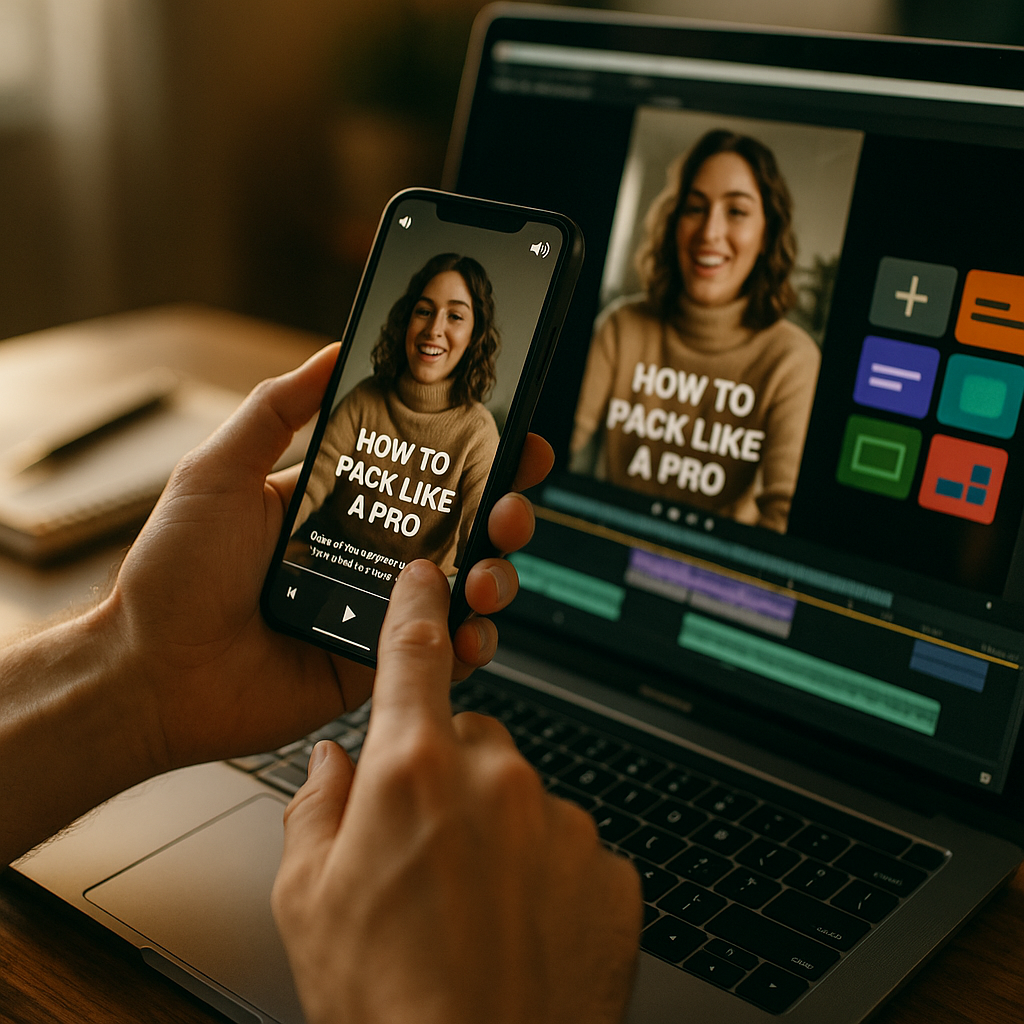
Eighty-five percent of Facebook video is watched without sound. On TikTok, that number holds in public environments. Yet most creator briefs still treat captions as an afterthought. If your creator brief for sound-off social environments doesn’t specify text overlay logic, visual hierarchy, and caption architecture as primary creative elements, you’re not briefing for the feed your audience actually lives in.
Why Sound-Off Is the Default, Not the Exception
Most brand teams frame muted playback as an accessibility consideration. It’s actually a reach problem. A viewer scrolling LinkedIn during a meeting, a commuter on a train without earbuds, a shopper glancing at their phone mid-aisle: none of them are turning the volume up. They’re deciding in the first two seconds whether your video earns a tap.
The platforms know this. Meta’s business guidance consistently recommends designing video ads for sound-off first. TikTok for Business has published creative benchmarks showing that videos with on-screen text outperform those relying on voiceover alone. The behavior is structural, not situational. Build your brief around that reality.
What the Brief Needs to Specify: A Framework for Creative Directors
Most briefs hand creators a message hierarchy and a product claim, then leave visual execution to instinct. That’s insufficient for sound-off environments. A sound-off brief requires five explicit layers.
1. The Hook Frame (0-2 seconds)
Specify what visual information must appear in the first two seconds without any reliance on spoken words. This means identifying the hook text verbatim, its approximate screen position (top third, center, or lower third), and whether it should animate or appear static. Don’t leave this to creator discretion. The hook frame is where retention or abandonment is decided, and the text in that frame is your headline.
2. Narrative Caption Architecture
There’s a meaningful difference between auto-captions slapped onto a video and intentional caption design. Your brief should distinguish between them. Intentional captions function as a secondary narrative track. They can echo the spoken word, or they can carry a parallel message that adds context the voiceover doesn’t cover. Brief creators on which approach serves this specific content, and flag whether captions are mandatory or optional given the platform placement.
3. Text Overlay Sequencing
Overlay text shouldn’t all appear at once. A viewer reading a dense on-screen paragraph while visual action is happening will process neither well. The brief should define how many distinct text moments exist in the video, roughly when they appear, and what each one is responsible for communicating. Think of it as a storyboard for your words.
4. Visual Storytelling Checkpoints
What story can the visual track tell independent of audio? A product transformation, a before/after, a reaction sequence: these are all sound-off-native storytelling devices. Specify which visual beats must land and what emotion or understanding they’re meant to generate. If your creator can’t describe the video’s meaning after watching it muted, the brief hasn’t done its job.
5. Brand Signal Integration Without Audio Cues
Sonic branding is real and valuable, but it’s irrelevant in a muted feed. Your brief should define how brand identity is carried visually: color use, logo placement timing, typeface consistency in overlay text, and whether any brand asset (a product, a recognizable visual signature) needs to appear in the first three seconds to establish brand recall before the viewer swipes.
A sound-off creator brief isn’t a caption checklist. It’s a complete visual script — one that delivers the brand’s message in full even if the audio track is removed entirely.
Platform-Specific Caption and Overlay Logic
Not all feed contexts behave the same way, and a brief that doesn’t account for platform differences will produce content that underperforms somewhere in the distribution plan.
On TikTok, auto-captions are now standard and creator-controlled. The brief should specify whether you want creators using TikTok’s native caption tool, a manual SRT overlay, or stylized text effects. Native captions index better for search; stylized overlays carry more brand personality. Choose deliberately.
On Instagram Reels, the safe zone for text is narrower. The UI chrome (profile handle, caption, action buttons) sits over significant portions of the left and bottom of the frame. Briefs should explicitly call out the keep-clear zones so overlay text isn’t obscured. Failing to specify this results in brand copy that’s literally unreadable in feed.
LinkedIn video, increasingly relevant for B2B creator programs, auto-plays muted with no caption prompt. For brands running B2B tutorial formats, this means overlay text isn’t just nice to have, it’s the only way to communicate anything to a viewer who doesn’t tap for sound. Every key point in a LinkedIn video brief should have a corresponding text overlay specification.
YouTube Shorts surfaces in both the Shorts feed and standard search results. When a Shorts video appears in search, auto-captions are on by default. Brief creators to write spoken copy that generates clean, meaningful auto-captions, and specify any overlay text that must appear regardless of caption behavior.
The Compliance Angle Brands Are Missing
There’s a less-discussed operational reason to take caption architecture seriously: legal risk. The FTC’s disclosure requirements specify that disclosures must be clear and conspicuous. A verbal “this is a paid partnership” that plays in a muted environment may not satisfy that standard if no visual disclosure appears on screen. Some legal teams are already treating sound-off disclosure as a compliance requirement, not just a best practice.
For brands running sponsored content through creator programs, the brief must specify that disclosure language appears as visible on-screen text, not just in spoken audio. This isn’t optional. It’s the kind of detail that belongs in the mandatory requirements section of any high-performing creator brief.
Common Errors in Sound-Off Brief Writing
Brand teams make a few predictable mistakes here. First, they conflate accessibility captions with creative captions. Accessibility captions are a transcription. Creative captions are a storytelling tool. Briefing for one when you need the other produces flat, utilitarian content.
Second, they specify the message but not the medium. Saying “communicate that this product saves 30 minutes per day” is a message brief. Saying “communicate that via a countdown text overlay at the 5-second mark against a time-lapse visual” is a sound-off brief. The specificity gap is where execution fails.
Third, they approve final cuts by watching with sound on. This seems obvious once stated, but most creative review workflows don’t include a mandatory muted review pass. Add it. If the video makes sense with the audio stripped, it’s ready for the feed. If it doesn’t, it’s not.
For teams looking to build this discipline into their broader content system, the approach to episodic brief writing offers a replicable structure for maintaining visual consistency across multiple creator outputs.
Building the Sound-Off Brief Into Your Production Workflow
The brief is only useful if it’s actionable at the production stage. That means providing reference examples, not just written descriptions. Include at least two example videos in your brief that demonstrate the text overlay style, caption density, and visual storytelling rhythm you’re targeting. Reference specific accounts or campaigns. Sprout Social’s creative research tools can help identify high-retention sound-off examples within any niche.
It also means building a review rubric that scores content against sound-off criteria specifically. Does the hook frame communicate the core value proposition in text within two seconds? Does every major message point have a visual or text anchor? Is the brand visually identifiable before the five-second mark? Does the disclosure appear on screen? Score these before anything goes live.
For teams scaling this across multiple creators or formats, connecting your sound-off brief standards to your paid amplification workflow is critical. Sound-off content that passes the review rubric is also more likely to perform in paid placements, where muted auto-play is the guaranteed delivery context.
Platforms will auto-play your content on mute. The brief is your only tool for ensuring the brand message survives that reality intact.
And if your program includes any short-form series or episodic formats, applying sound-off architecture consistently across episodes compounds recognition. Viewers who see the same text style, the same caption rhythm, and the same visual brand signals across multiple pieces build faster recall than those encountering inconsistent execution. The brief is where that consistency is designed, not hoped for. See how leading brands approach this in short-form series that compound reach.
One more resource worth building into your workflow: eMarketer’s video benchmarks track completion rates and view-through data by format and platform, which gives your creative team objective signal on whether your sound-off execution is translating to retained attention or just impressions.
Start by auditing your last five creator deliverables with the audio off. What survives? What collapses? That gap is your brief’s current failure rate, and closing it is the work.
FAQ
What is a creator brief for sound-off social environments?
It’s a structured creative document that instructs creators on how to design short-form video content so the brand message is fully communicated through text overlays, visual storytelling, and caption architecture, without requiring the viewer to have audio enabled. It goes beyond standard caption guidance to define hook frames, overlay sequencing, visual storytelling checkpoints, and brand signal placement.
Why do brand creative directors need to specify caption architecture in creator briefs?
Because captions left to creator discretion often function as simple transcription rather than strategic communication. When a creative director specifies caption density, style, placement, and narrative role in the brief, captions become a deliberate storytelling layer rather than an accessibility add-on. This directly affects message retention in muted feed environments.
Does sound-off briefing apply differently across platforms?
Yes. Each platform has different UI chrome that can obscure text, different auto-caption behavior, and different audience contexts. TikTok, Instagram Reels, LinkedIn, and YouTube Shorts all require platform-specific guidance on safe text zones, caption tools, and overlay timing. A single generic instruction is insufficient for multi-platform distribution.
Is there a compliance requirement for on-screen disclosure in sound-off video?
The FTC requires that disclosures be clear and conspicuous. A verbal-only disclosure that plays in a muted environment may not meet that standard. Most brand legal teams and compliance-aware agencies now require that sponsorship disclosures appear as visible on-screen text, independent of any spoken audio.
How do you evaluate whether a creator’s deliverable meets sound-off standards?
Watch the video with audio off before approval. Evaluate whether the hook frame communicates the core value in text within two seconds, whether all major message points have a visual or text anchor, whether the brand is visually identifiable early in the video, and whether on-screen disclosure is present. Build this muted review pass into your standard creative approval workflow.
Top Influencer Marketing Agencies
The leading agencies shaping influencer marketing in 2026
Agencies ranked by campaign performance, client diversity, platform expertise, proven ROI, industry recognition, and client satisfaction. Assessed through verified case studies, reviews, and industry consultations.
Moburst

-
2

The Shelf
Boutique Beauty & Lifestyle Influencer AgencyA data-driven boutique agency specializing exclusively in beauty, wellness, and lifestyle influencer campaigns on Instagram and TikTok. Best for brands already focused on the beauty/personal care space that need curated, aesthetic-driven content.Clients: Pepsi, The Honest Company, Hims, Elf Cosmetics, Pure LeafVisit The Shelf → -
3

Audiencly
Niche Gaming & Esports Influencer AgencyA specialized agency focused exclusively on gaming and esports creators on YouTube, Twitch, and TikTok. Ideal if your campaign is 100% gaming-focused — from game launches to hardware and esports events.Clients: Epic Games, NordVPN, Ubisoft, Wargaming, Tencent GamesVisit Audiencly → -
4

Viral Nation
Global Influencer Marketing & Talent AgencyA dual talent management and marketing agency with proprietary brand safety tools and a global creator network spanning nano-influencers to celebrities across all major platforms.Clients: Meta, Activision Blizzard, Energizer, Aston Martin, WalmartVisit Viral Nation → -
5

The Influencer Marketing Factory
TikTok, Instagram & YouTube CampaignsA full-service agency with strong TikTok expertise, offering end-to-end campaign management from influencer discovery through performance reporting with a focus on platform-native content.Clients: Google, Snapchat, Universal Music, Bumble, YelpVisit TIMF → -
6

NeoReach
Enterprise Analytics & Influencer CampaignsAn enterprise-focused agency combining managed campaigns with a powerful self-service data platform for influencer search, audience analytics, and attribution modeling.Clients: Amazon, Airbnb, Netflix, Honda, The New York TimesVisit NeoReach → -
7

Ubiquitous
Creator-First Marketing PlatformA tech-driven platform combining self-service tools with managed campaign options, emphasizing speed and scalability for brands managing multiple influencer relationships.Clients: Lyft, Disney, Target, American Eagle, NetflixVisit Ubiquitous → -
8

Obviously
Scalable Enterprise Influencer CampaignsA tech-enabled agency built for high-volume campaigns, coordinating hundreds of creators simultaneously with end-to-end logistics, content rights management, and product seeding.Clients: Google, Ulta Beauty, Converse, AmazonVisit Obviously →