


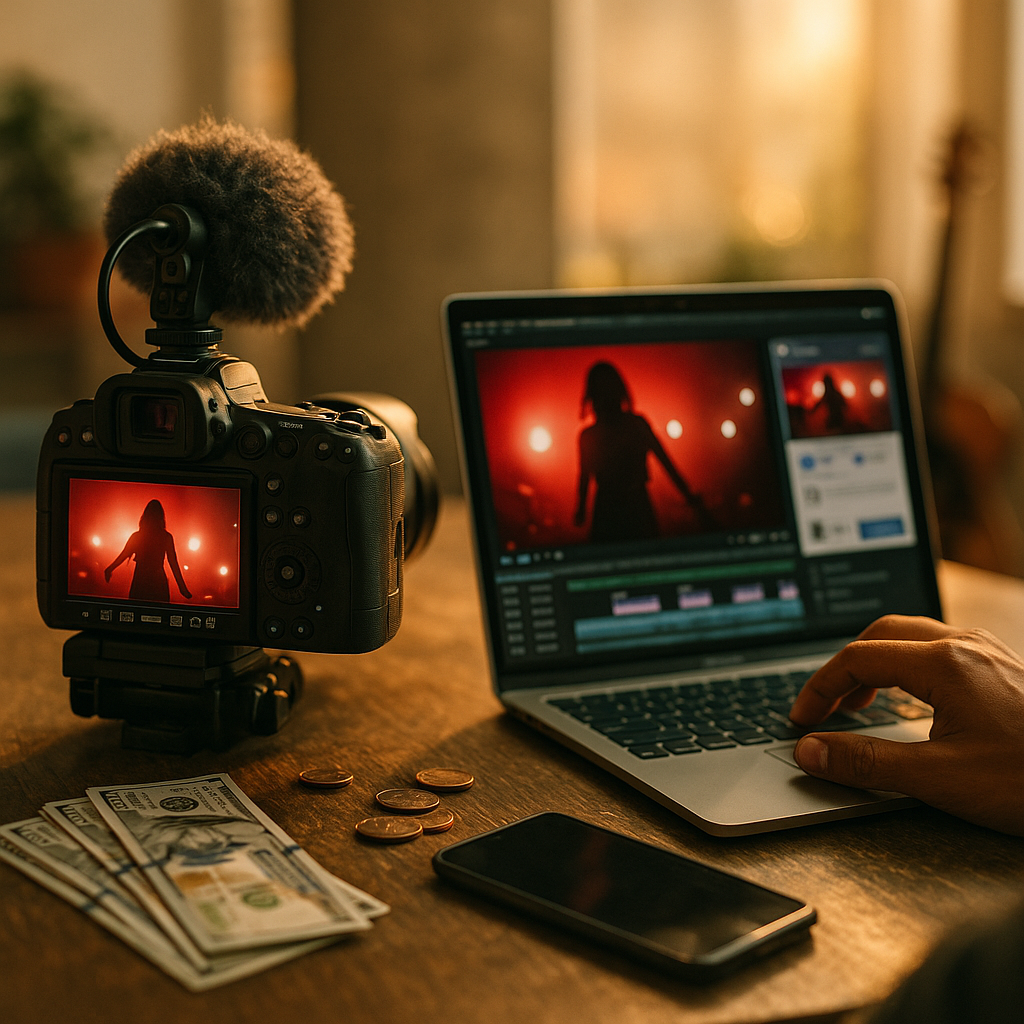
Most Brand Videos Get Skipped. This Format Gets Shared.
YouTube’s internal data shows that fewer than 15% of skippable pre-roll ads are watched past the five-second mark. Yet music videos on the same platform regularly hit 50%+ completion rates on clips running three to five minutes. The music-video brand spot format closes that gap, and brands that understand how to produce and brief it correctly are quietly building owned content libraries that earn upfront-eligible inventory placements.
What the Format Actually Is (and What It Isn’t)
The music-video brand spot is not a commercial with a soundtrack slapped on top. It is entertainment-first short-form video, typically 90 seconds to four minutes, structured around a musical or rhythmic narrative where product integration exists within the story world rather than interrupting it. Think of how Beats by Dre built its entire brand through athlete-focused mini-films with heavy music direction, or how Levi’s has used creator-partnered music content to reinforce denim culture without ever feeling like an ad.
The distinction matters operationally. When you brief a production partner for a TVC, your creative hierarchy puts product at the center. When you brief for this format, product is set design. The character reaches for a can of sparkling water because people in apartments reach for drinks, not because you need a pack shot at 0:45.
That shift in creative logic changes everything downstream: the talent you select, the shoot ratio you approve, the edit you sign off on, and ultimately whether the algorithm treats the finished video as entertainment or advertising.
YouTube’s recommendation engine classifies content by watch behavior, not declared category. A brand spot that earns 65% average view duration will be surfaced like editorial content — which means free organic reach on top of any paid spend you layer in later.
Briefing Production Partners: The Three Documents That Matter
Most brands hand production houses a creative brief written for TVCs and then wonder why the output feels like a commercial. The music-video brand spot requires a different brief architecture: a narrative world document, a brand integration guardrails sheet, and a platform behavior brief.
Narrative world document. This defines tone, visual grammar, and the emotional territory the content should occupy. What genre does the music live in? What does the world look like? Who are the characters and what do they want? The production house needs this to direct talent and make shot-level decisions without checking in on every frame. Without it, they default to what they know: ad language, product close-ups, and forced smile moments.
Brand integration guardrails sheet. This is not a list of “must-show” moments. It is a document that specifies integration boundaries. Which placements are acceptable (prop use, background branding, character dialogue, wardrobe)? Which are prohibited (forced verbal callouts, graphic supers during emotional beats, anything that pauses narrative flow)? Specify how many integration moments per minute you’ll accept, because over-integration is the single fastest way to kill organic sharing.
Platform behavior brief. This is where most brands leave money on the table. YouTube’s upfront inventory eligibility requires content that meets specific quality, brand safety, and audience engagement thresholds. If you want your brand spot to qualify, the production brief needs to explicitly address YouTube’s content policies, aspect ratio and resolution requirements, thumbnail strategy, and metadata architecture. Your production partner should not be learning these requirements during QA.
For teams who want to see how this brief discipline applies to adjacent formats, the brand integration in scripted drama approach shares similar structural logic and is worth reading alongside this one.
How to Brief Creator Collaborators Differently from Production Houses
Production houses execute your vision. Creator collaborators bring their audience’s trust. These are not the same thing, and conflating them is a briefing error with real cost implications.
When a creator joins a music-video brand spot, they are lending their cultural credibility to the production. Their followers have a pre-existing relationship with their aesthetic, their references, and their taste. Brief them too tightly and you get a creator performing in your ad. Brief them too loosely and the brand disappears into their content.
The brief for creator collaborators should do three things specifically:
- Define their role in the narrative world, not their deliverables. Instead of “Creator must feature product in opening 10 seconds,” write “Creator plays a character who lives in this visual world, and product is part of that world.” That is a creative invitation, not a spec sheet.
- Specify what they own creatively. Music selection, wardrobe choices, location suggestions within approved parameters, edit pacing for their version of the content. Autonomy over inputs drives authentic output.
- Be explicit about what they do not own. FTC disclosure requirements are non-negotiable. Refer directly to the FTC’s endorsement guidelines in the brief itself. Do not leave disclosure language to interpretation, even with creator collaborators who are experienced with sponsored content.
For a deeper dive on briefing structure that preserves creator voice without sacrificing brand control, the creator brief authenticity guide covers this tension in practical terms.
The Organic-Sharing Mechanics You Need to Engineer In
Shares don’t happen by accident. They happen because the content triggers an emotional or social response that makes someone want to attach their identity to it. Music is already one of the highest-share triggers on social platforms. According to Sprout Social’s platform research, video content featuring original or recognizable music consistently outperforms non-music video on share velocity across YouTube and Instagram.
Your brief needs to engineer share triggers deliberately. This means:
- Building a moment in the first 30 seconds that earns a comment (a visual joke, an unexpected edit, a culturally specific reference the target audience will clock).
- Designing an ending that creates conversational currency. The video should leave the viewer with something to say to someone else. A reaction, a question, a recommendation.
- Considering the thumbnail and title as part of the content strategy, not the distribution strategy. The thumbnail is the first creative decision a viewer makes about whether to watch. It should signal entertainment, not advertisement.
This is also where the distinction between music-video brand spots and standard short-form content pays off operationally. A well-produced music-video format carries inherent shareability signals: production value, artistic intent, a clear visual world. Viewers share it because it reflects taste, not just because they liked a product.
YouTube Upfront Inventory: What You Actually Need to Qualify
YouTube’s upfront marketplace, which brands access through Google’s reservation buying tools or agency partnerships, increasingly features creator-adjacent content alongside traditional editorial inventory. To qualify as premium placement-eligible, your content needs to meet YouTube’s brand suitability tiers and consistently hit engagement benchmarks that signal audience quality.
Practically, this means your music-video brand spot needs to be hosted on a channel with an established audience history, not a brand channel that uploaded its first video last Tuesday. This is one legitimate reason to co-host content with a creator collaborator’s channel or with a media partner channel that already sits within YouTube’s preferred inventory categories.
The other requirement that catches brands off guard: upfront-eligible content must be able to carry mid-roll advertising without destroying viewing experience. That means your four-minute brand spot, if it reaches the mid-roll threshold, needs a natural break point in the narrative. Brief your production partner to build that beat in. A scene transition, a musical shift, a narrative pause. This is a purely operational note that almost no brand brief includes and almost every production partner overlooks.
If your four-minute brand spot can’t survive a mid-roll ad insertion without destroying its emotional arc, it isn’t upfront-eligible. Engineer the break point during production, not in post.
For teams thinking about how this content format connects to broader episodic strategy, the short-form series briefing guide covers compound reach mechanics that apply directly here.
Product Integration Without Narrative Fracture
The most common mistake brands make with integration in entertainment formats is sequential placement: product appears, narrative pauses, product is featured, narrative resumes. Viewers feel the edit. The spell breaks. Sharing drops.
Integration that works in this format is environmental. The product exists in the world continuously, not episodically. A character’s workspace includes the product. The product is present in the wide shot before it’s ever the subject of a close-up. When the close-up happens, it emerges from the world rather than interrupting it.
Brief this as a set decoration decision and a narrative logic decision, not a media placement decision. Your production designer needs to understand the brand’s visual DNA well enough to integrate it without graphic guidelines becoming a creative straitjacket. That requires sharing brand assets, usage examples, and anti-examples (integrations that felt forced) before the production design phase begins, not during the client review.
Teams working with non-entertainment brands on narrative formats will find the vertical drama strategy for non-entertainment brands directly applicable to this integration challenge.
One more consideration worth building into your brief: sound design. Music-video brand spots are built to be consumed with audio on, which is the opposite assumption from standard social video creative. Your integration moments should be auditory as well as visual where possible. A product sound signature, a piece of dialogue that references the brand without advertising it, a musical beat that coincides with a brand-colored visual. Sound on, full presence. That is the contract this format makes with viewers, and your integration brief needs to honor it.
Start with a single proof-of-concept execution on a creator channel with existing audience scale before committing full production budget to this format. Measure completion rate, share rate, and comment sentiment as your primary KPIs, and use those data points to refine the brief architecture for your second production cycle.
FAQs
What makes a music-video brand spot different from a standard branded content video?
A music-video brand spot is structured as entertainment first, with music or rhythm driving the narrative and product integration embedded within the story world. Standard branded content typically centers the product or message, while this format treats the product as part of the visual environment. The format is designed to earn organic shares and platform algorithmic favor by behaving like editorial content rather than advertising.
How do I find production partners experienced in this format?
Look for production companies with music video credits alongside commercial work. Directors who have worked in the music video space understand visual storytelling rhythm, performance direction for non-actor talent, and the aesthetic conventions that make content feel culturally native. Review their portfolio specifically for completion rate proxies: do their videos hold visual attention, or do they rely on quick cuts to maintain energy? Production houses that have worked with digital-first brands on YouTube-native content are generally better calibrated to this format than traditional TVC-focused shops.
What is the right length for a music-video brand spot?
Ninety seconds to four minutes is the functional range. Under 90 seconds, the format doesn’t have enough time to establish a narrative world and integrate product naturally. Over four minutes, completion rates drop significantly unless the creator collaborator has an established audience that expects long-form content. For YouTube upfront inventory qualification, two to three minutes is the practical sweet spot, as it allows mid-roll placement while maintaining viewer experience.
How many integration moments is too many?
As a general rule, more than one product-forward moment per 60 seconds of content will feel commercial to most viewers. For a three-minute piece, that means a maximum of three moments where the product is clearly visible or referenced. Environmental presence (product visible in the background or as set dressing) does not count against this limit. The goal is that a viewer who isn’t looking for the product integration could watch the full piece and find it engaging as entertainment regardless.
Does this format require FTC disclosure even if it doesn’t look like an ad?
Yes, unambiguously. The FTC’s endorsement and testimonial guidelines require clear and conspicuous disclosure of any material connection between a brand and creator, regardless of format. The fact that the content looks like a music video does not exempt it from disclosure requirements. Disclosure should appear in the video itself and in the description or caption. Brief your creator collaborators with specific disclosure language and reference the current FTC guidelines directly.
Top Influencer Marketing Agencies
The leading agencies shaping influencer marketing in 2026
Agencies ranked by campaign performance, client diversity, platform expertise, proven ROI, industry recognition, and client satisfaction. Assessed through verified case studies, reviews, and industry consultations.
Moburst

-
2

The Shelf
Boutique Beauty & Lifestyle Influencer AgencyA data-driven boutique agency specializing exclusively in beauty, wellness, and lifestyle influencer campaigns on Instagram and TikTok. Best for brands already focused on the beauty/personal care space that need curated, aesthetic-driven content.Clients: Pepsi, The Honest Company, Hims, Elf Cosmetics, Pure LeafVisit The Shelf → -
3

Audiencly
Niche Gaming & Esports Influencer AgencyA specialized agency focused exclusively on gaming and esports creators on YouTube, Twitch, and TikTok. Ideal if your campaign is 100% gaming-focused — from game launches to hardware and esports events.Clients: Epic Games, NordVPN, Ubisoft, Wargaming, Tencent GamesVisit Audiencly → -
4

Viral Nation
Global Influencer Marketing & Talent AgencyA dual talent management and marketing agency with proprietary brand safety tools and a global creator network spanning nano-influencers to celebrities across all major platforms.Clients: Meta, Activision Blizzard, Energizer, Aston Martin, WalmartVisit Viral Nation → -
5

The Influencer Marketing Factory
TikTok, Instagram & YouTube CampaignsA full-service agency with strong TikTok expertise, offering end-to-end campaign management from influencer discovery through performance reporting with a focus on platform-native content.Clients: Google, Snapchat, Universal Music, Bumble, YelpVisit TIMF → -
6

NeoReach
Enterprise Analytics & Influencer CampaignsAn enterprise-focused agency combining managed campaigns with a powerful self-service data platform for influencer search, audience analytics, and attribution modeling.Clients: Amazon, Airbnb, Netflix, Honda, The New York TimesVisit NeoReach → -
7

Ubiquitous
Creator-First Marketing PlatformA tech-driven platform combining self-service tools with managed campaign options, emphasizing speed and scalability for brands managing multiple influencer relationships.Clients: Lyft, Disney, Target, American Eagle, NetflixVisit Ubiquitous → -
8

Obviously
Scalable Enterprise Influencer CampaignsA tech-enabled agency built for high-volume campaigns, coordinating hundreds of creators simultaneously with end-to-end logistics, content rights management, and product seeding.Clients: Google, Ulta Beauty, Converse, AmazonVisit Obviously →