


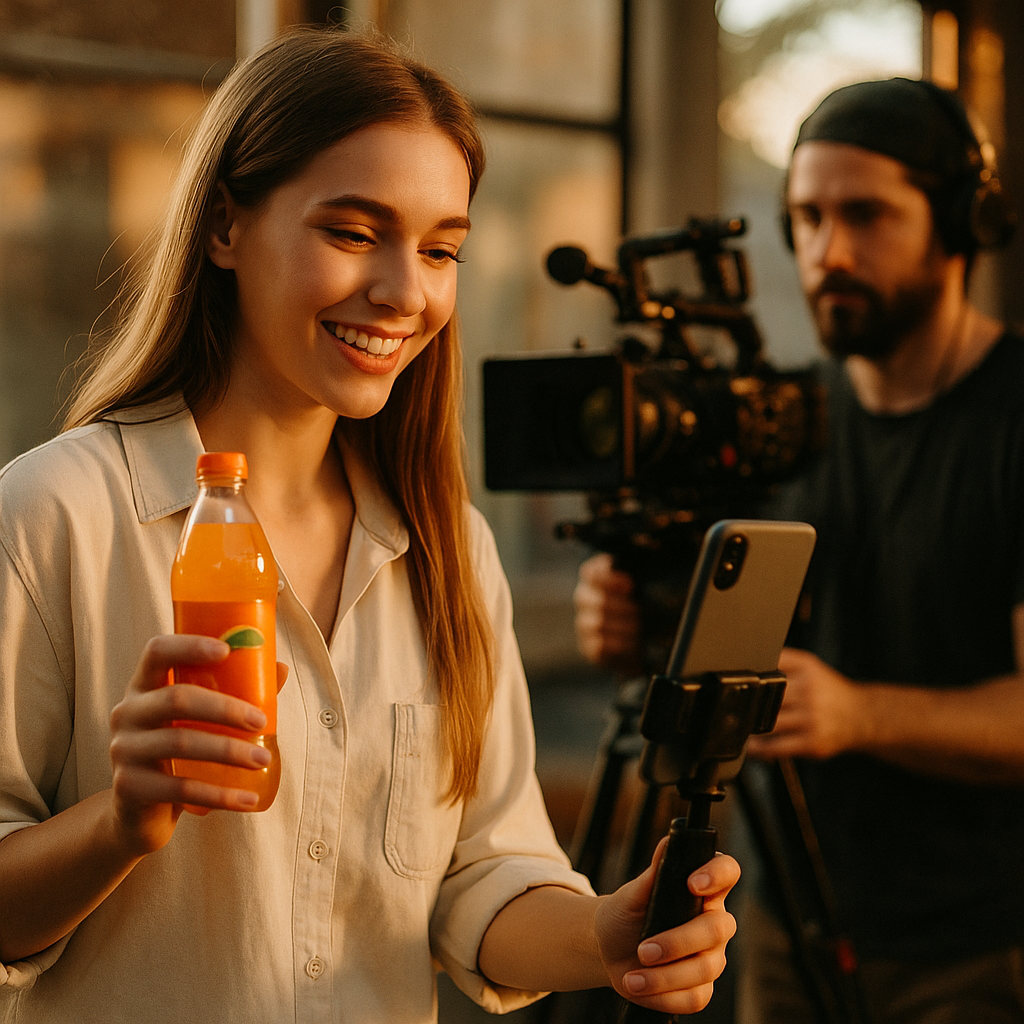
Vertical short-form drama is generating eight-figure revenue for some creator studios, and brands that treat it like a standard sponsored post are leaving most of that value on the table. The format demands a fundamentally different integration architecture — one that serves the algorithm, the audience, and your legal team at the same time.
Why Scripted Episodic Content Changes the Commerce Equation
Traditional influencer placements are transactional. A creator mentions your product, posts it, and the impression window closes within 48 hours. Scripted vertical drama operates on a different logic entirely. Episodes compound. Audiences return. Search indexing on YouTube means episode three of a series might drive product discovery six months after it publishes.
That compounding dynamic is what makes episodic series ROI so fundamentally different from one-off sponsored content. A single well-integrated brand moment inside a drama series can resurface every time a new viewer binge-watches from the beginning. You are not buying a post. You are buying recurring real estate inside a piece of content with a long half-life.
The format is growing fast. Short-form drama (episodes typically between 60 seconds and 8 minutes) has exploded across TikTok’s LIVE ecosystem, YouTube Shorts, and the longer-form YouTube feed simultaneously. Series-format content now routinely outperforms one-off posts on retention metrics, which directly feeds both platforms’ distribution algorithms.
Brands investing in scripted vertical series are effectively buying long-tail content real estate — each episode becomes a recurring discovery surface, not a depreciating post.
Product Integration: Narrative First, Product Second
The cardinal sin of brand integration in scripted content is making the product feel like an interruption. Audiences who watch episodic drama are invested in characters and story arcs. The moment they sense a commercial break, retention drops and the algorithm notices.
The operational framework that works looks like this: the product solves a problem that already exists in the script, not a problem invented to accommodate the product. A skincare brand integrated into a drama about a competitive figure skater works when the character’s pre-competition routine becomes a natural scene, not when the character suddenly announces she loves moisturizer.
Brands should push creative teams toward what the industry calls “narrative utility.” Ask one question before approving any integration: does the product move the story forward, or does it pause the story to deliver a message? If it pauses the story, rewrite it. For practical guidance on structuring these briefs from the start, the brand integration brief for scripted drama framework is a useful starting point for your creative and legal teams.
The best integrations give the product a recurring presence across episodes rather than a one-time cameo. A beverage brand that appears in episode one, becomes a plot-relevant object in episode three, and gets referenced again in episode seven has built genuine brand memory. That costs more to develop but delivers audience retention data that a single product mention never could.
Disclosure Language That Doesn’t Kill the Narrative
This is where brands frequently make avoidable legal and creative mistakes simultaneously. The FTC’s guidelines on endorsements and material connections are unambiguous: paid partnerships in scripted content require clear, conspicuous disclosure. “Clear and conspicuous” means a viewer who isn’t looking for the disclosure should still encounter it. Burying “#ad” in a 30-hashtag caption does not meet that standard.
The good news: disclosure and storytelling are not inherently in conflict. The mechanics that work across both TikTok and YouTube include on-screen text disclosure in the first three seconds of the episode (matching the pace of the content, not shrunk into a corner), a verbal acknowledgment by the creator or narrator that feels native to the show’s tone, and platform-native tools like TikTok’s Branded Content toggle and YouTube’s paid promotion disclosure checkbox. Use all three, not one.
One operational note: if the series features AI-generated talent or synthetic characters, disclosure requirements extend to the AI nature of that content on many platforms. For brands working with AI talent layers in their drama productions, see the guidance on microdrama integration for AI talent for how to structure those disclosures correctly.
A common mistake is drafting disclosure language in legal and then handing it to the creator to deliver verbatim. The result sounds like a legal disclaimer and tanks viewer retention. The better process: legal sets the non-negotiable requirements, creative translates them into language that fits the show’s voice, legal reviews the translation. It takes more cycles upfront but saves you the compliance risk of a disclosure that fails the conspicuousness test.
Commerce CTAs Inside Episodic Content: Timing and Friction
A CTA in scripted drama has to earn its place the same way the product integration does. Drop a “link in bio” prompt at the climax of an episode and you will see a measurable retention cliff in your analytics. Time it wrong and you train your audience to skip the product moment.
The highest-performing commerce CTA structures in vertical drama follow an end-card or post-resolution placement model: the emotional payoff of the scene lands first, then the CTA appears as the scene closes or transitions. On TikTok, this means placing your Shop integration or product link prompt in the final five seconds. On YouTube, it means using end cards, pinned comments, and chapter markers to drive clicks without interrupting viewing.
TikTok Shop’s integration into scripted content has matured significantly. Creators can tag products directly within video, and brands can run affiliate structures where the creator earns per sale rather than per post, aligning creator incentives directly with commerce outcomes. For brands optimizing attribution inside scripted series, affiliate-linked product tagging is currently the most accurate measurement option available at scale.
YouTube’s approach differs. Longer episode formats (three to eight minutes) allow for mid-episode product cards without the same retention penalty, because audiences in that format are conditioned to more content-dense viewing. Use YouTube’s product shelf feature beneath videos, and coordinate with creators to include a verbal CTA that references the shelf directly. The redundancy across verbal, on-screen, and below-fold touchpoints compounds click-through meaningfully.
Algorithm Distribution: What Both Platforms Actually Reward
Running a series simultaneously on TikTok and YouTube is not simply a matter of uploading the same file to both platforms. Each algorithm weights different signals, and a production that optimizes purely for one will underperform on the other.
TikTok’s For You Page favors completion rate, share velocity, and comment engagement in the first hour. That means vertical drama episodes need a hook in the first two seconds strong enough to prevent swipe-aways, and a cliffhanger or emotional beat at the end strong enough to generate comments. Series work well here because viewers who comment “I need episode 4 NOW” are generating exactly the engagement signal TikTok’s algorithm responds to.
YouTube’s algorithm, by contrast, rewards watch time, click-through rate from thumbnails, and subscriber return rate. This means the same episode may need a different thumbnail strategy, a slightly expanded runtime (YouTube audiences accept longer content), and chapter markers that help the algorithm understand content structure. Cross-platform content should be treated as a modular production problem. For teams managing distribution across multiple surfaces, a modular brief for multi-surface distribution approach avoids the costly mistake of treating all platforms identically.
TikTok and YouTube don’t just have different audiences — they have different algorithmic incentive structures. A dual-platform drama strategy requires platform-specific briefs, not one brief with two upload destinations.
One underused tactic: produce a 60-90 second “recap” version of each episode specifically for TikTok, while the full 4-6 minute episode lives on YouTube. The TikTok version drives curiosity and funnels high-intent viewers to YouTube for the full episode, increasing YouTube watch time and building a cross-platform audience relationship. This architecture also lets you run separate commerce CTAs optimized for each platform’s native commerce tools.
Brief Architecture That Makes This Operational
None of the above works without a brief that gives creators clear guardrails on all four variables: product integration placement, disclosure requirements, CTA timing, and platform-specific delivery specs. Brands that hand over a single-page brief and trust the creator to sort out the rest are the ones who end up with compliance issues or content that the algorithm buries.
The brief should specify the episode beat where the product appears (scene number, not just “naturally”), the exact disclosure language approved by legal, the CTA format and timing window for each platform, and the content specifications that signal episodic structure to both algorithms. For brands building this infrastructure, the scripted vertical series brief for ROI and FTC compliance is a useful structural template that covers both the creative and legal dimensions.
Audit every episode before it publishes against a compliance checklist. Brief the creator’s production team, not just the creator. The person writing the script and the person editing the final cut both need to understand where the brand requirements sit.
What to Do Before You Commission Episode One
Map the series story arc before a single scene is scripted, identify the three to five moments across the arc where product integration serves the narrative, get legal’s disclosure language approved before production begins, and define your attribution methodology (affiliate links, unique promo codes, UTM parameters) so you can measure performance from day one. Every decision made in pre-production costs a fraction of what it costs to fix in post.
FAQ
Frequently Asked Questions
How do FTC disclosure rules apply to scripted vertical drama content?
The FTC requires that any material connection between a brand and a creator be disclosed clearly and conspicuously in the content itself — not just in captions or hashtags. For scripted drama, this means on-screen text disclosure early in the video, a verbal or written acknowledgment that fits the show’s tone, and use of platform-native tools like TikTok’s Branded Content toggle and YouTube’s paid promotion checkbox. All three layers should be used together.
Can the same episode work on both TikTok and YouTube without re-editing?
Technically yes, but strategically it underperforms. TikTok’s algorithm favors completion rate and fast engagement signals, which means shorter runtimes and stronger hooks. YouTube rewards watch time and click-through rate from thumbnails. Best practice is to produce a short recap version for TikTok and the full episode for YouTube, with platform-specific thumbnails, CTAs, and commerce integrations tailored to each platform’s native tools.
What is the best way to structure a commerce CTA inside a drama episode without hurting retention?
Place the CTA after the episode’s emotional resolution, not during it. On TikTok, this means the final three to five seconds. On YouTube, use end cards, chapter markers, and a pinned comment with the product link, plus a verbal CTA that references where to find the product. Avoid placing commerce prompts at peak narrative moments — the algorithm registers the resulting retention drop and reduces distribution.
How should brands handle product integration in AI-generated or synthetic character drama series?
AI talent in scripted content introduces an additional disclosure layer beyond standard paid partnership language. Many platforms require disclosure of AI-generated or synthetic characters separately from brand partnership disclosure. Brands should work with legal and the platform’s creator policies directly to ensure both the AI nature of the content and the commercial relationship are disclosed. Operational briefs for AI talent integrations need to specify both disclosure requirements clearly.
How many episodes should a brand-integrated drama series run to maximize ROI?
Industry data from creator studios suggests a minimum of six episodes to build audience return behavior and meaningful search indexing on YouTube. Fewer than six episodes rarely generates the compounding reach that makes the format economically superior to one-off posts. Twelve-episode arcs with a defined story resolution tend to outperform open-ended series on completion rates and overall brand recall, as audience investment in a resolved narrative arc is significantly higher.
Top Influencer Marketing Agencies
The leading agencies shaping influencer marketing in 2026
Agencies ranked by campaign performance, client diversity, platform expertise, proven ROI, industry recognition, and client satisfaction. Assessed through verified case studies, reviews, and industry consultations.
Moburst

-
2

The Shelf
Boutique Beauty & Lifestyle Influencer AgencyA data-driven boutique agency specializing exclusively in beauty, wellness, and lifestyle influencer campaigns on Instagram and TikTok. Best for brands already focused on the beauty/personal care space that need curated, aesthetic-driven content.Clients: Pepsi, The Honest Company, Hims, Elf Cosmetics, Pure LeafVisit The Shelf → -
3

Audiencly
Niche Gaming & Esports Influencer AgencyA specialized agency focused exclusively on gaming and esports creators on YouTube, Twitch, and TikTok. Ideal if your campaign is 100% gaming-focused — from game launches to hardware and esports events.Clients: Epic Games, NordVPN, Ubisoft, Wargaming, Tencent GamesVisit Audiencly → -
4

Viral Nation
Global Influencer Marketing & Talent AgencyA dual talent management and marketing agency with proprietary brand safety tools and a global creator network spanning nano-influencers to celebrities across all major platforms.Clients: Meta, Activision Blizzard, Energizer, Aston Martin, WalmartVisit Viral Nation → -
5

The Influencer Marketing Factory
TikTok, Instagram & YouTube CampaignsA full-service agency with strong TikTok expertise, offering end-to-end campaign management from influencer discovery through performance reporting with a focus on platform-native content.Clients: Google, Snapchat, Universal Music, Bumble, YelpVisit TIMF → -
6

NeoReach
Enterprise Analytics & Influencer CampaignsAn enterprise-focused agency combining managed campaigns with a powerful self-service data platform for influencer search, audience analytics, and attribution modeling.Clients: Amazon, Airbnb, Netflix, Honda, The New York TimesVisit NeoReach → -
7

Ubiquitous
Creator-First Marketing PlatformA tech-driven platform combining self-service tools with managed campaign options, emphasizing speed and scalability for brands managing multiple influencer relationships.Clients: Lyft, Disney, Target, American Eagle, NetflixVisit Ubiquitous → -
8

Obviously
Scalable Enterprise Influencer CampaignsA tech-enabled agency built for high-volume campaigns, coordinating hundreds of creators simultaneously with end-to-end logistics, content rights management, and product seeding.Clients: Google, Ulta Beauty, Converse, AmazonVisit Obviously →