


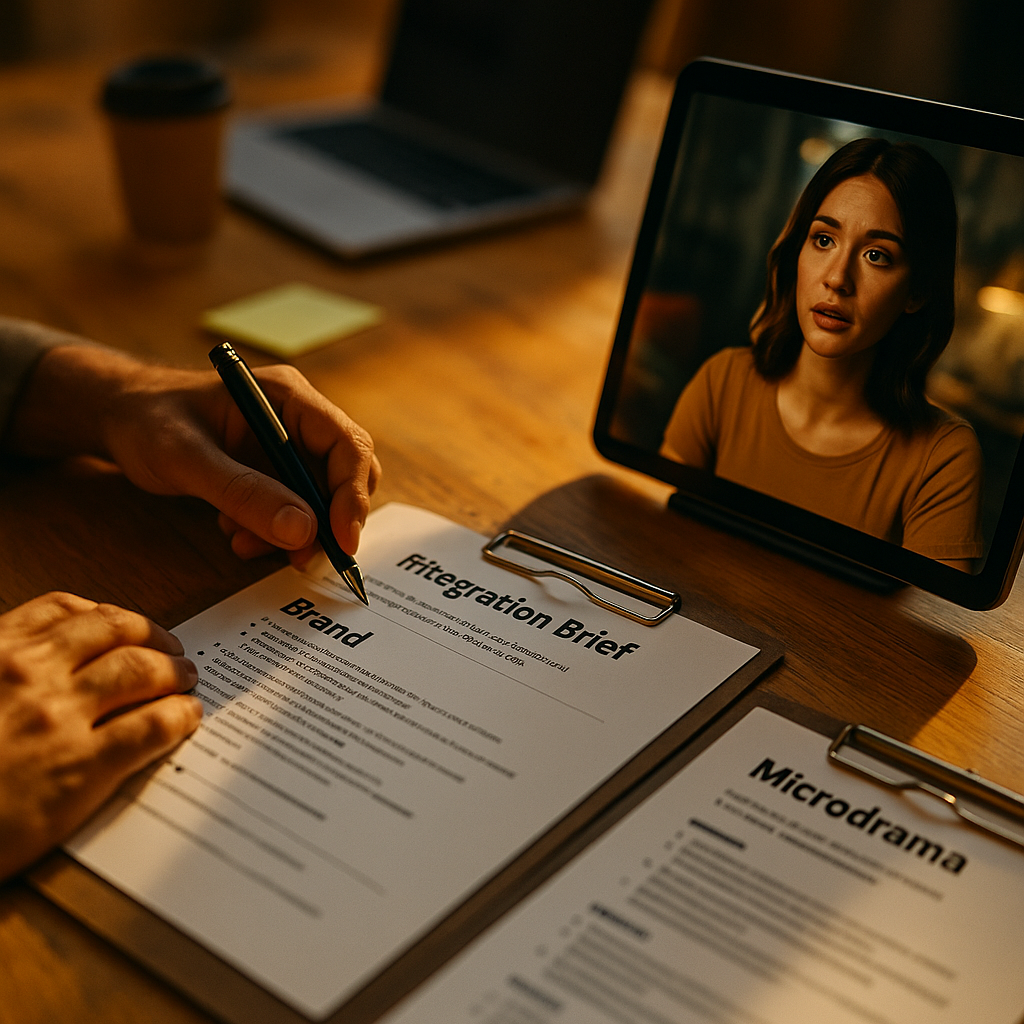
Dhar Mann built a content empire on moral-lesson microdramas. Brands noticed. Now the format is everywhere, and the production stack has changed completely. Brand microdrama integration no longer means hiring a creator with a camera and a conscience. It means orchestrating human talent, generative video tools, and brand narrative inside a single production brief. Most marketing teams are writing that brief wrong.
Why the Microdrama Format Has Become a Brand Asset Class
Short-form scripted drama on TikTok, Instagram Reels, and YouTube Shorts now generates completion rates that pre-roll advertisers would trade their entire upfront budgets to achieve. According to Sprout Social benchmark data, scripted narrative content consistently outperforms both talking-head tutorials and product demos on saves and shares, the two metrics most predictive of algorithmic amplification.
The format works because it borrows from soap opera logic: compressed emotional stakes, relatable conflict, and a resolution that lands in under 90 seconds. When a brand is woven into that arc naturally, it doesn’t feel like an ad. When it’s bolted on as an end-card, audiences clock it instantly and disengage.
The complication in 2026 is that production expectations have accelerated faster than most brand teams can staff. Audiences now compare independent creator microdramas against AI-augmented series from mid-sized studios. The visual benchmark has risen. Generative assets, from AI-generated background environments to synthetic voiceover layers and motion-stabilized B-roll, are filling production gaps that used to require six-figure budgets. For brands, this creates opportunity and risk simultaneously.
Generative assets lower the production floor. They do not lower the storytelling bar. The brief you write determines which direction your series travels.
What a Talent-Layer Integration Brief Actually Controls
Most creative briefs stop at tone, messaging pillars, and FTC disclosure requirements. A talent-layer integration brief goes further. It defines exactly where human performance sits relative to generative elements in the final output. Think of it as a production constitution for a hybrid creative team.
The brief needs to answer five structural questions before a single script scene is written:
- Character ownership: Is the central character portrayed by a real human creator, a synthetic avatar, or a blend where a creator’s likeness is extended through AI tooling?
- Scene jurisdiction: Which scenes require human performance for emotional credibility, and which can be handled by generative assets without compromising authenticity?
- Brand integration placement: Is the brand a plot element (a product the character actively uses to resolve conflict) or environmental (present in the setting)?
- Voice and dialogue ownership: Who approves final script language, and what is the revision protocol when generative drafts diverge from brand voice?
- Attribution and disclosure architecture: How is AI-generated content disclosed in compliance with FTC guidelines, and does that disclosure live in the caption, on-screen, or both?
Skipping any of these produces the downstream problems that brand teams complain about most: inconsistent character portrayal across episodes, brand mentions that feel forced, and compliance exposure when generative elements aren’t properly disclosed.
For a deeper look at how these structural decisions translate into deliverable specs, the framework in scripted vertical drama integration provides a practical starting scaffold.
The Three-Layer Production Model
The most operationally efficient approach separates production into three distinct layers, each with its own brief section and approval gate.
Layer one: Human performance core. This is the irreplaceable creative nucleus. Real talent delivers dialogue, emotional reaction, and physical product interaction. The brief should specify minimum on-camera time per episode, performance style (naturalistic versus heightened drama), and any creator-specific brand safety guardrails. Creators like Dhar Mann’s stable of performers bring audience trust. That trust lives in their faces, not in the surrounding environment. Protect it by keeping the performance brief uncluttered.
Layer two: Generative asset shell. Backgrounds, transitions, atmospheric B-roll, and in some cases synthetic supporting characters all fall here. Tools like Runway Gen-3, Sora-integrated workflows, and ElevenLabs audio layers are now standard in professional creator productions. The brief needs to specify which generative tools are pre-approved, what visual style guide the AI outputs must match, and who reviews generative assets before they reach the editor.
Layer three: Brand narrative architecture. This is where your product or service lives in the story. The brief should define the integration moment with scene-level precision, not just “feature the product naturally.” Specify: which character uses it, what problem it solves in that episode, and what the emotional payoff is for the audience. Vague instructions like “integrate organically” are how brands end up with a 3-second logo flash that nobody remembers.
If your team is also thinking about how these episodic structures compound over time compared to one-off posts, the analysis on episodic vs. one-off sponsored content ROI is worth a read before committing to a series format.
Writing the Brief Section by Section
A talent-layer integration brief for AI-assisted microdramas has eight working sections. Here’s what each one needs to contain and what it’s protecting against.
Series premise and world rules (200 words max): Define the fictional universe. What are the stakes? What are the emotional themes? This section prevents script drift across episodes, especially when multiple writers or AI drafting tools are generating content in parallel.
Creator/talent specifications: Name the human performers, their role in each episode, their approved content categories, and any exclusivity windows. If a creator’s AI-generated likeness is being used in any scene, this section must include explicit written consent language and the scope of that consent. This is not optional.
Generative asset specifications: List approved tools, approved visual styles with reference images, and a clear prohibition list. If your brand has strict visual identity standards, generative outputs need to pass brand compliance review before editorial assembly.
Brand integration map: A scene-by-scene breakdown, not episode-level, of where and how the brand appears. Include the emotional context of each integration. A skincare brand appearing when a character is preparing for a job interview lands differently than the same product appearing in a comedic chaos scene.
Script approval workflow: Define who holds final script approval, what the turnaround SLA is, and whether AI-generated draft scripts require human rewrite before talent receives them. Most professional creator studios are now using AI for first-draft scripting. Know which workflows your production partner uses.
FTC and platform compliance section: Specify disclosure language, placement, and format for every platform in the distribution plan. FTC disclosure requirements apply to AI-generated content, not just paid partnerships. Get this in writing before production begins.
Performance metrics and episode-level KPIs: Define success at the episode level, not just campaign level. Completion rate, save rate, and comment sentiment are measurable per episode. Build in a review gate between episodes two and three to adjust integration approach based on real data.
Rights and usage specifications: Who owns the final assets? Can the brand repurpose individual scenes for paid media? Does the creator retain any rights to AI-generated versions of their likeness? This section prevents expensive disputes after delivery.
For teams managing these briefs across multiple formats and surfaces simultaneously, the modular brief framework for multi-surface distribution offers a practical template for avoiding version-control chaos.
The Compliance Layer Most Brands Miss
Here’s what catches brand teams off-guard: AI-generated content in branded series sits at the intersection of three separate regulatory conversations. There’s the FTC paid endorsement framework, platform-specific AI content labeling requirements (TikTok and YouTube both have mandatory disclosure fields for AI-generated content), and emerging state-level legislation around synthetic media and likeness rights.
A brief that doesn’t explicitly address all three creates compliance gaps. The production partner may handle FTC disclosures correctly while missing YouTube’s AI label requirement. Or the creator’s contract covers their human performance but doesn’t address an AI-generated version of their voice used in a bonus episode. These are not hypothetical risks.
Teams building compliance-forward creative programs should also be referencing brief frameworks built for FTC and ROI alignment as a secondary check against their internal legal review.
The safest brief is one where every AI-generated element is explicitly named, approved, and disclosed before a single scene ships. Build the disclosure architecture first, then build the story around it.
Distribution Brief: Where the Brief Meets the Algorithm
A well-written talent-layer brief also contains a distribution section that most brand teams treat as an afterthought. It shouldn’t be. The algorithmic logic of TikTok, Instagram, and YouTube Shorts treats scripted content differently depending on how the first three seconds are constructed, whether captions are optimized for search intent, and whether the content triggers save behavior in the first episode.
Specify in the brief: the hook format for each episode (dialogue-first versus visual-action-first), caption structure including relevant search terms without keyword stuffing, and the optimal posting cadence for building episode-to-episode audience retention. TikTok’s creative guidelines and Meta’s content best practices publish updated recommendations on this regularly. Pull from those, not from campaign intuition.
The brief should also identify which scenes have the highest clip potential for cross-platform redistribution. Emotional peaks, product resolution moments, and character confrontations all clip well. Build those moments deliberately rather than hoping they emerge from the story organically.
For teams thinking about how scripted content intersects with broader creator series economics, scripted series brand deals and attribution covers the commercial mechanics in detail.
The Operational Reality for Brand Teams
Building a microdrama series with AI integration is not a campaign activation. It’s a content operation. It requires a production partner who understands both traditional scripted storytelling and generative tooling workflows. It requires internal brand stakeholders who can turn around script approvals in 48 hours, not two weeks. And it requires a brief architecture that is specific enough to maintain brand integrity across six to twelve episodes without micromanaging every creative decision the production team makes.
The brands winning in this format right now are not the ones with the largest budgets. They’re the ones who wrote the best brief before shooting began.
Start there: audit your current integration brief against the eight sections above, identify which ones are missing or vague, and rebuild those sections before your next production kick-off. The brief is the product. Everything else is execution.
FAQs
What is a talent-layer integration brief in the context of brand microdramas?
A talent-layer integration brief is a production document that defines exactly where and how human creator performance intersects with AI-generated or generative assets in a scripted short-form series. It covers character ownership, scene jurisdiction for generative elements, brand integration placement within the story, script approval workflows, and compliance disclosures. It goes beyond a standard creative brief by addressing the technical and legal complexity of hybrid human-AI productions.
How should brands disclose AI-generated content in sponsored microdramas?
Brands must address disclosure at three levels: FTC paid endorsement requirements, platform-specific AI content labeling (TikTok and YouTube both have mandatory AI disclosure fields), and any applicable state-level synthetic media legislation. Disclosure language should be specified in the brief before production begins, and it should cover both AI-generated visual elements and any AI-generated voice or likeness use. Working with legal counsel familiar with current FTC guidance is strongly recommended.
Which generative AI tools are commonly used in brand microdrama production?
Production teams are currently using tools like Runway Gen-3 for generative video backgrounds and transitions, ElevenLabs for AI voice synthesis, and Sora-integrated workflows for atmospheric B-roll. The specific tools approved for a production should be listed in the brief’s generative asset specifications section, along with a visual style guide that AI outputs must match before editorial assembly.
How do you measure ROI on a brand microdrama series?
ROI measurement for scripted microdrama series should be tracked at the episode level, not just the campaign level. Key metrics include video completion rate, save rate (a strong predictor of algorithmic amplification), comment sentiment analysis, and downstream conversion signals tied to brand integration moments. Building a performance review gate between episodes two and three allows brands to adjust integration approach based on real data before committing to the full series.
What makes a microdrama brand integration feel natural versus forced?
Natural integration requires the brand to function as a plot element rather than a logo placement. The product or service should solve the emotional or practical conflict the character faces in that episode. The integration moment should be mapped in the brief at the scene level, with the emotional context of the integration explicitly defined. Vague instructions like “integrate organically” consistently produce forced-feeling results because they leave interpretation to the production team rather than the brand strategist.
Top Influencer Marketing Agencies
The leading agencies shaping influencer marketing in 2026
Agencies ranked by campaign performance, client diversity, platform expertise, proven ROI, industry recognition, and client satisfaction. Assessed through verified case studies, reviews, and industry consultations.
Moburst

-
2

The Shelf
Boutique Beauty & Lifestyle Influencer AgencyA data-driven boutique agency specializing exclusively in beauty, wellness, and lifestyle influencer campaigns on Instagram and TikTok. Best for brands already focused on the beauty/personal care space that need curated, aesthetic-driven content.Clients: Pepsi, The Honest Company, Hims, Elf Cosmetics, Pure LeafVisit The Shelf → -
3

Audiencly
Niche Gaming & Esports Influencer AgencyA specialized agency focused exclusively on gaming and esports creators on YouTube, Twitch, and TikTok. Ideal if your campaign is 100% gaming-focused — from game launches to hardware and esports events.Clients: Epic Games, NordVPN, Ubisoft, Wargaming, Tencent GamesVisit Audiencly → -
4

Viral Nation
Global Influencer Marketing & Talent AgencyA dual talent management and marketing agency with proprietary brand safety tools and a global creator network spanning nano-influencers to celebrities across all major platforms.Clients: Meta, Activision Blizzard, Energizer, Aston Martin, WalmartVisit Viral Nation → -
5

The Influencer Marketing Factory
TikTok, Instagram & YouTube CampaignsA full-service agency with strong TikTok expertise, offering end-to-end campaign management from influencer discovery through performance reporting with a focus on platform-native content.Clients: Google, Snapchat, Universal Music, Bumble, YelpVisit TIMF → -
6

NeoReach
Enterprise Analytics & Influencer CampaignsAn enterprise-focused agency combining managed campaigns with a powerful self-service data platform for influencer search, audience analytics, and attribution modeling.Clients: Amazon, Airbnb, Netflix, Honda, The New York TimesVisit NeoReach → -
7

Ubiquitous
Creator-First Marketing PlatformA tech-driven platform combining self-service tools with managed campaign options, emphasizing speed and scalability for brands managing multiple influencer relationships.Clients: Lyft, Disney, Target, American Eagle, NetflixVisit Ubiquitous → -
8

Obviously
Scalable Enterprise Influencer CampaignsA tech-enabled agency built for high-volume campaigns, coordinating hundreds of creators simultaneously with end-to-end logistics, content rights management, and product seeding.Clients: Google, Ulta Beauty, Converse, AmazonVisit Obviously →