


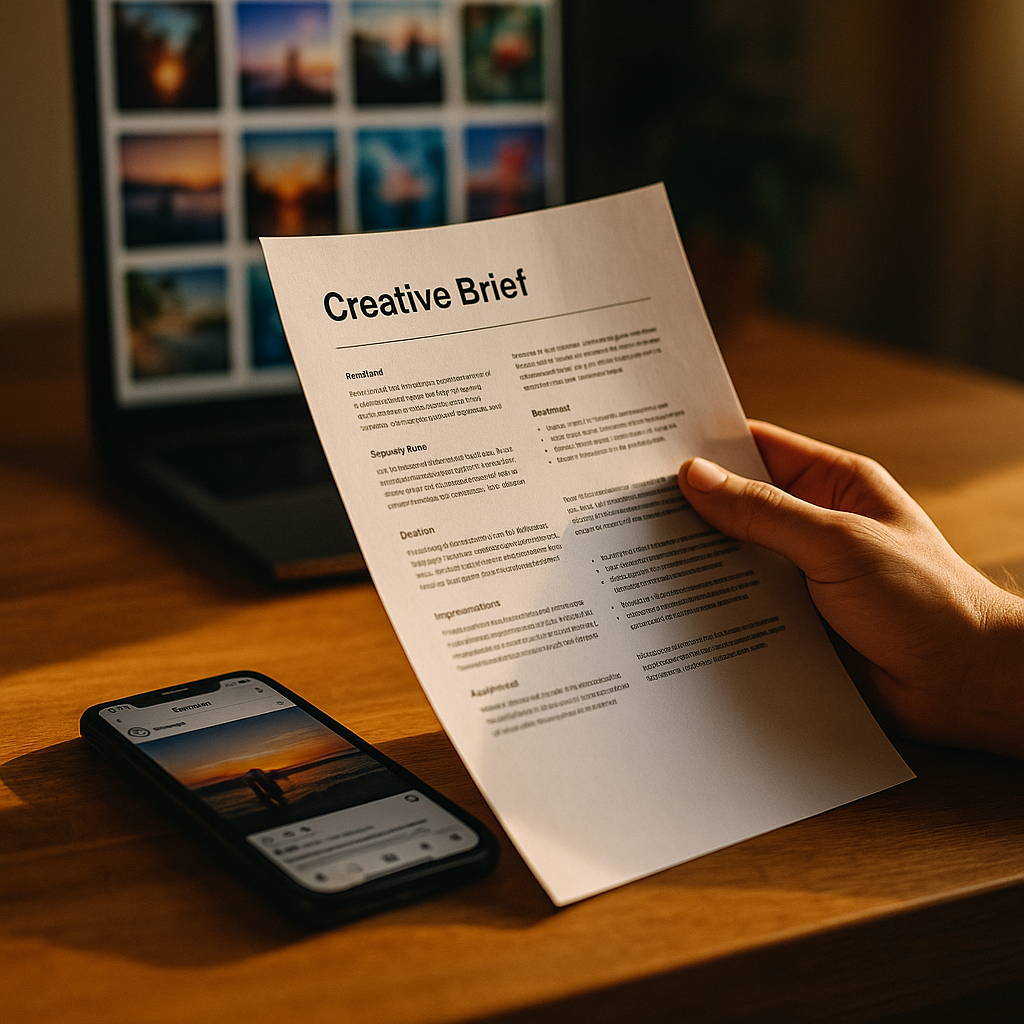
TikTok’s own creator tools flag “recycled” content before it publishes. Meta’s algorithm quietly suppresses assets it recognizes as duplicates from other platforms. So why do half the briefs sitting in brand marketing folders still ask creators to “adapt” the same video for every channel? The anti-repost creative standard isn’t a nice-to-have anymore. It’s the difference between a campaign that gets amplified and one that gets buried.
If your influencer program still measures success by asset count instead of platform-native performance, you’re funding invisible content. Let’s fix that.
Why Platforms Punish Repurposed Content Now
Every major platform has spent the last two years training its recommendation systems to detect duplication. Watermarks, aspect ratios, compression artifacts, even caption phrasing patterns — these are all signals now. TikTok has publicly discussed deprioritizing content bearing other platforms’ watermarks. Instagram Reels does the same. YouTube Shorts increasingly favors native uploads over cross-posted files with visible branding from elsewhere.
This isn’t platforms being petty. It’s economics. Each platform wants viewers to stay, and content that smells like a leftover from somewhere else signals low investment. The algorithm reads that as low quality, regardless of how good the underlying idea is.
A single video reformatted for five platforms doesn’t reach five audiences — it reaches a fraction of one, because each platform’s system suppresses what it detects as duplicate or non-native content.
Brands that don’t understand this keep paying full asset rates for content that dies in distribution. That’s not a creative problem. It’s a briefing problem.
What “Anti-Repost” Actually Means in a Brief
Anti-repost doesn’t mean producing entirely separate campaigns for every channel — nobody has that budget. It means directing creators to build platform-native variations from a shared creative core, each engineered for the mechanics of where it will live.
A useful mental model: think of the campaign idea as the seed, and each platform’s asset as a distinct plant grown in different soil. Same DNA, different root system. A TikTok version needs jump cuts and text-on-screen pacing designed for sound-off scroll behavior. A YouTube long-form cut needs narrative arc and retention hooks at the 30-second and 3-minute marks. A LinkedIn post needs a completely different tone: fewer jump cuts, more authority signaling, minimal trend-chasing.
This is exactly the thinking behind our short-form video creative brief for algorithm distribution — the brief has to specify platform mechanics, not just messaging.
The Three Layers of a Unique-Asset Brief
- Narrative core: the single idea, hook, or proof point every asset must carry, regardless of format.
- Platform grammar: pacing, aspect ratio, caption style, and sound design native to where the asset will run.
- Distribution intent: what you want the platform’s algorithm to reward — watch time, saves, shares, comments — and creative choices that serve that specific signal.
Skip any one of these layers and you’re back to reposting with extra steps.
The Cost of Getting This Wrong
Consider the math most brands never run. A campaign with three creators, each asked to produce one asset repurposed across four platforms, generates twelve pieces of content. Sounds efficient on a spreadsheet. In practice, if platform algorithms suppress ten of those twelve because they read as duplicates, you’ve paid full production and usage fees for content that barely surfaces.
Compare that to three creators each producing platform-native assets for two channels — six pieces total, but each one built to earn organic reach. Fewer assets, dramatically more impressions per dollar spent. This is the ROI conversation brand teams need to have before they negotiate creator rates, not after the content underperforms.
eMarketer’s research on social platform engagement consistently shows native-format content outperforming cross-posted assets on watch time and completion rate — the two metrics that most heavily influence algorithmic distribution today.
Briefing for Originality Without Killing Creator Voice
Here’s the tension every brand marketer knows: tight briefs risk sounding scripted, and scripted content underperforms almost everywhere. Creators know their audience’s ear for authenticity better than any brand strategist does. So how do you demand originality without demanding a specific video?
The answer is briefing outcomes, not outputs. Tell the creator what emotional beat, proof point, or call-to-action the asset needs to hit — then let them determine the exact words, pacing, and visual choices that will land with their specific audience. This is the same principle behind our guide on how to rewrite creator briefs for casual-over-polished content: specificity about goals, flexibility about execution.
Brands that micromanage scripts word-for-word tend to get content that performs identically across creators — and identical content triggers the same duplication-detection flags platforms use for cross-posted assets, even when it’s technically all “original” footage.
Over-scripting creates a different version of the repost problem: creative that’s original in origin but repetitive in execution, which algorithms and audiences both recognize instantly.
Building the Brief: A Practical Framework
Every brief aiming for platform amplification should answer five questions before a creator ever picks up a camera:
- What is the platform-specific success metric? Watch time on TikTok is not the same currency as click-through on a YouTube description link.
- What native format best serves that metric? A poll sticker, a duet chain, a countdown feature — pick the mechanic before the message.
- What creative freedoms does the creator have? Specify what’s fixed (disclosure language, key claims) and what’s flexible (tone, visuals, structure).
- What does “done” look like, per platform? Give creators a clear definition of a finished, platform-native asset rather than a generic deliverable count.
- How will originality be verified? Increasingly, brands run creative through duplication-detection tools before approving usage rights.
Our breakdown of the watch-time-first brief for winning TikTok’s algorithm walks through exactly how to operationalize step one and two together, which is where most briefs fall apart.
Format Innovation Is Your Anti-Repost Insurance
The safest way to guarantee originality is to brief formats that simply can’t be lifted and reposted without looking broken. Interactive formats — polls, AR filters, countdown stickers, animated collages — are inherently platform-locked. You can’t repost an Instagram countdown sticker to TikTok and have it function the same way.
This is why formats covered in our pieces on poll-driven and AR creator deliverables and Instagram animated collages are gaining budget share. They’re not just engaging — they’re structurally resistant to the lazy repurposing that tanks reach.
Multi-episode series formats offer similar protection. Because each episode builds narrative continuity specific to a platform’s audience and cadence, they’re much harder to strip and reuse elsewhere. Our guide to multi-episode creator series briefs covers how this format also strengthens FTC disclosure consistency, a compliance bonus most brands don’t realize they’re getting.
Compliance and Rights: The Overlooked Risk
There’s a legal dimension to anti-repost standards that often gets missed in creative discussions. When creators repost the same asset across multiple brand deals or multiple platforms without clear usage terms, brands run into murky whitelisting and paid amplification rights. Did the original agreement cover usage on a platform the creator later reposted to independently? Does the disclosure language required by the FTC’s endorsement guidelines still apply correctly when content moves context?
Unique, platform-specific assets sidestep a lot of this ambiguity. Each piece of content has a clear origin, a clear usage scope, and a disclosure treatment matched to its platform’s norms. That’s cleaner for legal review and easier to audit if a regulator or platform ever asks questions.
Measuring Whether It’s Working
Don’t just track reach. Track the ratio between reach and asset count, platform by platform. If native asset production is working, you should see rising impressions-per-dollar and completion rate even as raw asset volume goes down. Tools like Sprout Social’s analytics suite and platform-native dashboards from Meta Business Suite can isolate native versus cross-posted performance if you tag assets correctly at the briefing stage.
Set a baseline before you shift strategy. Pull the last quarter’s repost-heavy campaign data, then compare it against a native-first pilot with the same creators. Most brand teams that run this comparison never go back to the old model — the gap in cost-per-view is usually too stark to ignore.
Where This Is Headed
Expect platforms to keep tightening duplication detection, not loosening it. As AI-generated content floods feeds, native, verifiably original creative becomes a scarcer and more valuable signal — both to algorithms and to audiences increasingly skeptical of anything that feels mass-produced. Brands that build anti-repost thinking into their briefing process now won’t be scrambling to retrofit it later.
Start with one campaign: rebrief it for platform-native originality using the five-question framework above, measure the lift, then scale what works.
FAQs
What is the anti-repost creative standard?
It’s a briefing approach that directs creators to produce unique, platform-native assets instead of reusing or lightly editing the same content across multiple channels. The goal is to earn organic algorithmic amplification, which platforms increasingly withhold from duplicated or cross-posted content.
Does repurposing content always hurt performance?
Not always, but heavy repurposing without platform-specific adaptation usually reduces reach because algorithms detect and deprioritize duplicate signals like watermarks, aspect ratios, and repeated compression patterns.
How can brands verify creator content is original?
Many brands now run submitted assets through duplication-detection tools before approving usage rights, and build originality checkpoints directly into the brief’s approval workflow rather than relying on trust alone.
Does this approach cost more than traditional repurposing?
It can cost more per asset, but typically costs less per impression because native content earns significantly more organic reach. Brands should measure cost-per-view, not cost-per-asset, when comparing the two approaches.
Which formats naturally support the anti-repost standard?
Interactive and platform-locked formats — polls, AR filters, countdown stickers, animated collages, and multi-episode series — are structurally harder to repost elsewhere, making them a reliable way to enforce originality by design.
How does this affect FTC disclosure compliance?
Unique, platform-specific assets make disclosure treatment easier to manage because each piece has a clear origin and usage scope, reducing ambiguity when content is repurposed or amplified across contexts.
FAQs
What is the anti-repost creative standard?
It’s a briefing approach that directs creators to produce unique, platform-native assets instead of reusing or lightly editing the same content across multiple channels. The goal is to earn organic algorithmic amplification, which platforms increasingly withhold from duplicated or cross-posted content.
Does repurposing content always hurt performance?
Not always, but heavy repurposing without platform-specific adaptation usually reduces reach because algorithms detect and deprioritize duplicate signals like watermarks, aspect ratios, and repeated compression patterns.
How can brands verify creator content is original?
Many brands now run submitted assets through duplication-detection tools before approving usage rights, and build originality checkpoints directly into the brief’s approval workflow rather than relying on trust alone.
Does this approach cost more than traditional repurposing?
It can cost more per asset, but typically costs less per impression because native content earns significantly more organic reach. Brands should measure cost-per-view, not cost-per-asset, when comparing the two approaches.
Which formats naturally support the anti-repost standard?
Interactive and platform-locked formats — polls, AR filters, countdown stickers, animated collages, and multi-episode series — are structurally harder to repost elsewhere, making them a reliable way to enforce originality by design.
How does this affect FTC disclosure compliance?
Unique, platform-specific assets make disclosure treatment easier to manage because each piece has a clear origin and usage scope, reducing ambiguity when content is repurposed or amplified across contexts.
Top Influencer Marketing Agencies
The leading agencies shaping influencer marketing in 2026
Agencies ranked by campaign performance, client diversity, platform expertise, proven ROI, industry recognition, and client satisfaction. Assessed through verified case studies, reviews, and industry consultations.
Moburst

-
2

The Shelf
Boutique Beauty & Lifestyle Influencer AgencyA data-driven boutique agency specializing exclusively in beauty, wellness, and lifestyle influencer campaigns on Instagram and TikTok. Best for brands already focused on the beauty/personal care space that need curated, aesthetic-driven content.Clients: Pepsi, The Honest Company, Hims, Elf Cosmetics, Pure LeafVisit The Shelf → -
3

Audiencly
Niche Gaming & Esports Influencer AgencyA specialized agency focused exclusively on gaming and esports creators on YouTube, Twitch, and TikTok. Ideal if your campaign is 100% gaming-focused — from game launches to hardware and esports events.Clients: Epic Games, NordVPN, Ubisoft, Wargaming, Tencent GamesVisit Audiencly → -
4

Viral Nation
Global Influencer Marketing & Talent AgencyA dual talent management and marketing agency with proprietary brand safety tools and a global creator network spanning nano-influencers to celebrities across all major platforms.Clients: Meta, Activision Blizzard, Energizer, Aston Martin, WalmartVisit Viral Nation → -
5

The Influencer Marketing Factory
TikTok, Instagram & YouTube CampaignsA full-service agency with strong TikTok expertise, offering end-to-end campaign management from influencer discovery through performance reporting with a focus on platform-native content.Clients: Google, Snapchat, Universal Music, Bumble, YelpVisit TIMF → -
6

NeoReach
Enterprise Analytics & Influencer CampaignsAn enterprise-focused agency combining managed campaigns with a powerful self-service data platform for influencer search, audience analytics, and attribution modeling.Clients: Amazon, Airbnb, Netflix, Honda, The New York TimesVisit NeoReach → -
7

Ubiquitous
Creator-First Marketing PlatformA tech-driven platform combining self-service tools with managed campaign options, emphasizing speed and scalability for brands managing multiple influencer relationships.Clients: Lyft, Disney, Target, American Eagle, NetflixVisit Ubiquitous → -
8

Obviously
Scalable Enterprise Influencer CampaignsA tech-enabled agency built for high-volume campaigns, coordinating hundreds of creators simultaneously with end-to-end logistics, content rights management, and product seeding.Clients: Google, Ulta Beauty, Converse, AmazonVisit Obviously →