


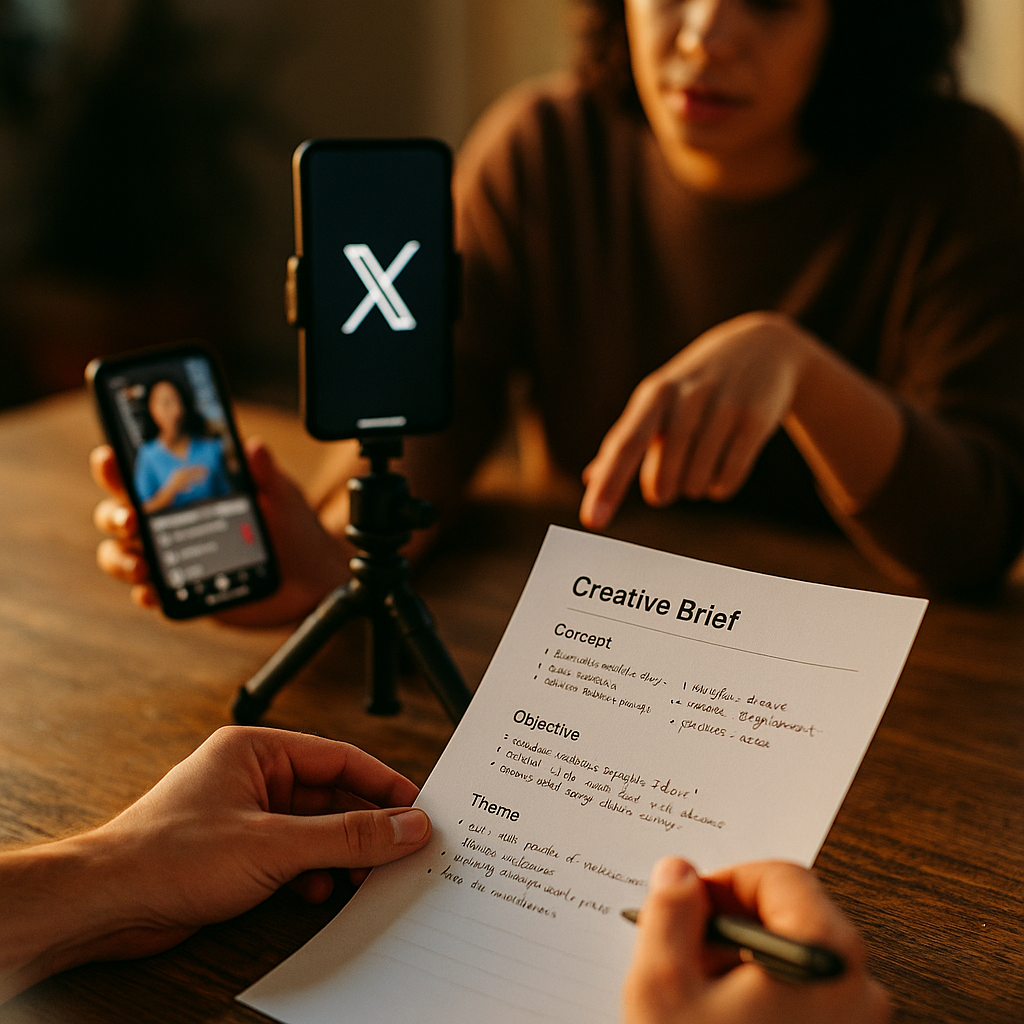
X now withholds ad revenue share from creators who repost, template, or recycle content it deems unoriginal — and its detection has gotten aggressive enough that entire accounts have lost payout eligibility overnight. If your influencer program touches X’s Creator Revenue Sharing or the broader Creator Subscriptions ecosystem, the brief you hand creators now needs to satisfy an algorithm’s definition of “original,” not just your brand’s style guide.
That’s a harder problem than it sounds. Most creative briefs were built for reach and engagement, not for passing a platform’s originality filter. This guide breaks down what actually qualifies, and how to write briefs that don’t accidentally disqualify your creators from rewards programs they should be earning from.
Why X Is Policing “Originality” So Hard Right Now
X’s ad revenue sharing model pays creators based on engagement from verified users, but the company has been explicit: content that’s duplicated, lightly edited, or lifted from other platforms doesn’t count. This isn’t a minor policy footnote. It’s a direct response to a flood of reposted TikTok clips and recycled meme content that gamed engagement without adding anything new.
The platform’s stance mirrors a broader shift across the industry. Sprout Social’s research on platform algorithm changes has repeatedly flagged originality as a ranking signal, not just a monetization gate. Meta and TikTok have quietly done the same thing with their creator funds. X just made the rule more explicit and the enforcement more visible.
If your brief could be executed identically on three different platforms without changes, it’s not original enough for X’s rewards program — it’s just distribution.
For brands, this matters because a disqualified creator post doesn’t just lose payout. It often loses reach too, since X’s distribution algorithm and its monetization eligibility increasingly run on overlapping signals.
What “Original” Actually Means in Practice
X hasn’t published a precise technical definition, but based on creator reports and platform guidance, three factors seem to matter most:
- Provenance: Was the content created for X first, or repurposed from elsewhere with minimal edits?
- Narrative structure: Does the post build an argument, a story, or a perspective, rather than just captioning a clip?
- Native format use: Does it use X-specific features (threads, polls, Community Notes context, native video) in a way that couldn’t exist on another platform?
That third point is the one brands miss most. A brief that says “post the TikTok to X” is functionally asking a creator to fail the originality test before they’ve even hit publish.
Formats That Reliably Qualify
Not every format survives X’s scrutiny equally well. Based on what’s been working for brand-sponsored creators through late 2025 and into now, five formats consistently clear the bar.
Thread-native storytelling. Multi-post threads that build a narrative arc — problem, tension, resolution — read as native to X in a way single images never will. This is the format X’s own algorithm seems to reward most consistently, likely because threads generate longer dwell time and more replies.
Live commentary and real-time reaction. Posting during an event, launch, or breaking industry moment creates content that literally could not have been made anywhere else first. Timing is the originality signal here.
Data-and-opinion hybrids. A creator sharing a stat alongside a strong, personal take performs well precisely because it’s synthesis, not repost. This overlaps with formats we’ve covered for other platforms — the cost breakdown format works particularly well adapted into thread form, since it pairs a concrete number with a creator’s independent framing.
Serialized creator arcs. Content built as part of an ongoing series, rather than a one-off, tends to score well because it demonstrates continuity a repost can’t fake. If you’re already running multi-episode creator series elsewhere, extending the arc onto X with platform-native recaps is low-lift and high-yield.
Raw, unpolished reaction content. Ironically, the rougher the edit, the more “original” it often reads to both audiences and, apparently, X’s detection systems. This lines up with what we’ve seen work in casual-over-polished briefs generally — polish increasingly signals repurposed ad content, not native creator voice.
What Fails, Even When It Feels Original
Here’s where a lot of brands get burned. A piece of content can feel fresh to your marketing team and still get flagged as low-originality by X’s systems.
Screen recordings of other platforms’ content, even with new commentary layered on top, are a common rejection trigger. So is cross-posting the exact same caption and asset across five platforms simultaneously, a practice that’s standard in most multi-format UGC shoots but needs a platform-specific edit pass before it hits X.
Template-heavy formats are another risk zone. If every creator in your program is filling in the same visual template with different products, X’s systems can detect the pattern across accounts even if no single post looks like a direct copy. This is worth flagging if you’re running comparison-style content — the taste-test ranking format is a good example of something that needs enough creator-specific variation to avoid looking mass-produced.
The Repost-With-Commentary Trap
This one deserves its own callout because it’s the most common mistake brands make when briefing for X specifically.
Adding a few sentences of commentary above an embedded video or screenshot feels like added value. To a human, it often is. But X’s originality scoring appears to weight the ratio of new content to embedded content, and thin commentary over someone else’s video rarely clears the threshold. If commentary is the core value, it needs to be substantial: a genuine thread-length take, not a caption.
Writing the Brief: A Practical Template
Your creative brief for X rewards-eligible content needs a few sections that most standard influencer briefs skip entirely.
- Platform-native mandate. State explicitly that the asset must be conceived for X, not adapted from another platform’s content calendar.
- Format specification. Name the exact native feature required: thread, poll-embedded post, quote-post with substantial added commentary, or live-reaction post tied to a specific timestamp.
- Voice and pacing notes. Because thread structure matters so much, give creators a rough beat sheet: hook post, context, tension or contrarian angle, resolution, call to action.
- Originality checklist. A simple pass/fail list the creator can self-audit against before submission — no embedded third-party video longer than a few seconds, no identical captions used elsewhere, no template visual reused across other creators in the campaign.
- Disclosure language. FTC-compliant disclosure requirements don’t disappear because the content is platform-native. Reference FTC endorsement guidance directly in the brief so creators aren’t guessing.
Compare this to how you’d brief for algorithm-driven short-form video elsewhere. The short-form video brief for algorithm distribution focuses heavily on watch-time hooks in the first three seconds. X’s originality standard asks for something closer to the opposite: depth and narrative payoff over instant hook velocity.
Measuring Whether It Worked
Once content is live, don’t just track engagement. Track reward eligibility status directly, if X surfaces it in the creator’s dashboard, and ask creators to report back. eMarketer’s creator economy research has noted that payout transparency remains inconsistent across platforms, so brands often have better visibility into what’s working by aggregating creator-reported data than by waiting on platform-side reporting.
Build a simple qualifying-vs-non-qualifying tracker across your creator roster. Over two or three campaign cycles, you’ll start to see which creators and which formats consistently clear the bar. That data becomes your brief template for the next cycle, and it’s more reliable than any single platform announcement about what “originality” means this quarter.
Reward-program eligibility is quietly becoming a creator selection criterion in its own right — the creators who consistently qualify are, almost by definition, the ones producing content your audience hasn’t seen five times already.
FAQs
What counts as “original content” for X’s rewards program?
Content that’s conceived and produced specifically for X, uses native features like threads or polls, and adds substantial new narrative or perspective rather than repackaging video or text from another platform.
Can a creator repost TikTok content to X and still qualify for revenue sharing?
Generally no. Direct reposts or lightly captioned embeds of content originally made for another platform are the most common reason creators lose reward eligibility on X.
Does adding commentary to an embedded video make it original enough?
Only if the commentary is substantial and forms the bulk of the value, such as a full thread-length analysis. A short caption over someone else’s video rarely qualifies.
How can brands audit creator content before publishing to avoid disqualification?
Build an originality checklist into the creative brief covering embedded content limits, caption uniqueness across platforms, and template reuse across the creator roster, then have creators self-certify before submission.
Does X’s originality standard affect organic reach, not just monetization?
Increasingly yes. Reports from creators suggest the same signals used for reward eligibility overlap with distribution ranking, so low-originality content may see reduced reach even without a formal payout penalty.
FAQs
What counts as “original content” for X’s rewards program?
Content that’s conceived and produced specifically for X, uses native features like threads or polls, and adds substantial new narrative or perspective rather than repackaging video or text from another platform.
Can a creator repost TikTok content to X and still qualify for revenue sharing?
Generally no. Direct reposts or lightly captioned embeds of content originally made for another platform are the most common reason creators lose reward eligibility on X.
Does adding commentary to an embedded video make it original enough?
Only if the commentary is substantial and forms the bulk of the value, such as a full thread-length analysis. A short caption over someone else’s video rarely qualifies.
How can brands audit creator content before publishing to avoid disqualification?
Build an originality checklist into the creative brief covering embedded content limits, caption uniqueness across platforms, and template reuse across the creator roster, then have creators self-certify before submission.
Does X’s originality standard affect organic reach, not just monetization?
Increasingly yes. Reports from creators suggest the same signals used for reward eligibility overlap with distribution ranking, so low-originality content may see reduced reach even without a formal payout penalty.
Start your next X-specific brief by naming the exact native format required and attaching a five-point originality checklist creators can self-audit against before they hit publish. That single addition will save more rewards-program headaches than any amount of after-the-fact content review.
Top Influencer Marketing Agencies
The leading agencies shaping influencer marketing in 2026
Agencies ranked by campaign performance, client diversity, platform expertise, proven ROI, industry recognition, and client satisfaction. Assessed through verified case studies, reviews, and industry consultations.
Moburst

-
2

The Shelf
Boutique Beauty & Lifestyle Influencer AgencyA data-driven boutique agency specializing exclusively in beauty, wellness, and lifestyle influencer campaigns on Instagram and TikTok. Best for brands already focused on the beauty/personal care space that need curated, aesthetic-driven content.Clients: Pepsi, The Honest Company, Hims, Elf Cosmetics, Pure LeafVisit The Shelf → -
3

Audiencly
Niche Gaming & Esports Influencer AgencyA specialized agency focused exclusively on gaming and esports creators on YouTube, Twitch, and TikTok. Ideal if your campaign is 100% gaming-focused — from game launches to hardware and esports events.Clients: Epic Games, NordVPN, Ubisoft, Wargaming, Tencent GamesVisit Audiencly → -
4

Viral Nation
Global Influencer Marketing & Talent AgencyA dual talent management and marketing agency with proprietary brand safety tools and a global creator network spanning nano-influencers to celebrities across all major platforms.Clients: Meta, Activision Blizzard, Energizer, Aston Martin, WalmartVisit Viral Nation → -
5

The Influencer Marketing Factory
TikTok, Instagram & YouTube CampaignsA full-service agency with strong TikTok expertise, offering end-to-end campaign management from influencer discovery through performance reporting with a focus on platform-native content.Clients: Google, Snapchat, Universal Music, Bumble, YelpVisit TIMF → -
6

NeoReach
Enterprise Analytics & Influencer CampaignsAn enterprise-focused agency combining managed campaigns with a powerful self-service data platform for influencer search, audience analytics, and attribution modeling.Clients: Amazon, Airbnb, Netflix, Honda, The New York TimesVisit NeoReach → -
7

Ubiquitous
Creator-First Marketing PlatformA tech-driven platform combining self-service tools with managed campaign options, emphasizing speed and scalability for brands managing multiple influencer relationships.Clients: Lyft, Disney, Target, American Eagle, NetflixVisit Ubiquitous → -
8

Obviously
Scalable Enterprise Influencer CampaignsA tech-enabled agency built for high-volume campaigns, coordinating hundreds of creators simultaneously with end-to-end logistics, content rights management, and product seeding.Clients: Google, Ulta Beauty, Converse, AmazonVisit Obviously →