


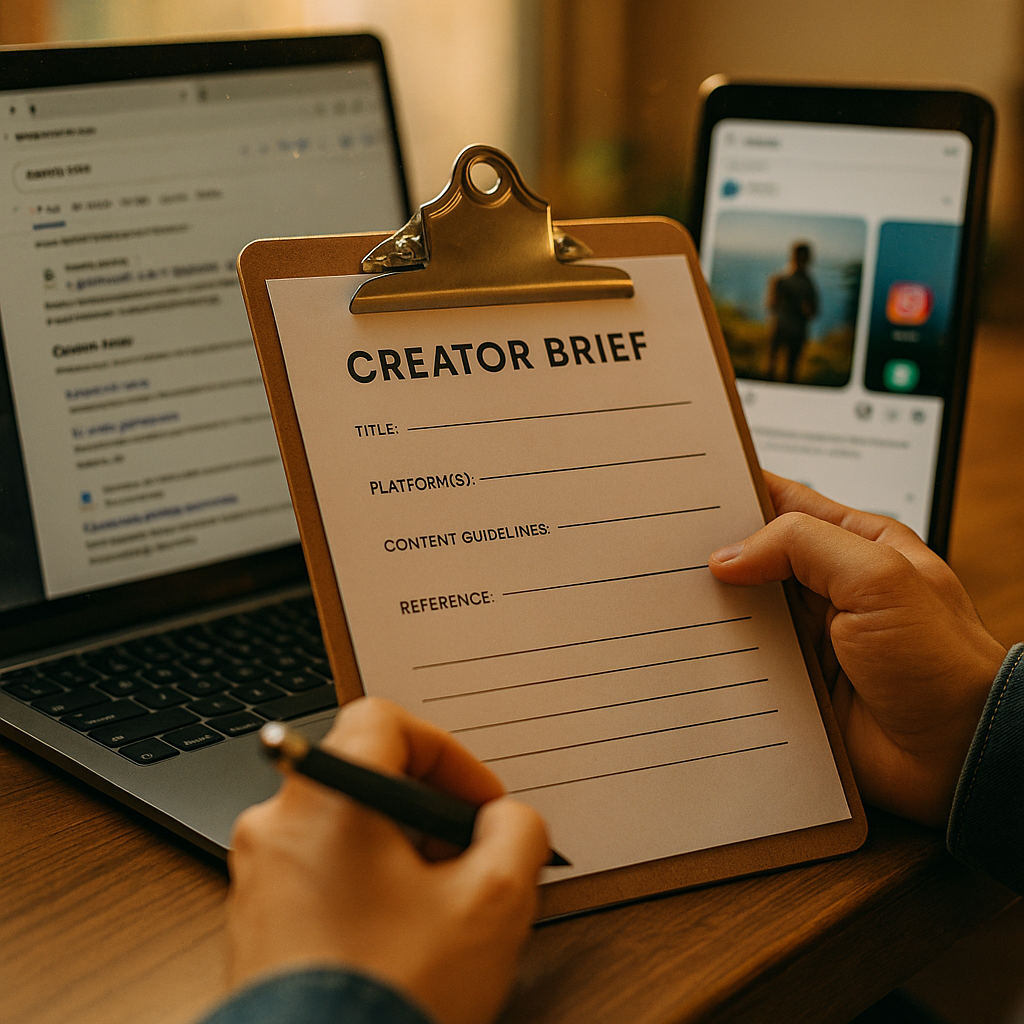
Roughly 40% of Gen Z now starts product searches on TikTok or Instagram rather than Google. Meanwhile, generative search engines like Perplexity and Google’s AI Overviews are pulling creator content directly into answers. If your campaign brief isn’t built for both surfaces, you’re funding half a campaign. Here’s how to fix that with a unified brief template.
Two Discovery Engines, One Brief Gap
Most campaign briefs were designed for a world that no longer exists. They optimize for reach and engagement on a single platform, brief the creator on tone and format, and call it done. That approach made sense when algorithmic feeds were the only discovery layer. It doesn’t hold up when a brand mention inside a creator’s video transcript can surface inside a Perplexity answer card six months later.
The problem isn’t that marketers don’t understand SEO or social algorithms separately. It’s that nobody has built a systematic brief structure that serves both simultaneously. Social feed algorithms (TikTok’s For You Page, Instagram’s Reels ranking, YouTube’s recommendation engine) optimize for watch time, save rates, and engagement velocity. Generative search engines index the text layer: transcripts, captions, structured descriptions, and cited sources. These are different surfaces with different ranking signals, but they’re fed by the same piece of creator content.
A creator video that earns 2M views on TikTok but has a transcript full of vague brand language will never surface in an AI Overview. Specificity is the bridge between social virality and search visibility.
What AI-Curated Feeds Actually Reward
Before you can brief for both surfaces, you need to be precise about what each one rewards.
Social feed algorithms in the current environment prioritize originality signals over reshared content. TikTok’s algorithm, per documentation from TikTok for Business, weights completion rate and re-watch behavior heavily. Instagram’s Reels ranking has moved toward “send rate” (how often a viewer shares content to a friend via DM) as a top signal. YouTube rewards session initiation: does your creator’s video start a viewing session rather than end one?
What this means for your brief: the creator needs a hook that earns completion, not just a click. The brand message needs to live inside the content, not bolt on at the end. Authenticity isn’t a soft nice-to-have; it’s a ranking variable. Creators who feel scripted produce content that underperforms on completion metrics, and low completion tanks algorithmic distribution regardless of follower count. This is why hook testing and brief quality have become a core performance lever, not an afterthought.
How Generative Search Engines Index Creator Content
Generative search is a different beast. Google’s AI Overviews, Perplexity, and Google Search more broadly pull from indexed text. For creator content, that means video transcripts (auto-generated or manual), YouTube descriptions, podcast show notes, and any linked landing pages. The content that gets cited tends to share a few characteristics: it makes specific factual claims, it names the brand clearly and in context, and it uses the language patterns that match how people phrase queries.
Think about how a consumer might ask an AI assistant about your product category. They’re asking things like “what’s the best magnesium supplement for sleep” or “which skincare brand do dermatologists actually recommend.” If your creator’s transcript says “this stuff is amazing and honestly changed my routine,” that’s not going to surface in an AI answer. If the transcript says “I’ve used [Brand X] magnesium glycinate nightly for 60 days and my sleep tracker data improved by 23%,” that’s citable, specific, and query-matched.
This is also where clean MarTech data infrastructure starts to matter upstream. If your brand’s product pages, press assets, and owned content don’t reflect the same language the creator uses, the AI has no authoritative source to validate against.
The Unified Brief Template: Section by Section
Below is the working template structure. Each section is designed to serve both discovery surfaces.
1. Campaign Context Block
State the campaign objective, product or service, and the specific audience segment. Keep it to three sentences. Both the creator and any AI indexing the content need clear topical context upfront.
2. Mandatory Brand Language (The “Citable Claim”)
Include two to three specific claims the creator must work into the content naturally. These should be factual, verifiable, and phrased the way consumers ask questions. Example: “Reduces fine lines in 28 days, clinically tested” rather than “powerful anti-aging formula.” This is the layer that feeds generative search. Require the creator to say these claims on-camera or include them verbatim in captions and descriptions.
3. Hook Framework (Social Algorithm Layer)
Give the creator two or three approved hook angles to test. These should be curiosity gaps, counterintuitive claims, or relatable problems. Specify that the hook must land within the first three seconds. Reference your data-driven workflow here: hook performance should be tracked separately from overall post performance so you can iterate across the campaign.
4. Transcript and Caption Requirements
This is the section most brands skip entirely. Specify that the creator must submit a transcript or caption draft before posting. The transcript should include: the citable claim (verbatim or near-verbatim), the product name (full brand name, not a nickname), and at least one search-relevant phrase from a provided keyword list. Keep the keyword list to five terms. More than five creates unnatural scripting.
5. Format and Platform Specifications
List required formats per platform (vertical 9:16 for TikTok/Reels, horizontal or square for YouTube, etc.) and specify whether a repurposed cut is authorized for paid amplification. If paid is in scope, note it explicitly. Paid amplification at scale requires separate rights language, and this is where most brands lose time in post-production.
6. Attribution and Tracking Setup
Include the UTM parameters or promo code structure. Specify the landing page URL the creator will reference. If you’re running revenue attribution beyond engagement, include the pixel or SDK integration instructions the creator or their team needs to know about.
7. Compliance Checklist
FTC disclosure requirements are non-negotiable. Per FTC guidelines, #ad or #sponsored must be clear and conspicuous, not buried in hashtags. Include your brand’s specific disclosure language. Add a row for platform-specific paid partnership labels if applicable.
The Metadata Layer Most Briefs Miss
Even if you nail the on-camera content, generative search indexing depends heavily on what surrounds the video. YouTube descriptions are crawled. Podcast show notes are indexed. Instagram bio links matter. Brief your creators on these explicitly.
For YouTube: require a 150-word minimum description that opens with the citable claim, includes the full product name, and links to the campaign landing page in the first two lines. For podcasts and long-form audio: require a structured show notes document with timestamps, the brand mention in the intro paragraph, and a dedicated product link. For Instagram: the caption should mirror the citable claim language from the transcript, since Instagram captions are now indexed by Google.
The creator’s video is the top of the iceberg. The description, caption, transcript, and linked content beneath it are what generative search actually reads. Brief for both layers or your search visibility is accidental at best.
Testing and Iteration Logic
A unified brief isn’t a one-time document; it’s a testing framework. Run two hook variants per campaign and track completion rate separately from click-through. Monitor which creator posts surface in AI search results using tools like Perplexity queries on your own brand terms and Google’s AI Overviews for your target keywords. If a specific citable claim keeps appearing in AI results, that’s signal: double down on that language across future creator briefs.
The cross-platform ROI measurement framework matters here because social reach and search visibility are both legitimate value drivers, but they require different measurement windows. Social performance peaks in 48-72 hours. Search indexing and AI citation can generate value for 12-18 months. Your reporting cadence needs to account for both.
Connect this to your paid media budget architecture to make sure search-driven longevity is factored into the value calculation when you’re justifying creator fees internally. Content that generates AI citations six months post-campaign is earning media value that never shows up in a standard post-campaign report. Start capturing it.
Build your next brief using this template, run it for one campaign cycle, and then audit which creator assets surfaced in generative search results for your target keywords. That audit will tell you more about your content strategy than three months of engagement reports.
Frequently Asked Questions
What makes a creator brief work for both social algorithms and generative search?
A unified brief needs to serve two layers simultaneously. Social algorithms reward completion rate, save behavior, and authentic hooks in the first three seconds. Generative search engines index text: transcripts, captions, and descriptions. The brief must require specific, factual brand claims spoken or written verbatim, a hook framework optimized for watch time, and structured metadata requirements (YouTube descriptions, caption language) that use search-relevant keyword phrases naturally.
How specific do citable claims need to be for AI search visibility?
Very specific. Vague brand language like “game-changing formula” or “totally transformed my skin” won’t surface in AI Overviews or Perplexity answers because it can’t be matched to a consumer query. Claims need a measurable outcome, a timeframe, or a qualifying detail. “Reduces dark circles in 21 days, dermatologist tested” is citable. “My under-eyes look so much better” is not. Brief your creators with two to three pre-approved citable claims they must include verbatim or near-verbatim.
Do I need separate briefs for each platform or can one brief cover all of them?
One master brief with platform-specific addendums is the most efficient structure. The core elements (citable claims, hook framework, attribution setup, compliance checklist) should be consistent across platforms. What changes per platform is format specification, caption length, metadata requirements, and repurposing rights. Keep the master brief at the top and append a one-page platform sheet for each distribution channel the creator will post on.
How do I track whether creator content is actually appearing in AI search results?
Run manual audits using Perplexity and Google’s AI Overviews for your target product category keywords and brand name queries. Search for the specific phrasing from your citable claims. Tools like Semrush and Ahrefs are beginning to add AI Overview tracking features. Set a monthly audit cadence rather than tracking at the time of posting, since indexing and citation can take weeks to months after a creator publishes.
Is FTC compliance different when creator content surfaces in AI search results?
The FTC’s disclosure requirements apply to the original content, and those disclosures should follow the content wherever it’s distributed or cited. If an AI search result quotes or embeds a creator’s video, the original paid partnership disclosure within that content still needs to be visible. Brands should ensure disclosure language is included in transcripts and captions, not just as on-screen text, so it’s preserved when the text layer is indexed or cited by generative search tools.
Top Influencer Marketing Agencies
The leading agencies shaping influencer marketing in 2026
Agencies ranked by campaign performance, client diversity, platform expertise, proven ROI, industry recognition, and client satisfaction. Assessed through verified case studies, reviews, and industry consultations.
Moburst

-
2

The Shelf
Boutique Beauty & Lifestyle Influencer AgencyA data-driven boutique agency specializing exclusively in beauty, wellness, and lifestyle influencer campaigns on Instagram and TikTok. Best for brands already focused on the beauty/personal care space that need curated, aesthetic-driven content.Clients: Pepsi, The Honest Company, Hims, Elf Cosmetics, Pure LeafVisit The Shelf → -
3

Audiencly
Niche Gaming & Esports Influencer AgencyA specialized agency focused exclusively on gaming and esports creators on YouTube, Twitch, and TikTok. Ideal if your campaign is 100% gaming-focused — from game launches to hardware and esports events.Clients: Epic Games, NordVPN, Ubisoft, Wargaming, Tencent GamesVisit Audiencly → -
4

Viral Nation
Global Influencer Marketing & Talent AgencyA dual talent management and marketing agency with proprietary brand safety tools and a global creator network spanning nano-influencers to celebrities across all major platforms.Clients: Meta, Activision Blizzard, Energizer, Aston Martin, WalmartVisit Viral Nation → -
5

The Influencer Marketing Factory
TikTok, Instagram & YouTube CampaignsA full-service agency with strong TikTok expertise, offering end-to-end campaign management from influencer discovery through performance reporting with a focus on platform-native content.Clients: Google, Snapchat, Universal Music, Bumble, YelpVisit TIMF → -
6

NeoReach
Enterprise Analytics & Influencer CampaignsAn enterprise-focused agency combining managed campaigns with a powerful self-service data platform for influencer search, audience analytics, and attribution modeling.Clients: Amazon, Airbnb, Netflix, Honda, The New York TimesVisit NeoReach → -
7

Ubiquitous
Creator-First Marketing PlatformA tech-driven platform combining self-service tools with managed campaign options, emphasizing speed and scalability for brands managing multiple influencer relationships.Clients: Lyft, Disney, Target, American Eagle, NetflixVisit Ubiquitous → -
8

Obviously
Scalable Enterprise Influencer CampaignsA tech-enabled agency built for high-volume campaigns, coordinating hundreds of creators simultaneously with end-to-end logistics, content rights management, and product seeding.Clients: Google, Ulta Beauty, Converse, AmazonVisit Obviously →