


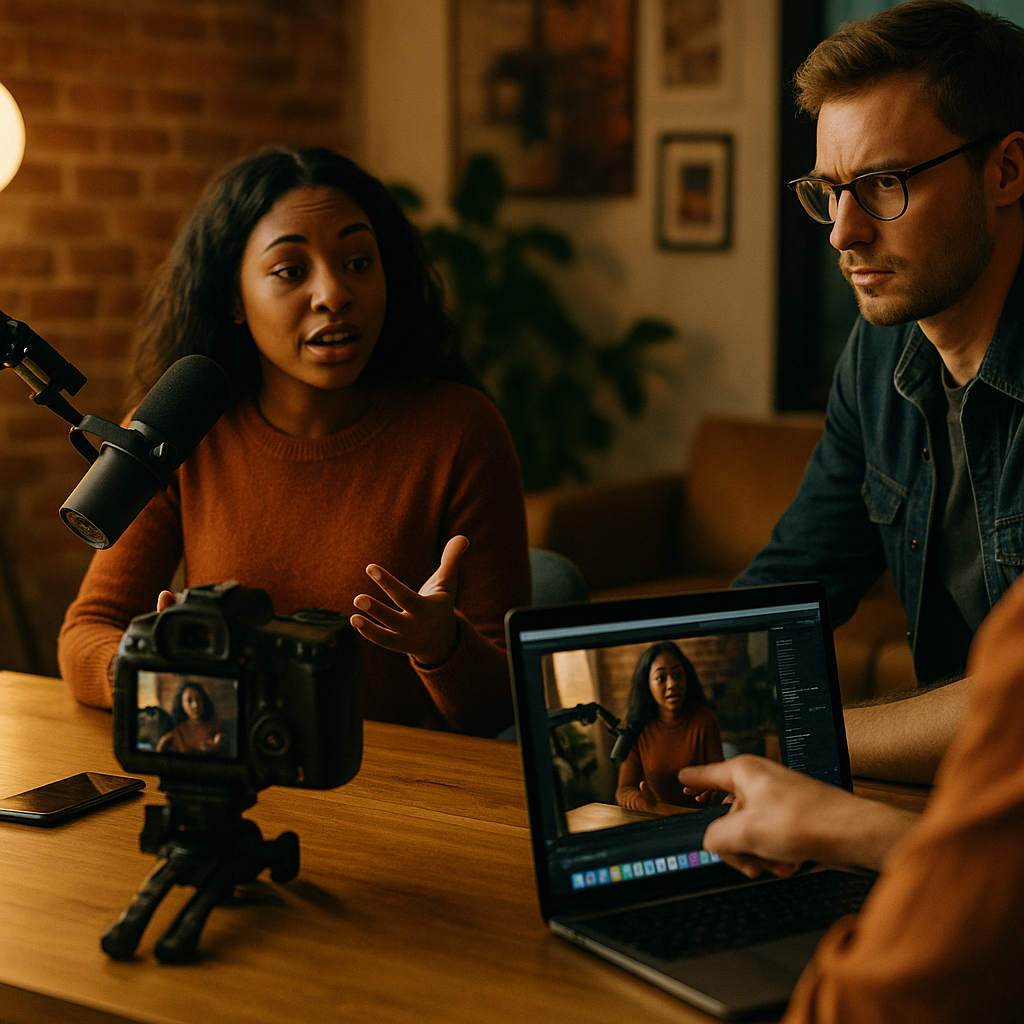
Some of the highest-output content teams in marketing right now don’t have an office, a holding company, or an account director. They have a creator, three editors, a booking system, and a Slack full of clients. Creator-run studios are quietly rewiring how brands source production, and most procurement teams haven’t updated their vendor checklists to match.
That gap is starting to cost people. Not in a dramatic, headline-making way — more in the slow bleed of missed deadlines, murky ownership rights, and briefs that get reinterpreted three times before anything ships.
What Is a Creator-Run Studio, Exactly?
A creator-run studio is production infrastructure built around one creator’s brand, voice, or format, but staffed and scaled like a small agency. Think of a creator with 400K followers who now employs two editors, a producer, and a part-time strategist, and who sells “content packages” to five brands a month instead of one-off posts.
This is different from a traditional influencer deal in a structural way. You’re not just paying for reach or a single deliverable. You’re buying into a production pipeline that happens to be led by a recognizable face. The creator becomes both the talent and the studio head — sourcing, briefing, shooting, editing, and often distributing across formats without ever touching a traditional agency.
It’s also distinct from the creator parent company model, where a holding entity manages multiple creators under shared contracts and back-office systems. A creator-run studio is usually singular — built around one person’s IP, even if the output scales well beyond what that person could shoot alone.
The creator isn’t just in front of the camera anymore. They’re running the P&L behind it — and that changes who brands are actually negotiating with.
Why Brands Are Suddenly Paying Attention
Three forces converged here, and none of them are going away.
- Agency costs kept climbing while output slowed. A 30-second vertical video from a mid-tier agency can still run five figures once you factor strategy, production, and revisions. Creator studios routinely undercut that by 40-60% while matching turnaround speed.
- Platforms reward native-feeling content. Algorithms across TikTok and Instagram increasingly favor content that doesn’t look like an ad. Creator-run studios, by nature, produce in the native language of the platform because that’s literally the creator’s day job. Reporting on TikTok’s trust-based algorithm makes clear that distribution now depends on perceived authenticity, not just production polish.
- The creator middle class needed a business model. Mid-tier creators without brand deals big enough to sustain them full-time started productizing their skill sets. This tracks with the broader shift toward the creator middle class outgrowing macro influencers in both volume and ROI.
Put those together and you get a sourcing category that didn’t exist three years ago, competing directly with agencies and freelance production houses for the same budget line.
The Sourcing Decision Brands Actually Face
Here’s the practical fork in the road for a brand marketer building next quarter’s content calendar. Do you go to a traditional production agency, a freelance editor network, or a creator-run studio?
Each has trade-offs, but the creator studio option flips a few assumptions that procurement teams are used to.
Agencies sell process. Freelancers sell flexibility. Creator studios sell proof — they already have an audience validating the format before you spend a dollar. That’s the pitch, and it’s a compelling one. It’s also why brands increasingly treat these studios less like vendors and more like embedded content partners.
But proof of audience isn’t proof of process. And process is exactly what breaks down when a one-person operation scales into a five-person shop overnight.
Where the Risk Actually Lives
Ask any brand that’s worked with a fast-scaling creator studio and you’ll hear a version of the same story: the first project was incredible, the third project was late, and the fifth project had a different editor with a completely different visual style.
Growth outpaces infrastructure. That’s not a knock on creators — it’s what happens to almost every service business in its first 18 months. The difference is that when a creator’s face is the brand, quality drift is harder to spot until it’s already live.
Three risk areas deserve specific attention before signing:
- Rights and usage terms. Who owns the raw footage? Can the studio repurpose your brand content for their own portfolio or another client’s campaign? Get this in writing, not in a DM thread.
- Key-person dependency. If the creator is the face and the strategist, what happens when they’re on a brand trip for three weeks? Ask about backup production capacity before you need it.
- Financial stability. Many creator studios run lean, with revenue concentrated in two or three anchor clients. That’s the same vetting logic covered in how brands should vet creator income streams — a studio that loses its biggest client can vanish fast.
A creator-run studio with no documented process is a single point of failure wearing a nice portfolio.
Operational Red Flags Procurement Teams Keep Missing
Most procurement checklists were built for agencies with legal departments and standardized contracts. Creator studios don’t fit that mold, and forcing them into it wastes everyone’s time. But skipping vetting entirely is worse.
Here’s what actually predicts whether a creator studio will scale with you or stall out mid-contract:
- Do they use a real project management system, or is scheduling happening in DMs and spreadsheets? This is the same failure mode flagged in why spreadsheets are failing brands in creator operations — it applies just as much to production studios as booking pipelines.
- Can they show you a revision workflow, or does every note get routed through the creator personally? Bottlenecking every decision through one person doesn’t scale past three or four active clients.
- What’s their contract renewal rate with existing brands? Deal churn is a real signal. Data on why 63% of creator deals don’t renew suggests retainer-based relationships consistently outperform one-off bookings — ask a creator studio if they retain clients past a single campaign.
- Do they disclose paid partnerships transparently? The FTC’s endorsement guidance applies whether the creator is a solo operator or running a full studio, and enforcement risk doesn’t disappear just because there’s a team behind the account.
How This Changes Budget Allocation
The interesting shift isn’t just where brands source production — it’s how they categorize the spend. Creator-run studios often get budgeted as “influencer marketing” when they’re functionally production vendors, which means they get evaluated on reach and engagement metrics instead of deliverable quality, timeline adherence, and usage rights.
That’s a reporting mismatch that skews ROI conversations internally. A studio that delivers flawless, on-brief video assets but has modest personal reach might get cut from next quarter’s budget because someone’s looking at follower count instead of asset performance.
Fix this by splitting the evaluation: score the creator-as-talent separately from the studio-as-vendor. Track content performance the way you’d track any production partner — turnaround time, revision cycles, brief adherence — and track the creator’s personal distribution separately, the way you’d assess any influencer partnership reach metric.
This distinction matters more as AI tools compress production timelines industry-wide. Coverage of how AI cut creator discovery costs but not vetting costs applies directly here — faster sourcing doesn’t mean faster due diligence. If anything, the vetting burden increases because there are more studios to evaluate and less standardization across them.
What to Put in the Contract
Skip the boilerplate influencer agreement template. A creator-run studio contract needs a few specific clauses that generic templates miss:
- Named production lead. Specify who on the studio side owns your account, and require notice if that person changes.
- Deliverable specs with version control. Define exactly what “final” means, how many revision rounds are included, and what triggers additional cost.
- Usage window and platform rights. Creator studios often want to repost work to their own channels for portfolio purposes. Set clear boundaries and timing.
- Exit and handoff terms. If the relationship ends, who keeps raw files? Can you take the project to another vendor without starting over?
None of this is exotic contract language. It’s the same rigor brands apply to any production vendor — it just hasn’t been standard practice in creator sourcing because the category is new enough that most legal teams haven’t built templates for it yet.
Is This a Passing Trend or a Structural Shift?
Structural, most likely. The creator economy has already crossed $250 billion in market size, and a meaningful share of that growth is coming from creators building real operational infrastructure, not just personal brand deals. eMarketer and Statista both track continued growth in creator-led commercial activity, and production services are one of the fastest-scaling categories within it.
Brands that build repeatable vetting processes now will source faster and with less risk than competitors still treating every creator studio deal as a one-off negotiation.
The Bottom Line
Treat a creator-run studio like what it is: a production vendor with a personal brand attached, not a media buy. Vet the operations, contract the deliverables, and budget the creator’s reach separately from the studio’s output quality — do that, and this becomes one of the most cost-efficient sourcing channels available right now.
FAQs
What’s the difference between a creator-run studio and a creator parent company?
A creator-run studio is typically built around one creator’s brand and production pipeline, even if it employs a small team. A creator parent company manages multiple creators under one corporate structure with shared contracts and back-office systems.
How much cheaper are creator-run studios than traditional agencies?
Brands commonly report 40-60% lower costs for comparable video deliverables, though pricing varies widely based on the creator’s niche, production complexity, and studio size.
What contract terms should brands prioritize when hiring a creator-run studio?
Focus on named production leads, clear deliverable specs with defined revision limits, usage and platform rights, and exit/handoff terms for raw files if the relationship ends.
Do FTC disclosure rules apply to creator-run studios the same way they apply to individual influencers?
Yes. Endorsement and disclosure requirements apply regardless of whether a creator operates solo or runs a full production team, and brands share responsibility for compliance.
How should brands evaluate ROI for creator-run studio partnerships?
Separate the evaluation into two tracks: production quality metrics (turnaround time, brief adherence, revision cycles) and the creator’s personal distribution reach, since bundling both under “influencer marketing” metrics skews the analysis.
FAQs
What’s the difference between a creator-run studio and a creator parent company?
A creator-run studio is typically built around one creator’s brand and production pipeline, even if it employs a small team. A creator parent company manages multiple creators under one corporate structure with shared contracts and back-office systems.
How much cheaper are creator-run studios than traditional agencies?
Brands commonly report 40-60% lower costs for comparable video deliverables, though pricing varies widely based on the creator’s niche, production complexity, and studio size.
What contract terms should brands prioritize when hiring a creator-run studio?
Focus on named production leads, clear deliverable specs with defined revision limits, usage and platform rights, and exit/handoff terms for raw files if the relationship ends.
Do FTC disclosure rules apply to creator-run studios the same way they apply to individual influencers?
Yes. Endorsement and disclosure requirements apply regardless of whether a creator operates solo or runs a full production team, and brands share responsibility for compliance.
How should brands evaluate ROI for creator-run studio partnerships?
Separate the evaluation into two tracks: production quality metrics (turnaround time, brief adherence, revision cycles) and the creator’s personal distribution reach, since bundling both under “influencer marketing” metrics skews the analysis.
Top Influencer Marketing Agencies
The leading agencies shaping influencer marketing in 2026
Agencies ranked by campaign performance, client diversity, platform expertise, proven ROI, industry recognition, and client satisfaction. Assessed through verified case studies, reviews, and industry consultations.
Moburst

-
2

The Shelf
Boutique Beauty & Lifestyle Influencer AgencyA data-driven boutique agency specializing exclusively in beauty, wellness, and lifestyle influencer campaigns on Instagram and TikTok. Best for brands already focused on the beauty/personal care space that need curated, aesthetic-driven content.Clients: Pepsi, The Honest Company, Hims, Elf Cosmetics, Pure LeafVisit The Shelf → -
3

Audiencly
Niche Gaming & Esports Influencer AgencyA specialized agency focused exclusively on gaming and esports creators on YouTube, Twitch, and TikTok. Ideal if your campaign is 100% gaming-focused — from game launches to hardware and esports events.Clients: Epic Games, NordVPN, Ubisoft, Wargaming, Tencent GamesVisit Audiencly → -
4

Viral Nation
Global Influencer Marketing & Talent AgencyA dual talent management and marketing agency with proprietary brand safety tools and a global creator network spanning nano-influencers to celebrities across all major platforms.Clients: Meta, Activision Blizzard, Energizer, Aston Martin, WalmartVisit Viral Nation → -
5

The Influencer Marketing Factory
TikTok, Instagram & YouTube CampaignsA full-service agency with strong TikTok expertise, offering end-to-end campaign management from influencer discovery through performance reporting with a focus on platform-native content.Clients: Google, Snapchat, Universal Music, Bumble, YelpVisit TIMF → -
6

NeoReach
Enterprise Analytics & Influencer CampaignsAn enterprise-focused agency combining managed campaigns with a powerful self-service data platform for influencer search, audience analytics, and attribution modeling.Clients: Amazon, Airbnb, Netflix, Honda, The New York TimesVisit NeoReach → -
7

Ubiquitous
Creator-First Marketing PlatformA tech-driven platform combining self-service tools with managed campaign options, emphasizing speed and scalability for brands managing multiple influencer relationships.Clients: Lyft, Disney, Target, American Eagle, NetflixVisit Ubiquitous → -
8

Obviously
Scalable Enterprise Influencer CampaignsA tech-enabled agency built for high-volume campaigns, coordinating hundreds of creators simultaneously with end-to-end logistics, content rights management, and product seeding.Clients: Google, Ulta Beauty, Converse, AmazonVisit Obviously →