


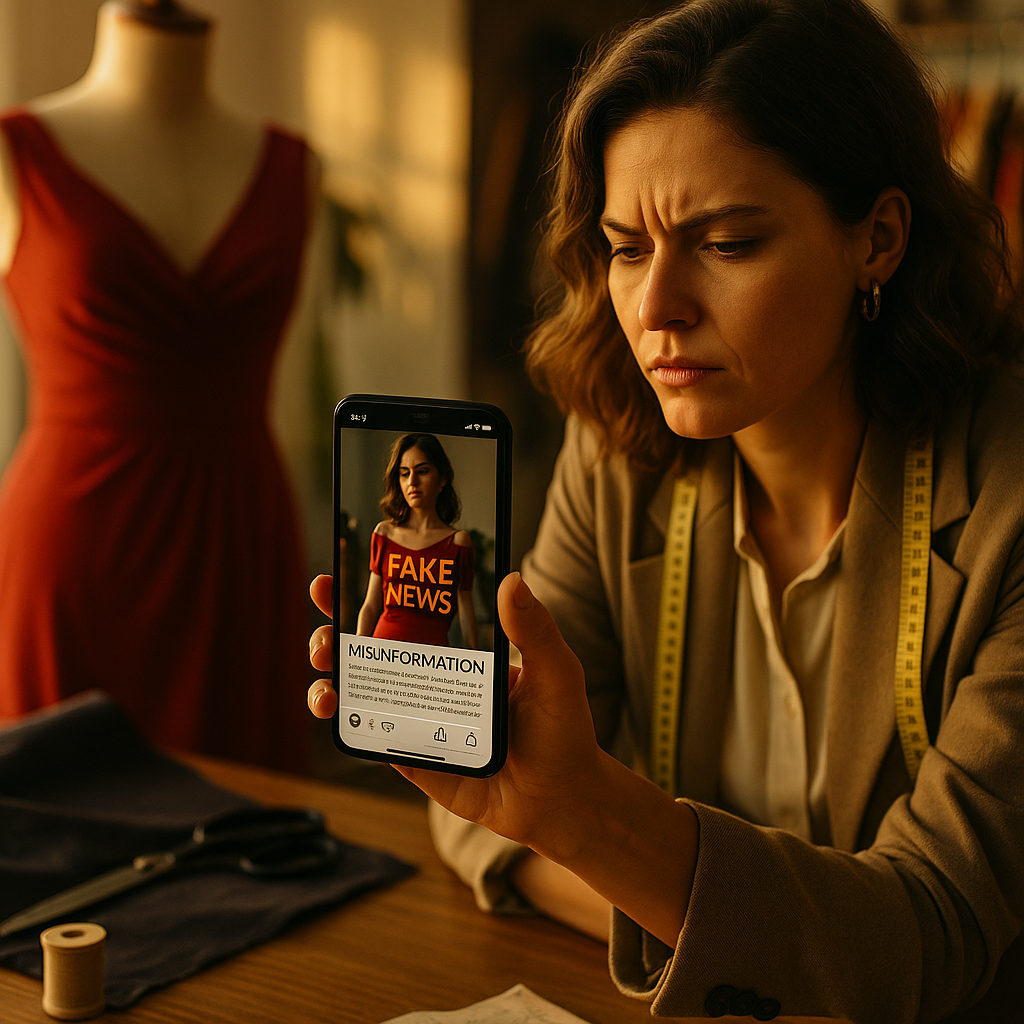
In 2025, social platforms can turn a rumor into a brand-threatening narrative in hours. This case study on viral misinformation crisis management follows a mid-sized fashion label that faced false allegations about unsafe dyes and unethical labor. The brand’s response combined evidence, speed, and transparency without inflaming the conversation. What they did next changed outcomes and rebuilt trust—here’s how.
Viral misinformation crisis: What happened and why it spread
The fashion label—known for minimalist staples and a strong direct-to-consumer channel—woke up to a surge of posts claiming its bestselling sweatshirt contained “toxic chemicals” and was “banned in Europe.” The claim began as a stitched video: a creator held a garment, showed a screenshot of a lab report (not attributable to any accredited lab), and concluded the brand was “poisoning customers.” Within a day, dozens of micro-influencers repeated the allegation with minor variations.
Three factors accelerated the spread:
- Visual ‘proof’: The fabricated report looked official and used technical language, which reduced skepticism.
- Algorithmic amplification: Outrage framing (“they’re hiding this”) drove watch time and reshares, pushing the content into new audiences.
- Real consumer anxieties: Chemical safety and supply-chain ethics are already high-salience concerns in apparel, so the story felt plausible.
The label’s leadership resisted the instinct to “clap back.” Instead, they treated the situation as an information integrity problem: isolate the falsehoods, establish verifiable facts, and reduce uncertainty for customers, retail partners, and employees. That mindset shaped the response that followed.
Brand reputation recovery: Immediate triage and decision-making
In the first six hours, the brand convened a cross-functional “truth team” with clear authority: Head of Communications (owner), General Counsel, Quality Assurance lead, Customer Care manager, and the Performance Marketing lead. Their first action was not posting—it was diagnosis.
They ran a rapid triage checklist:
- Clarify the claim: “Toxic chemicals,” “EU ban,” and “unsafe dye” were three separate allegations requiring different evidence.
- Assess reach and velocity: Which platforms, which accounts, how fast is it growing, and what search terms are trending?
- Identify stakeholders at risk: Customers with open orders, wholesale partners, marketplace teams, and internal staff who might face harassment.
- Lock the facts: Confirm dye-house documentation, compliance test results, and lot-level traceability.
Two decisions proved critical for brand reputation recovery. First, they committed to a same-day public response with evidence, even if it was imperfect and followed by updates. Second, they separated communications for different audiences: a public statement for customers, a detailed brief for partners, and scripts for customer care—so no one improvised under pressure.
They also paused scheduled content and promotional ads. This avoided the appearance of “selling through a scandal” and reduced the risk that ads would appear next to misinformation posts, where screenshots could be used as further “proof” of indifference.
Social media crisis response: Contain the rumor without inflaming it
The label’s social media crisis response balanced speed with restraint. Instead of replying to every viral post—an approach that can amplify the rumor—they posted a pinned update across primary channels and directed all replies to one canonical source of truth.
The pinned post followed a simple structure:
- State what’s false (without repeating sensational phrasing): “A circulating document is not from an accredited lab and does not reflect our products.”
- State what’s true: “Our materials are tested to meet applicable chemical safety standards. We can trace this product to specific production lots.”
- Show evidence: A link to test summaries and certification references, plus a commitment to publish additional details within 48 hours.
- Invite questions: A dedicated customer support form and a Q&A highlight, with response time expectations.
They also implemented tactical community management:
- Reply rules: Customer care and social teams used consistent language, avoided speculation, and never attacked creators personally.
- Comment moderation: They removed doxxing and threats, but left critical questions visible when asked in good faith—demonstrating confidence.
- Platform reporting: They reported the fabricated lab report as misleading content with falsified documents, attaching evidence of accreditation checks.
Most importantly, the brand prepared for the reader’s next question: “If you’re innocent, why not show everything?” They addressed that directly by explaining what could be shared immediately (test summaries and standards) versus what required supplier consent or redaction (proprietary formulations and contract terms). This prevented a transparency demand from becoming a new controversy.
Digital PR strategy: Evidence, third-party validation, and press discipline
A strong digital PR strategy gave the brand leverage beyond its own channels. The team created a newsroom page with a timestamped timeline, downloadable statements, and a concise “what we know” section. They avoided jargon and made documents scannable for journalists and customers.
To improve credibility under Google’s EEAT expectations (experience, expertise, authoritativeness, trust), they used third-party validation rather than self-assertion:
- Accredited testing confirmation: They published the name of the independent lab (with accreditation identifiers where permitted) and the product test scope.
- Supply chain documentation: They shared country-of-origin and factory audit framework details, focusing on verifiable claims.
- Independent expert interpretation: They commissioned a short explanation from a qualified textile chemist on what the test results mean and what they do not mean.
Press discipline mattered. The CEO did one long-form interview with a reputable outlet and declined sensational requests. Every response used the same message spine: “Here are the facts, here is the documentation, here is what we’re improving.” That consistency reduced quote-mining and kept the story from mutating.
They also answered the practical follow-up: “Should customers stop wearing the product?” The brand stated clearly that there was no evidence of elevated risk based on test results, offered a no-questions-asked return for concerned customers, and advised anyone with specific sensitivities to consult a medical professional. That showed responsibility without conceding the false claim.
Customer trust rebuilding: Service moves that prove integrity
Evidence alone rarely rebuilds trust. People judge how a company behaves when stressed. The label focused on customer trust rebuilding through concrete service actions that reduced friction and uncertainty.
They made four high-impact moves:
- Extended returns: A temporary extended return window for the affected category, including free return shipping.
- Proactive outreach: Emails to recent purchasers with the facts, links to documentation, and a direct support channel. They kept the subject line neutral to avoid spreading the rumor.
- Customer care enablement: A playbook with decision trees, escalation paths, and a shared repository of answers—so every customer received consistent information.
- Retail partner toolkit: A one-page brief, talking points, and a QR code linking to the newsroom page for in-store staff.
They also corrected a hidden vulnerability: their product pages previously referenced “non-toxic dyes” without defining the term. During the crisis, that wording became a liability because it sounded like marketing spin. They replaced it with precise language about testing standards and compliance, and added a permanent section on materials testing.
To prevent trust from eroding internally, leadership held short daily updates for staff. Employees are often the first to see customer anger and misinformation in their personal feeds. Giving them clear facts and boundaries (“do not debate online from personal accounts; share the official link if needed”) reduced risk and anxiety.
Crisis communications plan: Long-term safeguards and measurable outcomes
Once the immediate spike slowed, the label converted lessons into a stronger crisis communications plan. They treated the incident as a system failure—of monitoring, message clarity, and documentation accessibility—not just a random reputational hit.
The updated plan included:
- Always-on monitoring: Keyword tracking for brand + safety/ethics terms, plus escalation thresholds based on velocity, not just volume.
- Pre-approved templates: Legal-reviewed statements for common categories (product safety, labor allegations, counterfeit documents) to cut response time.
- Evidence readiness: A “rapid disclosure folder” with current test summaries, certification references, factory audit framework details, and spokesperson bios.
- Single source of truth: A permanent transparency hub linked from product pages, customer care macros, and brand bios.
- Scenario drills: Quarterly tabletop exercises involving customer care, paid media, leadership, and legal.
They also defined success metrics beyond sentiment. The brand tracked:
- Customer care indicators: Contact volume, repeat contacts, time-to-first-response, and refund rate for the affected products.
- Search and traffic signals: Click-through rates from the transparency hub, branded search queries related to “safety,” and time-on-page for documentation.
- Partner stability: Wholesale reorder behavior and inbound questions from retail accounts.
The most useful outcome was behavioral: the organization became faster and more factual. Their leadership stopped treating “transparency” as a slogan and started treating it as an operational capability—documentation, clarity, and a practiced process.
FAQs: Viral misinformation crisis management in fashion
-
What is the first thing a fashion brand should do when misinformation goes viral?
Clarify the exact claims, confirm internal facts (testing, traceability, supplier records), and assign a small decision team with authority. Post quickly only after you know what you can prove, and create a single source of truth you can link everywhere.
-
Should brands publicly argue with the person who posted the rumor?
Usually no. Direct arguments often amplify the post and create a creator-versus-brand storyline. Focus on evidence in your own channels, respond politely to good-faith questions, and report falsified documents through platform tools when applicable.
-
What evidence builds the most trust during a product safety allegation?
Third-party verification: accredited lab testing summaries, clear scope of what was tested, and traceability to production lots. Pair technical documents with plain-language explanations from qualified experts so non-specialists can understand the results.
-
How do you communicate without spreading the misinformation further?
Avoid repeating sensational phrases and lead with facts. Use short, consistent language, pin one update, and link to a canonical page. In email, keep subject lines neutral and focus on reassurance, documentation, and customer options.
-
Should the brand offer refunds even if the claim is false?
Offering an extended return window can reduce anxiety and show confidence, especially when paired with evidence. Make it time-bound and clearly framed as customer care, not an admission of wrongdoing.
-
How can fashion brands prevent a similar crisis in the future?
Maintain an always-on monitoring system, keep evidence ready (testing summaries, certification references, supplier framework details), train teams with scenario drills, and tighten product page claims so marketing language doesn’t outpace what you can document.
The label’s experience shows that misinformation doesn’t require a perfect rebuttal—only a disciplined, evidence-first response. In 2025, speed, verification, and service design determine whether a rumor becomes a lasting reputation scar. Build a single source of truth, use third-party validation, and treat transparency as an operational system. The takeaway: prepare now, so your next crisis is shorter.