


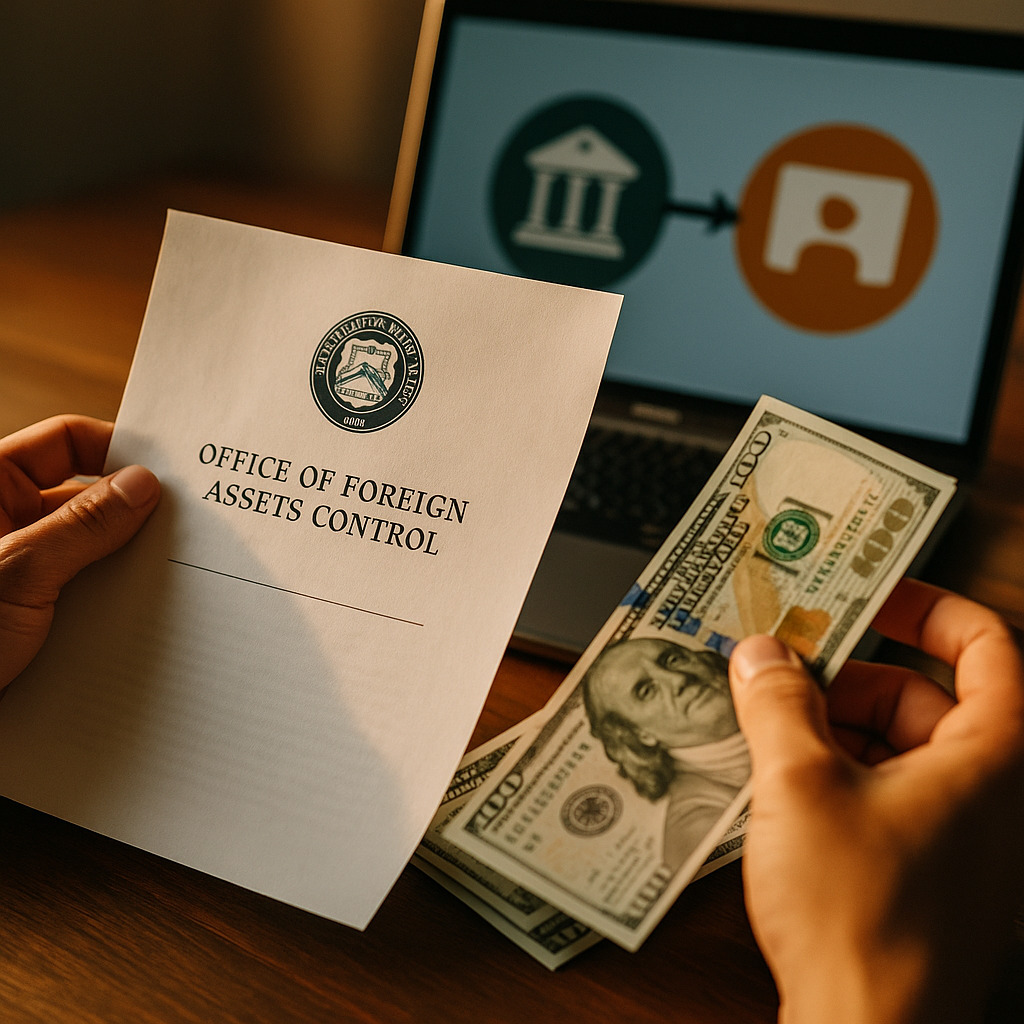
In 2025, creator platforms pay talent across borders at unprecedented speed, but regulatory risk travels just as fast. Navigating OFAC Compliance for Global Cross Border Creator Payments requires more than a checkbox: it demands accurate screening, controlled payout flows, and well-documented decisions. The right approach protects creators, preserves access to banking rails, and scales internationally—if you know where the pitfalls hide.
Understanding OFAC regulations for creator economy payouts
The U.S. Office of Foreign Assets Control (OFAC) administers and enforces sanctions programs that can restrict payments to specific countries, regions, entities, vessels, or individuals. If your platform has a U.S. nexus—such as U.S. incorporation, U.S. employees, U.S. banking relationships, USD settlement, U.S.-hosted infrastructure, or U.S. customers—OFAC expectations may apply directly or indirectly through your financial partners.
Creator payments create unique OFAC exposure because the payee base is large, fast-changing, and globally distributed. A single payout run can include thousands of micro-payments to new creators onboarded minutes earlier. That velocity increases the risk of:
- Sending funds to a blocked person or entity (for example, an SDN-listed individual or a blocked company).
- Facilitating prohibited activity involving sanctioned regions, even if the creator is not personally listed.
- Using intermediary banks or payout partners that reject or freeze transactions due to weak screening evidence.
A practical compliance posture starts with clarity: you are not trying to “predict sanctions”; you are building repeatable controls that prevent prohibited transfers, generate defensible audit trails, and support rapid remediation when alerts occur.
Sanctions screening workflow for cross-border payments
An effective sanctions screening program for creator payouts blends onboarding checks, continuous monitoring, and transaction-time controls. The goal is to catch true matches without blocking legitimate creators unnecessarily.
1) Screen at onboarding with identity confidence
- Collect enough data to disambiguate similar names: legal name, date of birth (where appropriate), country of residence, and payout destination details.
- Validate identity using risk-based methods (for example, document verification or database checks) for higher-risk geographies or high-earning creators.
2) Re-screen continuously as lists change
OFAC designations and sanctions programs update over time. Re-screen creators, payees, and beneficial owners on a schedule and upon material changes (new address, new bank account, new legal name, new business entity).
3) Screen at payout time with contextual rules
- Screen recipient name and bank beneficiary fields before initiating the transfer.
- Apply region and corridor rules: bank country, wallet country, IP signals (used carefully), and shipping/benefit location (if relevant to services).
- Use velocity and anomaly checks: sudden changes in payout destination, unusually high payout amounts, or many creators routing to one bank account.
4) Triage alerts using a documented methodology
False positives are inevitable. Reduce them with:
- Matching logic tuned to your risk profile (fuzzy matching thresholds, transliteration handling, and alias matching).
- Case management that records why an alert was cleared or escalated, including sources reviewed and the decision-maker.
5) Build a “stop-the-line” mechanism
If the system flags a potential match, your payout flow should automatically pause the specific payout (not necessarily the entire batch), preserve funds, and route the case to compliance review. A clear SLA—such as 24–72 hours depending on risk—helps operations teams and creators understand timelines.
Risk assessment and due diligence for creator platforms
A strong risk assessment turns OFAC compliance from generic policy into controls tailored to your business model. This is also where you answer leadership’s inevitable question: “How much compliance is enough?” The right answer is “enough to match our risk and our banking partners’ expectations, with evidence.”
Key risk drivers in global creator payments
- Geography: creators, audiences, and payout destinations tied to higher-risk jurisdictions or sanctioned regions.
- Product features: instant payouts, user-to-user transfers, tipping, or marketplace-style monetization that increases speed and anonymity.
- Counterparty type: individuals vs. businesses, agencies managing multiple creators, or entities with complex ownership.
- Payment rails: wires, ACH equivalents, card payouts, wallets, crypto off-ramps, or local bank transfers with varying transparency.
Practical due diligence that scales
- Tiered onboarding: low-friction entry for low-risk creators; enhanced checks for higher-risk corridors, higher payout volumes, or agency accounts.
- Beneficial ownership checks: when a creator is paid through a company, capture ownership/control details based on risk. This matters because sanctions can apply to entities owned or controlled by blocked persons.
- Source of funds logic: map platform revenue flows (subscriptions, ads, brand deals) and ensure you can explain how funds reach the creator.
Answering the follow-up question: do we need a formal OFAC program?
If your company touches U.S. financial infrastructure or serves U.S. markets, a documented sanctions compliance framework is a baseline expectation. Even without a direct U.S. footprint, many payment partners contractually require OFAC-aligned controls because they bear sanctions risk in settlement.
Payment processing controls and transaction monitoring
Sanctions compliance improves dramatically when your transaction monitoring is designed around how payouts actually move. Creator platforms often route payments through a payment service provider (PSP), local payout aggregator, or bank sponsor. Each handoff is a control point—and a potential failure point.
Design controls into the payout lifecycle
- Pre-funding controls: before funds leave your ledger, confirm payee screening status is “clear,” the payout destination is verified, and no new risk flags were introduced since the last review.
- Hold-and-release logic: for higher-risk corridors, delay first payout until minimum verification is complete. Communicate this upfront to avoid creator support escalations.
- Change management: treat changes to bank account, wallet, or address as a new risk event that triggers re-screening.
Monitoring patterns relevant to sanctions risk
- Multiple creators using the same payout instrument (possible agency fronting or nominee behavior).
- Creators routing payouts through countries unrelated to their profile (possible evasion attempts).
- Repeated payout failures or returns from banks citing sanctions or compliance concerns.
How to work with PSPs and banks without gaps
Clarify responsibilities in contracts and operating procedures:
- Who screens: you, the PSP, or both? “Both” is common, but you must know what each party covers (names, banks, addresses, intermediaries).
- What data is screened and at what point (onboarding vs. per-transaction).
- How alerts are shared and how funds are handled during investigation.
- What reporting and audit evidence you can obtain (screening logs, match rationale, timestamps).
Redundancy helps, but duplication without coordination creates inconsistent outcomes. Align your thresholds and escalation rules so creators don’t face unpredictable payout holds.
OFAC reporting, recordkeeping, and audit readiness
When sanctions issues arise, audit readiness depends on your ability to show what happened, when it happened, and why your team made each decision. The strongest programs are not just compliant; they are explainable.
Records to maintain for creator payout compliance
- Screening results (including list versions or update timestamps where available).
- Alert case files with evidence reviewed, decision notes, and approver identity.
- Transaction data: payer, payee, amount, currency, corridor, timestamps, and payout partner identifiers.
- Risk assessments, policies, and procedure revisions tied to operational changes (new payout rail, new market launch).
- Training completion records for relevant teams (payments ops, creator support, compliance, engineering).
Blocking vs. rejecting vs. pausing payouts
In practice, your platform may “pause” a payout internally while investigating. If you determine a true sanctions match or a prohibited destination, your next steps should follow legal guidance and your payment partner’s requirements. Your procedures should clearly define:
- Who can approve a block or termination of the payout relationship.
- When to escalate to legal counsel or a specialized sanctions advisor.
- How to communicate with the creator without tipping off bad actors or misrepresenting the reason.
Operational takeaway
Don’t rely on institutional memory. Build a compliance evidence trail that survives employee turnover, system migrations, and partner changes.
Reducing false positives and improving creator experience
Creator platforms win on trust and reliability. Excessive payout delays can damage retention, yet lax controls threaten banking access. The solution is not choosing between compliance and growth; it is engineering for both through creator payout compliance that is precise and transparent.
Ways to reduce false positives without weakening controls
- Improve data quality: normalize names, capture local script where appropriate, and store structured address components.
- Use layered identifiers: combine name matching with date of birth, nationality, business registration numbers, or bank metadata where lawful and proportionate.
- Optimize thresholds by corridor: higher sensitivity in higher-risk routes; more precision in low-risk routes to reduce noise.
- Feedback loops: label cleared alerts and feed outcomes back into tuning rules, supervised by compliance to avoid overfitting.
Communicate payout holds effectively
- Set expectations in your payout UI: “Verification may be required for some payouts, especially when payout details change.”
- Provide a checklist of what the creator can do to speed resolution (submit documents, confirm address, verify bank ownership).
- Offer predictable timelines and status updates; avoid vague language that increases support volume.
Internal alignment matters
Compliance should define the rules, but product and engineering should own implementation quality. Regular reviews between compliance, ops, and support reduce contradictory messaging and ensure edge cases are handled consistently.
FAQs about OFAC compliance for creator payments
Do non-U.S. creator platforms need to follow OFAC rules?
Often, yes in practice. Even if you are not a U.S. company, OFAC risk can apply through U.S. dollar clearing, U.S.-based PSPs, U.S. correspondent banks, U.S. customers, or contractual requirements from partners that must comply with OFAC.
What data should we collect from creators to support sanctions screening?
At minimum, collect legal name and country of residence plus payout destination details. For higher-risk profiles, add date of birth, address, and business ownership information if paid via an entity. Collect only what you can protect and justify under your privacy obligations.
How often should we re-screen creators and payees?
Re-screen on a schedule and when risk changes. Common triggers include changes to name, address, bank account, business entity, unusual payout behavior, or expansion into new corridors. Also re-screen when sanctions lists are updated by your screening provider.
What should we do if a creator matches an OFAC list?
Pause the payout, open a case, and escalate to trained compliance staff. Confirm whether it is a true match using reliable identifiers. If confirmed or if uncertainty remains at a high-risk threshold, follow your documented procedures and seek legal guidance as needed before proceeding.
Can we rely solely on our PSP or bank for OFAC screening?
Relying solely on a partner can leave gaps, especially at onboarding or when creators change payout details. Many platforms use shared responsibility: the platform screens users and controls payout eligibility, while the PSP screens transactions. Document who does what and keep evidence.
How do we handle agencies or managers who collect payouts for multiple creators?
Treat them as higher-risk counterparties. Verify the entity, screen beneficial owners where appropriate, confirm authorization to act for creators, monitor concentration to a single payout instrument, and require stronger documentation before enabling high volumes.
Does OFAC compliance affect refunds, chargebacks, or clawbacks?
Yes. Any movement of value can raise sanctions issues, including refunds to a blocked party or chargeback settlements. Apply screening logic to outbound flows beyond “creator payouts,” and ensure your ledgers can prevent prohibited disbursements.
Global creator monetization works best when compliance is built into the payout engine, not bolted on after a bank escalates an issue. In 2025, OFAC expectations reward platforms that screen intelligently, document decisions, and coordinate responsibilities with payment partners. The takeaway: combine risk-based onboarding, real-time transaction controls, and strong records so you can pay creators quickly while staying defensible under sanctions scrutiny.