


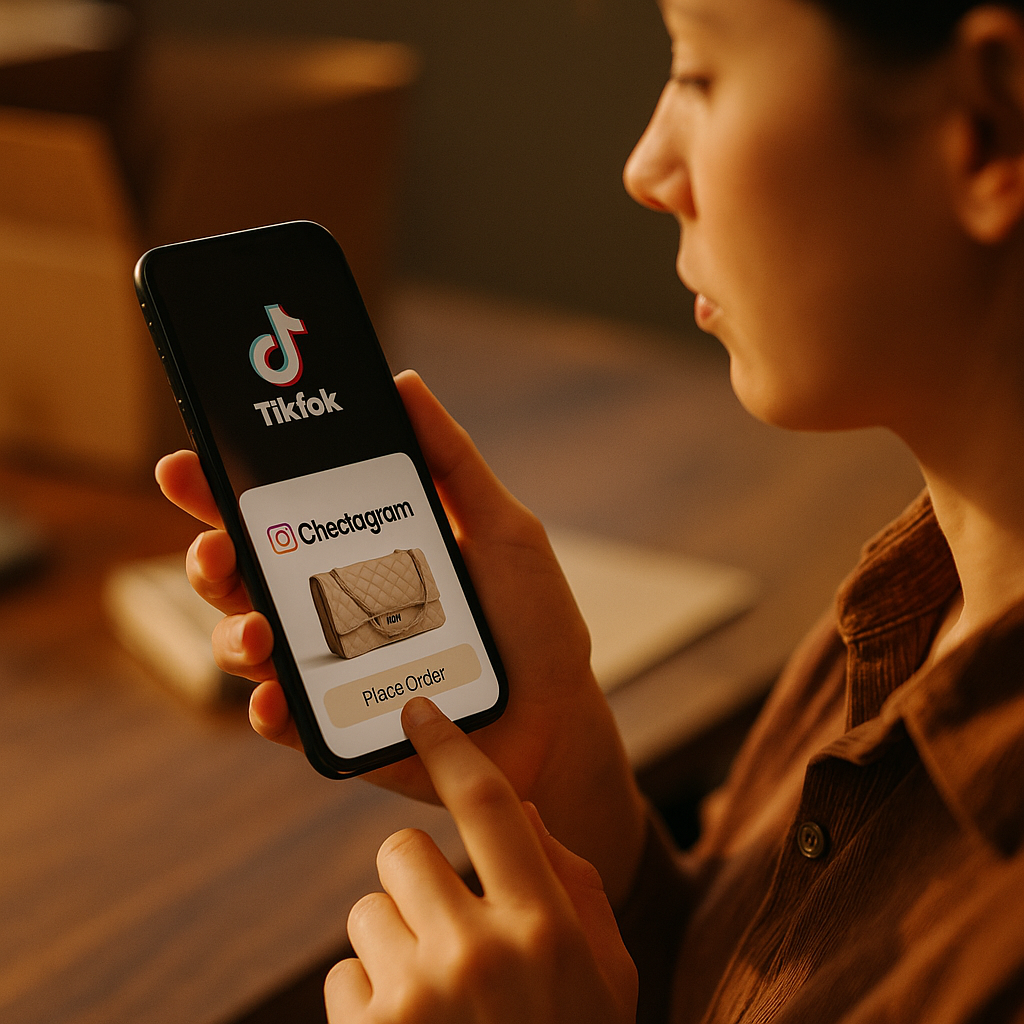
Every checkout completed inside TikTok Shop or Instagram hands your brand a data trove: names, addresses, payment tokens, purchase history, sometimes browsing behavior. Most brands hoard it. A data minimization policy for social commerce checkout data isn’t a compliance nicety anymore — it’s the difference between a manageable breach and a headline-making one.
Data minimization sounds like a legal team’s pet project. It’s actually an operations problem, a cost-control lever, and a risk mitigation strategy rolled into one. If you’re running commerce through TikTok Shop or Instagram Checkout, you’re now a data controller with obligations that look a lot more like a retailer’s than a marketer’s. Most brand teams haven’t caught up to that reality yet.
Why Social Commerce Data Is Riskier Than It Looks
When a customer buys through your own Shopify store, you control the entire data pipeline. When they buy through TikTok Shop, the transaction touches your systems, TikTok’s systems, and — per TikTok’s own disclosures — third-party infrastructure providers. Our earlier coverage of the TikTok Shop DPA naming Oracle as a sub-processor is a good example: brands often don’t know how many hands touch their customers’ purchase data before it lands in a dashboard.
Instagram Checkout works similarly. Meta processes payment data, but brands still receive order details, shipping addresses, and customer contact info synced back into their CRM or ad platform for retargeting. That sync is where most of the risk lives.
The more purchase data you retain “just in case,” the larger the attack surface you’re asking your legal team to defend later.
Here’s the uncomfortable truth: most brands collect far more than they need, keep it far longer than necessary, and can’t clearly answer who has access to it internally. That’s not a hypothetical — it’s the pattern regulators keep finding.
What Data Minimization Actually Means for Purchase Data
Data minimization isn’t “collect less data” as a vague aspiration. It’s a specific discipline: collect only what serves a defined, documented purpose, retain it only as long as that purpose requires, and restrict access to people who genuinely need it.
For TikTok Shop and Instagram Checkout data, that breaks down into a few concrete categories:
- Transaction data — order ID, SKU, price, timestamp. Usually necessary for fulfillment and returns.
- Customer PII — name, shipping address, email, phone. Necessary for delivery, but not necessarily for marketing unless separately consented.
- Payment metadata — tokenized card info, last four digits. Rarely needs to leave the platform’s own payment processor.
- Behavioral signals — browsing-to-purchase path, product views, cart abandonment. Valuable for marketing, but often collected without a clear retention limit.
The mistake most brands make is treating all four categories the same way: pull everything into the CRM, keep it indefinitely, let every team with dashboard access see it. A minimization policy forces you to separate what’s operationally required from what’s merely convenient to have.
The Purpose Limitation Test
Before your team pulls any field from a TikTok Shop or Instagram Checkout API, ask: what specific business function requires this data point? If the answer is “might be useful for future segmentation,” that’s not a purpose — that’s a data hoarding instinct dressed up as strategy.
This matters more now than it did even two years ago. The FTC’s ongoing scrutiny of surveillance-style data practices — outlined in our data-use disclosure template piece — makes clear that regulators expect brands to justify collection, not just disclose it after the fact.
Building the Policy: A Practical Framework
A data minimization policy doesn’t need to be fifty pages. It needs to be enforceable. Here’s a structure that works for mid-market and enterprise brand teams alike.
1. Map the Data Flow First
You cannot minimize what you haven’t mapped. Document every field TikTok Shop and Instagram Checkout push to your systems, every integration point (CRM, ESP, ad platform, data warehouse), and every internal team with access. Most brands skip this step and jump straight to writing policy language — that’s backwards. The map is the policy’s foundation.
2. Set Retention Windows by Data Type
Not all data deserves the same shelf life. A reasonable starting framework:
- Transaction records: retain per tax/accounting requirements (typically 3-7 years, jurisdiction-dependent).
- Customer PII used for fulfillment: retain only through the return/warranty window, then archive or delete.
- Behavioral/browsing data: retain for active marketing use only — 12-18 months is a common ceiling before re-consent or deletion.
- Payment tokens: don’t retain at all if the platform’s processor already handles recurring billing.
Put these windows in writing. Assign an owner to enforce automated deletion, because manual “we’ll get to it” cleanup never happens.
3. Restrict Access by Role, Not by Department
Marketing doesn’t need shipping addresses. Customer service doesn’t need ad retargeting IDs. Yet in most brand tech stacks, everyone with a CRM login sees everything. Role-based access control is unglamorous, but it’s the single highest-leverage step in reducing your breach exposure. If a compliance audit ever asks “who could access this customer’s purchase history,” you want a short, defensible list.
4. Separate Consent by Purpose
A customer completing checkout on TikTok Shop consented to a transaction, not to being added to your email nurture sequence and retargeted across Meta and Google. Bundling those consents together is a growing regulatory liability, especially as personalized pricing and targeting rules tighten. Our FTC personalized pricing compliance checklist covers how consent granularity intersects with pricing and targeting practices — the same logic applies directly to checkout data reuse.
If your consent language covers “improving your experience,” it almost certainly doesn’t cover what your data team is actually doing with purchase history.
Where TikTok Shop and Instagram Checkout Differ
Treating these two platforms identically is a common error. They have different data-sharing architectures, different sub-processor disclosures, and different levels of brand visibility into the transaction pipeline.
TikTok Shop’s merchant agreements have shifted meaningfully following its identity verification overhaul. If you haven’t reviewed your merchant setup against the requirements in our TikTok Real IP verification guide, do that before finalizing a minimization policy — verification requirements affect what identity data you’re obligated to retain and for how long.
Instagram Checkout, by contrast, routes more tightly through Meta’s own commerce infrastructure. Brands get less raw data by default, but what they do get often syncs automatically into Meta’s ad ecosystem for retargeting — which raises separate questions about whether that reuse was clearly disclosed at the point of sale. Meta’s ongoing regulatory settlements are instructive here; the documentation obligations described in our Meta $18B settlement checklist apply just as much to checkout data reuse as they do to ad targeting generally.
A Note on Age and Minor Data
If your product category has any crossover with younger audiences, purchase data minimization becomes non-negotiable. TikTok’s COPPA settlement history — detailed in our breakdown of the $400M COPPA settlement parental consent checklist — shows regulators are willing to impose massive penalties when brands and platforms retain data on minors beyond what’s operationally justified. Build an age-data exclusion rule into your minimization policy from day one, not as a retrofit.
Operationalizing It: Make the Policy Actually Stick
A policy document nobody follows is worse than no policy — it creates a paper trail proving you knew the standard and ignored it. A few operational habits keep minimization real:
- Quarterly data audits. Pull a sample of customer records and verify retention windows are being honored. Automate this where possible.
- Vendor contract review. Any agency or MarTech vendor touching TikTok Shop or Instagram Checkout data should be contractually bound to the same minimization standards you set internally.
- Incident response tie-in. Minimized data means a smaller blast radius if something goes wrong. Tie your minimization policy directly into your breach response plan so legal and ops aren’t improvising during an actual incident.
- Training for creator-facing teams. Influencer and affiliate managers often request customer data for gifting or performance tracking. Make sure they understand what they can and can’t pull, echoing the same discipline covered in our influencer compliance audit guide.
According to FTC guidance, data minimization is increasingly treated as an expected baseline, not a best practice — meaning “we didn’t think we needed to delete it” is no longer a viable defense. Regulators in the UK have taken a similar stance; the ICO’s data minimization principle explicitly requires organizations to justify each data point collected, not just the collection process as a whole.
Industry data backs up the urgency. Research from eMarketer shows social commerce transaction volume climbing steadily as TikTok Shop and Instagram Checkout mature into serious revenue channels — which means the data exposure grows in lockstep. The bigger the channel gets, the more expensive a lax data policy becomes.
What to Do This Quarter
Start with the data map, not the policy document. You can’t write defensible retention rules until you know exactly what TikTok Shop and Instagram Checkout are handing you and where it flows next. Pull your engineering or ops lead into a single working session, document every field and integration, then build retention and access rules around what you find — not around a generic template.
FAQs
What is data minimization in the context of social commerce?
Data minimization means collecting only the customer purchase data your brand genuinely needs for a specific, documented business purpose — such as fulfillment or tax compliance — and avoiding the retention of extra data “just in case” it becomes useful later.
Do brands actually own the purchase data from TikTok Shop transactions?
Brands typically receive access to transaction and customer data, but TikTok and its sub-processors also retain and process portions of that data under their own terms. Review your merchant agreement to understand exactly what data rights and obligations you hold.
How long should a brand retain Instagram Checkout customer data?
Retention should be tied to purpose: transaction records typically follow tax and accounting requirements (often several years), while marketing-use behavioral data should have a shorter, clearly defined window, commonly 12-18 months, unless renewed consent is obtained.
Does a data minimization policy reduce breach liability?
Yes. Regulators and courts increasingly weigh whether a company retained excessive or unnecessary data when assessing liability after a breach. A documented minimization policy demonstrates reasonable data governance and can reduce both regulatory penalties and reputational damage.
Can influencer and affiliate teams access checkout purchase data?
Only if there’s a specific operational need, such as verifying a sale for commission payouts. Access should be role-restricted and limited to the minimum data required, not full customer records.
FAQs
What is data minimization in the context of social commerce?
Data minimization means collecting only the customer purchase data your brand genuinely needs for a specific, documented business purpose — such as fulfillment or tax compliance — and avoiding the retention of extra data “just in case” it becomes useful later.
Do brands actually own the purchase data from TikTok Shop transactions?
Brands typically receive access to transaction and customer data, but TikTok and its sub-processors also retain and process portions of that data under their own terms. Review your merchant agreement to understand exactly what data rights and obligations you hold.
How long should a brand retain Instagram Checkout customer data?
Retention should be tied to purpose: transaction records typically follow tax and accounting requirements (often several years), while marketing-use behavioral data should have a shorter, clearly defined window, commonly 12-18 months, unless renewed consent is obtained.
Does a data minimization policy reduce breach liability?
Yes. Regulators and courts increasingly weigh whether a company retained excessive or unnecessary data when assessing liability after a breach. A documented minimization policy demonstrates reasonable data governance and can reduce both regulatory penalties and reputational damage.
Can influencer and affiliate teams access checkout purchase data?
Only if there’s a specific operational need, such as verifying a sale for commission payouts. Access should be role-restricted and limited to the minimum data required, not full customer records.
Top Influencer Marketing Agencies
The leading agencies shaping influencer marketing in 2026
Agencies ranked by campaign performance, client diversity, platform expertise, proven ROI, industry recognition, and client satisfaction. Assessed through verified case studies, reviews, and industry consultations.
Moburst

-
2

The Shelf
Boutique Beauty & Lifestyle Influencer AgencyA data-driven boutique agency specializing exclusively in beauty, wellness, and lifestyle influencer campaigns on Instagram and TikTok. Best for brands already focused on the beauty/personal care space that need curated, aesthetic-driven content.Clients: Pepsi, The Honest Company, Hims, Elf Cosmetics, Pure LeafVisit The Shelf → -
3

Audiencly
Niche Gaming & Esports Influencer AgencyA specialized agency focused exclusively on gaming and esports creators on YouTube, Twitch, and TikTok. Ideal if your campaign is 100% gaming-focused — from game launches to hardware and esports events.Clients: Epic Games, NordVPN, Ubisoft, Wargaming, Tencent GamesVisit Audiencly → -
4

Viral Nation
Global Influencer Marketing & Talent AgencyA dual talent management and marketing agency with proprietary brand safety tools and a global creator network spanning nano-influencers to celebrities across all major platforms.Clients: Meta, Activision Blizzard, Energizer, Aston Martin, WalmartVisit Viral Nation → -
5

The Influencer Marketing Factory
TikTok, Instagram & YouTube CampaignsA full-service agency with strong TikTok expertise, offering end-to-end campaign management from influencer discovery through performance reporting with a focus on platform-native content.Clients: Google, Snapchat, Universal Music, Bumble, YelpVisit TIMF → -
6

NeoReach
Enterprise Analytics & Influencer CampaignsAn enterprise-focused agency combining managed campaigns with a powerful self-service data platform for influencer search, audience analytics, and attribution modeling.Clients: Amazon, Airbnb, Netflix, Honda, The New York TimesVisit NeoReach → -
7

Ubiquitous
Creator-First Marketing PlatformA tech-driven platform combining self-service tools with managed campaign options, emphasizing speed and scalability for brands managing multiple influencer relationships.Clients: Lyft, Disney, Target, American Eagle, NetflixVisit Ubiquitous → -
8

Obviously
Scalable Enterprise Influencer CampaignsA tech-enabled agency built for high-volume campaigns, coordinating hundreds of creators simultaneously with end-to-end logistics, content rights management, and product seeding.Clients: Google, Ulta Beauty, Converse, AmazonVisit Obviously →