


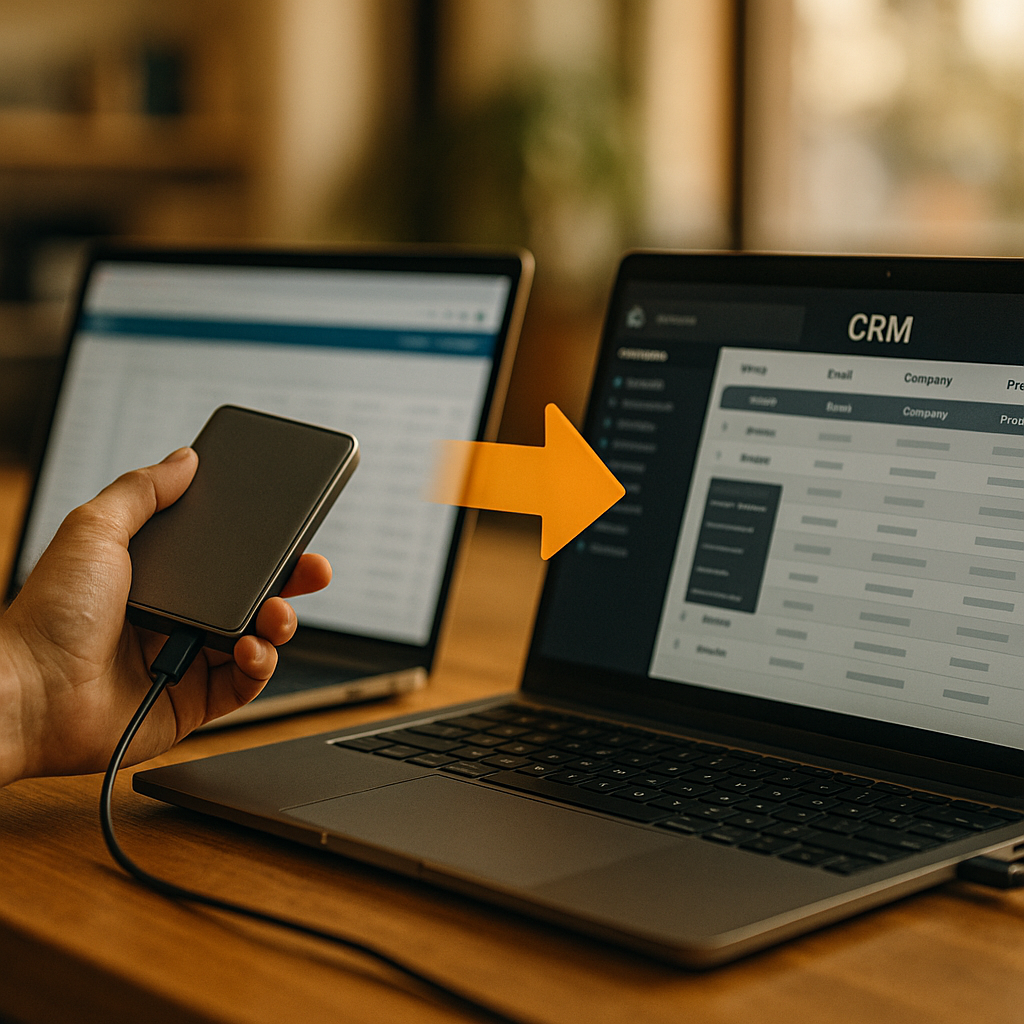
Data portability rights are reshaping how organizations collect, store, and use customer information inside modern CRM systems. In 2025, customers expect easy exports, clean transfers, and real control over their records, while regulators demand proof, speed, and transparency. This shift changes technical architecture, vendor selection, and retention playbooks. Brands that prepare now will build trust and agility—will yours?
Understanding data portability rights and the primary keyword
Data portability rights give individuals the ability to obtain a copy of their personal data and move it to another provider without unnecessary friction. In CRM terms, that typically includes identity and contact details, communication preferences, transaction history, support interactions, and sometimes behavioral data that can be linked to a person. These rights are not merely “download my data” features; they require organizations to deliver usable data in structured, commonly used formats and to complete requests within defined timelines.
For CRM leaders, the practical meaning is clear: you must be able to identify what personal data you hold, where it resides, how it was collected, and how to export it safely. You also need defensible rules for what is included and excluded. For example, you may need to separate a customer’s personal data from internal annotations, proprietary scoring logic, or information about other individuals embedded in tickets or call transcripts. This is where a well-designed data inventory and clear data governance are no longer optional.
Expect follow-up questions from stakeholders such as, “Does portability apply to every record in the CRM?” Not always. In many regimes, portability focuses on personal data provided by the individual and data observed from their use of a service. Inferences and derived analytics may have different treatment, but you still need a policy position and a repeatable process to justify what you provide. The best approach is to define a portability “bundle” for each product line and maintain it like any other compliance artifact.
Regulatory compliance and privacy engineering for CRM
Portability is one of several customer rights that collectively shape CRM strategies: access, deletion, rectification, objection, and restriction. In 2025, a “rights-ready” CRM is engineered to respond consistently across these requests without manual heroics. That means integrating privacy engineering into your CRM program rather than delegating it to a one-off compliance project.
Start by treating portability requests as high-assurance workflows. Your process should verify identity, authenticate the requester, and detect account takeover attempts. Then it should assemble the requested data from relevant systems, apply redactions when other individuals’ data is present, and produce an export that is both readable and structured. Finally, it should log evidence for audit purposes: what was produced, when, by whom, and under what policy.
Key design principles that support regulatory compliance without crippling operations include:
- Data minimization by default: If you collect less unnecessary personal data, you reduce portability scope and risk.
- Purpose limitation controls: Tie data fields to declared purposes so you can explain why data exists and how it’s used.
- Retention automation: Align CRM retention with legal and operational needs; expired data should not linger in exports.
- Evidence-grade logging: Maintain immutable logs for rights handling, including exceptions and redactions.
Teams often ask, “Do we need a separate tool to handle this?” Not always, but many organizations benefit from a dedicated privacy request platform that orchestrates identity checks, ticketing, and system connectors. If you keep it inside your CRM, ensure the workflow is segregated from standard user roles and that exports cannot be triggered casually by frontline staff.
CRM architecture and interoperable data formats
Portability exposes architectural weak spots: fragmented customer records, inconsistent identifiers, and brittle integrations. Future-ready CRM strategies treat portability as an interoperability requirement, not a compliance afterthought. If your customer profile is scattered across marketing automation, billing, product analytics, and support tools, a portability request becomes a multi-system scavenger hunt unless you plan for it.
Architecturally, aim for a “single customer view” that is actually exportable. That does not necessarily mean one database, but it does mean a consistent identity resolution layer, documented schemas, and clear lineage from source systems to customer profiles. Modern approaches include customer data platforms, event streaming, and federated queries, but the portability test remains the same: can you accurately compile a person’s data and deliver it quickly?
Interoperable formats matter. A portability export should work for real customers and downstream systems, not just your internal team. Most organizations deliver a combination of human-readable files and structured data. Design considerations include:
- Structured data: Use commonly used formats like CSV and JSON with clear field names and stable schemas.
- Context: Provide metadata such as export date, account identifiers, and field explanations so recipients can interpret the data.
- Separation of concerns: Keep different domains (profile, orders, support, consent) in distinct files to reduce confusion.
- Internationalization: Ensure exports handle locale, time zones, and character encoding reliably.
Teams also need to plan for “portability at scale.” It is not enough to export a single account; you must ensure the process remains reliable during peak request periods and does not degrade core CRM performance. That often implies asynchronous export jobs, rate limiting, queuing, and well-defined service-level targets.
Customer trust, consent management, and data ethics
Portability influences customer trust because it signals that your organization respects autonomy. Customers who can leave easily are more likely to stay if you continue to deliver value. This is why portability, paradoxically, can strengthen retention when executed with clarity and speed.
In CRM strategy, trust becomes an operational metric. Customers will judge your brand by how transparent you are about what you collect, how you explain it, and how quickly you fulfill requests. A portability workflow that is confusing, delayed, or incomplete undermines your claims about customer-centricity.
Consent management is tightly connected. If your CRM cannot show when and how consent was obtained, you may export data without the context needed to interpret lawful use. Future CRM programs therefore treat consent as first-class data with auditable timestamps, sources, and versioned privacy notices. This also helps answer common follow-up questions like, “Why do you have this data?” and “How did you decide to contact me?”
Data ethics goes beyond compliance. Even if certain inferred attributes are not strictly required in an export, ask whether withholding them creates a misleading picture for the individual. Conversely, consider whether exporting sensitive inferences could harm the individual if the file is accessed by someone else. The practical approach is to create a documented ethics rubric for portability outputs, reviewed by privacy, security, and product leadership, and to apply it consistently.
To make the experience genuinely helpful, leading organizations add an explanatory layer: a plain-language summary of categories, sources, and how to update preferences. This reduces support load and turns a compliance moment into a relationship moment.
Vendor lock-in, CRM migration strategy, and competitive differentiation
Portability rights reduce vendor lock-in pressure, and that affects how you should negotiate and design CRM contracts. In 2025, procurement and CRM leadership should assume that migrations and multi-vendor stacks will be more common, not less. Your organization’s ability to export and import customer data cleanly is now a competitive capability.
A portability-forward CRM migration strategy includes:
- Exit-ready contracts: Ensure your CRM vendor provides export tools, API access, documentation, and reasonable offboarding support.
- Schema governance: Maintain canonical data definitions so you can map fields across systems without losing meaning.
- Data quality discipline: Portability exposes duplicates, stale records, and inconsistent consent states; fix these before migration.
- Reconciliation testing: Validate that exported data matches source records and that imports preserve relationships and timestamps.
Organizations often ask, “Will portability make churn worse?” Not if you respond strategically. Portability lowers the cost of switching, so differentiation shifts to experience quality, personalization that respects boundaries, and reliable service. CRM strategies should prioritize:
- Value-based personalization: Use customer data to reduce friction and increase relevance, not to overwhelm.
- Transparent preference controls: Give customers simple ways to manage channels, frequency, and topics.
- Faster issue resolution: Strong service experiences are harder to “port” than raw data.
In this environment, portability becomes a brand signal: “We are confident enough in our service that we won’t trap you.” That message can outperform aggressive retention tactics that rely on obscurity or friction.
Security, identity verification, and operational readiness
Portability increases the security stakes because exports can concentrate valuable personal data into a single package. CRM leaders must treat portability as a high-risk data delivery channel and design controls that match that risk.
Operational readiness starts with identity verification. Your process should adapt to the sensitivity of the data and the threat model. At minimum, require authenticated access to the account, implement step-up verification for higher-risk profiles, and monitor unusual request patterns. If you allow an agent-assisted process, define strict scripts and escalation paths to prevent social engineering.
Secure delivery matters as much as secure compilation. Safer patterns include secure portals with expiring links, time-limited downloads, and encryption in transit and at rest. If you deliver files via email, you increase risk; if you allow API-based transfers, you must control tokens, scopes, and auditability. Also plan for what happens when an export is generated but never downloaded: retain it for the shortest practical period and purge automatically.
To keep teams aligned, document a portability runbook that includes:
- Roles and approvals: Who can trigger exports, who can review exceptions, and who signs off on policy changes.
- Incident response hooks: How you detect and respond to suspicious requests and potential data leakage.
- Quality checks: Sampling or automated validation to ensure completeness and correct redaction.
- Training: Practical guidance for support and privacy teams on edge cases and customer communication.
When you build portability into daily operations, you reduce compliance risk and improve your ability to answer customers clearly. That capability also supports other initiatives like CRM consolidation, identity management modernization, and safer personalization.
FAQs
What customer data must be included in a portability export from a CRM?
Typically, include personal data that identifies the individual and the data they provided or that was observed through their use of the service, such as contact details, preferences, transactions, and support history. Exclude or redact information that would reveal other individuals’ data or internal-only notes when required by policy and law.
Do data portability rights apply to inferred scores and predictive segments?
Often, inferred or derived data can be treated differently than provided or observed data. However, you should set a documented position, evaluate customer expectations, and ensure you can explain what you include and why. Many organizations share some derived attributes when it improves transparency without creating undue risk.
How should a company deliver portable CRM data securely?
Use authenticated portals with expiring links, strong access controls, and encryption. Apply step-up identity verification for higher-risk accounts, log every action for audit, and automatically purge generated export files after a short retention window.
What CRM capabilities matter most for portability compliance?
Look for strong identity resolution, export APIs, consistent schemas, audit logs, role-based access control, consent tracking, retention controls, and integration connectors to other systems where personal data resides. The ability to orchestrate exports across your stack is often more important than any single feature.
Will data portability increase customer churn?
Portability reduces switching friction, but churn is usually driven by poor experience, weak value, or lack of trust. Organizations that execute portability clearly and quickly often improve trust, and they compete on service quality rather than lock-in.
How can teams reduce the operational burden of portability requests?
Automate intake, identity verification, data discovery, export generation, redaction rules, and delivery. Maintain a clean data inventory and standardized schemas, and use a repeatable workflow with evidence-grade logging to prevent manual rework.
In 2025, data portability rights are no longer a niche legal topic; they directly shape CRM architecture, vendor strategy, security controls, and customer experience. Organizations that treat portability as an interoperability and trust program deliver faster exports, reduce compliance risk, and improve data discipline across systems. The takeaway: build a rights-ready CRM now, and you’ll earn flexibility and credibility later.