


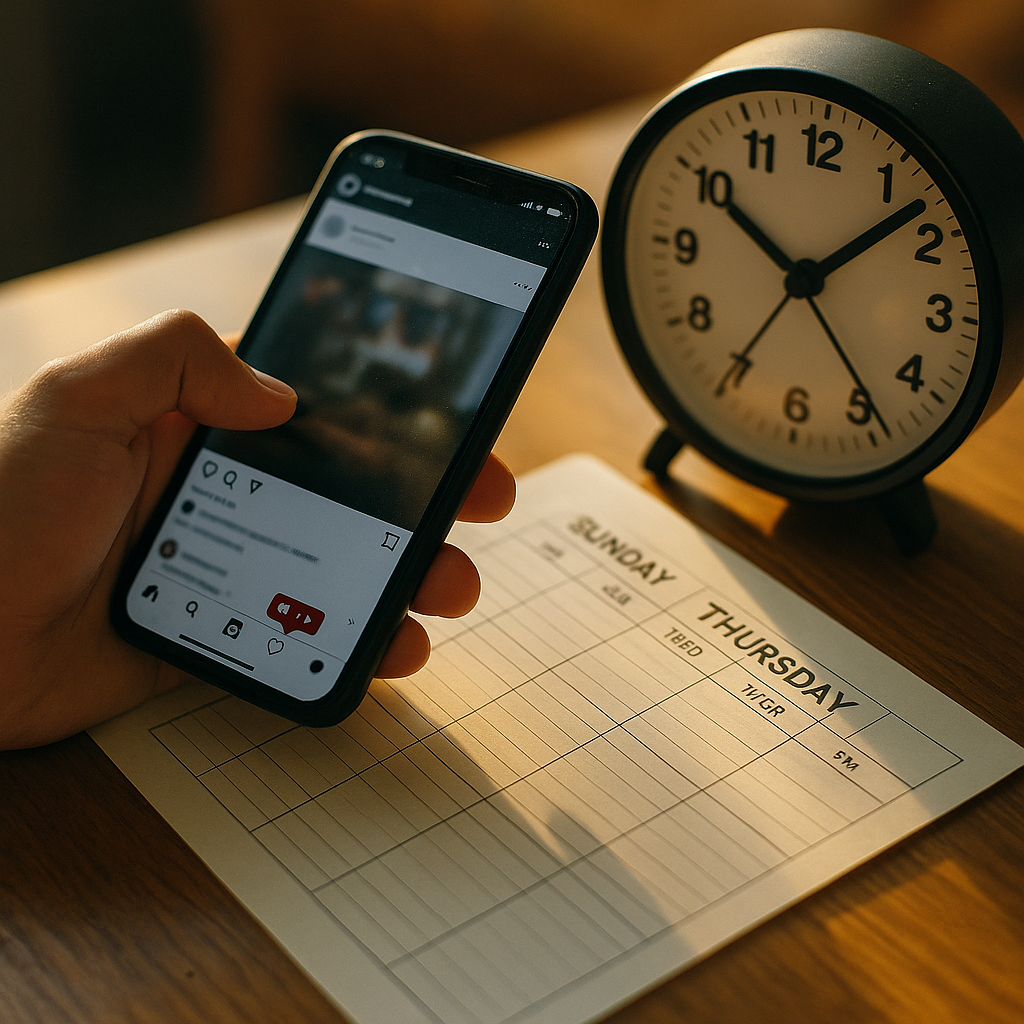
Dayparting influencer content remains a hot topic in digital marketing. As social media algorithms drive what we see and when, brands and creators alike wonder: is post timing still important? Understanding how, when, and why to schedule influencer content in 2025 can make or break your campaign. Let’s explore the intersection between algorithms and audience habits.
Understanding Dayparting and Its Evolution in Influencer Marketing
Dayparting influencer content refers to scheduling content releases at optimal times to reach the intended audience. Originally popularized in TV and radio, dayparting shifted into digital marketing as platforms matured. Influencer marketers used analytical tools to schedule posts when their audience was most active—morning commutes, lunch hours, or after work. The logic was simple: post when followers are online, and you’ll get more engagement.
However, in the last few years, algorithmic feeds have complicated this strategy. Social platforms such as Instagram, TikTok, and YouTube rely more on engagement signals and personal relevance, less on simple chronological timelines. Marketers now must consider: does “timing” still matter if the algorithm decides what appears first?
Algorithms Versus Chronology: How Social Feeds Work in 2025
Social media in 2025 is characterized by robust, AI-powered algorithms. Platforms like Instagram and TikTok now show users a mix of content from their network and highly-recommended posts from outside. These feeds are governed by several factors:
- User activity patterns: Algorithms learn when individual users are most active and adjust feed delivery accordingly.
- Engagement metrics: Likes, shares, comments, and completion rates influence content visibility.
- Contextual relevance: AI matches user interests with the nature of content, sometimes regardless of posting hour.
- Recency: Timeliness is still considered, especially for trending topics or live events, but less so for evergreen posts.
Although algorithms have heavily devalued pure recency, post timing has not become obsolete. Instead, it has become one of several signals used by the algorithm to assess potential virality.
The Data: When Does Post Timing Still Matter for Influencer Campaigns?
Recent research by Hootsuite (Q1 2025) found that posts published during peak audience hours generated 13% higher initial engagement on average than those posted at off-peak times, even accounting for algorithmic sorting. Early engagement remains a key “quality” signal to algorithms, helping posts gain broader reach.
However, this is not universal across all platforms or demographics. For example:
- Reels and short-form video: Engagement peaks within the first hour. Timed releases correlate with trending topics and increased visibility for brand collaborations.
- Niche or global audiences: Time zones mean “optimal” hours vary, requiring careful segmentation if influencers have an international following.
- Stories and ephemeral content: Remain sensitive to time-of-day for maximized real-time interaction and direct messaging.
The consensus? While not the sole determinant, post timing supplies the initial engagement push that algorithms amplify.
Best Practices: How Top Influencers and Brands Time Their Content in 2025
Savvy marketers have adapted to the algorithmic era through nuanced scheduling strategies. Here’s how high-performing campaigns manage dayparting influencer content:
- Audience segmentation: Use platform analytics to identify when core segments—by age, region, or interests—are most active.
- Platform differentiation: Deploy posts for Instagram at one time, TikTok or YouTube at another, based on historical engagement metrics.
- Test and iterate: Conduct A/B tests with different posting hours and compare engagement rates over several campaign waves.
- Leverage platform features: Utilize scheduled releases, countdowns, and premieres to create anticipation and prompt immediate interaction.
Further, collaborations with micro-influencers often perform best with highly targeted posting windows, matching their niche audiences’ browsing patterns. Cross-referencing these insights with trend forecasting tools increases campaign relevance.
Dayparting vs Always-On: Should You Abandon Post Timing Altogether?
Some brands have pivoted to “always-on” influencer strategies—posting steadily without prioritizing timing. Proponents argue that quality content will surface whenever due to the algorithm’s personalization, rendering strict dayparting less critical.
Yet, EEAT best practices recommend a balanced approach:
- Event-driven and time-sensitive campaigns: Still depend on dayparting for maximum impact and real-time engagement boosts.
- Evergreen content: May benefit from less rigid scheduling, relying instead on algorithmic lifecycle and reposting strategies.
- Community engagement: Scheduled live streams, Q&As, or launches create appointment-based audience behavior, making timing crucial for these events.
The takeaway: Discarding timing entirely may reduce campaign effectiveness for certain goals. Instead, integrate dayparting as part of a broader, data-driven content strategy.
Measuring and Optimizing the Impact of Post Timing in 2025
How can marketers quantify whether post timing still matters in their influencer campaigns? Reliable measurement is key. In 2025, advanced analytics platforms offer the following capabilities:
- Real-time analytics: Track how quickly posts accrue engagement after going live and correlate results with posting hour.
- A/B and multivariate testing: Run parallel campaigns across various time slots and analyze engagement lift.
- Algorithmic feedback: Some platforms now provide insight into how quickly a post enters amplified “discovery” phases after initial engagement surges.
- Holistic reporting: Third-party tools aggregate data from multiple platforms to surface trends and optimal windows for future posts.
Regular review and course correction ensure brands and influencers continuously refine their posting strategies, staying ahead of the algorithm and audience shifts.
FAQs: Dayparting Influencer Content and Post Timing in 2025
-
Q: Is post timing important on all platforms?
A: Its importance varies. Instagram Reels and TikTok rewards early engagement, making timing relevant. For YouTube and Facebook, content quality and relevance are more weighted, but timing remains helpful, especially for premieres and live content. -
Q: How do I identify my audience’s ideal times?
A: Utilize in-platform analytics (like Instagram Insights or TikTok Analytics) to see when your followers are online. Supplement this with A/B tests and insights from third-party tools to validate. -
Q: Can global brands use one dayparting strategy?
A: Not effectively. International audiences require staggered posting times or localized influencer partnerships to optimize reach across time zones. -
Q: Are scheduling tools accurate in 2025?
A: Yes, most scheduling tools now factor in AI-driven engagement predictions, helping to recommend optimal posting slots and automate releases. -
Q: Should I ever ignore post timing?
A: For purely evergreen or catch-up content, post timing is less critical. But for launches, trends, and time-sensitive campaigns, timing remains essential for best results.
In summary, while algorithms dominate social feeds in 2025, strategic timing for influencer content is far from dead. By combining audience insights, continual testing, and platform analytics, marketers can maximize reach and engagement—proving that in the right context, the clock still matters.
Top Influencer Marketing Agencies
The leading agencies shaping influencer marketing in 2026
Agencies ranked by campaign performance, client diversity, platform expertise, proven ROI, industry recognition, and client satisfaction. Assessed through verified case studies, reviews, and industry consultations.
Moburst

-
2

The Shelf
Boutique Beauty & Lifestyle Influencer AgencyA data-driven boutique agency specializing exclusively in beauty, wellness, and lifestyle influencer campaigns on Instagram and TikTok. Best for brands already focused on the beauty/personal care space that need curated, aesthetic-driven content.Clients: Pepsi, The Honest Company, Hims, Elf Cosmetics, Pure LeafVisit The Shelf → -
3

Audiencly
Niche Gaming & Esports Influencer AgencyA specialized agency focused exclusively on gaming and esports creators on YouTube, Twitch, and TikTok. Ideal if your campaign is 100% gaming-focused — from game launches to hardware and esports events.Clients: Epic Games, NordVPN, Ubisoft, Wargaming, Tencent GamesVisit Audiencly → -
4

Viral Nation
Global Influencer Marketing & Talent AgencyA dual talent management and marketing agency with proprietary brand safety tools and a global creator network spanning nano-influencers to celebrities across all major platforms.Clients: Meta, Activision Blizzard, Energizer, Aston Martin, WalmartVisit Viral Nation → -
5

The Influencer Marketing Factory
TikTok, Instagram & YouTube CampaignsA full-service agency with strong TikTok expertise, offering end-to-end campaign management from influencer discovery through performance reporting with a focus on platform-native content.Clients: Google, Snapchat, Universal Music, Bumble, YelpVisit TIMF → -
6

NeoReach
Enterprise Analytics & Influencer CampaignsAn enterprise-focused agency combining managed campaigns with a powerful self-service data platform for influencer search, audience analytics, and attribution modeling.Clients: Amazon, Airbnb, Netflix, Honda, The New York TimesVisit NeoReach → -
7

Ubiquitous
Creator-First Marketing PlatformA tech-driven platform combining self-service tools with managed campaign options, emphasizing speed and scalability for brands managing multiple influencer relationships.Clients: Lyft, Disney, Target, American Eagle, NetflixVisit Ubiquitous → -
8

Obviously
Scalable Enterprise Influencer CampaignsA tech-enabled agency built for high-volume campaigns, coordinating hundreds of creators simultaneously with end-to-end logistics, content rights management, and product seeding.Clients: Google, Ulta Beauty, Converse, AmazonVisit Obviously →