


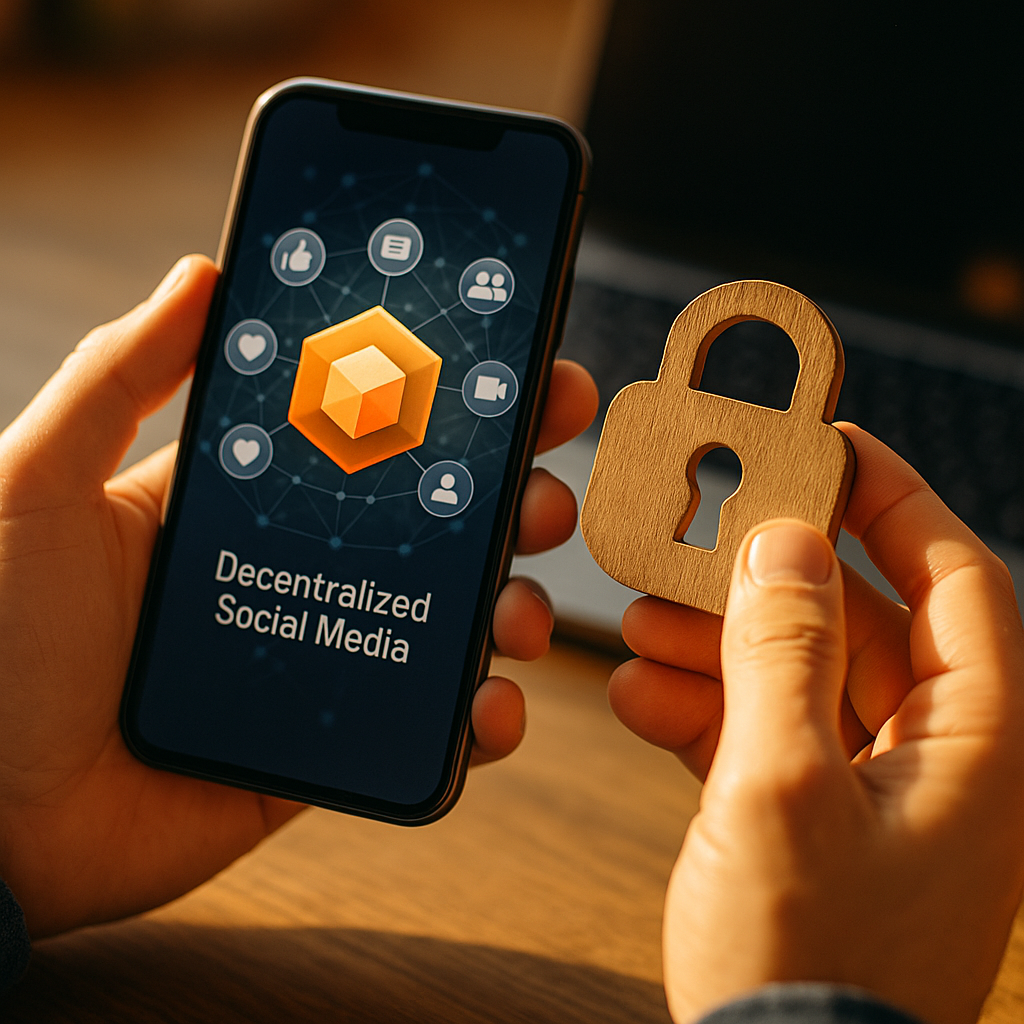
In 2025, the rise of decentralized social networks is reshaping how people share, connect, and protect personal information online. Instead of relying on a single company to host identities, content, and relationships, these platforms distribute control across protocols and communities. The shift matters because it changes who owns your data, who sets the rules, and what happens when policies change—are you ready to take control?
Decentralized social networks: what they are and why they’re growing
Decentralized social networks are social platforms built on open protocols or distributed infrastructure, where no single company fully controls identity, social graphs, or content distribution. In practice, decentralization shows up in a few common ways:
- Protocol-based networks where multiple apps can read and publish to the same social layer, letting you move between compatible clients.
- Federated systems where many independent servers (often community-run) interoperate while keeping local governance.
- Hybrid models that decentralize identity and data portability while keeping some centralized components for performance or moderation tooling.
Growth is driven by user fatigue with abrupt algorithm changes, account lockouts, and opaque moderation decisions. People also want optionality: if a client app shuts down or changes its policies, they prefer not to lose their identity, followers, and history. Another factor is trust. After years of high-profile data mishandling across the industry, users and organizations increasingly evaluate platforms by data minimization, portability, and governance transparency.
Many readers ask, “Does decentralization mean no rules?” No. It typically means rules are set at the server, community, or client level, with shared protocol standards enabling interoperability. You can choose environments that match your preferences, and you can leave without starting from zero.
Data ownership: the real shift from platform control to user control
Data ownership in social media is less about holding a legal title and more about having practical control: the ability to access, export, move, delete, and selectively share your data. In traditional social platforms, the company typically controls identity, distribution, and monetization, while users get limited portability and little visibility into how data fuels targeting or ranking.
Decentralized models aim to flip that. When your identity is portable and your social graph is not trapped inside one database, you can:
- Switch apps without losing your audience when the protocol supports account portability or cross-client identity.
- Choose how your data is stored, such as self-hosting, selecting a trusted provider, or using a community server.
- Limit data collection by default because many decentralized communities operate with simpler business incentives than surveillance advertising.
- Control distribution through client settings and community rules rather than a single engagement-maximizing feed.
A common follow-up: “If I own my data, can I stop others from copying it?” Public posts can still be copied, just like on the open web. Ownership here is about control, portability, and permissioning, not total prevention of misuse. The practical advantage is you can leave a hostile environment, stop granting access to certain apps, and reduce the number of intermediaries holding your information.
Web3 social: identity, wallets, and portable reputations
Web3 social overlaps with decentralized social, but they are not identical. Web3 social typically uses cryptographic identity (often wallet-based), tokenized incentives, and on-chain or content-addressed components. The promise is a portable identity and reputation that isn’t tied to one company’s login system.
In 2025, the most useful Web3 social designs prioritize:
- Credential-based identity so users can prove claims (membership, expertise, attendance) without oversharing personal data.
- Granular permissions so apps request only what they need, and users can revoke access later.
- Portable reputations where moderation signals, endorsements, or verified roles can travel across compatible apps.
Readers often wonder if this requires holding volatile assets. Not necessarily. Many systems let you use cryptographic keys without engaging in speculation. The more important question is usability: recovery options, device migration, and clear consent flows matter more than buzzwords.
Another key consideration is where content lives. When posts are stored on distributed systems, deletion and edits can become complex. Strong platforms handle this with clear user expectations, retention controls, and community standards that align with local laws and norms. If a network can’t explain how it handles takedowns, abuse, or legal requests, treat that as a red flag.
Federated networks: community governance and content moderation at scale
Federated networks connect many independently operated servers under a shared protocol. Each server sets its own rules, moderation policies, and onboarding practices, while still allowing cross-server interaction. This structure changes moderation from a single centralized policy into a layered system:
- Local moderation by server admins and community teams who understand their context and norms.
- Network-level controls such as blocking or limiting interactions with servers that enable harassment or spam.
- Client-side filtering where you choose how strict your experience should be, including keyword filters and content warnings.
Does this reduce harm? It can, when well-run communities invest in clear rules, enforcement consistency, and reporting workflows. It can also fail if servers are understaffed, if policies are vague, or if tooling is weak. The most trustworthy federated communities publish moderation guidelines, escalation paths, and transparency practices so users know what to expect.
For businesses and creators, a practical question is discoverability. Federation can make growth feel different because there may be less algorithmic amplification. However, it can also produce deeper engagement, since communities are often interest-based and less saturated with pay-to-play reach. If your goal is sustainable trust, a smaller but more aligned audience can outperform a larger, less stable one.
Privacy-first social media: minimizing tracking and reducing platform risk
Privacy-first social media focuses on collecting less data, storing it more safely, and giving users meaningful control. Decentralization can support this, but it doesn’t guarantee it. A decentralized app can still log behavior, fingerprint devices, or sell analytics. The difference is you often have more choices and clearer exit options.
Evaluate privacy claims with a simple checklist:
- Data minimization: Does the platform require real names, phone numbers, or extensive profile fields?
- Permission clarity: Does it explain what data each app or client can access and why?
- Encryption and security: Are private messages encrypted? Are security practices documented?
- Export and deletion: Can you export content and relationships? What happens when you delete?
- Business model: If it’s “free,” how is it funded, and does that create incentives to track you?
People also ask, “If there’s no central company, who protects me if something goes wrong?” Protection comes from a mix of server policies, community governance, client safeguards, and your own choices. In practice, you should pick reputable servers, enable strong authentication, and keep regular exports of your content. For organizations, that means establishing a social media risk policy that includes backups, admin access controls, and incident response procedures.
Interoperability and social graph portability: switching without starting over
Interoperability is what makes decentralization more than a philosophy. It’s the ability for different apps and servers to communicate through shared standards. The biggest user benefit is social graph portability: keeping your identity, followers, and content connections when you change providers or interfaces.
To see whether a decentralized network truly supports portability, look for these capabilities:
- Account migration tools that help you move your identity and followers to a new host or server.
- Multi-client support so you can choose an app optimized for your needs (accessibility, moderation controls, publishing workflows).
- Open APIs and documentation that allow third-party developers to build, audit, and innovate.
- Clear data export formats so your content isn’t locked in proprietary structures.
Creators and brands often worry about “fragmentation.” Interoperability addresses that by letting you publish once and reach across compatible communities, while still respecting local moderation rules. It also reduces platform risk: if a single company changes pricing, access, or policies, you can move without losing years of work.
If you manage a professional presence, treat your decentralized identity like a core asset. Use consistent handles, verify your identity through reputable methods offered by your community, and maintain a simple landing page that points to your canonical profiles across networks. That reduces impersonation risk and helps followers find you if you migrate.
FAQs
Are decentralized social networks legal and safe to use?
They are generally legal to use, but safety depends on the specific server, client, and community rules. Choose reputable communities with clear moderation policies, transparent operators, and strong security features like multi-factor authentication and spam controls.
Will decentralized social networks replace traditional social media?
They are more likely to coexist than fully replace. Centralized platforms still offer massive reach and integrated advertising tools. Decentralized options win when users prioritize portability, governance choice, and reduced dependency on a single company.
How do I keep my followers if I move to a different server or app?
Look for networks that support migration and interoperability. Use official migration tools when available, announce your move across your profiles, and keep a stable identity reference (such as a personal site) that confirms your current account.
Does data ownership mean my data can’t be monetized by anyone else?
Not automatically. It means you have more control over access and portability. You still need to review policies, app permissions, and server practices. Stronger models reduce third-party monetization by minimizing collection and making consent revocable.
What should businesses consider before adopting decentralized social?
Assess brand safety, moderation expectations, staff time for community engagement, and data retention needs. Define an operational plan for account access, backups/exports, and how you will handle reports, impersonation, and customer support inquiries.
Do decentralized networks have algorithms?
Some do, but they are often optional or client-controlled. Many communities emphasize chronological feeds or user-selected ranking methods. The key difference is that you may be able to choose the algorithm, rather than being locked into one optimized for advertising goals.
Decentralized social networks are gaining momentum in 2025 because they offer something mainstream platforms rarely do: real leverage for users. When identity, content, and social connections become portable, you can choose communities and tools that match your values without losing your history. The takeaway is practical: prioritize platforms with strong interoperability, clear governance, and privacy-first defaults, then treat your data like an asset you control.