


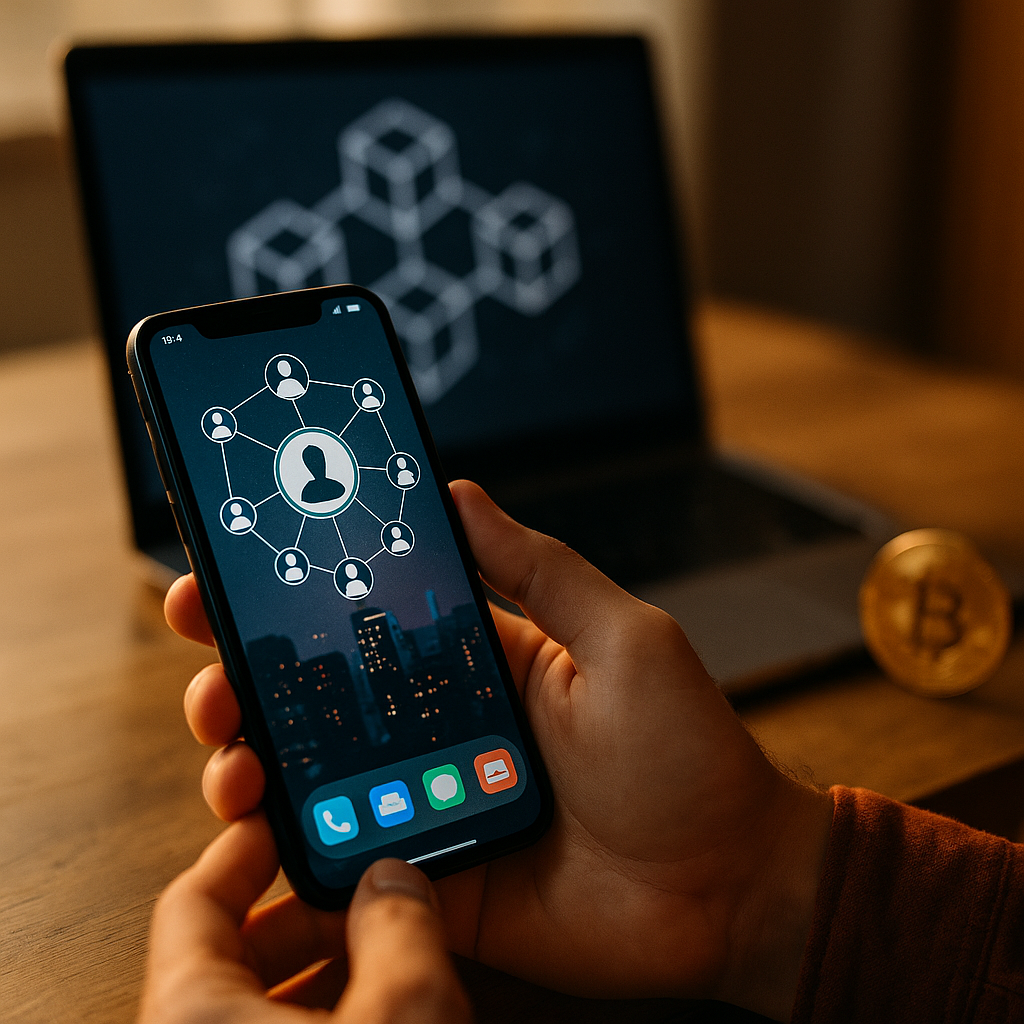
Decentralized social networks are moving from niche experiments to credible alternatives to platform-controlled social media in 2026. As concerns about surveillance, algorithmic opacity, and data misuse grow, users want more control over identity, audience, and monetization. This shift is not only technical; it changes who owns online relationships and digital value. What happens when users finally hold the keys?
Why decentralized social media matters for personal data sovereignty
Traditional social platforms built massive businesses by centralizing user data, attention, and distribution. In that model, a company controls account access, content ranking, advertising systems, and often the economic value created by creators and communities. Users receive convenience, but they give up a large degree of autonomy.
Personal data sovereignty changes that balance. It means individuals have meaningful control over how their data is stored, shared, monetized, and transferred. In practice, that includes the ability to move identity and followers across platforms, decide who can access posts and metadata, and reduce dependence on a single intermediary.
Decentralized networks address this through federated protocols, blockchain-based identity layers, or hybrid architectures that separate social graphs from any one company’s servers. That distinction matters. If your audience, profile, and content history are portable, you are less vulnerable to sudden policy changes, account suspensions, or declining organic reach driven by opaque platform incentives.
For users, the value is control. For creators, it is audience ownership. For developers, it is composability. For regulators and privacy advocates, it is a possible path away from the concentration of power that has defined social media for more than a decade.
This does not mean every decentralized network is automatically private, secure, or user friendly. Some expose too much data by design. Others depend on complex wallets, keys, or token systems that create friction. Still, the broader movement reflects a real demand: people want social experiences that do not require surrendering their digital lives to a centralized gatekeeper.
How blockchain social networks and federated protocols actually work
The term blockchain social networks often gets used broadly, but decentralized social systems usually fall into three categories.
First, federated networks. These platforms rely on independent servers, often called instances, that can communicate through shared protocols. Users may sign up on one instance but interact with users on another. The network is distributed across many administrators rather than one company. This model can reduce central points of failure while preserving familiar social features.
Second, blockchain-based networks. These systems use onchain components for identity, content references, creator payments, or governance. Not every post is stored directly on a blockchain because that can be expensive and inefficient. Instead, many projects store proofs, handles, permissions, or transaction records onchain while using distributed storage for media and content.
Third, hybrid models. These combine federated architecture with cryptographic identity, or pair blockchain ownership with offchain performance layers. In 2026, hybrid designs are common because they attempt to balance speed, usability, transparency, and user control.
Several core mechanisms shape these networks:
- Portable identity: users maintain a handle or wallet-linked profile they can reuse across apps.
- Social graph ownership: followers, follows, and community links are not locked inside one interface.
- Permissioned data access: users grant specific apps access to specific information.
- Tokenized or direct monetization: creators can receive payments, subscriptions, or rewards without depending entirely on platform ad models.
- Community governance: rules may be set by protocol governance, server admins, or community voting.
If this sounds technically complex, that is because it often is. However, better user experience has improved adoption. Many products now abstract away wallet setup, key management, and protocol jargon. That matters because mainstream users do not care about architecture; they care whether the app works, whether their community is there, and whether they can trust it.
Key benefits of user-owned data for creators, communities, and brands
User-owned data is the strongest argument for decentralized social networks because it affects daily online life. The benefit is not ideological alone. It is practical.
For creators, audience portability reduces platform risk. If a creator invests years building a following, that audience should not disappear because an algorithm changes or an account is restricted. A decentralized model can let creators keep direct access to their followers and move between interfaces without starting from zero.
For users, the benefit is greater agency over privacy and identity. Instead of giving one company broad rights over behavioral data, users can approve narrower permissions. In stronger implementations, they can also revoke access, separate identities by context, and choose storage methods that fit their risk tolerance.
For communities, decentralized architecture can support resilience. When moderation, hosting, and governance are distributed, no single failure point can take down the entire social layer. That can make networks more durable, especially for interest-based communities that want custom rules or stronger member participation.
For brands, the opportunity is more nuanced. Decentralized environments can create stronger first-party relationships and transparent engagement mechanisms, but they also limit the data extraction tactics that many marketers became used to on centralized platforms. Brands that succeed here focus on trust, value exchange, and community participation rather than surveillance-heavy targeting.
Other benefits include:
- Reduced lock-in: switching apps does not always mean losing content or followers.
- New monetization models: memberships, tips, collectibles, and direct transactions can work without traditional platform cuts.
- Interoperability: multiple apps can build on the same underlying network, increasing innovation.
- Transparency: some systems make ranking logic, governance rules, or payment flows more visible.
Still, these advantages depend on execution. A network can claim decentralization while concentrating power in a foundation, investor group, or small set of validators. Readers should ask a simple question: who controls identity, access, moderation, and monetization when disputes happen? The answer reveals whether the platform meaningfully supports sovereignty or just markets the idea.
The biggest privacy and data ownership challenges still holding adoption back
Privacy and data ownership do not improve automatically just because a system is decentralized. In fact, some decentralized designs create new risks.
The first challenge is usability. If users must manage private keys, understand signing permissions, and navigate multiple storage layers, many will make mistakes. Lost credentials can mean lost access. Poor interface design can lead users to over-share information they thought was private.
The second challenge is moderation. Centralized platforms are often criticized for inconsistent enforcement, but they can remove harmful content quickly. Decentralized systems must balance censorship resistance with safety. In federated environments, moderation standards differ by server. In onchain systems, immutability can make harmful content references difficult to address. This tension remains one of the movement’s hardest problems.
The third challenge is scalability and performance. Mainstream social apps need low latency, easy onboarding, and reliable media delivery. Fully decentralized systems can struggle here, especially during periods of high activity. Hybrid architectures help, but they also introduce tradeoffs between purity and practicality.
The fourth challenge is legal and regulatory clarity. Data portability, privacy rights, child safety, content liability, and financial regulation can intersect in complex ways when networks span jurisdictions and blend social interaction with tokenized economies. Companies and communities need governance models that can adapt without recreating the same centralized power they aimed to avoid.
The fifth challenge is economic sustainability. Many early decentralized projects relied on speculation rather than durable value. In 2026, the stronger networks are those with clear utility: creator tools, community coordination, identity portability, or privacy-preserving communication. Hype fades quickly when there is no lasting reason to participate.
Users evaluating a platform should look for practical signals of trustworthiness:
- Clear documentation explaining what is onchain, offchain, public, and private.
- Independent security audits and transparent incident reporting.
- Portable account recovery options that do not make users choose between convenience and control.
- Visible moderation policies and appeal processes.
- Sustainable governance that does not hide central control behind decentralized language.
These are the standards that separate credible infrastructure from marketing claims.
What Web3 identity means for the future of social networking
Web3 identity is becoming the connective tissue of decentralized social networks. Instead of creating a separate account for every app, users can maintain a portable identity layer tied to cryptographic credentials, verified attributes, and selective disclosure tools.
This does not mean every user will need a public wallet for every social action. The more mature vision is flexible identity: one persistent profile for reputation and ownership, combined with privacy-preserving credentials for age checks, memberships, or professional verification. That allows users to prove something about themselves without exposing unnecessary personal data.
In social networking, this unlocks several changes. First, reputation can travel with the user. A creator’s follower history, verified work, and community standing do not need to disappear when trying a new app. Second, communities can verify roles and permissions more efficiently. Third, developers can build specialized social experiences on shared identity rails instead of rebuilding fragmented user databases.
This shift also affects platform competition. In the centralized era, platforms won partly by locking in social graphs. In a portable identity era, apps compete more on experience, safety, discovery, and utility. That is healthier for users because it lowers switching costs and encourages innovation.
There are still hard questions. How should pseudonymity work in sensitive contexts? Who issues credentials, and can those issuers be trusted? How can identity systems avoid excluding users who lack formal documentation or technical confidence? The best projects acknowledge these concerns directly and design for optionality.
The likely future is not one universal network replacing all social media. It is an ecosystem of interoperable networks where users carry identity, audience, and permissions across multiple applications. Some will emphasize public discourse. Others will focus on private communities, creator economies, or niche interest groups. Personal sovereignty becomes realistic when identity is portable, permissions are granular, and data relationships are not owned by a single company.
How to evaluate decentralized platforms before you join or build on them
If you are considering joining, investing time in, or building on a decentralized social platform, use a practical evaluation framework. Vision matters, but infrastructure quality matters more.
Start with control. Can you export your data, move your identity, and preserve your audience connections? If not, the platform may be less decentralized than advertised.
Then assess privacy. What information is public by default? What metadata is exposed? Are there permission settings that ordinary users can understand? Strong privacy should be built into the product, not hidden in developer documents.
Next, review governance. Who can change the rules, freeze accounts, update protocols, or alter economic incentives? Decentralization is about power distribution, not just technical architecture.
After that, examine moderation and safety. Does the platform explain how abuse, impersonation, harassment, and illegal content are handled? A network that cannot protect users will struggle to grow, regardless of its ideals.
Finally, look at traction and utility. Are real communities active there? Are creators earning value? Are developers building useful applications? Sustainable adoption comes from repeated use, not momentary curiosity.
For businesses and creators, one more question matters: what relationship can you own here that you cannot own on a centralized platform? If the answer is meaningful audience portability, direct monetization, stronger trust, or better consent management, then decentralized social may deserve a place in your strategy.
In 2026, the rise of decentralized social networks is not just a reaction against big platforms. It is a structural attempt to rebuild the social web around user choice, transparent infrastructure, and durable digital rights. The transition will be uneven, and many projects will fail. But the underlying demand for data sovereignty is real and growing.
FAQs about decentralized social networks and personal data sovereignty
What is a decentralized social network?
A decentralized social network is a platform where control is distributed across servers, protocols, or blockchain infrastructure instead of being held by one company. Users may gain more portability, transparency, and control over identity and content.
What does personal data sovereignty mean?
Personal data sovereignty means individuals have real control over how their data is collected, used, shared, stored, and transferred. It includes consent, portability, revocation of access, and stronger ownership of digital identity and audience relationships.
Are decentralized social networks more private?
Not always. Some improve privacy through selective permissions and reduced central tracking. Others expose more public data than users expect. Privacy depends on the platform’s design, default settings, storage model, and user education.
Do I need a crypto wallet to use decentralized social platforms?
Not in every case. Many federated platforms do not require wallets. Some blockchain-based apps abstract wallet setup behind familiar logins. Still, wallets or cryptographic credentials remain common for ownership, payments, and portable identity.
Can I take my followers with me on decentralized social media?
In some networks, yes. That is one of the main advantages. If the social graph is tied to a portable protocol rather than a single app, you may be able to switch interfaces without losing your audience connections.
How do creators make money on decentralized networks?
Common options include direct tips, subscriptions, tokenized memberships, digital collectibles, paid communities, and protocol-native rewards. The strongest models reduce dependence on ad revenue and platform-controlled monetization rules.
What are the biggest risks of decentralized social media?
The biggest risks include poor user experience, lost credentials, inconsistent moderation, legal uncertainty, scalability issues, and platforms that market decentralization without delivering meaningful user control.
Will decentralized social networks replace traditional social media?
Probably not completely. A more likely outcome is a mixed ecosystem where interoperable decentralized platforms grow alongside centralized apps. Users, creators, and brands will choose based on trust, utility, audience, and control.
Decentralized social networks are redefining how identity, audience, and data ownership work online. Their promise is not perfection but a better balance of power between users and platforms. The clearest takeaway is simple: choose networks that make control portable, privacy understandable, and governance transparent. In 2026, personal data sovereignty is no longer a fringe idea. It is becoming a standard users expect.