


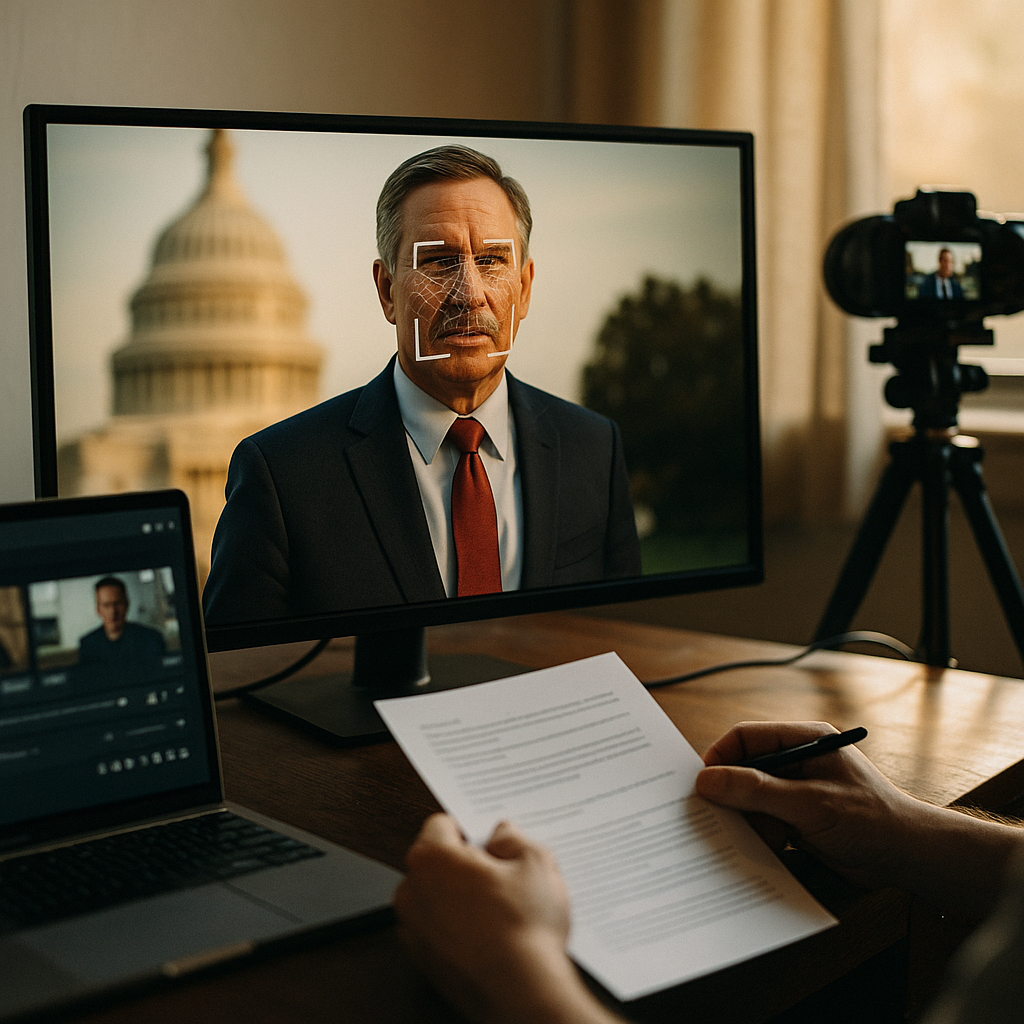
Compliance Rules for Deepfake Disclosure in Advocacy Ads are no longer optional details that legal teams can “handle later.” In 2025, regulators, platforms, and the public expect clear labeling whenever synthetic media could influence civic debate. Advocacy groups face real penalties, takedowns, and reputational damage when disclosures are unclear or missing. The good news: strong compliance is achievable with a repeatable playbook—if you know where to start.
Understanding advocacy advertising compliance
Advocacy ads aim to shape public opinion on issues, policies, or candidates, even when they are not “vote-for/vote-against” campaign ads. Because they can influence democratic outcomes, they often trigger heightened scrutiny. In 2025, that scrutiny increasingly includes whether ads contain synthetic, manipulated, or AI-generated content that could mislead a reasonable viewer.
For deepfake disclosure, compliance is best approached as a layered system rather than a single label. You typically need to address:
- Legal requirements (jurisdiction-specific rules on electioneering communications, deceptive practices, and AI/deepfake disclosures).
- Platform policies (ad libraries, political content verification, manipulated media rules, and disclosure formats).
- Operational controls (internal review, vendor oversight, and evidence retention).
Reader follow-up question: “If our ad is about an issue, not a candidate, do we still need disclosure?” Often yes. Many rules and platform policies focus on whether the content could mislead the public in a political context, not solely on express advocacy.
To align with Google’s EEAT expectations, assign clear ownership (legal, compliance, creative, media buying), document decisions, and keep a verifiable record of what you published and why.
Deepfake disclosure requirements and triggers
Deepfake rules generally trigger when a communication uses AI or editing to create a realistic but false impression that a real person said or did something they did not. In advocacy advertising, the highest-risk situations include:
- Synthetic likeness of a public figure (voice cloning or face swaps of candidates, officials, or prominent activists).
- Altered context (splicing audio/video to change meaning while keeping an authentic look).
- Fabricated “news” segments or realistic “on-the-street” interviews that did not occur.
- AI-generated scenes presented as documentary footage (riots, polling places, government actions).
Disclosure expectations typically rise as (1) realism increases, (2) proximity to an election or major vote increases, and (3) the portrayed person is identifiable and the message could change audience beliefs or behavior.
Practical rule: if an average viewer could reasonably think the media is authentic, you should presume disclosure is required. Even where the law is ambiguous, platforms may enforce stricter standards, and your reputation is always at stake.
Reader follow-up: “What about satire or obvious parody?” Some frameworks allow exceptions, but relying on “it’s obvious” is risky. The safer approach is a clear disclosure plus creative cues (tone, styling) that reduce confusion.
Political ad platform policies for synthetic media
In 2025, advocacy advertisers commonly distribute content through major social and video platforms, programmatic networks, connected TV, and publisher-direct placements. Each channel can impose separate rules on manipulated media and political content. Your compliance strategy should treat platform policy as enforceable “law” for that placement.
Common platform expectations include:
- Upfront labeling of AI-generated or materially manipulated audio/video.
- Restrictions on deceptive impersonation and content that misleads about voting processes or official actions.
- Political advertiser verification (identity checks, authorization, and payment transparency).
- Ad library transparency (public archive entries, spend ranges, targeting parameters, and creative storage).
Operationally, build a placement checklist that answers:
- Is this ad classified as political/advocacy by the platform?
- Does the platform require a synthetic media label in the ad itself, in metadata, or both?
- Are there format requirements (e.g., on-screen text size, duration, audio callout)?
- Will the ad be rejected if it includes a public figure’s synthetic voice?
Reader follow-up: “If we disclose in the description text, is that enough?” Often not. Many platforms and regulators expect the disclosure to travel with the asset itself (video frames or audio) so it remains visible when shared, embedded, or viewed without captions.
Election law and regulatory enforcement risks
Deepfake compliance for advocacy ads sits at the intersection of election regulation, consumer protection, defamation, right of publicity, and sometimes criminal impersonation statutes. Because rules vary by jurisdiction, the most defensible approach is to design disclosures that meet the strictest standard you reasonably anticipate across your distribution footprint.
Key legal risk themes in 2025 include:
- Deceptive practices: Even outside election statutes, misleading synthetic media may trigger general deceptive advertising enforcement.
- Election interference: Content that misrepresents voting logistics or fabricates official statements can create elevated enforcement exposure.
- Defamation and false light: A realistic synthetic portrayal can create liability if it communicates a provably false factual claim about a person.
- Rights of publicity and consent: Using someone’s likeness or voice (especially for fundraising or persuasion) can require permission.
To demonstrate EEAT, involve counsel early, especially for ads that include real people, public figures, or claims that could be taken as factual. Maintain a written analysis of your disclosure decision: what is synthetic, why it is synthetic, how viewers could interpret it, and what steps you took to prevent confusion.
Reader follow-up: “Can we avoid risk by using a generic AI narrator?” It reduces impersonation risk, but you still may need disclosure if the overall video presents AI-generated imagery as real footage or uses synthetic audio in a way that could mislead.
Disclosure label standards: wording, placement, and accessibility
Effective deepfake disclosure is not a tiny footnote. It is a communication element designed to be noticed, understood, and retained. Build disclosures around three principles: clarity, proximity, and persistence.
Clarity: Use plain language that an average viewer understands. Avoid legal jargon like “synthetically generated audiovisual representations.” Prefer direct phrasing such as:
- “This video contains AI-generated imagery.”
- “Audio has been generated using AI.”
- “This is a dramatization; scenes did not occur.”
- “Voice is simulated; the person shown did not say these words.”
Proximity: Place the disclosure where the viewer encounters the synthetic element. If the deepfake appears early, disclose early. If it appears multiple times, reinforce the disclosure at meaningful intervals. For short-form video, a single early disclosure plus a persistent watermark can be more effective than a fast end card.
Persistence: Ensure the disclosure survives reposts and cropped versions. Use:
- On-screen text (high contrast, readable size, adequate duration).
- Audio disclosure when synthetic voice is used or when video may be consumed hands-free.
- Watermarks or corner labels that remain visible throughout.
Accessibility matters. Add captions that include the disclosure, ensure color contrast, and avoid placing labels behind UI overlays (play buttons, platform captions, or profile badges). If an ad is translated, translate the disclosure accurately and keep it equally prominent.
Reader follow-up: “How long should the disclosure stay on screen?” Long enough for an ordinary viewer to read without pausing. If you cannot confidently say it is readable, it is not compliant in practice—even if technically present.
Governance, documentation, and audit-ready workflows
A compliance program fails when it depends on memory or informal approvals. Build a workflow that makes disclosure decisions repeatable, reviewable, and defensible. This is also how you demonstrate EEAT: experience with real operational constraints, expertise in risk controls, authoritativeness through documentation, and trust via consistent execution.
Recommended controls for advocacy organizations and their agencies:
- Asset intake questionnaire: Identify whether any element is AI-generated (voice, face, background, b-roll, “crowd” scenes), whether any real person is depicted, and whether consent exists.
- Synthetic media risk rating: Low/medium/high based on realism, subject sensitivity, proximity to elections, and likelihood of being interpreted as factual.
- Disclosure decision log: Store final disclosure language, placement mockups, and the rationale.
- Substantiation file: Keep source footage, prompts (where appropriate), edit timelines, model/vendor notes, and permissions/releases.
- Two-person sign-off: Creative lead plus compliance/legal for high-risk assets; include media buyer confirmation for platform-specific requirements.
- Post-launch monitoring: Confirm the right version ran, disclosures rendered correctly on mobile, and community sharing did not strip labels.
Vendor management is crucial. Agencies, freelancers, and AI tool providers should be contractually required to disclose synthetic elements and provide records. Add clauses requiring:
- Disclosure of any model used to generate voice/likeness.
- Confirmation of training-data and licensing constraints when relevant.
- Indemnity and cooperation for takedowns or platform disputes.
Reader follow-up: “What if we used AI only for color correction or noise reduction?” Purely technical enhancement that does not change meaning or depict events that did not occur is typically lower risk, but document it anyway. Your internal record helps rebut allegations of deception.
FAQs
Do advocacy ads need deepfake disclosures even if they are not election ads?
Often yes. If the ad could materially mislead viewers about real people or real events in a civic context, disclosure may be required by platform policies and may reduce legal exposure under deceptive practices standards.
What counts as a “deepfake” for compliance purposes?
Use a practical definition: realistic synthetic or manipulated media that could make a reasonable viewer believe a real person said or did something they did not, or that a real event occurred when it did not. If it can mislead, treat it as disclosure-triggering.
Is a disclaimer in the caption or landing page sufficient?
Usually not. Best practice is an in-asset disclosure (on-screen text and/or audio) so the information stays with the media when it is shared, embedded, or viewed without accompanying text.
Can we use an AI-generated voice to read real quotes without disclosure?
High risk. Even if the words are accurate, a simulated voice can imply endorsement or authentic speech. Use clear language such as “Voice is simulated” and avoid using a recognizable person’s voice without consent.
What if we disclose, but the ad is still misleading?
Disclosure does not cure deception. If the core message implies false facts (for example, fabricated wrongdoing, fake official announcements, or altered voting instructions), you can still face takedowns and legal claims.
How should we handle influencer-led advocacy ads that use AI effects?
Require creators to flag any AI-generated or materially altered segments, provide the original files, and include standardized on-screen disclosures. Also ensure the influencer’s sponsorship disclosure remains separate and clear so viewers understand both the funding and the synthetic media elements.
What documentation should we keep to be audit-ready?
Keep the final ad files, proof of disclosures, platform submission details, approval records, source assets, consent/releases, vendor attestations, and a short written rationale explaining why the disclosure is adequate for the media and audience.
How quickly should we respond if a platform flags our ad as manipulated media?
Immediately. Pause spend, preserve evidence, review whether the served version includes the disclosure, and submit a corrected asset if needed. Fast action reduces repeat violations and helps protect account standing.
In 2025, deepfake disclosure in advocacy advertising demands more than a small disclaimer—it requires a system. Use clear labels that stay with the media, align creative choices with platform rules, and document every decision from asset creation to post-launch monitoring. When you treat disclosure as part of message integrity, you reduce legal risk and build trust with audiences. The takeaway: disclose early, disclose clearly, and keep receipts.