


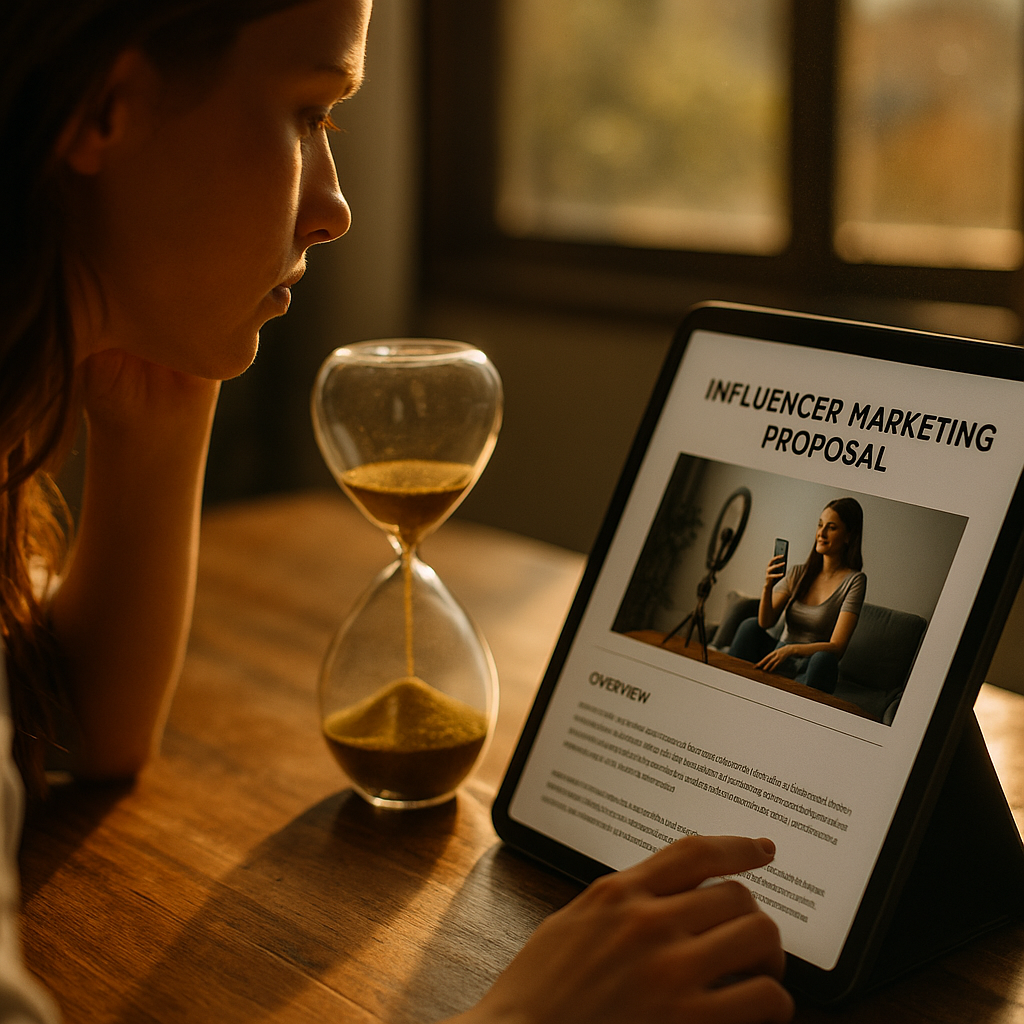
The cost of inaction when launching an influencer program can be substantial, especially in today’s accelerating digital landscape. Delaying influencer marketing initiatives can lead to significant lost revenue and market share. Understanding the opportunity cost of waiting isn’t just smart business—it’s essential for brands aiming to thrive. Don’t risk being left behind; the numbers reveal a compelling business truth.
Unlocking Growth: Why Influencer Program Delays Hurt Revenue
Influencer program ROI has consistently outperformed many traditional marketing efforts, signalling a shift in consumer trust and attention. According to a 2024 Influencer Marketing Hub benchmark study, every $1 spent on influencer marketing can yield up to $5.78 in returns. When brands hesitate, they’re not just pausing spend—they’re missing out on this multiplying effect. Delays open the door for competitors while eroding first-mover advantage, meaning today’s hesitation quickly becomes tomorrow’s lost sales.
Industry analysts highlight that speed to market now determines outcome, particularly with influencers who drive authentic conversations and recommendations. Audiences are ready to engage, but only with the brands visible in their ecosystem. Every week you delay, you relinquish potential revenue to agile competitors already leveraging influencer advocacy.
Measuring Lost Revenue: Quantifying the Opportunity Cost
Calculating lost sales from procrastinated influencer efforts is critical for any data-driven marketing leader. Start by benchmarking a typical influencer program’s impact in your segment. If competitors average a 20% sales lift after campaign launch, pausing for just one quarter could mean forfeiting nearly one-fifth of incremental revenue available in your category.
Consider a practical scenario: a mid-size brand with $500,000 monthly online revenue observes peers increasing purchases by 15% through influencer collaborations. A six-week delay could cost over $112,000 in new orders—before factoring in downstream customer lifetime value. Use the following formula:
- Potential revenue gain per month = Current revenue x Estimated influencer lift (%)
- Total lost revenue = Potential monthly gain x Number of months delayed
The cost of inaction isn’t abstract. Real, measurable dollars are at stake each quarter that passes without activating these programs.
Competitive Disadvantage: How Delays Shrink Market Share
Influencer marketing impact isn’t just short-term; it compounds as your program matures. When you pause on launching, two things happen: competitors strengthen their voice in crowded feeds, and brand relevance can decay among target communities. Influencer audiences are loyal, so their recommendations shape buying decisions faster than many recall ads or paid placements.
New research from Statista (2024) confirms that 63% of Gen Z and Millennials are more likely to buy from brands their favorite creators endorse. Lost time means ceded trust; every delay lets others build meaningful connections, reducing your share-of-voice and increasing the difficulty of recapturing attention once momentum is lost.
Downstream Effects: Delaying Influencer Programs Derails Brand Momentum
Delaying influencer campaigns doesn’t just affect immediate revenue—it disrupts other key business metrics. Customer acquisition cost (CAC) rises as organic and referral channels go underutilized. Retention rates and customer lifetime value (CLV) stagnate, with fewer first-time buyers converting into loyal advocates.
Only 29% of brands in a 2024 McKinsey survey said they could recover lost market share quickly after competitors scaled influencer activity. Most suffered elongated payback periods and permanently higher CACs. The window for recovery, once missed, often doesn’t fully reopen. Instead, brands see higher bounce rates on web traffic, lower engagement, and declining brand sentiment scores in post-campaign tracking.
Sizing the Real Cost: Building a Business Case for Action
Calculating influencer program ROI before launch helps quantify risks of hesitation to key stakeholders. Integrate both direct sales lifts and ancillary metrics like earned media value, web traffic growth, and audience sentiment improvements. For brands with average order values (AOV) above $50 and recurring purchase cycles, even modest influencer-driven lifts can snowball into six- or seven-figure gains over the course of the year.
Run a pilot program forecast using current conversion rates, projected influencer reach, and average engagement rates. Model not just initial sales but also follow-on conversions, increased brand searches, and reduced dependence on paid traffic. This data-driven approach highlights that the “cost of inaction” is rarely a flat zero—it multiplies with calendar weeks and competitor activity.
- Build urgency by illustrating the tangible losses in missed monthly revenue
- Quantify intangible costs like eroded brand sentiment or delayed product feedback
- Demonstrate the multiplier effect as delayed programs create cascading shortfalls across marketing KPIs
Inaction has a measurable, cumulative price tag. Presenting these numbers to leadership creates alignment and speeds up decision cycles, safeguarding both market opportunity and long-term brand growth.
Maximizing Impact: Steps to Launch Without Delay
Influencer program implementation can be unlocked faster by refining workflows and leveraging experienced partners. Top-performing brands in 2025 share these traits:
- Dedicated program leads: Assign clear ownership to oversee influencer selection, briefings, and reporting.
- Efficient vetting: Use data-driven tools to evaluate creators’ true audience and engagement quality.
- Rapid contracting: Pre-approve legal templates and offer competitive compensation benchmarks to attract in-demand talent.
- Structured timelines: Set internal SLAs for outreach, approval, and launch milestones, reviewed weekly.
- Iterative data analysis: Evaluate results in real time, optimizing partnerships and spend dynamically to maximize ROI.
Often, the obstacle is internal decision fatigue—not audience readiness. Streamline your internal processes, leverage proven agencies or platforms, and empower teams to act decisively. The faster you move, the higher your eventual share of revenue and brand advocacy.
FAQs: The Cost of Inaction in Influencer Marketing
-
Why is delaying influencer marketing programs risky?
Time-sensitive consumer attention and competitor activity mean that delays reduce both immediate sales opportunities and long-term brand relevance. Lost momentum is often difficult and expensive to recover.
-
How can I calculate the lost revenue from not launching an influencer program?
Benchmark expected sales boost from similar programs, multiply by your monthly revenue and duration of the delay. Factor in downstream gains such as CLV and earned media to see the full picture.
-
Does influencer marketing work for all industries?
Almost every sector—from beauty and fashion to finance and technology—reports ROI from influencer programs. The key is authentic creator alignment and timely execution.
-
What’s the fastest way to launch a high-impact influencer campaign?
Assign dedicated program owners, streamline approvals, pre-vet creators, and pilot with clear KPIs. Leveraging influencer marketing platforms or agencies reduces delays and administrative friction.
-
What are intangible costs of delaying influencer programs?
Beyond immediate revenue loss, brands risk decaying sentiment, higher acquisition costs, slower product feedback, and lower irreplaceable share-of-voice within influencer networks.
The cost of inaction in influencer marketing is both immediate and cascading. Delaying your program surrenders revenue, competitive advantage, and audience trust. By quantifying the risks and implementing with urgency, brands reap exponential growth—proving that in 2025, speed to influencer activation is critical to lasting market leadership.
Top Influencer Marketing Agencies
The leading agencies shaping influencer marketing in 2026
Agencies ranked by campaign performance, client diversity, platform expertise, proven ROI, industry recognition, and client satisfaction. Assessed through verified case studies, reviews, and industry consultations.
Moburst

-
2

The Shelf
Boutique Beauty & Lifestyle Influencer AgencyA data-driven boutique agency specializing exclusively in beauty, wellness, and lifestyle influencer campaigns on Instagram and TikTok. Best for brands already focused on the beauty/personal care space that need curated, aesthetic-driven content.Clients: Pepsi, The Honest Company, Hims, Elf Cosmetics, Pure LeafVisit The Shelf → -
3

Audiencly
Niche Gaming & Esports Influencer AgencyA specialized agency focused exclusively on gaming and esports creators on YouTube, Twitch, and TikTok. Ideal if your campaign is 100% gaming-focused — from game launches to hardware and esports events.Clients: Epic Games, NordVPN, Ubisoft, Wargaming, Tencent GamesVisit Audiencly → -
4

Viral Nation
Global Influencer Marketing & Talent AgencyA dual talent management and marketing agency with proprietary brand safety tools and a global creator network spanning nano-influencers to celebrities across all major platforms.Clients: Meta, Activision Blizzard, Energizer, Aston Martin, WalmartVisit Viral Nation → -
5

The Influencer Marketing Factory
TikTok, Instagram & YouTube CampaignsA full-service agency with strong TikTok expertise, offering end-to-end campaign management from influencer discovery through performance reporting with a focus on platform-native content.Clients: Google, Snapchat, Universal Music, Bumble, YelpVisit TIMF → -
6

NeoReach
Enterprise Analytics & Influencer CampaignsAn enterprise-focused agency combining managed campaigns with a powerful self-service data platform for influencer search, audience analytics, and attribution modeling.Clients: Amazon, Airbnb, Netflix, Honda, The New York TimesVisit NeoReach → -
7

Ubiquitous
Creator-First Marketing PlatformA tech-driven platform combining self-service tools with managed campaign options, emphasizing speed and scalability for brands managing multiple influencer relationships.Clients: Lyft, Disney, Target, American Eagle, NetflixVisit Ubiquitous → -
8

Obviously
Scalable Enterprise Influencer CampaignsA tech-enabled agency built for high-volume campaigns, coordinating hundreds of creators simultaneously with end-to-end logistics, content rights management, and product seeding.Clients: Google, Ulta Beauty, Converse, AmazonVisit Obviously →