


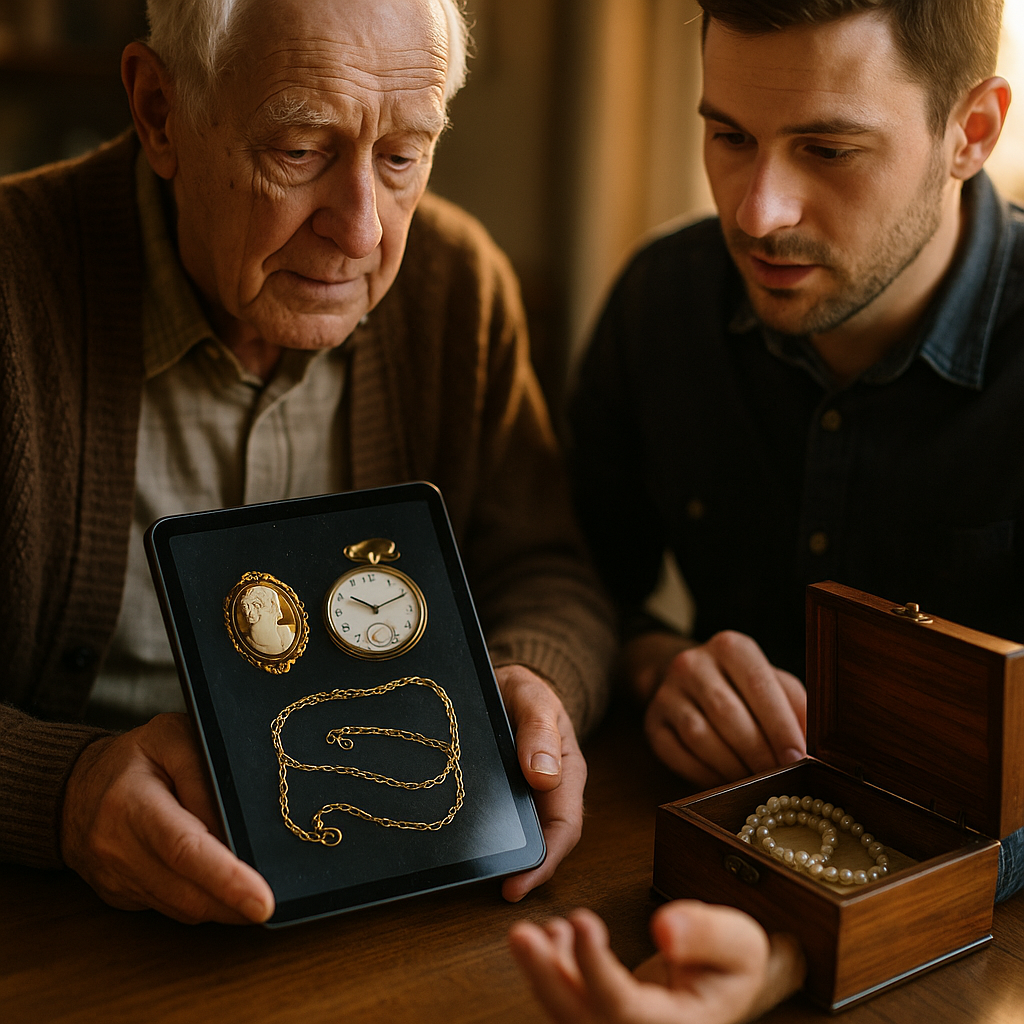
Digital heirloom marketing is shifting how brands earn trust: by creating products and stories meant to last for decades, not months. In 2025, customers document their lives in the cloud while worrying about platform churn, privacy, and permanence. This tension has opened a new category—offerings designed to endure, be handed down, and stay usable over time. What makes something truly worth keeping?
Digital heirlooms and legacy products: what “built for longevity” really means
A digital heirloom is not just “content you keep.” It is a carefully packaged asset—photos, messages, audio, video, design files, journals, family histories, creative works, or even digital collectibles—intended to remain accessible and meaningful across life stages. Longevity products are the tools and services that preserve, protect, and present those assets in ways that survive device upgrades, app shutdowns, and changing tastes.
In practice, “built for longevity” means a product does four things well:
- Endures technically: exports are available, file formats are standard, and migrations are supported.
- Endures legally: ownership, licensing, and inheritance controls are clear.
- Endures emotionally: the experience reinforces meaning—context, storytelling, provenance, and intentionality.
- Endures economically: the business model supports long-term access without forcing risky lock-in.
Readers often ask whether “digital heirloom” is just rebranding storage. It is not. Cloud storage solves capacity; heirloom design solves continuity. That includes durable metadata (who, where, when), curation tools, “after you” instructions, and a plan for what happens if the company changes ownership.
Legacy branding strategy: why long-term value is winning in 2025
Several market forces are converging, making legacy positioning commercially attractive. First, consumers now understand the fragility of digital life—accounts get locked, services sunset, and personal archives scatter across apps. Second, the creator economy has matured: creators treat their work as a catalog that must remain usable and monetizable over time, not a stream that disappears. Third, families want practical ways to pass down stories, not just possessions.
A strong legacy branding strategy shifts the marketing promise from “newest and fastest” to “still works and still matters.” That message resonates when brands can back it up with clear policies and product decisions. The strongest examples in the market emphasize:
- Durable access: predictable retrieval and offline options.
- Clarity: transparent terms, inheritance tools, and support commitments.
- Meaning: guided storytelling prompts, annotations, and family collaboration.
Brands also benefit from a different kind of trust flywheel. When customers believe a company is designed for decades, they commit more data, more emotion, and more referrals. That reduces acquisition costs over time and encourages premium pricing, because “safe to keep” is a high-stakes value proposition.
One practical follow-up: “Will longevity messaging slow growth?” Not if it is paired with modern utility. The winning approach combines immediate daily value (capture, organize, share) with long-term assurance (portability, preservation, succession planning).
Long-term customer trust: product decisions that make longevity credible
Longevity is not a slogan; it is an engineering, legal, and support posture customers can test. To build long-term customer trust, companies must design for predictable change. That starts with reducing avoidable risk for the customer.
1) Portability and open formats
Provide exports in widely supported formats (for example, common image, video, text, and archive types) plus human-readable metadata. Offer a one-click “full account export” and document what is included. Customers should not need a developer to leave.
2) Resilient storage and redundancy
Use multi-region backups, integrity checks, and clear retention policies. Customers do not need infrastructure details, but they do need plain-language assurances and evidence: security pages, incident transparency, and a tested recovery process.
3) Privacy, encryption, and access control
Heirloom products are intimate. End-to-end encryption, strong key management, and granular sharing permissions matter. If encryption prevents the company from recovering data, communicate a safe, user-controlled recovery approach (such as recovery keys or trusted contacts).
4) Succession and inheritance features
Customers want “what happens if I’m gone?” answered without legal complexity. Offer settings like legacy contacts, time-locked sharing, emergency access workflows, and a downloadable “digital estate” packet. Make it usable even if family members are not technical.
5) Support that respects time horizons
Longevity customers value response quality over speed alone. Provide clear escalation paths, data restoration help, and documentation that will still be available if interfaces change.
Follow-up questions usually include: “How do I evaluate a vendor quickly?” Look for transparent export documentation, plain-language security claims, a clear pricing plan for long-term access, and policies describing what happens during acquisitions or shutdowns.
Family legacy technology: the new product categories shaping digital heirlooms
Family legacy technology is expanding beyond storage into experience design. In 2025, the strongest categories share a theme: they reduce friction now while preserving optionality later.
Curated memory platforms
These tools guide users through capturing stories and context—who is in the photo, why it mattered, what came next. They often include collaborative timelines, voice prompts for older relatives, and permission settings for multi-generation access. The key differentiator is not “unlimited uploads,” but structure that makes the archive legible decades later.
Digital time capsules and scheduled delivery
Time-delayed messages, anniversary releases, and “future letters” convert passive storage into intentional gifting. When well-designed, these features include identity verification and fail-safes, so delivery does not depend on a single email address surviving.
Hybrid physical-digital heirlooms
Premium photo books with embedded QR links, NFC-enabled keepsakes, or framed displays that connect to a secure archive bridge the gap between tangible inheritance and digital depth. The product must ensure that the link remains stable and transferable, not tied to one app account forever.
Creator legacy vaults
Creators need long-term licensing clarity, version control, and provenance. Tools that preserve project files, source assets, and publish-ready exports—plus rights documentation—help creators pass work to heirs, collaborators, or foundations.
Ethical AI for restoration and storytelling
AI features can enhance old photos, transcribe audio, or organize archives. The longevity standard is higher here: customers need to know what was altered, how models are trained, and how to revert. A trustworthy approach labels AI outputs, preserves originals, and provides opt-outs for training and sharing.
If readers wonder, “Is this only for families?” No. Professionals, artists, community historians, and small businesses use the same durability principles—because long-term access, clear ownership, and portability matter across contexts.
Durable product design: how to market longevity without empty promises
Durable product design becomes powerful marketing when it is translated into specific, verifiable benefits. Customers want to know how durability changes their day-to-day behavior: less anxiety, easier organization, safer sharing, and confidence that memories and work will not vanish.
Lead with proof, not sentiment
Replace vague language (“forever,” “never lose a memory”) with testable commitments:
- Export guarantee: “Download your full archive anytime in standard formats.”
- Continuity plan: “If we discontinue a feature, we provide advance notice and migration tools.”
- Security posture: “Encryption at rest and in transit, plus optional end-to-end encryption.”
Explain tradeoffs clearly
Longevity forces choices. For example, end-to-end encryption improves privacy but can limit account recovery. Pricing that supports long-term stewardship may cost more than ad-funded apps. Address these realities directly. That honesty increases credibility and reduces churn from mismatched expectations.
Build content that earns EEAT
To align with Google’s helpful content expectations, publish material that demonstrates real experience and expertise:
- Operational transparency: security pages, uptime reporting, and incident postmortems when relevant.
- Practical guides: “How to organize a family archive,” “How to prepare a digital estate packet,” “How to choose formats for long-term preservation.”
- Responsible claims: cite reputable sources for statistics and label estimates as estimates.
- Author accountability: identify who wrote the guidance and their role (product, security, archival practice, legal counsel).
Design onboarding for outcomes
Heirloom products fail when they become a dumping ground. Use onboarding that leads to a small win in the first session: import a set, add three captions, set a legacy contact, create one shareable “chapter.” Those steps prove value and reduce the likelihood of abandonment.
Answer the hard question: “What if your company disappears?”
Longevity marketing must include a contingency story. Consider publishing a continuity pledge: export access, escrow options for encryption keys or code (where appropriate), and a clear shutdown protocol. Even if most customers never read it, the existence of a plan signals seriousness.
Sustainable business models: pricing and operations that support decades of access
Longevity is expensive: storage, security, support, and compliance compound over time. A sustainable model is part of the product’s integrity. Without it, “heirloom” becomes a risk.
Subscription with transparent stewardship
Subscriptions can work if pricing is stable and customers understand what it funds: redundancy, security audits, ongoing format support, and human support. Offer tiers that match real use cases (individual, family, creator) and avoid surprise limits that punish growth.
Lifetime plans with safeguards
“Lifetime” can be meaningful if defined precisely (whose lifetime, what’s included, what happens if usage expands). The ethical approach discloses assumptions and includes a sustainability mechanism, such as reasonable caps, optional add-ons, or a trust-backed continuity fund.
Hybrid ownership models
Some customers want local control plus cloud convenience. Products that support local backups, NAS integration, or periodic offline archive shipments reduce dependence on a single vendor and can still monetize via software, support, and premium collaboration features.
Institutional partnerships
For community archives, nonprofits, or creator estates, partnerships with libraries, universities, or established preservation organizations can increase trust. The key is governance clarity: who controls access, how permissions work, and how data moves if partners change.
A common follow-up is: “How do I justify paying for this?” The practical answer is that heirloom tools replace hidden costs—lost time, scattered files, repeated migrations, and irreversible loss. The emotional answer is that stewardship prevents your most meaningful assets from being trapped in a platform’s lifecycle.
FAQs
What is the difference between a digital heirloom and a backup?
A backup focuses on recovery after loss. A digital heirloom focuses on long-term usability and meaning: organization, context, permissions, portability, and inheritance workflows. The best solutions include both.
How can I tell if a “longevity” product is trustworthy?
Look for: full-data export in standard formats, clear ownership terms, transparent security practices, a documented shutdown or migration plan, and inheritance features (legacy contact or successor access). Avoid products that rely on proprietary-only formats with no export path.
Are digital heirlooms secure and private?
They can be, but security varies by vendor. Prioritize encryption, strong authentication, granular sharing controls, and clear policies about employee access. If end-to-end encryption is offered, verify how recovery works if you lose your keys.
What should a digital estate plan include for family archives?
Include: a list of key accounts and devices, where the archive is stored, who should receive access, recovery instructions, and any legal documents that apply. Many people also add a short “intent” note explaining what to share publicly versus keep private.
Do I need special file formats for long-term preservation?
Choose widely supported formats and keep originals. When exporting, ensure metadata is retained. If a platform offers an archive package that includes both files and a readable index, that improves future usability.
Can AI-enhanced photos and recordings count as heirlooms?
Yes, if the product preserves the original, labels AI changes, and allows reversibility. The heirloom value comes from authenticity and context, so transparency about edits matters.
How should brands market digital heirloom products without sounding sentimental?
Anchor messaging in outcomes and proof: portability, security, inheritance controls, and long-term support commitments. Use real workflows (organize, caption, share, bequeath) and publish clear policies that reduce perceived risk.
Conclusion
Digital heirloom products are rising because people now expect their most meaningful data to outlast devices, apps, and trends. In 2025, brands win this space by pairing emotional relevance with verifiable durability: exportable archives, strong security, inheritance tools, and sustainable operations. The takeaway is simple—longevity is a product discipline and a trust strategy, and customers can tell the difference.