


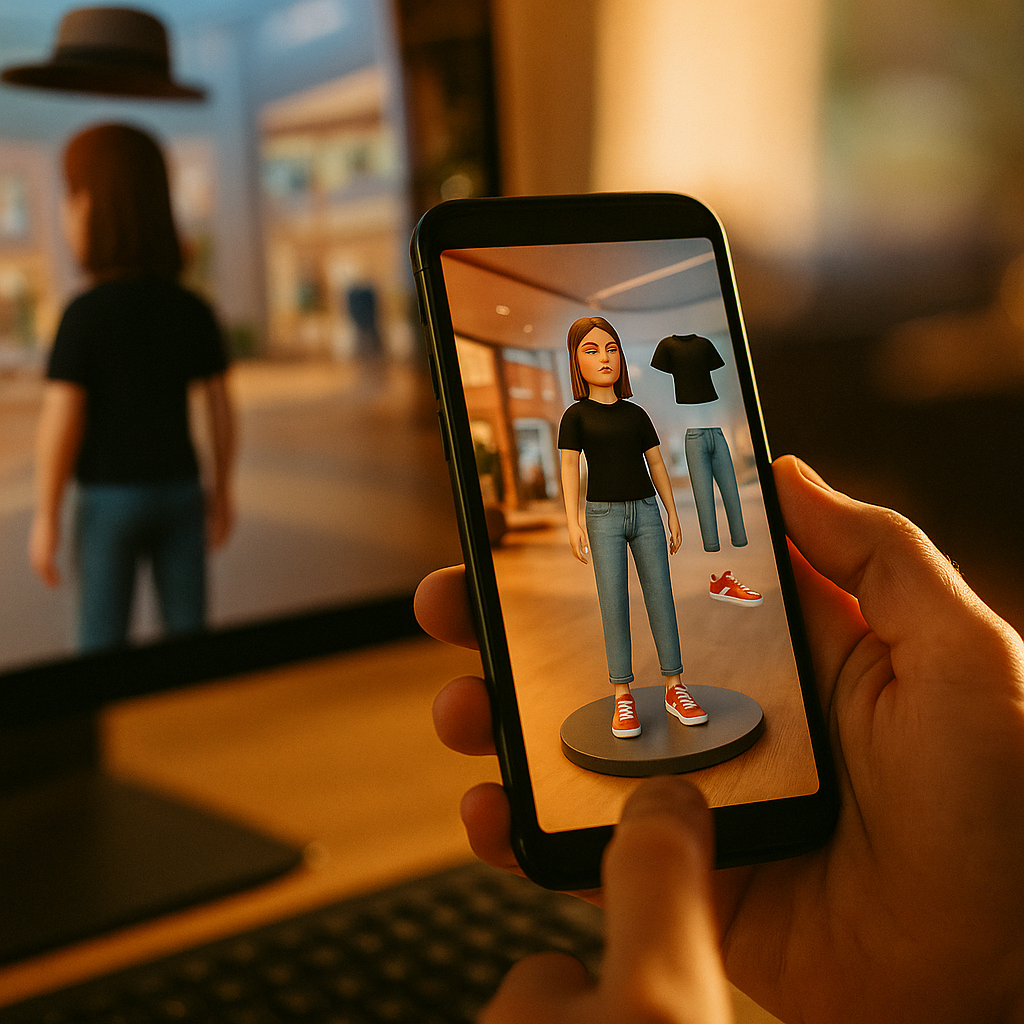
In 2025, brands are shifting from web clicks to embodied experiences, and the next frontier is direct-to-avatar marketing inside virtual spaces where identity, community, and commerce merge. Instead of targeting a browser, marketers engage the avatar—the user’s persistent presence across worlds. Done well, this approach can boost relevance, trust, and revenue—but only if you get the rules right. So what changes next?
Virtual spaces marketing: why avatars are the new customer interface
Virtual spaces have matured into social, transactional environments where users spend time as an avatar, not as a “session.” That change matters because the avatar becomes a decision-making surface: it signals preferences (style, affiliations, status items), carries inventory (wearables, emotes, badges), and moves through contexts (events, hangouts, games, workspaces). In practice, this makes the avatar a more continuous and expressive interface than a cookie or device ID.
In 2025, the key shift is that experience and identity are often purchased together. If someone buys a virtual jacket, they also buy belonging, recognition, and the ability to participate in a community aesthetic. This makes marketing less about persuasion and more about enabling self-expression. Brands that treat avatars as “ad slots” get ignored; brands that treat them as “identity tools” get adopted.
Readers often ask whether this is only for gaming. It isn’t. Virtual concerts, creator marketplaces, immersive brand stores, and social hubs all use avatar presence as the core interaction model. Even when the experience is light (a 3D showroom or a social drop), the same logic applies: the avatar is where intent, status, and social proof show up in real time.
Avatar personalization trends: what will define targeting and relevance
Direct-to-avatar engagement works when the message matches the user’s self-presentation and the context of the world. In 2025, relevance is increasingly shaped by avatar personalization trends that provide richer signals than traditional demographics.
What brands will target (and should target) going forward:
- Style graphs: color palettes, silhouettes, themes, and item “families” that indicate aesthetic preference without revealing real-world identity.
- Context signals: where the avatar is (music venue vs. competitive arena), what they’re doing (dancing, exploring, trading), and who they’re with (solo vs. group).
- Creator affinity: creators and communities the user supports, which often predict purchase intent better than age brackets.
- Inventory compatibility: recommendations based on what a user already owns, emphasizing mix-and-match rather than one-off buys.
What will matter less: broad demographic assumptions, retargeting based on one-time visits, and generic “brand worlds” that don’t integrate with the user’s existing identity. Users expect utility: an item that improves their look, capabilities, or social experience—now, not later.
Likely follow-up question: “Is personalization creepy in virtual worlds?” It can be. The safest model is to personalize from in-world behavior and declared preferences rather than inferred real-world identity. When users understand why they’re seeing an offer (“matches your outfit set” or “popular in your community”), acceptance rises and backlash drops.
Immersive advertising formats: from banners to interactions
The future of performance in virtual spaces won’t come from porting web ads into 3D. It will come from immersive advertising formats that feel native: interactive, opt-in, and value-forward. The best experiences earn attention instead of renting it.
Formats that are accelerating in 2025:
- Try-before-you-buy wearables: instant fitting with lighting and animation previews, plus social feedback tools (polls, reactions).
- Quest-based drops: users complete a short activity to unlock an item, creating earned ownership and higher retention.
- Event-linked merch: limited items tied to a moment (concert, esports final, film premiere) that function as memorabilia.
- Creator co-branded collections: brands partner with trusted creators to design items that already match community taste.
- Playable product experiences: a product “works” as a mechanic—tools, vehicles, instruments—so the value is demonstrated, not described.
What’s changing next: ads become systems, not placements. Instead of “impressions,” brands measure “interactions completed,” “items equipped,” and “time worn.” When an item is worn publicly, it becomes a durable, peer-amplified media channel that can outperform short-lived paid exposure.
Practical tip: design every campaign with a clear utility loop: discover → try → customize → show → share → trade/upgrade. If you can’t map the loop, the experience will feel like an interruption.
Virtual goods monetization: business models that will win
Avatar commerce is not just an add-on; it’s becoming a core revenue strategy through virtual goods monetization. The winning models align pricing, scarcity, and interoperability with user trust.
High-performing monetization approaches in 2025:
- Tiered access: free base items for adoption, paid variants for status, and premium editions for collectors.
- Bundles and sets: coordinated outfits and themed packs that reduce decision friction and increase average order value.
- Membership perks: recurring benefits such as monthly drops, exclusive colorways, early access, and event entry.
- Dynamic pricing with guardrails: price changes based on demand, but with transparency so users don’t feel exploited.
- Secondary-market aware design: items built for resale or gifting, with royalties and anti-fraud protections.
What readers usually ask: “Do brands need blockchain for ownership?” Not necessarily. Many users prioritize convenience, platform safety, and support over decentralized ownership. A practical strategy is to start with platform-native items and add portable credentials only where users clearly benefit, such as cross-space identity, verified scarcity, or secure transfer between accounts.
Measure the right outcomes: In avatar commerce, revenue is important, but so is “equip rate” (how often items are worn), “visibility minutes” (time displayed in social contexts), and “return to world” behavior after a drop. Those metrics indicate whether the product became part of identity rather than a forgotten purchase.
Metaverse privacy and identity: trust, consent, and compliance
As direct-to-avatar engagement grows, so do expectations around metaverse privacy and identity. Trust becomes a performance lever. Users will not adopt items or experiences that compromise safety, expose personal data, or manipulate social dynamics.
What trustworthy brands do in 2025:
- Consent-first data design: clear opt-ins for personalization, with easy controls and understandable explanations.
- Safety by default: age-appropriate experiences, harassment controls, and predictable moderation policies.
- Minimal data collection: use only what you need for the experience; avoid collecting sensitive traits when in-world signals suffice.
- Identity separation: let users enjoy branded experiences without forcing real-name disclosure or account linking unless essential.
- Transparent partnerships: disclose creator sponsorships, paid placements, and affiliate incentives inside the world.
EEAT in practice: demonstrate expertise by publishing clear user guidelines, moderation standards, and data handling summaries; show experience by sharing case learnings and what you changed after user feedback; build authority through credible partnerships and platform compliance; earn trust through consistent behavior, not slogans.
Likely follow-up question: “How do you balance measurement with privacy?” Favor aggregated analytics, on-device or in-world processing where possible, short retention windows, and user-controlled preference centers. If you cannot explain a metric’s value to a user, rethink collecting it.
Cross-platform avatar commerce: interoperability and the next ecosystem shift
The largest upside arrives when users can carry identity across experiences. Cross-platform avatar commerce is still constrained by platform rules and technical differences, but momentum is building around portable identity, standardized asset pipelines, and credential-based ownership.
What will progress in the near term:
- Portable identity cues: verified badges, profile credentials, and reputation markers that persist across spaces even when items can’t.
- Asset standardization: improved pipelines for converting wearables across engines and avatar rigs, reducing rework costs.
- Brand continuity: consistent item names, themes, and progression systems that travel with the user’s account history.
- Federated marketplaces: storefront experiences embedded inside multiple spaces with consistent pricing, support, and policies.
How to prepare without overbetting: Build modular assets (textures, materials, animations) and keep metadata clean (creator credits, usage rights, rarity, versioning). Negotiate rights that allow adaptation to new rigs and environments. Design campaigns around “identity primitives” (colors, symbols, silhouettes) that remain recognizable even when the exact model changes.
Operational reality: total interoperability will be uneven because platform incentives differ. Brands that win will treat each platform as a local culture while maintaining a coherent cross-space identity system, so users feel continuity without losing the uniqueness of each world.
FAQs
What is direct-to-avatar marketing?
It’s a strategy where brands market and sell experiences, virtual goods, and services directly to a user’s avatar inside virtual spaces. The avatar becomes the primary touchpoint for discovery, trial, purchase, and social sharing.
How is direct-to-avatar marketing different from traditional digital marketing?
Traditional digital marketing targets clicks and sessions. Direct-to-avatar marketing targets identity and interaction: what users wear, do, and display socially, with performance measured by engagement, equip rate, and community adoption.
Which industries benefit most in 2025?
Fashion and beauty, entertainment, sports, consumer electronics, and lifestyle brands see strong fit because they translate well into identity items, event-driven drops, and community-led experiences.
Do users actually pay for virtual goods?
Yes, when items provide identity value, social recognition, utility in-world, or collectible scarcity. Pricing works best when users can try items instantly and see how they look in relevant lighting and animations.
How do you measure ROI in virtual spaces?
Combine revenue with behavioral metrics: try-on rate, conversion to purchase, equip rate, time worn, repeat visits after drops, and referral actions such as gifting or sharing to friends.
What are the biggest risks for brands?
Privacy missteps, cultural mismatch with the community, low-quality assets, unclear ownership terms, and overly intrusive ad experiences. These risks are manageable with consent-first design, creator collaboration, and rigorous QA.
Do brands need to build their own virtual world?
Usually not. Many brands perform better by launching inside established platforms and events where communities already exist, then expanding to a persistent hub only after proving demand.
Direct-to-avatar marketing is moving toward identity-first, consent-driven commerce where users adopt brands as part of self-expression rather than tolerate them as interruptions. In 2025, the winners will design native interactions, partner with credible creators, and measure what users actually do—try, wear, share, and return. Treat avatars as customers with agency, and your virtual strategy becomes durable, scalable, and profitable.