


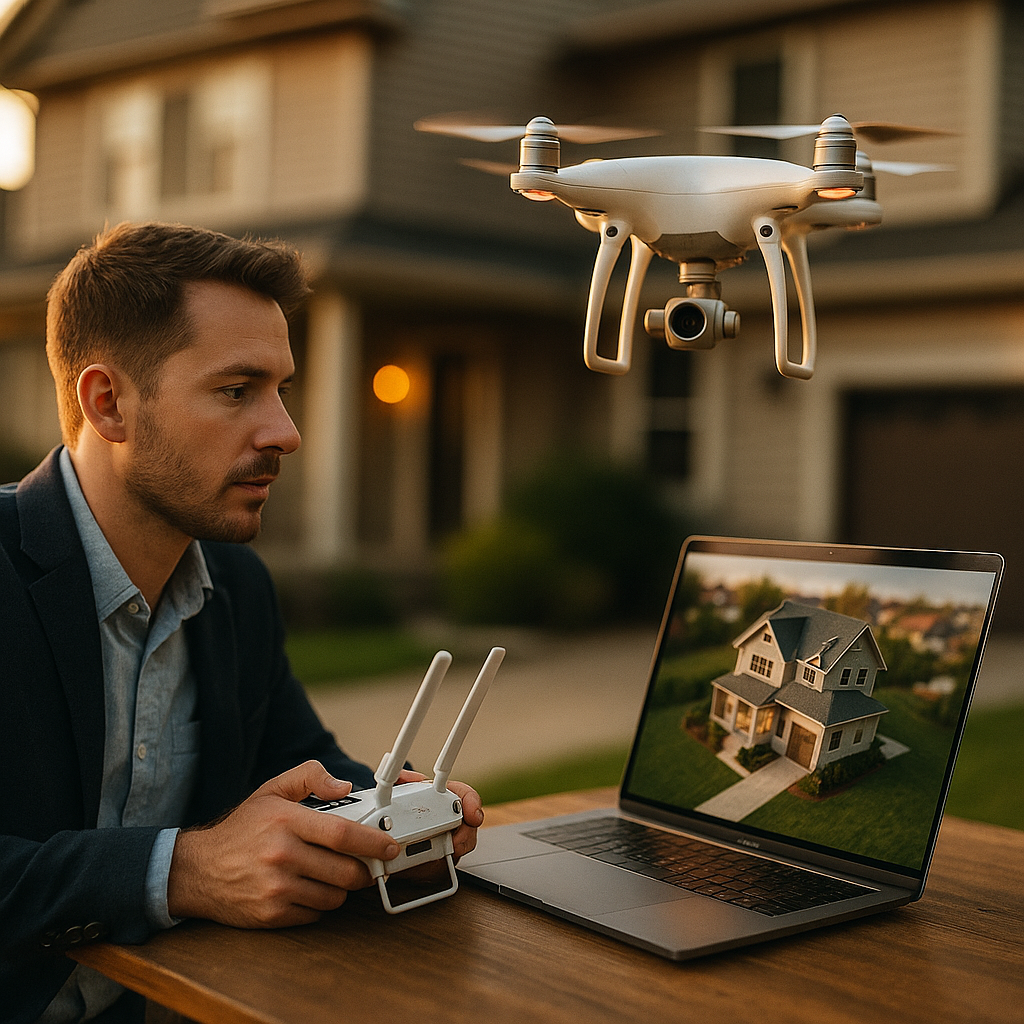
Case Study: How a Real Estate Brand Used Drones for 3D Video Sales is more than a trend story; it’s a playbook for selling property with clarity and speed in 2025. Buyers expect immersive detail before they book a showing, and sellers demand measurable marketing impact. This case study breaks down what worked, what it cost, and how results were tracked—so you can decide if it fits your listings.
Drone real estate marketing: the brand, the challenge, and the goal
Northline Properties (a mid-sized residential real estate brand with multiple agents across one metro area) faced a familiar problem: listings looked similar online. Standard photos and handheld walkthroughs failed to communicate lot size, neighborhood context, and the “feel” of a home—especially for buyers relocating from out of town.
The challenge: increase qualified inquiries and shorten time-to-offer without inflating marketing spend on every listing.
The goal: build a repeatable content system using drones and 3D video that could scale from entry-level homes to luxury properties, while staying compliant with aviation and privacy rules.
Northline also had a data requirement: leadership wanted proof that the new approach improved conversion quality (serious buyers) rather than simply generating more views. That meant tracking performance from ad impression to inquiry to showing request and, when possible, to offer.
3D property video: what they produced and why it outperformed standard tours
Northline didn’t just add drone shots to existing walkthroughs. They created a structured 3D property video package designed to answer buyers’ questions in the order they naturally ask them online:
- Context first (10–15 seconds): a smooth, stabilized aerial reveal showing the property’s position on the street, driveway access, and nearby green space.
- Lot and orientation (10–20 seconds): overhead orbit at a compliant altitude, highlighting yard size, fencing, slope, and sun exposure (important for gardens and pools).
- Structure and features (20–30 seconds): controlled push-ins to rooflines, outdoor living areas, garages, and separate entrances (ADUs and basements were common in their market).
- Seamless transition indoors (30–45 seconds): a gimbal walkthrough that matched the drone’s movement for continuity, paired with 3D “dollhouse” or floor-plan visualization where appropriate.
- Neighborhood proof (10–15 seconds): short aerials that indicate proximity to parks, trails, or commercial areas without focusing on people or private backyards.
They kept each finished video between 75 and 120 seconds. The team tested longer edits and found completion rates dropped sharply after the two-minute mark, especially on mobile. Instead, they produced a main cut plus two short derivatives (15–20 seconds) for social ads and listing teasers.
Why it worked: drone footage reduced uncertainty. Buyers could validate “corner lot,” “backs to greenbelt,” “close to transit,” or “private yard” instantly—details that often trigger a showing request. The 3D component reduced confusion about layout, a common friction point in text descriptions and still photos.
Northline also built a simple on-page structure for each listing: photos first for quick scanning, then the 3D video, then a floor plan, then the map. This order matched buyer intent and improved time on page.
Aerial video sales strategy: workflow, equipment, and timeline
The aerial video sales system succeeded because Northline treated it as an operational process, not a creative one-off. They implemented a repeatable workflow:
- Pre-shoot intake (10 minutes): agent completes a checklist: key selling points, boundaries, nearby highlights to show, and any privacy sensitivities (neighbors, schools, etc.).
- Flight planning (15–20 minutes): pilot checks airspace, permissions, weather, and selects a safe route that avoids hovering over people and minimizes neighbor intrusion.
- On-site capture (45–75 minutes): drone exteriors + stabilized indoor walk + optional 3D scan when layout complexity justified it.
- Post-production (6–10 hours): color correction, speed ramps kept minimal, map-style overlays used sparingly, captions added for silent autoplay.
- Compliance review (5 minutes): confirm no sensitive details are visible (faces, license plates, private areas) and that shots align with local privacy expectations.
Equipment choices: Northline used a mid-tier prosumer drone with obstacle avoidance and 4K capture for most homes, reserving higher-end cameras for luxury listings. They paired it with a gimbal camera indoors to match motion and stabilize transitions. This avoided the “two different videos glued together” effect.
Turnaround time: by batching edits and using templates, they delivered the main video within 48 hours for most listings. Faster delivery mattered because first-week listing performance often determines negotiation leverage.
Staffing: they hired one in-house marketing coordinator and contracted a licensed drone pilot/editor team. Leadership considered training an agent as a pilot but rejected it after reviewing schedule risk and compliance burden. The contracted team provided consistent quality and documentation.
If you’re wondering how they decided when to add a full 3D scan: they used it for multi-level homes, unique layouts, and any property where photos could mislead about flow (split levels, converted garages, ADUs). For simple single-story layouts, they relied on video + floor plan instead.
Real estate lead conversion: metrics, attribution, and results
Northline’s leadership required evidence tied to real estate lead conversion, not vanity metrics. They tracked performance with UTM links, call tracking numbers, and a consistent “request a showing” form. Each listing had:
- Video engagement: plays, 25/50/75% watches, and completion rate.
- Listing behavior: time on page, scroll depth, and clicks to showing request.
- Lead quality indicators: proportion of inquiries that scheduled a showing within seven days.
- Sales outcomes: time from listing to first offer, and offer count where available.
What changed after rollout: across the first set of listings using the package, Northline saw stronger down-funnel behavior. The marketing team reported that buyers arrived at showings with fewer basic questions and more targeted concerns (roof age, boundaries, light, noise), indicating they had pre-qualified themselves through the video.
Agents also noted a practical benefit: fewer “curiosity showings.” That matters because reducing unqualified foot traffic saves time and protects sellers’ privacy.
Northline used A/B comparisons where possible: listings in similar neighborhoods with similar price bands, one using the drone + 3D package and one using traditional media. While no field test is perfectly controlled, the pattern was consistent enough that they made the package the default for listings above a set price threshold and optional below it.
Attribution approach: they avoided claiming the video alone “sold the home.” Instead, they looked for contribution signals: did the video increase showing requests per 100 listing views, and did it reduce time-to-first-offer? That framing kept internal reporting credible and prevented overpromising to sellers.
If you want a practical benchmark: Northline treated the first two weeks as the key window. If the enhanced media didn’t move showing-request conversion early, it likely wouldn’t later, because buyer attention drops as listings age.
Drone photography ROI: costs, pricing model, and scaling without waste
To assess drone photography ROI, Northline itemized costs and compared them to outcomes sellers care about: speed, demand, and confidence.
Cost structure: they created three packages:
- Core Aerial: exterior drone video + 10 aerial stills.
- 3D Video Bundle: Core Aerial + indoor stabilized walkthrough + captions + short social cutdowns.
- Premium Showcase: Bundle + 3D scan/floor-plan visualization + twilight aerial sequence when appropriate.
Instead of charging every seller the maximum, Northline aligned media spend to expected return:
- Entry-level homes: Core Aerial when the lot/location was a primary differentiator; otherwise, standard photos remained acceptable.
- Move-up and unique properties: 3D Video Bundle as the default because layout clarity increased buyer confidence.
- Luxury homes: Premium Showcase, where production value influenced brand perception and higher buyer expectations.
ROI logic: Northline avoided “soft” ROI claims and focused on two defensible financial levers:
- Time cost: reducing days on market can reduce carrying costs and stress for sellers, and it can protect pricing power.
- Agent efficiency: fewer unqualified showings and fewer repetitive explanations freed agents to focus on negotiations and high-intent buyers.
They also scaled without waste by building reusable assets: neighborhood aerial b-roll (captured once per area, used many times) and templated motion graphics. This lowered per-listing edit time and improved consistency.
Seller communication: agents presented the package as a buyer-prep tool: “We use 3D video to help buyers understand the home before they step inside.” That statement set an honest expectation and reinforced trust.
FAA Part 107 compliance: safety, privacy, and trust signals in 2025
Northline treated FAA Part 107 compliance and privacy as marketing advantages, not hurdles. In 2025, buyers and neighbors notice when drones feel intrusive, and brands that ignore this risk reputation damage.
What they required from vendors:
- Current Part 107 certification and documented pre-flight checklists.
- Insurance appropriate for commercial operations.
- Airspace checks and any needed authorizations before arrival.
- Flight discipline: no hovering over crowds, no unnecessary low passes, and no lingering over neighboring properties.
Privacy-by-design editing: their post-production rules included blurring license plates when visible, avoiding identifiable faces, and excluding angles that reveal neighbors’ private backyards. They also avoided filming schools or playgrounds as “amenities” footage, focusing instead on parks, trails, and commercial corridors when relevant.
Trust signals for sellers: Northline added a short note in listing packets explaining that licensed pilots operated the drone legally and safely. This reduced seller hesitation and helped agents answer objections quickly.
Trust signals for buyers: captions and clear labeling helped buyers understand what they were seeing. For example, when showing proximity to a park, they used text like “Park entrance: 0.4 miles” rather than implying a view that the property didn’t actually have. That accuracy supported EEAT: real expertise, transparent claims, and content that helps users make decisions.
FAQs
-
Do drones actually help sell homes, or do they just look impressive?
Drones help when they communicate information buyers need to decide: lot boundaries, privacy, topography, access, and neighborhood context. Northline saw the biggest impact on properties where location or land features were key differentiators, and where 3D video reduced layout confusion.
-
What’s the ideal length for a drone + 3D real estate video?
Northline standardized most videos to 75–120 seconds, then produced short 15–20 second cutdowns for ads. This approach balanced clarity with mobile attention spans and improved completion rates.
-
When should a listing include a full 3D scan?
Use a 3D scan for multi-level homes, unusual layouts, ADUs, and properties where photos can misrepresent flow. For simpler homes, a strong walkthrough plus a clean floor plan often delivers enough clarity at lower cost.
-
How do you measure ROI from drone real estate marketing?
Track down-funnel metrics: showing requests per listing view, time-to-first-offer, and the share of inquiries that schedule a showing within seven days. Pair UTM links with call tracking and consistent forms to connect video engagement to lead actions.
-
Is it legal to fly a drone over homes for real estate marketing?
Commercial drone work typically requires a licensed operator and adherence to FAA rules, including airspace restrictions and safety requirements. Northline also used privacy-first filming and editing practices to avoid capturing identifiable people or sensitive neighboring areas.
-
Should agents learn to fly drones themselves?
It can work for some teams, but Northline chose a licensed vendor to reduce compliance risk, keep quality consistent, and protect agent time. If you do it in-house, plan for training, insurance, ongoing practice, and a documented safety workflow.
Northline’s results came from treating drones and 3D video as a disciplined sales system, not a flashy add-on. They matched formats to buyer questions, tracked conversion metrics that leadership trusted, and scaled production with templates and neighborhood b-roll. The takeaway is simple: when aerial and 3D content reduce uncertainty, they raise lead quality and speed decisions—without sacrificing compliance or trust.