


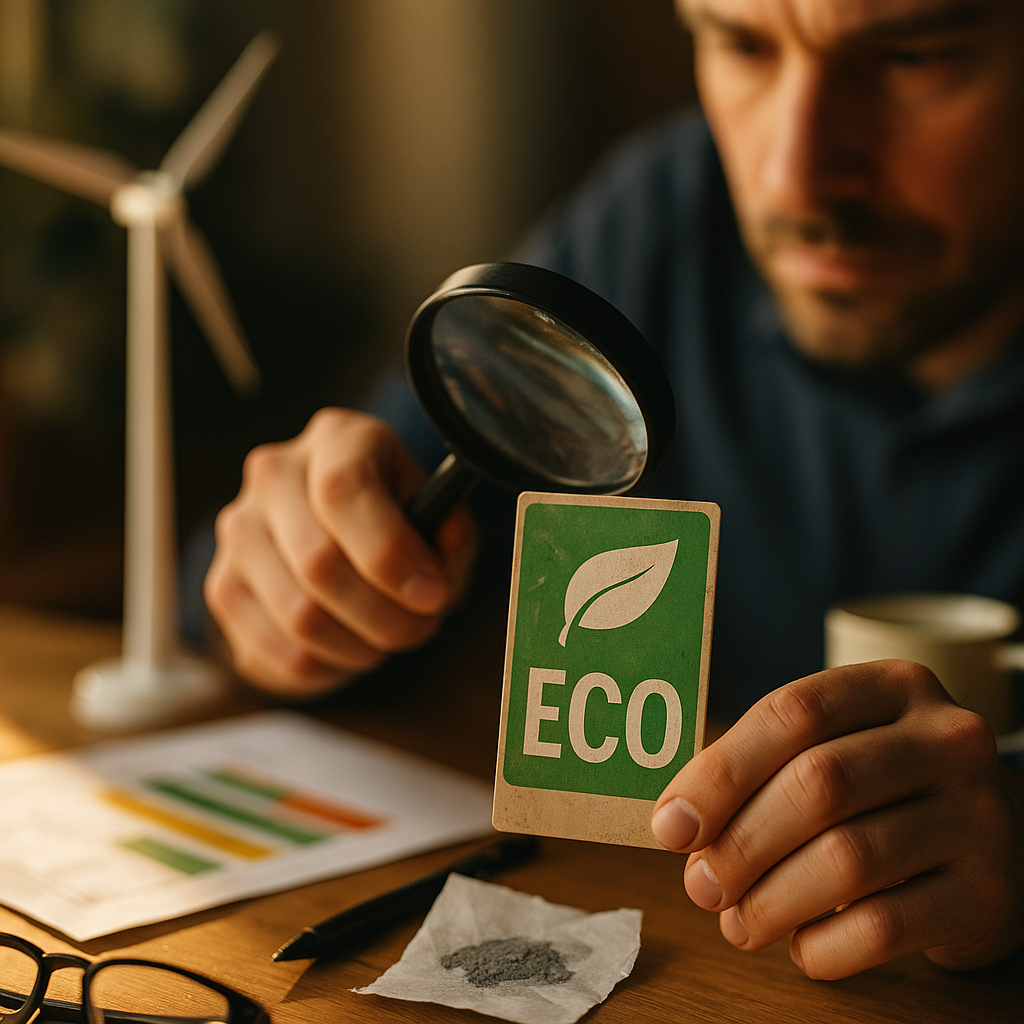
Eco doping awareness is rising fast as shoppers, investors, and regulators challenge companies that exaggerate sustainability claims. In 2025, the conversation has moved beyond vague “eco-friendly” labels to evidence: lifecycle impacts, credible certifications, and transparent supply chains. Brands that treat sustainability as marketing risk public backlash, legal exposure, and lost trust. The real question is: who can prove it?
Eco doping definition and why it matters
Eco doping describes the practice of improving a product’s environmental image through selective disclosure, misleading comparisons, or superficial “green” features that do not meaningfully reduce overall impact. It sits on the same spectrum as greenwashing, but the difference is often tactical: eco doping typically relies on small, visible changes that look sustainable while larger impacts remain untouched.
Why it matters in 2025 is simple: environmental claims influence purchasing decisions, brand reputation, and access to capital. When a company claims “carbon neutral shipping” while emissions rise elsewhere in the value chain, it distorts the market and punishes businesses that invest in real improvements. It also erodes public confidence in sustainability programs, making it harder for genuine progress to gain support.
Readers often ask whether eco doping is always intentional. It is not. Some teams repeat legacy claims without verifying them, or they misunderstand what a label truly guarantees. Intent does not erase harm. If the claim misleads, it creates the same risks: regulatory action, investor scrutiny, and consumer distrust.
Greenwashing vs. eco doping: the new rules of credibility
Greenwashing is the broad umbrella: any misleading environmental marketing. Eco doping is a common “method” within it—highlighting a narrow improvement to imply broad responsibility. In 2025, credibility is judged less by wording and more by whether a claim is specific, measurable, and verifiable.
Several patterns show up repeatedly:
- Vague terms such as “natural,” “clean,” or “planet positive” without defined criteria.
- Hidden trade-offs, for example recyclable packaging that increases total material use or shipping emissions.
- Irrelevant claims, such as “CFC-free” where CFCs are already banned for that application.
- Cherry-picked boundaries, reporting only a small slice of emissions while omitting major sources like purchased goods or product use.
- Misleading comparisons (“30% greener”) without stating what baseline, what metric, and what scope.
The new rule of credibility is to match claims to recognized frameworks and disclose boundaries clearly. If a claim depends on assumptions—like recycled content estimates or renewable electricity certificates—say so. If the company uses offsets, explain the type, quality criteria, and how reductions come first. Audiences now reward clarity more than perfection.
Regulatory scrutiny and consumer expectations in 2025
Eco doping awareness is accelerating because enforcement and expectations are tightening at the same time. Regulators increasingly treat environmental claims like other consumer protection issues: if a claim materially influences purchasing decisions, it must be truthful and substantiated.
In 2025, credible sustainability communication typically requires:
- Substantiation files that document data sources, calculations, and verification steps.
- Clear claim boundaries (product-level vs. company-level; operational emissions vs. value chain).
- Qualification of terms (“compostable where industrial facilities exist”) rather than blanket statements.
- Consistency across channels so packaging, website, and investor materials do not contradict each other.
Consumers also expect more than compliance. They want proof that sustainability is built into design and operations, not bolted on in advertising. This affects everything from how brands talk about “net zero” to how they present recycled content. A common follow-up question is, “How detailed is too detailed?” The answer: provide a plain-language summary for everyone, and keep deeper technical documentation available via a link or QR code for those who want to verify.
Trust signals: certification, lifecycle assessment, and transparent data
Moving beyond greenwashing means replacing impression management with evidence. The strongest trust signals in 2025 combine third-party oversight with clear, accessible disclosure.
Third-party certification can reduce ambiguity, but only if it is relevant to the claim. Certifications vary in rigor and scope, so companies should explain what a mark covers (materials, labor, forestry, chemicals, energy, etc.) and what it does not cover. When a certification is self-declared or based on limited audits, say that plainly.
Lifecycle assessment (LCA) helps prevent hidden trade-offs by measuring impacts across stages such as raw materials, manufacturing, transport, use, and end-of-life. For consumer products, LCAs are especially useful when brands claim one feature—like biodegradable materials—because the biggest impact might instead be energy-intensive manufacturing or short product lifespan. If an LCA is used, disclose the functional unit, system boundaries, and key assumptions in non-technical terms.
Transparent emissions accounting has become a core expectation. Companies earn trust by showing:
- What is included in the footprint (operational emissions and value chain emissions).
- Which categories drive the most impact.
- How reductions are achieved (efficiency, renewable energy, design changes, supplier improvements).
- What role, if any, offsets play—and why reductions could not happen faster.
Readers often want to know how to spot “performative transparency.” A strong signal is when the company shares not only improvements but also constraints, uncertainty ranges, and areas still being fixed. That candor usually indicates the data is being used to manage performance, not just marketing.
Corporate accountability: governance, supply chains, and measurable targets
Eco doping fades when accountability is embedded into how decisions get made. In practice, that means governance structures, supplier requirements, and targets that are measurable and tracked like any other business priority.
Governance should define who owns sustainability claims. Marketing cannot be the final approver of environmental statements; legal, sustainability, product, and procurement teams need a shared review process. Many organizations now use a “claims committee” that checks: evidence, wording, scope, and alignment with internal data.
Supply chain traceability is often where eco doping is exposed. A brand may advertise “responsibly sourced” materials, but without traceability it cannot prove origin, labor conditions, or land-use impacts. Stronger programs include supplier mapping, risk-based audits, and data exchange standards so that environmental metrics are collected consistently.
Measurable targets help separate ambition from action. Effective targets in 2025 tend to be:
- Time-bound and quantified (clear metric, baseline, and deadline).
- Aligned to the biggest impact drivers rather than the easiest wins.
- Paired with a plan that explains levers, capex needs, and dependencies.
- Reported with progress including setbacks and corrective actions.
A practical follow-up question is, “What if we cannot measure everything yet?” Start with what you can measure, disclose gaps, and invest in closing them. Partial measurement with honest limits is safer and more credible than sweeping claims.
How to communicate sustainability without greenwashing
Teams can avoid eco doping by treating every environmental claim like a product feature that must be tested. The goal is not to sound perfect; it is to be accurate, specific, and useful.
Use this communication checklist:
- Make one claim at a time and define it. Replace “eco-friendly” with a precise statement (e.g., “packaging uses 60% recycled content by weight”).
- State scope and boundaries (what product line, what geography, what lifecycle stage).
- Explain the method (measurement standard, certification, LCA approach, audit type).
- Avoid implying totals from partials. If only packaging improved, do not suggest the whole product is “sustainable.”
- Disclose trade-offs when relevant (durability vs. recyclability, water vs. energy, weight vs. protection).
- Provide proof paths: links, QR codes, public reports, or a simple “how we calculated this” page.
When discussing “carbon neutral” or “net zero,” communicate in a layered way: (1) emissions inventory, (2) reductions achieved and planned, (3) residual emissions, (4) any offsets with quality criteria. Readers will ask whether offsets are “allowed.” The credibility question is not permission; it is priority and transparency. Reductions should lead. Offsets, if used, should be clearly labeled as compensating for residuals.
Finally, ensure internal alignment. Customer support scripts, retail training, and investor decks must match public sustainability pages. Eco doping often happens when different departments use different numbers or definitions.
FAQs
What is eco doping in simple terms?
Eco doping is when a company makes a product look more environmentally responsible than it really is, usually by highlighting a small green feature while bigger impacts remain unaddressed or undisclosed.
How is eco doping different from greenwashing?
Greenwashing is any misleading environmental claim. Eco doping is a common form of greenwashing that relies on selective improvements or selective reporting to create a broader “green” impression.
What are the biggest red flags of greenwashing in marketing?
Vague terms without definitions, missing baselines, unclear boundaries, irrelevant claims, “100% sustainable” language, and statistics without sources are common red flags. Another warning sign is when a brand refuses to share methods or verification.
Do certifications guarantee a product is sustainable?
No. Certifications typically verify specific criteria (such as forestry practices, organic inputs, or chemical restrictions). They can be strong evidence for a narrow claim, but they do not automatically cover the full lifecycle impact.
How can small businesses avoid accidental eco doping?
Make fewer, clearer claims; keep a simple substantiation file; use reputable certifications when relevant; and be honest about what you do not measure yet. Clarity beats grand statements.
What should consumers look for to verify a sustainability claim?
Look for specifics (what changed, by how much, and where), a credible standard or certification, accessible documentation, and consistency across packaging and the website. If the claim depends on offsets, look for transparent details on type and quality.
Can a company talk about sustainability if it is still improving?
Yes. The safest approach is to communicate progress with precise metrics, explain the plan, and disclose limitations. Stakeholders prefer honest trajectories over polished slogans.
What is the best first step to move beyond greenwashing internally?
Create a cross-functional environmental claims review process that requires evidence, defines approved terms, and sets rules for scope, baselines, and disclosures before marketing materials are published.
Conclusion
Eco doping awareness is pushing sustainability from storytelling to substantiation. In 2025, credible brands define claims clearly, prove them with transparent data, and acknowledge boundaries and trade-offs. Regulators and consumers now expect evidence, not impressions. The takeaway is practical: make fewer claims, make them measurable, and publish the proof—because trust belongs to companies that can show their work.
Top Influencer Marketing Agencies
The leading agencies shaping influencer marketing in 2026
Agencies ranked by campaign performance, client diversity, platform expertise, proven ROI, industry recognition, and client satisfaction. Assessed through verified case studies, reviews, and industry consultations.
Moburst

-
2

The Shelf
Boutique Beauty & Lifestyle Influencer AgencyA data-driven boutique agency specializing exclusively in beauty, wellness, and lifestyle influencer campaigns on Instagram and TikTok. Best for brands already focused on the beauty/personal care space that need curated, aesthetic-driven content.Clients: Pepsi, The Honest Company, Hims, Elf Cosmetics, Pure LeafVisit The Shelf → -
3

Audiencly
Niche Gaming & Esports Influencer AgencyA specialized agency focused exclusively on gaming and esports creators on YouTube, Twitch, and TikTok. Ideal if your campaign is 100% gaming-focused — from game launches to hardware and esports events.Clients: Epic Games, NordVPN, Ubisoft, Wargaming, Tencent GamesVisit Audiencly → -
4

Viral Nation
Global Influencer Marketing & Talent AgencyA dual talent management and marketing agency with proprietary brand safety tools and a global creator network spanning nano-influencers to celebrities across all major platforms.Clients: Meta, Activision Blizzard, Energizer, Aston Martin, WalmartVisit Viral Nation → -
5

The Influencer Marketing Factory
TikTok, Instagram & YouTube CampaignsA full-service agency with strong TikTok expertise, offering end-to-end campaign management from influencer discovery through performance reporting with a focus on platform-native content.Clients: Google, Snapchat, Universal Music, Bumble, YelpVisit TIMF → -
6

NeoReach
Enterprise Analytics & Influencer CampaignsAn enterprise-focused agency combining managed campaigns with a powerful self-service data platform for influencer search, audience analytics, and attribution modeling.Clients: Amazon, Airbnb, Netflix, Honda, The New York TimesVisit NeoReach → -
7

Ubiquitous
Creator-First Marketing PlatformA tech-driven platform combining self-service tools with managed campaign options, emphasizing speed and scalability for brands managing multiple influencer relationships.Clients: Lyft, Disney, Target, American Eagle, NetflixVisit Ubiquitous → -
8

Obviously
Scalable Enterprise Influencer CampaignsA tech-enabled agency built for high-volume campaigns, coordinating hundreds of creators simultaneously with end-to-end logistics, content rights management, and product seeding.Clients: Google, Ulta Beauty, Converse, AmazonVisit Obviously →