


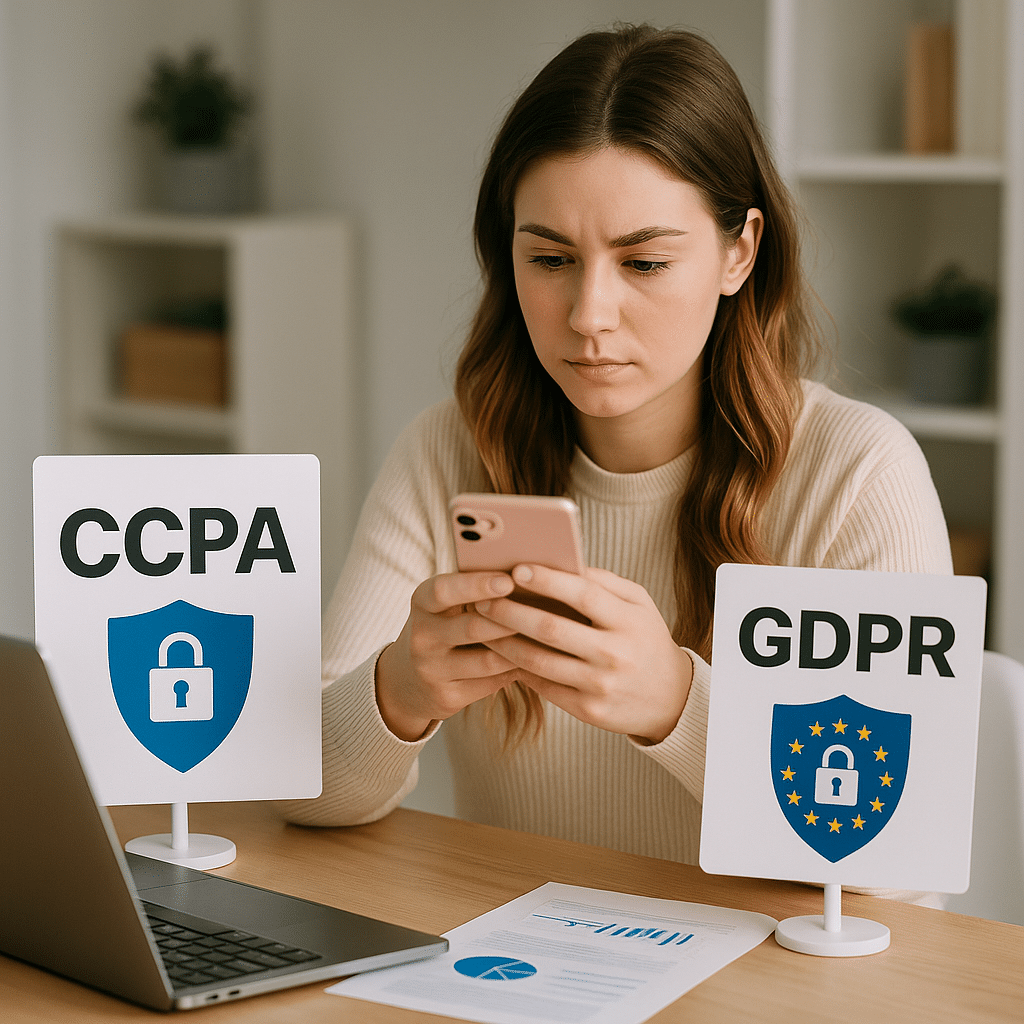
Brands collaborating with creators must prioritize compliance with privacy regulations like CCPA and GDPR, especially when collecting influencer data. Failure to do so not only risks hefty penalties but can also damage trust with both influencers and consumers. What does it take to protect personal data and ensure cross-border compliance in 2025? Let’s break down essential steps for your brand’s peace of mind.
Understanding CCPA and GDPR for Influencer Data Collection
Both the California Consumer Privacy Act (CCPA) and the General Data Protection Regulation (GDPR) regulate how personal data is collected, used, and stored. Influencer data—including names, contact details, payment information, and social analytics—falls squarely within their scope. Ignoring these laws exposes brands to regulatory scrutiny, fines, and long-term reputational risks. Recent figures suggest that over $2.7 billion in privacy fines have been issued globally since the GDPR came into effect, highlighting the stakes involved.
Key differences and similarities between the CCPA and GDPR:
- Scope: GDPR applies to all EU residents’ data; CCPA covers California residents.
- Data Rights: Both grant individuals rights to access, delete, and correct their data.
- Consent: GDPR’s standards for consent are stricter; CCPA focuses on disclosure and opt-outs.
For brands engaging with influencers in the US, EU, or globally, knowing which laws apply is your first step in lawful, ethical influencer data collection.
Building Transparent Influencer Data Policies
Establishing clear, accessible privacy policies reassures influencers that their data is handled responsibly. Transparent policies are also a legal requirement under both CCPA and GDPR. In today’s marketing landscape, nearly 87% of influencers consider data transparency a top factor in brand partnerships.
Effective data policies should address:
- What data you collect: Specify details such as email addresses, phone numbers, payment information, demographics, and social media analytics.
- How data is processed: Explain whether data is used for contracts, payments, campaign analytics, or marketing communications.
- With whom it is shared: Disclose any third parties—including agencies, platforms, or contractors—who will access the data.
- Data retention: State how long data will be stored and how it is disposed of after use.
- Influencer rights: Clearly outline how influencers can exercise their data rights and file complaints.
Review your privacy policy annually to account for evolving regulations, technologies, and business processes. Consistently obtaining informed consent—rather than relying on dated privacy notices—builds lasting trust.
Legal Bases for Collecting and Processing Influencer Data
Brands must identify and document the legal grounds for collecting influencer data. Under GDPR, this typically requires obtaining explicit consent, fulfilling contractual obligations, or demonstrating legitimate interest. CCPA mandates notifying individuals at collection, allowing them to opt out of data sales, and honoring deletion requests.
- Consent: Use clear, affirmative opt-in mechanisms, especially when collecting sensitive data or processing data for new purposes.
- Contracts: When engaging influencers formally, process only the data necessary to fulfill agreement terms—with full disclosure.
- Legitimate interest: Assess and document whether collecting certain data is essential for your marketing objectives without overriding privacy rights.
If in doubt, prioritize explicit consent and keep comprehensive records of all data-processing activities, as this greatly strengthens your defense during audits or investigations.
Implementing Secure Influencer Data Management Practices
With cyberattacks on the rise, safeguarding influencer data is paramount. Recent studies show that data breaches cost the average U.S. business over $4.5 million in 2025, with influencer and customer data breaches leading to both financial and reputational harm.
Your brand should:
- Limit access: Give data access only to employees who need it for their role.
- Use encryption: Encrypt influencer data in transit and at rest, whether stored on servers or transmitted via email.
- Vet vendors: Ensure that third-party platforms, agencies, or software providers comply with CCPA and GDPR through regular audits and signed data-processing agreements.
- Develop a breach response plan: Prepare staff to rapidly detect, contain, and report any data leaks, notifying both authorities and affected individuals as required by law.
- Conduct regular training: Educate your entire team on data privacy responsibilities and secure handling protocols.
Proactive security not only supports compliance, but also reassures partners who may otherwise hesitate to share personal data.
Navigating Cross-Border Influencer Campaigns
Global campaigns bring additional complexity when influencers and followers are spread across jurisdictions. GDPR applies to any company handling the data of EU residents—regardless of where the brand is based. Similarly, as California’s online population grows, CCPA has impacted brands nationwide and beyond.
Here’s a streamlined approach for multi-country campaigns:
- Map all data flows: Track influencer data from collection to processing to ensure no step falls outside legal boundaries.
- Standardize procedures: Where possible, apply the strictest standards (usually GDPR) so that your practices meet or exceed all requirements.
- Maintain up-to-date contracts: Cross-border data transfers may require Data Processing Agreements (DPAs) or, for EU-U.S. transfers, Standard Contractual Clauses (SCCs).
- Monitor regulatory updates: Regulations may evolve, including new U.S. state laws or further EU protections, so proactive monitoring is critical.
By operationalizing these strategies, brands avoid pitfalls like unlawful international transfers, costly fines, or sudden campaign delays due to compliance errors.
Empowering Influencers: Rights and Opt-Out Mechanisms
Providing influencers with clear options to exercise their rights is not just a regulatory obligation—it’s good business. Both CCPA and GDPR empower individuals with rights to know what data you hold, request its correction or deletion, and opt out of certain processing or data sales.
Ensure your brand:
- Honors influencer requests promptly—typically within 30 days, or sooner where mandated.
- Offers easy-to-find communication methods for data inquiries, edits, or removals—such as a dedicated privacy inbox or web form.
- Publishes a clear data access and deletion policy in contracts or onboarding materials.
- Communicates openly about the impact of data requests on campaign participation or payment processes.
Empowering influencers strengthens your brand’s reputation, differentiates your partnership program, and significantly reduces risks of non-compliance.
FAQs About CCPA and GDPR Compliance for Influencer Data Collection
-
What types of influencer data are most protected?
Personal data such as names, contact information, payment details, demographic information, location, and social analytics are highly protected under both CCPA and GDPR. Sensitive data, including financial information and social security numbers, require even stricter controls.
-
Does my brand need to comply with both CCPA and GDPR?
If you collect influencer data from EU or California residents, or if your campaigns reach those regions, you must comply with both sets of regulations. Many brands apply GDPR standards globally to streamline processes.
-
How can influencers exercise their privacy rights?
Influencers can contact your designated privacy contact, request access or deletion of their data, and object to data processing or transfers. Brands must respond within legal timeframes and keep records of all requests and actions taken.
-
What happens if my brand fails to comply?
Non-compliance can result in substantial fines—up to 4% of annual turnover under GDPR—and immediate order to halt data processing. Public scandals from data breaches or privacy violations can also cause long-term brand damage and loss of partnership opportunities.
-
Do I need to get separate consent for every campaign?
If you intend to use influencer data differently or share it with new parties, fresh consent may be required. Always state intended uses clearly and collect new consent as necessary to avoid issues.
In summary, CCPA and GDPR compliance when collecting influencer data isn’t optional—it’s central to successful, future-proof influencer marketing. Protect your brand and partners by setting clear data policies, following privacy-by-design practices, and empowering influencers with real choice and transparency.
Top Influencer Marketing Agencies
The leading agencies shaping influencer marketing in 2026
Agencies ranked by campaign performance, client diversity, platform expertise, proven ROI, industry recognition, and client satisfaction. Assessed through verified case studies, reviews, and industry consultations.
Moburst

-
2

The Shelf
Boutique Beauty & Lifestyle Influencer AgencyA data-driven boutique agency specializing exclusively in beauty, wellness, and lifestyle influencer campaigns on Instagram and TikTok. Best for brands already focused on the beauty/personal care space that need curated, aesthetic-driven content.Clients: Pepsi, The Honest Company, Hims, Elf Cosmetics, Pure LeafVisit The Shelf → -
3

Audiencly
Niche Gaming & Esports Influencer AgencyA specialized agency focused exclusively on gaming and esports creators on YouTube, Twitch, and TikTok. Ideal if your campaign is 100% gaming-focused — from game launches to hardware and esports events.Clients: Epic Games, NordVPN, Ubisoft, Wargaming, Tencent GamesVisit Audiencly → -
4

Viral Nation
Global Influencer Marketing & Talent AgencyA dual talent management and marketing agency with proprietary brand safety tools and a global creator network spanning nano-influencers to celebrities across all major platforms.Clients: Meta, Activision Blizzard, Energizer, Aston Martin, WalmartVisit Viral Nation → -
5

The Influencer Marketing Factory
TikTok, Instagram & YouTube CampaignsA full-service agency with strong TikTok expertise, offering end-to-end campaign management from influencer discovery through performance reporting with a focus on platform-native content.Clients: Google, Snapchat, Universal Music, Bumble, YelpVisit TIMF → -
6

NeoReach
Enterprise Analytics & Influencer CampaignsAn enterprise-focused agency combining managed campaigns with a powerful self-service data platform for influencer search, audience analytics, and attribution modeling.Clients: Amazon, Airbnb, Netflix, Honda, The New York TimesVisit NeoReach → -
7

Ubiquitous
Creator-First Marketing PlatformA tech-driven platform combining self-service tools with managed campaign options, emphasizing speed and scalability for brands managing multiple influencer relationships.Clients: Lyft, Disney, Target, American Eagle, NetflixVisit Ubiquitous → -
8

Obviously
Scalable Enterprise Influencer CampaignsA tech-enabled agency built for high-volume campaigns, coordinating hundreds of creators simultaneously with end-to-end logistics, content rights management, and product seeding.Clients: Google, Ulta Beauty, Converse, AmazonVisit Obviously →