


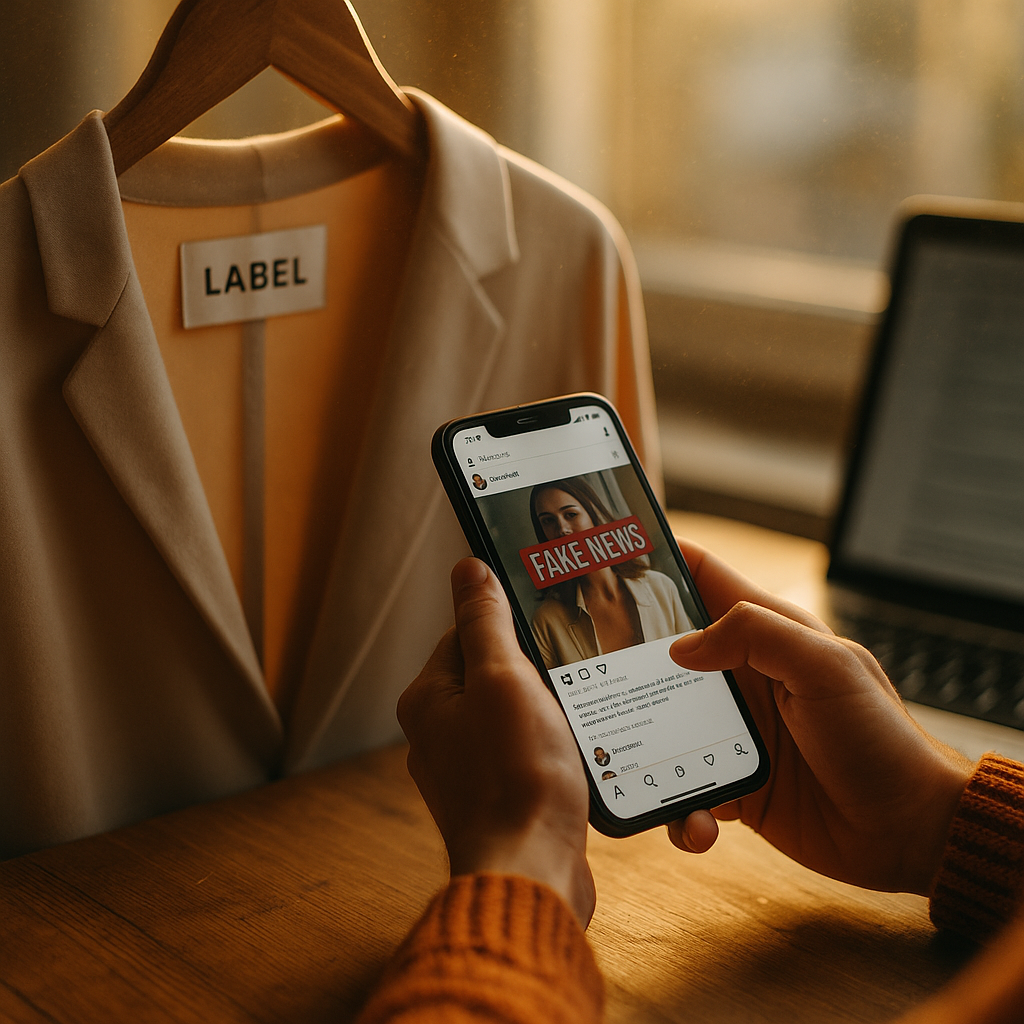
In 2025, a single misleading post can outrun a brand’s best campaign in hours. This case study on viral misinformation follows a mid-sized fashion label as it faced a false allegation about unsafe dye practices, amplified by short-form video and repost accounts. You’ll see the decisions that worked, the ones that stalled, and how trust was rebuilt—without inflaming the rumor mill. What would you do first?
Rapid response plan for misinformation crisis
The label in this case study—an established direct-to-consumer womenswear brand with wholesale partners—woke up to an unfamiliar spike in customer service tickets. A viral clip claimed the brand’s “signature black” contained banned chemicals and “tested positive” for carcinogens. The video had no lab name, no methodology, and no sourcing, yet it spread quickly through repost pages and commentary accounts.
The brand’s first win was speed with restraint. Within 90 minutes, the internal incident lead convened a cross-functional “truth team” with decision-makers from legal, product, customer care, social, and retail ops. They followed a simple playbook:
- Triage: identify the claim, where it started, and which customer segments were seeing it.
- Freeze risk: temporarily pause paid social amplification to avoid placing brand ads near rumor content.
- Preserve evidence: archive posts, comments, and DMs; capture timestamps and view counts.
- Single source of truth: create a living internal FAQ so every team answers consistently.
This approach prevented the most common failure mode: fragmented replies. When different teams “clarify” in different language, audiences interpret it as evasiveness. The brand also avoided threatening the creator in public, which often produces a second wave of attention. Instead, it prepared a short factual statement and focused on verification.
Social media listening to track viral misinformation
Before publishing anything, the team needed to understand the shape of the conversation. They used social media listening to answer questions executives typically ask but rarely quantify: How fast is the narrative growing? Who is pushing it? Is it confined to one platform? What are customers actually worried about?
They built a monitoring dashboard around:
- Keywords and variants: brand name + “toxic,” “dye,” “carcinogen,” “banned chemical,” plus common misspellings.
- Content clusters: the original clip, reposts, reaction videos, stitch/duet chains, and “explainers.”
- Question mining: the top recurring questions in comments (e.g., “Is this legal in the EU?” “What about kids’ items?”).
- Sentiment plus intent: not only positive/negative, but “seeking proof,” “seeking refund,” “warning others,” “mocking.”
Two insights changed their tactics. First, most engagement came from people who didn’t follow the brand; they were being fed the clip by recommendation algorithms. Second, the narrative was being “confirmed” by a handful of accounts that regularly post fear-based consumer content. That signaled the label should prioritize searchable, verifiable documentation over debate.
The team also tracked operational impact in parallel: return requests, cart abandonment, store call volume, and email unsubscribe rates. This mattered because misinformation is not just a PR issue; it becomes a revenue and retention issue within a day. By the end of the first afternoon, they had enough to craft a response that matched real concerns rather than the loudest commentary.
Brand reputation management with transparent proof
The label’s guiding principle was simple: don’t ask for trust—earn it with evidence. They assembled proof in layers so customers could choose the depth they wanted.
1) A clear public statement
They published a concise statement on their site and pinned it on their social profiles. It did three things:
- Named the claim without repeating sensational phrasing.
- Stated the facts: the dye system used, the compliance framework followed, and what testing exists.
- Promised updates with a specific timeframe for next steps.
2) A “proof page” built for customers and journalists
Instead of scattering receipts across posts, the brand created one dedicated page titled “Material Safety & Testing.” It included:
- Third-party lab reports (redacted only for proprietary supplier identifiers), with a plain-language summary for non-technical readers.
- Methodology notes: what was tested, sample selection, and what standards were used.
- Supply chain overview: where dyeing occurs and how the brand audits facilities.
- Contact channel for press and consumers to request additional documentation.
3) Executive and expert attribution
To align with EEAT expectations, they put real names and responsibilities on the record: the Head of Quality, the Sustainability Lead, and an independent toxicology consultant who could explain why the viral “at-home test” style claim was unreliable. The consultant did not attack the creator; they explained limitations of non-lab testing and why context matters (detection thresholds, false positives, and sample contamination).
4) Customer-first actions
Words alone don’t defuse fear. The label added practical options:
- Extended return window for concerned customers, no interrogation.
- Free material safety Q&A via live chat staffed by trained agents using the internal FAQ.
- Proactive outreach to wholesale partners with a briefing pack and talking points.
These steps reduced friction. Customers who felt respected were more willing to read the evidence rather than assume a cover-up. The label treated the moment as a trust audit, not a sparring match.
Customer trust rebuilding through consistent communication
The brand’s next challenge was consistency across every touchpoint. Viral misinformation spreads because it is simple. The rebuttal must be equally easy to understand, repeated in the same language, and available where customers actually ask.
They rolled out a “three-tier message” model:
- Tier 1 (10-second answer): “Our products are tested by accredited labs and meet applicable chemical safety requirements. Here’s the proof page.”
- Tier 2 (30-second answer): add what was tested and when, plus how to contact support for specifics.
- Tier 3 (deep dive): full reports, standards, and supplier oversight details.
This structure kept frontline staff from improvising. It also prevented over-explaining in social comments, which can read as defensive and fuel arguments.
Where they communicated (and why)
- Product pages: a short safety note and a link to the proof page for high-intent shoppers.
- Order confirmation emails: a calm “You may have seen questions online” line with the same link.
- Customer service macros: consistent answers in email, chat, and DMs.
- Retail stores: a one-page briefing so associates could answer without guesswork.
How they handled hostile comments
They didn’t try to “win” every thread. They used a simple rule: respond once with a factual link, invite questions in a controlled channel, and stop. For repeat bad-faith commenters, they enforced community guidelines and documented moderation decisions. This reduced the “debate spiral” that algorithms often reward.
What customers asked next—and how the brand answered
Once the main claim was addressed, customers shifted to practical follow-ups:
- “Do you test every batch?” The brand explained batch testing frequency and the controls used at mills, plus how they choose risk-based sampling.
- “What about older purchases?” They clarified whether the dye system changed and offered a support path for anyone wanting documentation tied to earlier production runs.
- “Why not publish this earlier?” They acknowledged that transparency can improve and committed to publishing testing summaries routinely.
That last point mattered. Rebuilding trust requires admitting what can be better without conceding false allegations. The label’s tone stayed steady: factual, accountable, and customer-centric.
PR strategy and media outreach to correct the record
Social virality often jumps from platforms to search results. The brand treated search as a second battlefield: once misinformation ranks, it becomes “research” for shoppers and journalists.
They pursued three parallel tracks:
- Platform reporting: submit takedown and misinformation reports with documentation, focusing on policy violations such as fabricated test results and impersonation of “lab” authority.
- Earned media: provide reporters a clean evidence pack and access to qualified spokespeople who could explain testing without jargon.
- Owned SEO: publish an FAQ-rich proof page and a short newsroom update so accurate information could rank for branded queries.
The earned media approach was careful. They did not pitch the story as “influencer drama.” They positioned it as a consumer safety clarification with verifiable materials. Journalists were given:
- Lab documentation and standards references.
- Supplier oversight overview in plain language.
- On-record contacts from quality and compliance, not just marketing.
This reduced the risk of articles repeating the rumor without context. It also reinforced EEAT signals: expertise (technical spokespeople), experience (quality team process), authoritativeness (independent lab results), and trust (transparent posting of documents).
They also avoided a common PR trap: over-correcting with aggression. Legal sent a private notice to the original poster requesting substantiation and correction, but the brand did not publicize it. The goal was to correct the record, not create a martyr narrative.
Lessons learned for fashion brands facing viral misinformation
By the end of the incident, the brand had stabilized returns, reduced support volume, and regained control of branded search results. More importantly, it strengthened infrastructure that will help with the next wave—because there is always a next wave.
Key lessons you can apply immediately:
- Build your “evidence library” before you need it. Store lab reports, certifications, supplier audits, and product safety summaries in a format that can be published quickly.
- Practice a 90-minute response drill. The first hour shapes the first day. Define who approves statements, who speaks to press, and who monitors channels.
- Create one proof destination. A single URL reduces confusion and makes it easier for customers, partners, and journalists to reference facts.
- Train customer-facing teams as truth carriers. Consistent language across chat, stores, and DMs is often more persuasive than a viral post.
- Measure operational signals, not just sentiment. Track refunds, cart abandonment, and search trends to understand real damage and recovery.
- Commit to proactive transparency. Publishing testing summaries routinely makes future misinformation less plausible.
A practical checklist for your next business day
- Assign an incident lead and a backup.
- Draft a three-tier message framework and get it pre-approved.
- Prepare a template “proof page” with placeholders for lab documents.
- Set up listening queries for your brand + top risk terms.
- Update community guidelines and moderation workflows.
The bigger takeaway: you cannot out-shout misinformation, but you can out-document it. Fashion brands that treat product claims as verifiable—and publishable—turn a crisis into a credibility advantage.
FAQs about viral misinformation in fashion
-
What should a fashion brand do in the first hour of a misinformation spike?
Assemble a cross-functional response team, archive the posts for evidence, pause nonessential paid amplification, and create an internal single-source FAQ. Avoid arguing in comments until you understand the exact claim and its reach.
-
Should brands respond publicly to the original viral post?
Usually yes, but once and with restraint: provide a factual correction and a link to a proof page. Don’t debate. Invite questions through customer support where you can respond consistently and document outcomes.
-
What evidence is most persuasive to customers during a product safety rumor?
Independent, third-party lab reports with clear methodology notes, plus a plain-language summary. Customers also value concrete actions like extended returns and a direct contact channel for questions.
-
How can a brand keep misinformation from ranking on Google for its name?
Publish a dedicated, well-structured proof page and a newsroom update that targets branded queries, then link to it from product pages and social profiles. Offer journalists an evidence pack so accurate coverage has strong sources and can outrank rumor posts.
-
When is legal action appropriate?
Use legal channels when there is demonstrable defamation, fabricated documents, impersonation, or clear commercial harm. Keep legal steps mostly private to avoid amplifying the rumor, and focus public messaging on verifiable facts.
-
How do you rebuild trust after the rumor fades?
Continue publishing transparency content—testing summaries, sourcing standards, and audit practices—on a routine schedule. Train customer-facing teams, keep the proof page updated, and treat each question as a chance to make your safety practices easier to understand.
Viral rumors thrive on speed, emotion, and missing context, but brands can respond with discipline and proof. This fashion label contained the damage by listening first, publishing verifiable documentation, and aligning every team around consistent customer answers. The clearest takeaway: build an evidence system now—so when the next claim hits, you can respond in minutes with facts that stand up to scrutiny.