


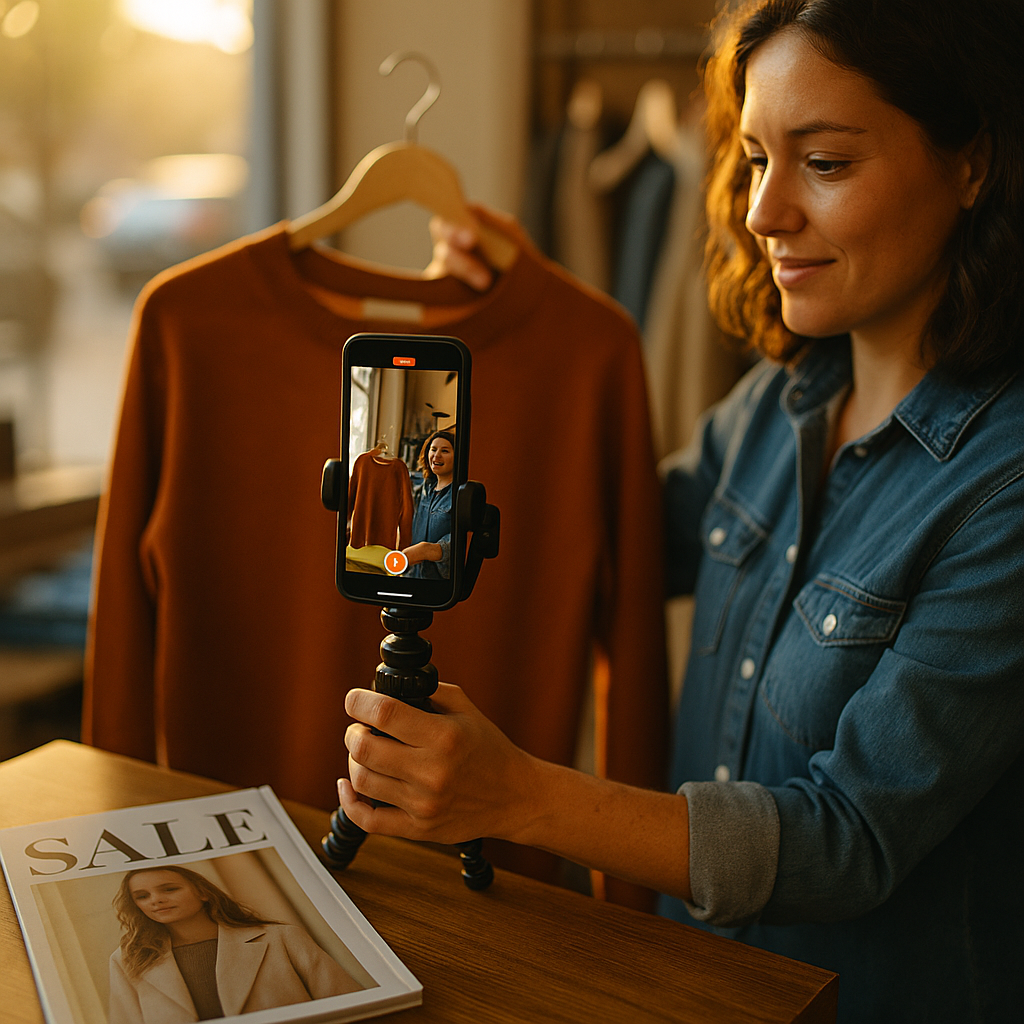
In 2025, many retail brands are discovering that print campaigns alone can’t keep pace with how customers research, compare, and buy. This case study on print to social video shows how one mid-sized retailer replaced expensive circulars with short, shoppable videos—without losing brand consistency or in-store traffic. The surprising part wasn’t the creative; it was the operating model behind it—here’s how it worked.
Print advertising decline: The retailer, the challenge, and the stakes
Company profile (anonymized for privacy): “Northline Home & Style” is a 120-store home goods and seasonal décor retailer with an established loyalty program, strong email list, and a long history of using glossy monthly mailers, local newspaper inserts, and in-store signage. By early 2025, leadership faced three problems that made the old approach harder to justify.
1) Rising production friction: The print calendar required long lead times. Merchandising needed final promotions weeks in advance, limiting the ability to react to weather shifts, competitor pricing, and inventory changes.
2) Targeting limits: Print distribution blanketed regions rather than reaching high-intent segments. The retailer could not easily tailor creative to new homeowners, gift buyers, or loyalty tiers.
3) Measurement gaps: Store teams could report foot traffic, and digital teams could report site analytics, but connecting printed inserts to purchases relied heavily on correlation, not attribution.
Business risk: Northline worried that reducing print would cut awareness and store visits. The marketing director needed a channel that could deliver reach, clarity on performance, and speed—without eroding brand trust. Social video emerged as the candidate because it could be produced quickly, targeted precisely, and optimized daily.
Social video strategy: Goals, audience insights, and platform choices
Northline set a direct goal: replace 40% of print-driven promotional reach with social video within two quarters while maintaining steady store traffic and improving measurable sales lift. To avoid a “viral-or-bust” mindset, the team treated social video as performance media that also built brand memory.
Audience insights (what they learned and how):
- Loyalty data: Purchase histories showed two primary peaks: seasonal refreshes (spring/summer and fall/holiday) and “weekend project” baskets driven by local weather.
- Search and site behavior: Product page paths revealed that shoppers often compared 3–5 items before buying, especially for storage, bedding, and small furniture.
- In-store questions: Store associates reported recurring questions: “How big is it in real life?” “Will it fit my space?” “How do I style it?” This signaled a need for short demo and styling content rather than static price-and-product ads.
Platform mix (chosen for intent and format fit):
- TikTok: Discovery and quick product storytelling; emphasis on native editing, hooks, and authentic demonstrations.
- Instagram Reels: A blend of discovery and conversion; strong for branded series and retargeting.
- YouTube Shorts: Efficient reach plus durable intent signals when paired with product searches and longer YouTube content.
Content pillars (repeatable and scalable):
- “Under 30 Seconds” demos: Show setup, size, and key benefit with clear captions.
- Style stacks: 3-item combinations with a total price and an alternate budget option.
- Store finds: Walkthroughs of endcaps and seasonal aisles that mirrored the role print circulars used to play.
- Problem-solution: “Small entryway?” “Cluttered pantry?” with a visual before/after.
Success metrics (set upfront): reach, 3-second view rate, 50% watch rate, click-through rate, add-to-cart rate, cost per incremental store visit (measured via platform and location analytics), and blended return on ad spend (ROAS) across online and store sales where available.
Short-form video production: Workflow, creative system, and brand safety
Northline did not win by creating one “perfect” video. They won by building a repeatable system that produced frequent, on-brand variations while controlling risk. The team replaced their print production cadence with a weekly video operating rhythm.
Team structure (lean but specialized):
- Creative lead: maintained brand guidelines, tone, and visual consistency.
- Producer/editor: turned raw footage into multiple cuts optimized for each platform.
- Merchandising liaison: ensured featured items aligned with inventory and promotional priorities.
- Paid social specialist: managed testing, retargeting, and budget allocation.
- Compliance reviewer (part-time): checked pricing claims, disclosures, and offer details.
Weekly workflow (built for speed):
- Monday: select 12–15 featured SKUs based on margin, inventory depth, and seasonal relevance.
- Tuesday: film in one flagship store and one home-styled set; capture vertical-first footage, hands-on demos, and price overlays.
- Wednesday: edit into 25–35 assets (multiple hooks, lengths, and CTAs).
- Thursday: launch tests with small budgets; monitor watch-time and click signals.
- Friday: scale winners; brief store managers on what customers will see online and what to feature in aisles.
Creative rules that protected brand trust:
- Pricing clarity: price shown only when confirmed; include “starting at” when variants exist.
- Caption accessibility: always-on captions and clear product names to support silent viewing.
- Proof over promises: demonstrate function rather than claiming “best” or “perfect.”
- UGC with guardrails: creator-style ads were scripted around factual benefits and real usage, then reviewed before publishing.
What replaced the print “look”: Instead of replicating circular layouts, the team translated print strengths—clear offers, curated collections, and seasonal inspiration—into fast visual sequences: a tight product shot, a real-size reference, a “fits in a small space” demo, and a direct CTA (“Save to your list,” “Check store pickup”).
Omnichannel measurement: Tracking lift, sales impact, and learnings
The retailer treated measurement as a product, not a report. Print had been difficult to attribute; social video offered real-time feedback, but Northline still needed a reliable link to revenue and store activity.
Measurement setup (practical and privacy-aware):
- Clean campaign taxonomy: every video carried consistent naming for platform, audience, creative pillar, and SKU group.
- Store pickup as a bridge: “Buy online, pick up in store” (BOPIS) and reserve options became key conversion events tied to local inventory.
- Incrementality testing: the team ran regional holdouts where social video spend was reduced while keeping other channels stable to estimate incremental lift.
- Creative-to-merchant feedback loop: top-performing hooks were shared with merchandising to influence endcap signage and in-store talk tracks.
Results (two quarters after launch):
- Print reduction: Northline cut print volume by 45% and reallocated most of that budget to social video production and paid distribution.
- Efficiency: paid social video delivered a lower cost per qualified session (visits with product views and add-to-cart behavior) than the retailer’s previous digital prospecting benchmarks.
- Store impact: regions with sustained social video spend showed higher store pickup orders and measurable store-visit lift versus holdout regions during key promotional weeks.
- Merchandise outcomes: videos that showed real size, setup time, and styling combinations increased conversion rates for categories that historically needed “touch and feel.”
Key learning: The biggest performance gains came from iteration speed. When a hook underperformed, the team replaced it within 48 hours—something impossible with print. Over time, they built a library of proven intros, overlays, and CTA patterns that reduced creative risk.
Likely follow-up question: “Did this hurt older demographics who prefer print?” Northline addressed this directly: they kept a smaller, high-quality seasonal print piece for top loyalty tiers and complemented it with staff-led assistance in-store. Meanwhile, social video retargeting reached older shoppers effectively when creative focused on practical demos and readability (large on-screen text, slower cuts, clear pricing).
Customer trust and EEAT: Credibility signals that made the shift work
Replacing print is not only a media decision; it’s a trust decision. Northline’s leadership recognized that social feeds can feel noisy, so every video had to earn attention and confidence quickly. Their approach aligned with EEAT by emphasizing real experience, transparent information, and operational consistency.
Experience (show, don’t claim):
- Videos featured real employees and store environments, not generic stock footage.
- Demonstrations included common failure points: assembly time, storage capacity, and fabric texture shown up close.
Expertise (use knowledgeable voices):
- Category specialists appeared in recurring segments (“Organizer Picks,” “Seasonal Styling in 20 Seconds”).
- Short tips were factual and practical: measuring a shelf, choosing the right bin depth, or pairing colors.
Authoritativeness (proof of reliability):
- Each ad linked to detailed product pages with specs, care instructions, and store availability.
- Top videos incorporated verified customer reviews as on-screen quotes, with the review count displayed when available.
Trust (reduce uncertainty):
- Clear return policy callouts and delivery/pickup timelines were included when they influenced purchase decisions.
- Disclosures were explicit for paid creator partnerships and limited-time offers.
How they avoided “chasing trends”: Northline used trends only when they reinforced the product message. The creative lead maintained a checklist: the first 2 seconds must show the product, text must be legible, and the video must answer one shopper question. If a trend didn’t meet these requirements, it didn’t ship.
Change management: Training, budgeting, and scaling beyond the pilot
Northline’s transition succeeded because the organization changed with the channel. Print had trained teams to think in monthly cycles; social video demanded weekly decision-making and cross-functional alignment.
Budget reallocation (what changed):
- From fixed placements to flexible spend: instead of committing early to print runs, Northline held budget for in-flight optimization.
- From one asset to many: the team planned for volume—multiple edits per concept—because testing required variations.
- From “campaigns” to always-on: they kept a baseline of evergreen demos and layered promotions on top.
Store enablement (often overlooked):
- Managers received a weekly “What’s trending in our ads” briefing with featured SKUs and expected questions.
- Endcaps were aligned to the videos’ hero products to reduce friction when customers arrived asking for items they saw online.
Governance (to keep speed without chaos):
- A single source of truth for offers and dates prevented mismatched pricing across platforms.
- A lightweight approval SLA (same-day review for price claims) preserved agility.
Scaling plan (next 90 days):
- Expand filming to three additional stores to reflect regional assortments and local seasonality.
- Launch a creator program focused on specific categories (storage, bedding, seasonal décor) with strict product-accuracy guidelines.
- Build a “video-to-search” bridge: use top-performing hooks as product page headlines and on-site banners for message match.
What they did not do: They did not eliminate print overnight. They removed the least efficient print components first, preserved one premium seasonal piece for high-value customers, and used savings to fund a video engine that could respond to inventory and demand in near real time.
FAQs
How do you know when it’s safe to reduce print spend?
Run a controlled test: reduce print in selected regions while increasing social video investment and keep other channels steady. Track store visits, store pickup orders, and category sales. If the test region sustains or improves results with better measurability, you can reduce print more confidently.
What kinds of products work best in social video for retailers?
Items that benefit from demonstration or size context perform well: storage solutions, décor, small furniture, seasonal collections, and bundles. If a product answers “how it looks,” “how it fits,” or “how it works” in under 30 seconds, it’s a strong candidate.
How many videos do you need per week to replace a print circular?
Northline produced 25–35 assets weekly from one filming day by creating multiple edits and hooks. Many retailers can start smaller—8–12 per week—if they commit to testing and iterating rather than relying on a single hero video.
Should you use employees or creators?
Use both. Employees add trust and operational knowledge, especially for demos and store walk-throughs. Creators can improve thumb-stopping style and platform-native pacing. The key is brand-safe guidelines: accurate claims, clear disclosures, and a review process for pricing and offers.
How do you measure store sales impact from social video?
Use a combination of store pickup conversions, location-based lift reporting available in ad platforms, and incrementality tests with geographic holdouts. Align featured products with in-store displays to reduce “I saw it online but can’t find it” friction, which also improves measurable outcomes.
What’s the biggest mistake retailers make when switching from print to video?
They treat video like a digital version of a flyer. Social video needs a shopper question answered quickly, a clear demonstration, and a strong first two seconds. The winning system prioritizes speed of learning—test, refine, and scale—over perfecting one concept.
Northline’s shift proved that replacing print isn’t about chasing social trends; it’s about building a faster, more measurable way to earn attention and drive purchases. By aligning merchandising, creative, and store operations around short-form video, the retailer reduced print dependence while improving agility and attribution. The takeaway: invest in a repeatable video engine, test incrementally, and let performance guide budget decisions.