


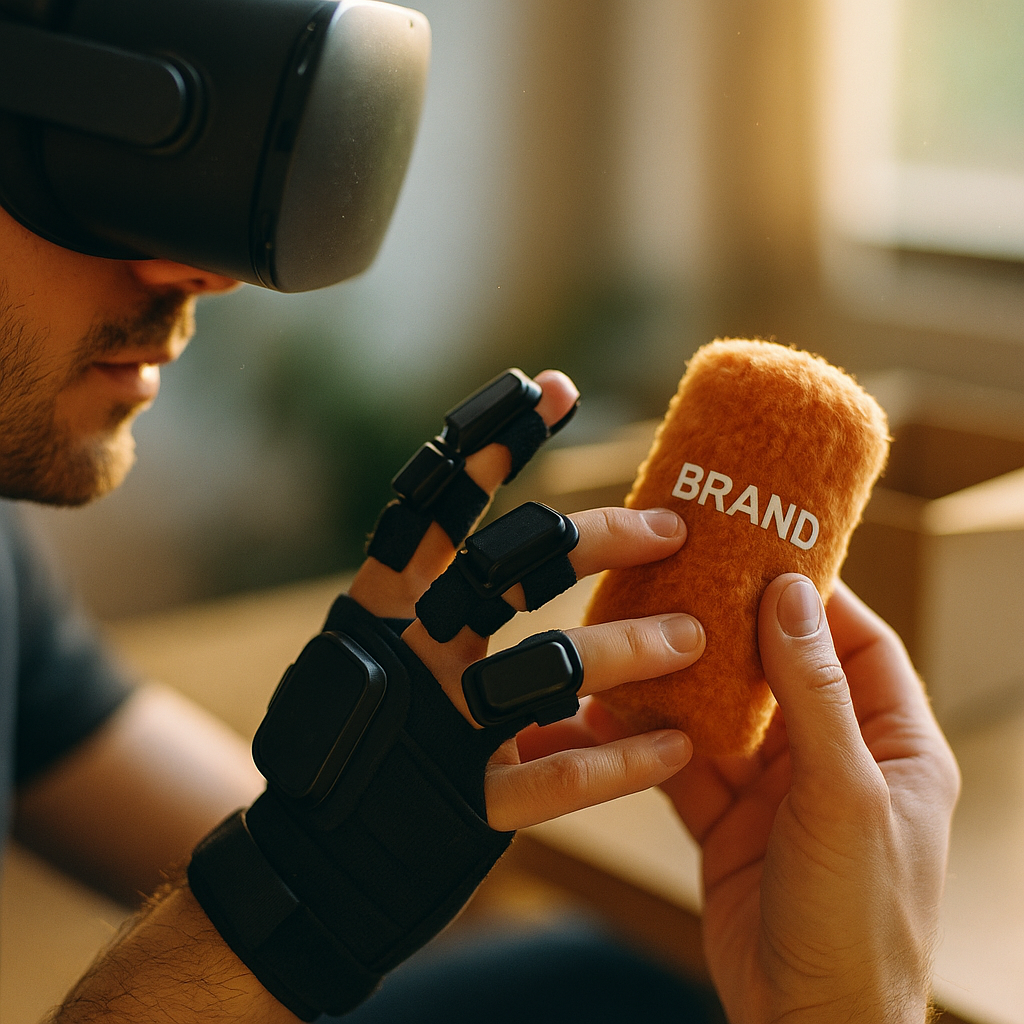
The Future of Haptic Marketing is moving fast in 2025, reshaping how brands communicate through touch across mobile, wearables, gaming, and retail. As screens saturate attention, tactile cues can add clarity, emotion, and trust—if they are designed responsibly and measured rigorously. This guide explains what’s changing, what to build, and how to integrate touch into content without losing users—ready to feel the difference?
What “haptic marketing” means for sensory marketing in 2025
Haptic marketing uses touch-based feedback—most commonly vibration, force feedback, texture simulation, or pressure cues—to influence perception and behavior. In practice, it sits inside sensory marketing, the discipline of shaping experiences through sight, sound, smell, taste, and touch. Touch is powerful because it can convey information quickly without demanding full visual attention.
In 2025, the most common haptic touchpoints include:
- Smartphones and tablets using vibration motors and OS-level haptic patterns for confirmations, alerts, and micro-interactions.
- Wearables delivering discreet pulses for navigation, coaching, and notifications.
- Game controllers and VR accessories providing nuanced force feedback and impact cues.
- In-store and experiential tech such as interactive kiosks, product demo rigs, and connected packaging prototypes.
The strategic shift is clear: haptics are no longer “decoration.” They are becoming a content layer—like audio—used to communicate meaning. That also raises a follow-up question: when does a vibration become content, not just UI polish? The answer is intent. If the tactile cue delivers information (progress, confirmation, warning, emotion, product feel), it’s content.
How touch feedback changes digital content and user behavior
Touch feedback can increase perceived responsiveness and reduce uncertainty. A well-timed pulse can confirm an action faster than a toast message, especially in on-the-go contexts. For marketing and content teams, that means haptics can support outcomes like:
- Higher interaction confidence during checkout, form completion, and authentication.
- Better comprehension when tactile cues reinforce hierarchy (success vs. warning vs. error) or guide attention.
- Stronger emotional imprint when haptic rhythm and intensity match a brand moment (launch, reveal, achievement).
- Reduced screen reliance in scenarios where users can’t look at the display (fitness, commuting, accessibility use cases).
However, haptics can also annoy users or create fatigue if they are frequent, intense, or inconsistent. That’s why the best teams treat touch feedback like typography: consistent rules, careful emphasis, and restraint. If your content strategy already defines tone of voice, you can define a “tone of touch” too—calm, crisp, energetic, or minimal.
A practical way to think about it is to map haptics to user intent:
- Confirm: short, light pulse for success and completion.
- Warn: sharper pattern for risky actions (delete, payment failure).
- Guide: repeating pulses to indicate direction or proximity (navigation, “getting warmer”).
- Delight: optional, rare, brand-signature patterns for achievements, not routine taps.
Readers often ask whether haptics can “increase conversions.” It can, but only when it reduces friction (fewer errors, faster confirmation) or improves clarity. Treat it as a usability lever first, and a persuasion lever second.
Immersive experiences: where haptics is heading (mobile, wearables, XR, retail)
Haptics is expanding beyond the phone vibration motor. The next wave of immersive experiences in 2025 focuses on realism, personalization, and context-aware touch.
Mobile and apps will keep evolving through richer pattern libraries, better latency, and more consistent design systems. Expect more brands to create “haptic styles” alongside motion and sound guidelines.
Wearables will become a primary channel for branded touch because they sit on the body. That enables subtle, always-available cues for loyalty programs, live events, wellness coaching, and location-based experiences. The opportunity is high, but so is responsibility: body-worn devices demand conservative defaults and explicit user control.
XR and gaming continue to push force feedback, finger-level tactility, and spatialized cues. This matters for marketing because product try-ons, demos, and virtual showrooms become more convincing when users can feel “clicks,” “resistance,” or “impact.” A smart content team will plan haptics as part of the narrative arc: onboarding, discovery, evaluation, and decision.
Retail and packaging are also shifting. Interactive shelves, demo stations, and connected product experiences can translate product features into tactile proof (for example, the difference between “soft close” vs. “snap fit,” or “smooth glide” vs. “high friction”). While fully tactile displays are still emerging, hybrid approaches—physical samples plus digital haptics—can bridge the gap.
If you’re deciding where to invest first, pick the channel where touch reduces uncertainty the most: payments and forms (confirmation), navigation (guidance), product feel (evaluation), or accessibility (non-visual signals).
Building a multisensory brand with a haptic design system
A multisensory brand is consistent across sight, sound, motion, and touch. The fastest way to get there is a haptic design system that defines patterns, intent, accessibility rules, and measurement standards.
Start with a small set of reusable tokens—similar to color tokens:
- Intensity levels: low, medium, high (with strict caps).
- Durations: short confirmation, medium attention, long guidance (rare).
- Patterns: single pulse, double pulse, ramp, heartbeat, staccato (limit the library).
- Semantic meanings: success, warning, error, progress, selection, boundary.
Then define rules teams can follow without debate:
- One meaning per pattern to avoid confusion.
- Use haptics only when it adds information or reduces error.
- Never punish users with aggressive vibration for mistakes.
- Provide a clear opt-out and honor OS settings.
Integrating haptics into content also requires editorial thinking. For example:
- In onboarding, use touch to confirm milestones and reinforce learning steps.
- In product education, align tactile cues to feature explanations (e.g., “feel the lock engage”).
- In storytelling, use haptics sparingly to mark key beats, not every transition.
A common follow-up is whether haptics should be “branded” like a sound logo. It can be, but keep it optional and infrequent. The best branded haptics feel like a signature, not an interruption.
Customer experience measurement: proving impact with trustworthy experiments
To follow EEAT best practices, teams need to show they can measure outcomes and avoid overstated claims. In haptics, you should measure both customer experience quality and business results, because touch can improve satisfaction without changing conversion—or vice versa.
Use a simple measurement stack:
- Behavioral metrics: task completion time, error rate, rage taps, abandonment, retry loops.
- Business metrics: conversion rate, checkout completion, return rate (where relevant), support tickets.
- Experience metrics: post-task confidence, perceived ease, perceived control, qualitative feedback.
Then run disciplined tests:
- A/B or multivariate tests comparing haptic vs. no haptic, or different patterns.
- Holdout groups to check novelty effects and avoid false positives.
- Accessibility review to ensure haptics does not exclude users with sensory sensitivities.
Make your interpretation conservative. If haptics reduces errors but slightly slows speed, decide based on risk: payments and security flows often benefit from fewer errors even at the cost of a fraction of a second.
Also document device variability. Haptics feels different across hardware; your measurement plan should segment by device class (flagship vs. budget, wearable models, controllers). That level of transparency increases credibility with stakeholders and aligns with EEAT expectations.
Privacy and accessibility: ethical guidelines for touch-based engagement
Haptics feels personal because it touches the body, so privacy and accessibility must be built in. Ethical design here is not theoretical—it determines whether users trust your experience.
Key guidelines for 2025:
- Respect user settings: if system haptics are disabled, do not override them.
- Offer granular controls: allow users to disable “marketing haptics” while keeping functional confirmations if needed.
- Limit intensity and frequency: avoid continuous or strong patterns that can cause discomfort or distraction.
- Support accessibility alternatives: pair haptics with visual and/or audio cues; never make touch the only channel for critical information.
- Avoid manipulative design: do not use haptics to create artificial urgency or anxiety (e.g., escalating buzzes for timers that pressure purchases).
Privacy questions come up often: can haptic interactions be considered sensitive data? Potentially. Touch patterns, interaction timing, and wearable signals can reveal behavior. Apply data minimization: collect only what you need, aggregate where possible, and explain clearly what you track and why.
When teams treat haptics as part of responsible UX—rather than a trick to drive taps—users respond with higher trust and lower opt-out rates.
FAQs
What is haptic marketing in simple terms?
Haptic marketing uses touch feedback—like vibrations or force cues—to communicate meaning, confirm actions, guide users, or enhance product experiences. It turns tactile sensations into a purposeful part of the brand and content experience.
How do you integrate haptics into content without annoying users?
Use haptics only when it adds information (confirmation, warning, guidance) and keep branded “delight” moments rare and optional. Maintain consistent patterns, respect OS settings, and give users control over intensity and frequency.
What channels benefit most from haptic content in 2025?
Mobile apps (checkout and forms), wearables (navigation and coaching), gaming/XR (product demos and virtual showrooms), and experiential retail (interactive demos) show the strongest fit because touch reduces uncertainty and increases clarity.
Can haptics improve conversion rates?
Yes, when it reduces friction—fewer errors, clearer confirmations, faster decision-making. Prove it with A/B tests tied to task completion, error rate, and conversion, and segment results by device type.
What are the biggest risks with haptic marketing?
The main risks are user fatigue, accessibility issues, and perceived manipulation. Overuse can irritate users, and relying on haptics alone can exclude users. Clear opt-outs, conservative defaults, and multi-channel feedback reduce these risks.
Do brands need a “haptic design system”?
If multiple teams ship features across app, wearable, and experiential touchpoints, a haptic design system prevents inconsistency. It defines patterns, meanings, intensity limits, accessibility rules, and measurement standards.
The future of haptic marketing in 2025 belongs to brands that treat touch as a disciplined communication layer, not a novelty. Build a small, consistent haptic vocabulary, connect each pattern to user intent, and measure impact with transparent experiments. Most importantly, respect privacy and accessibility so users stay in control. When touch adds clarity and confidence, content becomes more memorable—and more trusted.