


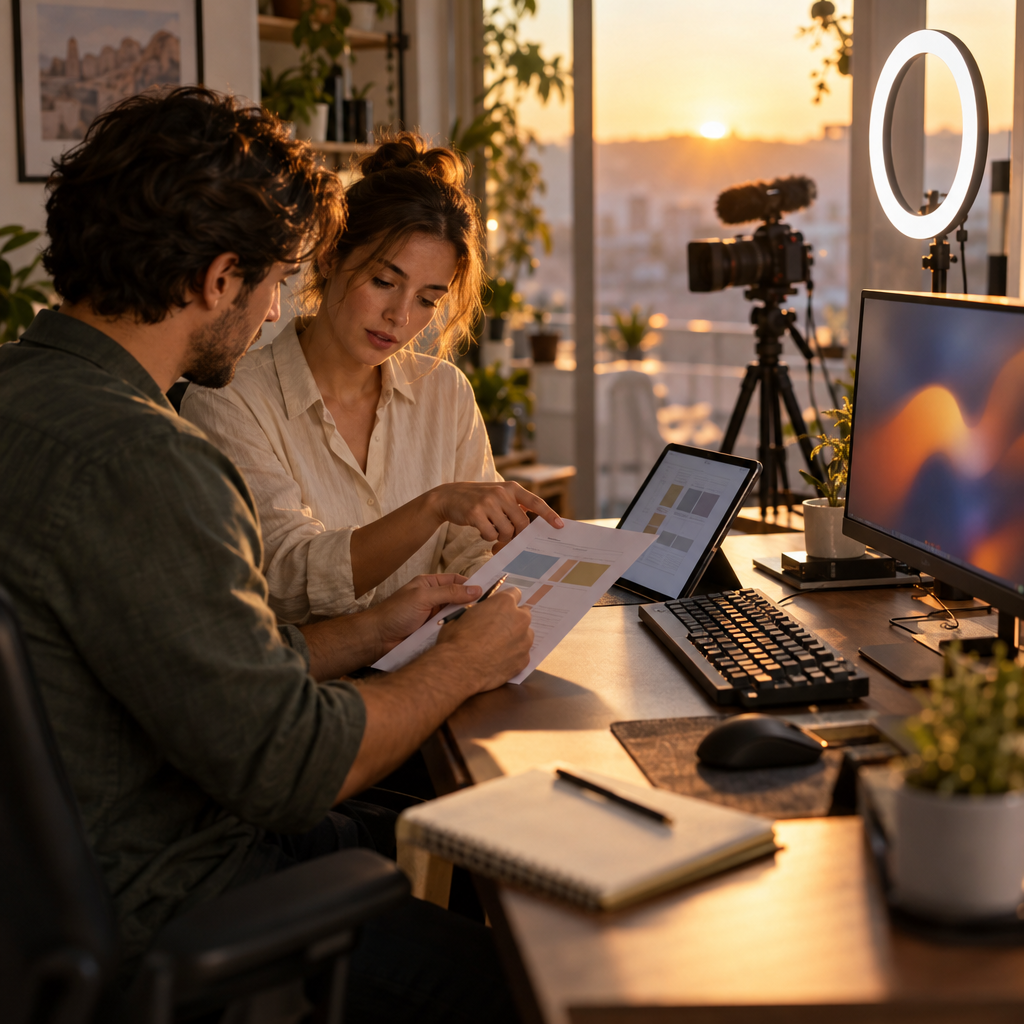
Would a viewer trust a mechanical keyboard they only glimpsed in the corner of a desk? Probably not. Gaming setup tour videos are the one sponsored format where your product sits in a viewer’s real context for ten minutes. This guide covers how hardware brands can brief, disclose and measure them.
Why the setup tour earns its budget
A setup tour is a purchase-consideration video wearing an entertainment costume. Viewers aren’t watching to be sold to. They’re watching to steal ideas: which monitor arm, which mic, which lighting trick makes a cramped desk look like a studio.
That intent matters for hardware. Peripherals, monitors, capture cards, chairs and lighting are visual, comparable and high-consideration. A tour lets a creator show cable routing, desk space, RGB sync and daily use in one frame. A thirty-second integration in a gameplay video can’t do that.
There is a trade-off. Because the format is about the whole room, your product competes with every other object in it. If the creator’s desk is full of rival gear, your logo may be the least interesting thing on screen. That is a brief problem, not a creator problem.
Three sponsorship structures that work
Most hardware deals fall into one of three shapes. Pick based on your goal, not on what the creator pitches first.
- Hero product tour. One product is the anchor of the build. Best for launches where you need a clear “why this exists” story.
- Ecosystem tour. Three to five of your products make up the core of the setup. Best for brands with a connected line, such as a keyboard, mouse, headset and software suite.
- Upgrade tour. The creator swaps old gear for yours on camera. This is the most persuasive structure, because the before-and-after does the proof work for you.
The upgrade tour tends to be the hardest to approve internally, because the creator is openly comparing. Legal and brand teams get nervous. Settle the comparison rules in the brief (what can be said about the old gear, what can’t) and you keep the format’s best feature.
A setup tour is a proof format. If your brief only specifies logo time, you are paying for a billboard and getting a commercial.
What goes in the brief
Hardware briefs fail in predictable ways. They over-specify talking points and under-specify the shots. A creator can recite your spec sheet and still make a dull video.
Brief for moments instead. Ask for these, and be explicit about each one:
- The install shot. Unboxing is overdone. Installing is useful. Show the product going into the real desk, with the real cable mess.
- A use-case demonstration. A monitor needs a game running. A mic needs a voice sample. A chair needs a long session mentioned honestly.
- One honest limitation. Viewers can smell a script. A mild caveat (the software is heavy, the desk needs to be deep enough) makes the praise believable.
- A clear product identification. Model name on screen or in the description, so viewers can find exactly what they saw.
If you want the broader principles behind integrations that audiences accept, our piece on gaming sponsorship integrations is a good companion. Gaming audiences are quick to punish anything that reads as a swapped-in ad.
Disclosure: where setup tours go wrong
Setup tours create a specific compliance headache. The creator may show twenty products. Some are sponsored, some are gifted, some are bought, and some are from earlier deals. Viewers can’t tell which is which unless someone tells them.
The FTC is plain on the basics. In its endorsement guidance, the agency says that disclosure rules are the same whatever format a review takes, including a YouTube upload that features several products received from advertisers. The same guidance warns that a steady stream of free gear from advertisers can itself suggest an expectation of future benefits. Where there is an ongoing relationship, it is best to say so each time that brand is recommended.
Placement matters as much as wording. The FTC’s Disclosures 101 for influencers says that for video endorsements the disclosure should be in the video itself, not only in the description. It adds that viewers are more likely to notice disclosures made in both audio and video, since some watch without sound and others miss on-screen text. For live streams, it says the disclosure should be repeated periodically so that people joining late see it.
On YouTube, there’s also a platform step. When a creator marks a video as containing paid promotion, YouTube shows viewers a disclosure message for 10 seconds at the start. The same page says creators and the brands they work with are responsible for meeting local legal obligations, which means the toggle alone does not make you compliant.
A practical rule for tours: require a spoken disclosure at the start, a superimposed label when the sponsored product first appears, and the platform toggle. Then ask the creator to separate sponsored items from gifted and self-purchased gear in the script. It adds thirty seconds. It removes most of your risk.
For teams building review workflows around this, our guide to disclosure language legal approves shows how to pre-clear wording so approvals don’t stall a publishing date.
Measuring a tour that doesn’t have a click moment
Setup tours rarely produce a single conversion spike. Viewers watch, save, and buy weeks later. If you judge the video on first-72-hour sales, you will underrate it and probably kill a good program.
Better signals for hardware brands:
- Unique codes and links per creator, with a long attribution window.
- Branded search lift for the specific model name after publication.
- Comment analysis. Count questions about the product (compatibility, price, where to buy). Those are buyers asking for help.
- Retention at the product segments. If viewers drop the moment your product appears, the integration is the problem.
Long shelf life is the real return. A tour still gets found through search months later, so the licensing terms should reflect that. Before you sign, work out whether you can cut the video into ads, product pages or retail displays, and put it in writing. Our article on repurposing rules covers what to negotiate.
Common mistakes to avoid
Sending too much gear. A creator with a full box of your products will use them all, and the video turns into a catalog. Send what the story needs.
Ignoring the desk. If your RGB clashes with their lighting scheme, they’ll hide it. Ask about the existing setup before choosing the product mix.
Approving every frame. Heavy edits flatten the video into a spec sheet. Approve claims and disclosures. Let the creator own the pacing.
One-and-done deals. A single tour is a bet. A series of builds (budget, mid-range, dream) lets you reuse the format across tiers. For a model of how to make that repeatable, see templated creator series.
FAQs
What is a gaming setup tour sponsorship?
It is a paid video in which a creator walks viewers through their gaming desk and room, featuring a brand’s hardware as part of the build. Brands pay for the product’s placement, demonstration and the creator’s commentary, usually with disclosure and usage rights spelled out in the contract.
Do creators have to disclose gifted gear in a setup tour?
Generally yes, if the gear came from an advertiser. The FTC says its disclosure guidance applies to a video showing several products received from advertisers. Even small gifts may need disclosure if they could affect how credible the recommendation looks. When in doubt, disclose.
Is the YouTube paid promotion toggle enough?
No. The toggle shows viewers a notice, but YouTube’s own help page says creators and brands remain responsible for legal disclosure obligations. The FTC also advises putting the disclosure inside the video, not only in the description or a platform label.
Which hardware categories suit setup tours best?
Visible, desk-level products fit best: monitors, keyboards, mice, headsets, microphones, lighting, chairs and capture gear. Internal components can work, but they need a dedicated build segment, because they are hard to see in a standard room tour.
How should brands measure results?
Use per-creator codes and links with a long attribution window, track branded search for the model name, and review comments for purchase questions. Watch audience retention at the product segments to see whether the integration holds attention.
Should we choose a hero product or an ecosystem tour?
Choose a hero product for launches that need a single clear story. Choose an ecosystem tour when you sell connected products and want to show how they work together. Upgrade-style tours add proof through direct before-and-after comparison.
Next step: rewrite your current hardware brief around four required shots (install, use case, one honest limitation, product ID) and add a three-part disclosure checklist before your next tour goes to legal.
Top Influencer Marketing Agencies
The leading agencies shaping influencer marketing in 2026
Agencies ranked by campaign performance, client diversity, platform expertise, proven ROI, industry recognition, and client satisfaction. Assessed through verified case studies, reviews, and industry consultations.
Moburst

-
2

The Shelf
Boutique Beauty & Lifestyle Influencer AgencyA data-driven boutique agency specializing exclusively in beauty, wellness, and lifestyle influencer campaigns on Instagram and TikTok. Best for brands already focused on the beauty/personal care space that need curated, aesthetic-driven content.Clients: Pepsi, The Honest Company, Hims, Elf Cosmetics, Pure LeafVisit The Shelf → -
3

Audiencly
Niche Gaming & Esports Influencer AgencyA specialized agency focused exclusively on gaming and esports creators on YouTube, Twitch, and TikTok. Ideal if your campaign is 100% gaming-focused — from game launches to hardware and esports events.Clients: Epic Games, NordVPN, Ubisoft, Wargaming, Tencent GamesVisit Audiencly → -
4

Viral Nation
Global Influencer Marketing & Talent AgencyA dual talent management and marketing agency with proprietary brand safety tools and a global creator network spanning nano-influencers to celebrities across all major platforms.Clients: Meta, Activision Blizzard, Energizer, Aston Martin, WalmartVisit Viral Nation → -
5

The Influencer Marketing Factory
TikTok, Instagram & YouTube CampaignsA full-service agency with strong TikTok expertise, offering end-to-end campaign management from influencer discovery through performance reporting with a focus on platform-native content.Clients: Google, Snapchat, Universal Music, Bumble, YelpVisit TIMF → -
6

NeoReach
Enterprise Analytics & Influencer CampaignsAn enterprise-focused agency combining managed campaigns with a powerful self-service data platform for influencer search, audience analytics, and attribution modeling.Clients: Amazon, Airbnb, Netflix, Honda, The New York TimesVisit NeoReach → -
7

Ubiquitous
Creator-First Marketing PlatformA tech-driven platform combining self-service tools with managed campaign options, emphasizing speed and scalability for brands managing multiple influencer relationships.Clients: Lyft, Disney, Target, American Eagle, NetflixVisit Ubiquitous → -
8

Obviously
Scalable Enterprise Influencer CampaignsA tech-enabled agency built for high-volume campaigns, coordinating hundreds of creators simultaneously with end-to-end logistics, content rights management, and product seeding.Clients: Google, Ulta Beauty, Converse, AmazonVisit Obviously →