


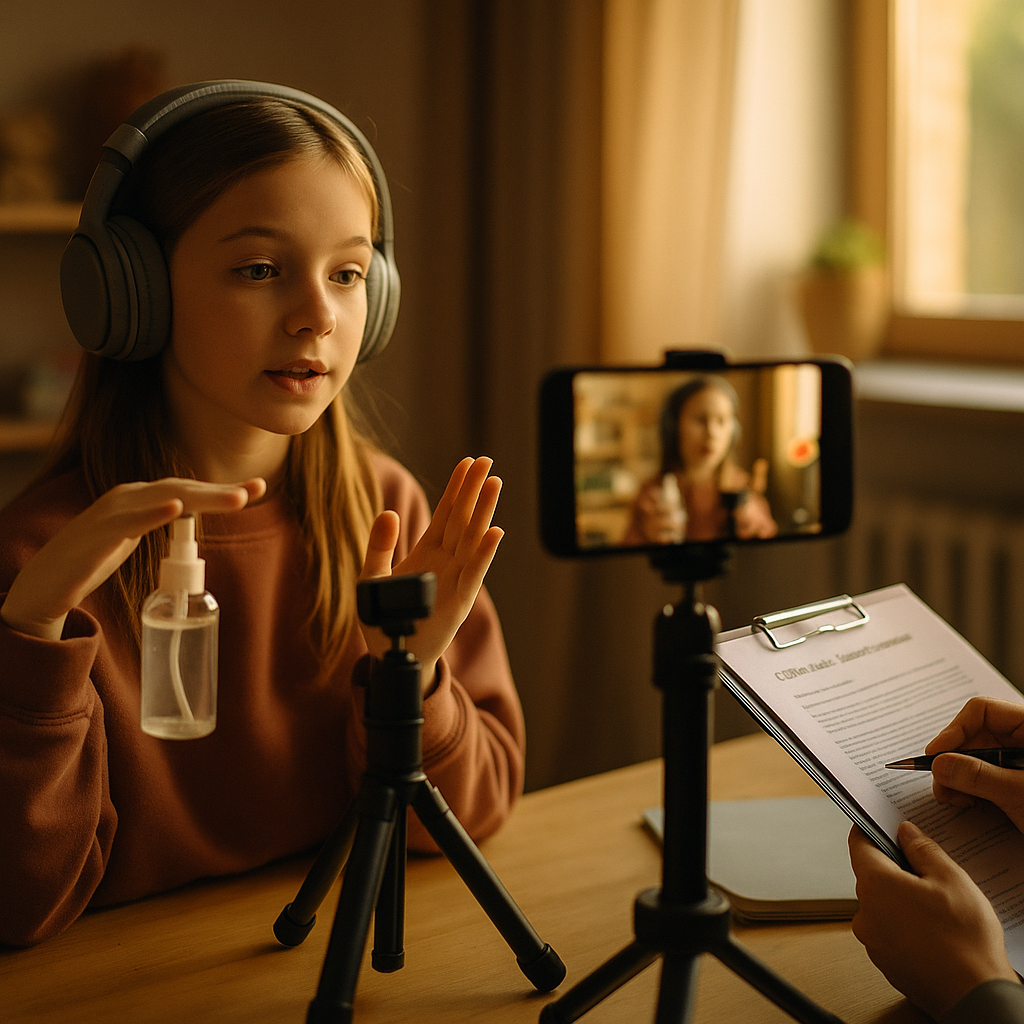
Gen Alpha will represent over $5 trillion in direct and influenced spending by 2030, yet most creator programs targeting or featuring this cohort are built on frameworks designed for Millennial audiences. That mismatch is a liability, not just a missed opportunity. Here is a Gen Alpha creator marketing framework built specifically for the ethical complexity brands are actually navigating.
Who Is Gen Alpha, and Why Do Standard Playbooks Fail?
Born from 2010 onward, Gen Alpha is the first generation raised entirely inside the algorithm. They do not distinguish between content and advertising the way older audiences do. They process creator recommendations as peer input, not promotions. And they are already shaping household CPG purchases at scale: a Morning Consult study found that 65% of Gen Alpha kids regularly influence family buying decisions on personal care and food products.
The standard influencer playbook fails here for three reasons. First, the legal and platform environment around minors is materially different from adult creator marketing. Second, the purchasing power dynamic is inverted: the child influences the adult buyer, rather than buying directly. Third, the ethical stakes are higher — regulators, advocacy groups, and parent audiences are watching beauty and CPG brands closely.
Gen Alpha’s real purchasing power is influence, not income. Brands that design for the parent-child decision loop will outperform those optimizing purely for direct conversion.
The Four-Layer Compliance Architecture
Before you brief a single creator, your program needs a compliance architecture with four distinct layers.
Layer 1: Platform restrictions. Meta’s teen account system now defaults to supervised experiences for under-16 users, with significant restrictions on ad targeting and direct messaging. TikTok restricts direct messaging for users under 16 and has tightened content recommendation filters for teens. YouTube enforces COPPA-triggered data restrictions on content made for children. Each platform has different rules, and the rules are tightening. Reviewing Meta’s minor safety rules should be a standard step in your program setup checklist.
Layer 2: FTC disclosure requirements. Disclosure rules do not relax because the audience is young. In fact, the FTC has signaled that marketing to minors receives heightened scrutiny. Any creator paid or gifted product must disclose clearly. Any AI-generated or AI-assisted content requires its own layer of disclosure. For brands running shoppable content, FTC disclosure rules for social commerce apply even when the end buyer is a parent.
Layer 3: Data and privacy compliance. COPPA governs data collection from children under 13 in the US. The UK’s Children’s Code applies to digital services likely accessed by under-18s. If your creator content is distributed on platforms with teen audiences, your campaign’s data practices need legal review, not just marketing review. The UK Information Commissioner’s Office has been particularly active in enforcement here.
Layer 4: Contractual safeguards. Your creator contracts need clauses covering AI-generated content, likeness rights for minor participants, content moderation obligations, and platform-specific compliance. Most standard influencer agreements do not include these provisions. Brands that have not updated their contracts since the latest round of platform teen-safety updates are exposed.
The Creator Tier Problem: Who Should Actually Appear in Gen Alpha Campaigns?
Here is the strategic question most creative briefs avoid: should your Gen Alpha program feature child creators, teen creators, adult creators speaking to parents, or some combination? Each choice carries different risk and reward profiles.
Child creators (under 13): High authenticity with Gen Alpha audiences, but maximum regulatory and ethical complexity. Parents or guardians must be contractual parties. Content must comply with platform child-safety rules. The reputational risk if something goes wrong is significant. Beauty brands in particular should think carefully: the FTC has specifically highlighted beauty and personal care as categories where marketing to children warrants scrutiny.
Teen creators (13-17): A workable middle tier for many CPG brands, especially food, lifestyle, and personal care. They have platform access, content creation skills, and genuine peer influence with Gen Alpha audiences. However, platform ad restrictions still apply, and Instagram’s teen AI controls affect how sponsored content from teen creators is distributed and recommended.
Adult creators as proxies: Millennial parent creators, family content creators, and Gen Z adults with Gen Alpha siblings often reach parent audiences with strong authenticity. This approach sidesteps most minor-specific regulatory risk while still addressing the parent-child decision loop. The tradeoff is reduced direct resonance with Gen Alpha kids themselves.
Most successful Gen Alpha programs use a layered approach: adult creators for paid distribution and direct-response objectives, with organic teen creator content for cultural credibility. These two tracks require separate compliance workflows.
Designing for the Parent-Child Purchase Loop
This is the mechanics most beauty and CPG marketers get wrong. Gen Alpha does not swipe a card. Their parents do. So the creator content needs to do two jobs simultaneously: generate desire in the child and reduce friction for the adult making the purchase decision.
Effective Gen Alpha creator briefs include messaging layers for both audiences. For the child: sensory language, social proof from peers, identity-relevant positioning. For the parent: ingredient transparency, brand safety signals, value framing. Creators who can naturally code-switch between these registers are rare and worth premium rates. Family content creators and parent-of-child-creator accounts often nail this instinctively.
For beauty brands specifically, the ethical dimension is acute. Products marketed to or through Gen Alpha should not rely on insecurity, comparison, or aspirational appearance anxiety. eMarketer data shows that parents increasingly make brand choices based on perceived ethical positioning. A creator program that reads as exploitative to parents will undermine the exact purchase decision you are trying to influence.
Platform Selection and the Reach-Risk Tradeoff
Not all platforms are equal for this cohort. YouTube and Roblox have the highest organic Gen Alpha time-spent. TikTok remains significant for older Gen Alpha (10-13) and their teen siblings. Instagram has lower direct Gen Alpha reach but strong parent audience density, making it effective for the adult-buyer layer of your strategy.
YouTube’s content classification system means branded content made for children operates under different ad-serving rules. If a creator marks their content as “made for kids,” behavioral advertising is disabled. Brands need to understand how this affects campaign attribution and retargeting before allocating budget. The Google Ads Help Center details these content category restrictions explicitly.
Social commerce integration is more limited with minor-adjacent audiences than with adult cohorts. Social commerce privacy compliance is a genuine operational consideration when campaigns touch platforms with teen-heavy demographics.
ESG Accountability and the Long Game
Brands that market to or through Gen Alpha are increasingly subject to ESG scrutiny from investors, retailers, and parent advocacy groups. Your creator program is not just a marketing decision; it is a governance decision. Documenting your ethical guardrails, maintaining clear records of compliance reviews, and establishing escalation protocols for problematic content are all components of a defensible program.
A creator program without a documented ethical framework is a liability waiting to be triggered. For Gen Alpha campaigns, that documentation is not optional — it is operational infrastructure.
Building an ESG accountability framework into your creator program from the start is significantly cheaper than retrofitting one after a regulatory inquiry or advocacy group complaint. Brands like Dove and Cetaphil have learned that proactive ethical positioning in youth-adjacent categories creates durable brand equity with parent audiences.
One structural recommendation: establish a minor-safety review checkpoint in your creative approval workflow, separate from your standard brand safety review. This checkpoint should include a legal review of any content featuring minors, a compliance check against current platform teen-safety policies, and a messaging audit against your brand’s stated values on youth marketing. Build this into your campaign calendar; do not treat it as an afterthought.
If you are operating across EU markets, the EU Digital Services Act adds another compliance layer for campaigns reaching European audiences, with specific provisions around algorithmic amplification of content to minors.
Your immediate next step: Audit your current creator contracts against the four compliance layers outlined above. If your agreements predate platform teen-safety updates from the last 18 months, they have gaps. Fix the contracts before you fix the creative brief.
FAQs
Can beauty brands legally use creators under 18 in sponsored content?
Yes, with conditions. Teen creators (13-17) can participate in sponsored content, but platform-specific rules apply to how that content is distributed and recommended. Brands must ensure proper FTC disclosures, obtain parental consent where required by the platform, and comply with data privacy laws like COPPA for any audience data collected. Creator contracts must name a parent or guardian as a party for creators under 18. For child creators under 13, the restrictions are significantly more extensive and vary by platform.
How should brands handle FTC disclosures when marketing beauty products to Gen Alpha through creators?
FTC disclosure requirements apply regardless of audience age. Any paid partnership or gifted product relationship must be disclosed clearly in the content. For campaigns targeting or likely reaching minors, the FTC expects disclosures to be understandable to the youngest likely audience member, not just adults. This means avoiding jargon-heavy disclosure labels and placing disclosures where they are visually prominent, not buried in descriptions or hashtag stacks.
What platforms are most effective for reaching Gen Alpha audiences through creator content?
YouTube has the highest time-spent among Gen Alpha, followed by Roblox and TikTok for older Gen Alpha. Instagram is more effective for reaching Millennial parent audiences, which is often the actual purchase decision-maker. Platform selection should be driven by the specific goal: direct Gen Alpha cultural resonance versus parent-level purchase influence. Most effective programs use a multi-platform approach with distinct compliance workflows for each channel.
What contractual protections do brands need when working with family content creators?
Contracts with family content creators should include: explicit consent clauses covering the likeness and participation of any minors featured; content moderation obligations requiring creators to remove or amend content that violates updated platform policies; AI-generated content disclosures and restrictions; data handling provisions compliant with COPPA and applicable regional privacy laws; and indemnification clauses covering regulatory penalties arising from the creator’s non-compliance. Standard influencer agreements typically do not include these protections without amendment.
How does Gen Alpha’s purchasing power actually work for CPG brands?
Gen Alpha’s influence on household spending is primarily indirect. Research indicates they regularly shape parental decisions on personal care, food, and household products, making them key influencers in the purchase funnel even without direct spending power. Effective CPG campaigns account for this by designing creator content that speaks to both the child’s preference and the parent’s purchase criteria simultaneously. The measurement framework should track both brand preference among children and purchase intent among parents, not just one metric.
Top Influencer Marketing Agencies
The leading agencies shaping influencer marketing in 2026
Agencies ranked by campaign performance, client diversity, platform expertise, proven ROI, industry recognition, and client satisfaction. Assessed through verified case studies, reviews, and industry consultations.
Moburst

-
2

The Shelf
Boutique Beauty & Lifestyle Influencer AgencyA data-driven boutique agency specializing exclusively in beauty, wellness, and lifestyle influencer campaigns on Instagram and TikTok. Best for brands already focused on the beauty/personal care space that need curated, aesthetic-driven content.Clients: Pepsi, The Honest Company, Hims, Elf Cosmetics, Pure LeafVisit The Shelf → -
3

Audiencly
Niche Gaming & Esports Influencer AgencyA specialized agency focused exclusively on gaming and esports creators on YouTube, Twitch, and TikTok. Ideal if your campaign is 100% gaming-focused — from game launches to hardware and esports events.Clients: Epic Games, NordVPN, Ubisoft, Wargaming, Tencent GamesVisit Audiencly → -
4

Viral Nation
Global Influencer Marketing & Talent AgencyA dual talent management and marketing agency with proprietary brand safety tools and a global creator network spanning nano-influencers to celebrities across all major platforms.Clients: Meta, Activision Blizzard, Energizer, Aston Martin, WalmartVisit Viral Nation → -
5

The Influencer Marketing Factory
TikTok, Instagram & YouTube CampaignsA full-service agency with strong TikTok expertise, offering end-to-end campaign management from influencer discovery through performance reporting with a focus on platform-native content.Clients: Google, Snapchat, Universal Music, Bumble, YelpVisit TIMF → -
6

NeoReach
Enterprise Analytics & Influencer CampaignsAn enterprise-focused agency combining managed campaigns with a powerful self-service data platform for influencer search, audience analytics, and attribution modeling.Clients: Amazon, Airbnb, Netflix, Honda, The New York TimesVisit NeoReach → -
7

Ubiquitous
Creator-First Marketing PlatformA tech-driven platform combining self-service tools with managed campaign options, emphasizing speed and scalability for brands managing multiple influencer relationships.Clients: Lyft, Disney, Target, American Eagle, NetflixVisit Ubiquitous → -
8

Obviously
Scalable Enterprise Influencer CampaignsA tech-enabled agency built for high-volume campaigns, coordinating hundreds of creators simultaneously with end-to-end logistics, content rights management, and product seeding.Clients: Google, Ulta Beauty, Converse, AmazonVisit Obviously →