


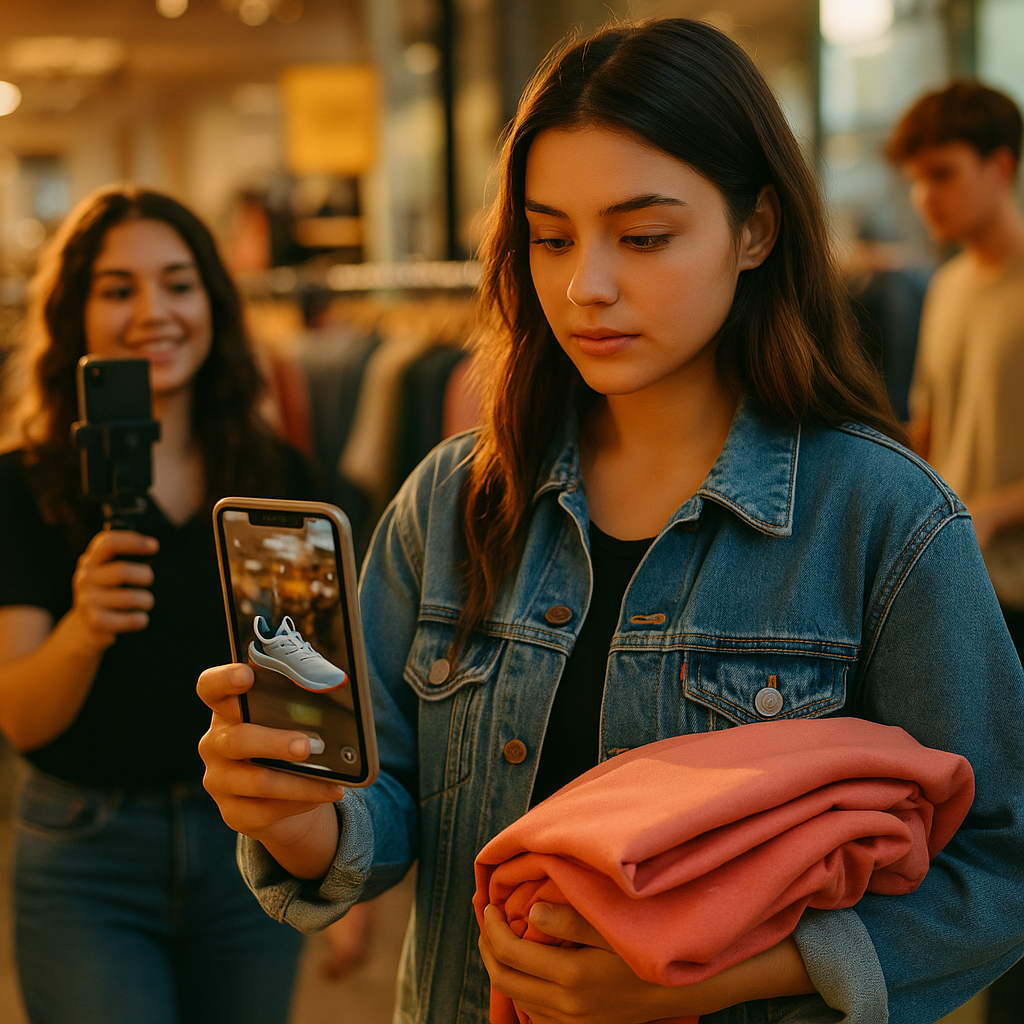
Sixty-four percent of Gen Z prefers shopping in physical stores, yet they will abandon any brand experience that doesn’t offer immediate digital interaction. That tension is not a contradiction — it’s the briefing document your creator campaign architecture has been missing. The Gen Z in-store experience paradox demands a fundamentally different campaign model, and most brands are still solving only half the equation.
Why “Phygital” Is Not a Strategy — It’s a Starting Point
Every retail conference in the past three years has beaten the word “phygital” into meaninglessness. What it actually describes is a real behavioral truth: Gen Z uses physical retail as a social and sensory environment, not a transaction venue. According to eMarketer research, Gen Z consumers spend more per in-store visit than Millennials in specific categories, including beauty, apparel, and consumer electronics. But the purchase decision is rarely completed without a digital validation loop: a TikTok search, a creator review, a QR-triggered AR try-on.
Brand marketers who treat in-store and digital creator content as separate line items in the media plan are burning budget on incomplete journeys. The question isn’t whether to invest in physical activation or digital creator content. It’s how you architect those two layers so each one amplifies the other.
The Creator’s Role Has Shifted — From Broadcast to Bridge
Historically, influencer campaigns ran ahead of a retail moment: tease, launch, amplify. The creator was a megaphone pointing toward a store or product page. That model still works for awareness, but it misses the in-store behavioral reality Gen Z has created.
Today’s high-performing creator campaigns for retail brands position creators as the connective tissue between physical discovery and digital confirmation. A Gen Z shopper walks into a Sephora, sees a display, opens TikTok to search the product, and lands on a creator’s in-store walkthrough filmed at that exact location. That’s not coincidence. That’s campaign architecture.
Nike, Glossier, and WNBA partner brands have all experimented with what internal teams are calling “in-store content seeding” — recruiting micro and nano creators to produce content inside physical locations before launch, ensuring that organic-looking search results are waiting when foot traffic arrives. For more on how creator tier selection affects this kind of performance, the framework in creator roster and attribution structures is directly applicable here.
The most effective Gen Z retail campaigns don’t launch at the store opening — they seed TikTok search results two weeks before, so every in-store visitor arrives pre-validated.
AR as Campaign Infrastructure, Not a Gimmick
Augmented reality in retail has had a credibility problem because too many brands deployed it as a novelty rather than a functional layer. The distinction matters operationally. AR filters on Snapchat and Instagram that allow virtual product try-ons are not entertainment assets — they are conversion infrastructure when wired into a creator campaign correctly.
Snap’s augmented reality platform reports that AR try-on features drive 2.4x higher purchase intent than standard creative. When a creator builds content that explicitly demonstrates the AR tool — “try this at home before you go in-store” — the in-store visit becomes confirmation-seeking behavior rather than exploratory. That shifts conversion probability dramatically.
For brand marketers, the operational question is who owns the AR asset creation. Currently, too many brands treat AR filter development as a tech build sitting in the product team, disconnected from the creator campaign brief. The brands getting this right are embedding AR asset specs directly into creator briefs, so the filter and the creator content launch simultaneously through TikTok’s creative tools or Meta’s Spark AR suite. The creator becomes the native demo environment for the AR layer.
Designing the Pop-Up for Shareability First
Pop-up events have always been PR plays. The Gen Z shift is that the pop-up is now primarily a content production set. Target’s activation strategy, Jacquemus’s viral aesthetic installations, and Liquid Death’s absurdist retail experiences all share one design principle: the physical space is optimized for creation, not just consumption.
Practically, this means the spatial design brief must include a content architect’s perspective from day one. Lighting rigs that work for smartphone cameras. Backdrops with intentional visual density. QR codes embedded in unexpected surfaces that trigger AR layers or exclusive product drops. Sound design that doesn’t make video content unusable. These are not nice-to-haves — they are the difference between an event that generates 200 pieces of creator content and one that generates 12.
When recruiting creators for pop-up activations, geographic targeting matters as much as audience size. A creator with 18,000 followers who is verified to have dense audience concentration in the city where the pop-up runs will outperform a macro creator whose audience is geographically diffuse. The methodology behind geographic audience vetting is directly applicable to retail pop-up creator selection.
AI’s Operational Role in Bridging the Paradox
Artificial intelligence is doing three things inside sophisticated creator campaign architectures right now that directly address the Gen Z in-store paradox.
First, predictive content matching. AI tools analyze which creator content formats are driving in-store visits versus online conversions, allowing campaign managers to allocate budget toward content types proven to move Gen Z from the scroll to the shelf. Platforms like Traackr and Sprinklr have embedded these predictive layers into their dashboards.
Second, real-time campaign personalization. When a creator campaign is running across multiple regional retail locations, AI can dynamically adjust which creator content surfaces in which geographic feed — routing a Chicago-based creator’s in-store content to Chicago-area audiences and suppressing it elsewhere. This is no longer experimental. It’s table stakes for national retailers with regional variance in their Gen Z foot traffic.
Third, UGC amplification at scale. When Gen Z shoppers create their own content inside physical stores, AI-driven UGC workflows can identify brand-relevant content, flag it for rights capture, and route it into paid amplification within hours. The UGC automation workflow framework matters here because speed is the variable: a shopper’s organic in-store post has maximum virality potential in the first 48 hours, and only automated detection catches that window reliably.
Thinking about which decisions AI should own versus where human judgment is non-negotiable? The strategic tension is unpacked well in this analysis of AI vs. human judgment in campaigns.
AI doesn’t replace the creative director’s instinct for what makes a pop-up shareable — but it’s the only tool that can close the 48-hour UGC amplification window before organic momentum dies.
Measuring What Actually Bridges Online and Offline
Standard influencer KPIs collapse under this model. Impressions don’t tell you whether someone walked into a store. Click-through rates don’t capture the Gen Z shopper who saved a TikTok, went in-store three days later, and converted at the register. Brands still optimizing creator campaigns against CPM or engagement rate alone are making allocation decisions with fundamentally incomplete data.
The measurement infrastructure for phygital creator campaigns needs to track: in-store foot traffic lift correlated against content publication windows, QR scan rates from in-store AR activations, and UGC volume generated per activation as a proxy for shareability success. Attribution modeling that can connect a creator’s content to a store visit requires retail media network integration, mobile location data partnerships (where privacy compliance allows), and loyalty program linkage. For a more detailed look at the attribution layer, influencer ROI beyond impressions covers the earned value and sentiment dimensions that standard dashboards miss.
FTC disclosure compliance remains non-negotiable when creators are producing in-store content, particularly when the brand has provided access, gifting, or compensation for the activation. Review FTC endorsement guidelines before briefing in-store creator activations to ensure disclosure requirements are met in both video and static formats.
The Architecture Decision Brand Marketers Need to Make Now
Start by auditing whether your current creator campaign briefs treat the in-store environment as a content location or just a conversion destination. If creators are being briefed to drive traffic to a store but not briefed on what to film inside it, you’re solving only one half of the paradox. The Gen Z audience wants the digital artifact of the physical experience — the content is the product, and the product validates the content. Build the campaign so both layers exist by design, not by accident.
Frequently Asked Questions
What is the Gen Z in-store experience paradox for brand marketers?
The paradox refers to the apparent contradiction in Gen Z shopping behavior: a majority prefer shopping in physical retail environments, yet they simultaneously expect interactive digital experiences — AR try-ons, creator-generated content, and shareable social moments — as part of the in-store visit. For brand marketers, the challenge is designing campaigns that satisfy both preferences rather than treating them as competing priorities.
How should creator briefs be structured for in-store activation campaigns?
Creator briefs for in-store activations should specify the physical location as a content environment, not just a visit destination. This includes lighting conditions, AR filter integration specs, specific products to demonstrate, disclosure requirements, and content formats optimized for TikTok search discovery. Creators should be briefed to produce content that serves Gen Z audiences who are searching for that store or product organically, as well as content that captures the in-store experience for those who haven’t visited yet.
Which creator tier works best for retail pop-up activations?
Micro and nano creators with dense geographic audience concentration in the pop-up’s city typically outperform macro creators for in-store activation campaigns. A creator with a geographically targeted audience drives higher local foot traffic lift and generates more authentic content. Tier selection should be based on verified audience location data, not just follower count.
How does AR fit into a Gen Z creator campaign strategy?
AR functions most effectively as campaign infrastructure when synchronized with creator content launches. Creators demo the AR tool (try-on filters, interactive product overlays) in their content, driving audience engagement with the AR layer before and during in-store visits. The AR experience serves as a bridge between digital content consumption and physical purchase confirmation, increasing purchase intent among Gen Z consumers significantly compared to standard creative formats.
How do you measure the ROI of a phygital creator campaign?
Effective measurement requires integrating multiple data sources: foot traffic lift during creator content publication windows, QR scan rates from in-store AR activations, UGC volume generated at the activation, and loyalty program or retail media network data that connects digital content exposure to in-store purchase. Standard CPM and engagement rate metrics are insufficient for capturing the full value of a campaign that bridges digital and physical touchpoints.
Top Influencer Marketing Agencies
The leading agencies shaping influencer marketing in 2026
Agencies ranked by campaign performance, client diversity, platform expertise, proven ROI, industry recognition, and client satisfaction. Assessed through verified case studies, reviews, and industry consultations.
Moburst

-
2

The Shelf
Boutique Beauty & Lifestyle Influencer AgencyA data-driven boutique agency specializing exclusively in beauty, wellness, and lifestyle influencer campaigns on Instagram and TikTok. Best for brands already focused on the beauty/personal care space that need curated, aesthetic-driven content.Clients: Pepsi, The Honest Company, Hims, Elf Cosmetics, Pure LeafVisit The Shelf → -
3

Audiencly
Niche Gaming & Esports Influencer AgencyA specialized agency focused exclusively on gaming and esports creators on YouTube, Twitch, and TikTok. Ideal if your campaign is 100% gaming-focused — from game launches to hardware and esports events.Clients: Epic Games, NordVPN, Ubisoft, Wargaming, Tencent GamesVisit Audiencly → -
4

Viral Nation
Global Influencer Marketing & Talent AgencyA dual talent management and marketing agency with proprietary brand safety tools and a global creator network spanning nano-influencers to celebrities across all major platforms.Clients: Meta, Activision Blizzard, Energizer, Aston Martin, WalmartVisit Viral Nation → -
5

The Influencer Marketing Factory
TikTok, Instagram & YouTube CampaignsA full-service agency with strong TikTok expertise, offering end-to-end campaign management from influencer discovery through performance reporting with a focus on platform-native content.Clients: Google, Snapchat, Universal Music, Bumble, YelpVisit TIMF → -
6

NeoReach
Enterprise Analytics & Influencer CampaignsAn enterprise-focused agency combining managed campaigns with a powerful self-service data platform for influencer search, audience analytics, and attribution modeling.Clients: Amazon, Airbnb, Netflix, Honda, The New York TimesVisit NeoReach → -
7

Ubiquitous
Creator-First Marketing PlatformA tech-driven platform combining self-service tools with managed campaign options, emphasizing speed and scalability for brands managing multiple influencer relationships.Clients: Lyft, Disney, Target, American Eagle, NetflixVisit Ubiquitous → -
8

Obviously
Scalable Enterprise Influencer CampaignsA tech-enabled agency built for high-volume campaigns, coordinating hundreds of creators simultaneously with end-to-end logistics, content rights management, and product seeding.Clients: Google, Ulta Beauty, Converse, AmazonVisit Obviously →