


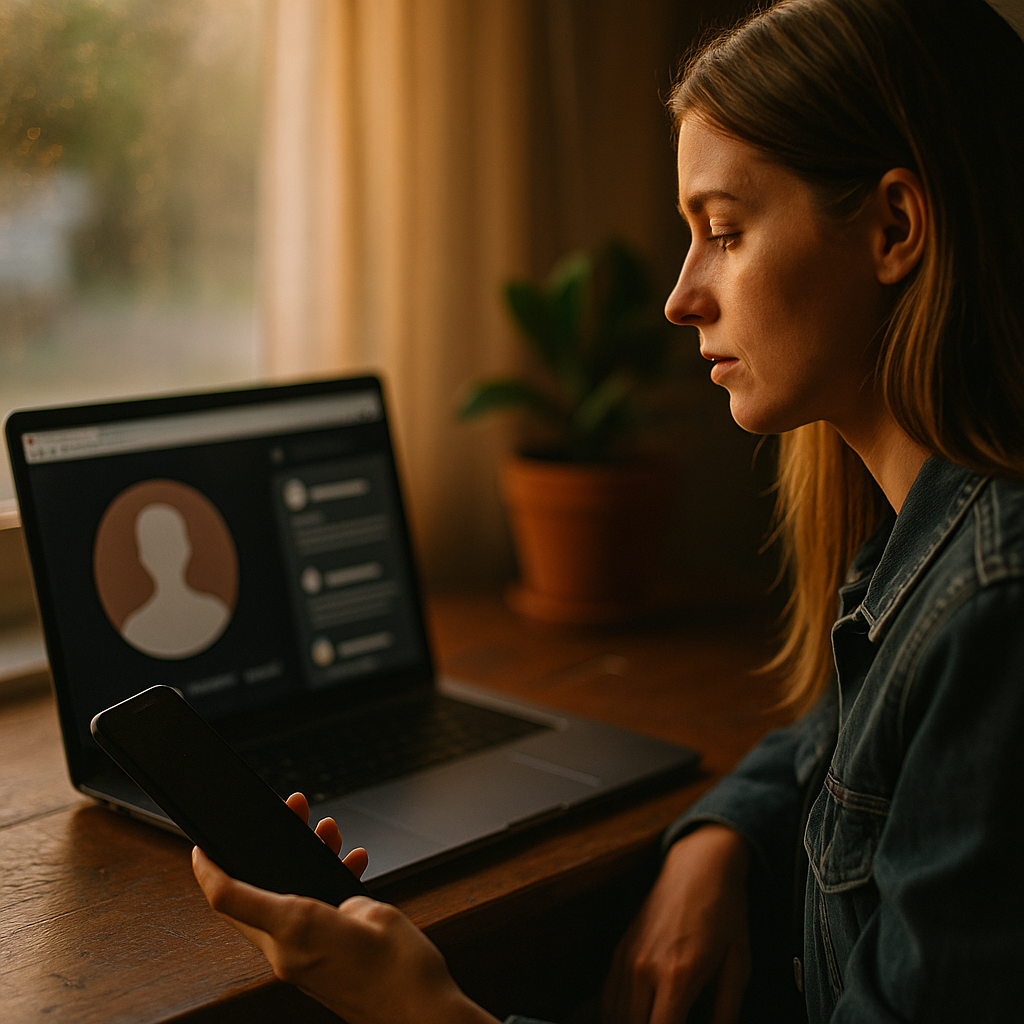
The Rise Of “Ghost Communities” And The Power Of Unbranded Influence is reshaping how people discover products, form opinions, and decide what to trust. In 2025, the most persuasive conversations often happen away from public feeds, brand pages, and searchable forums. These “invisible” groups look quiet from the outside, yet they drive real behavior inside. So how do you earn trust where you can’t easily track it?
What are ghost communities?
Ghost communities are private, semi-private, or hard-to-index spaces where people gather to exchange advice, reviews, referrals, and cultural cues—without performing for an audience. They can live in group chats, invite-only servers, closed social groups, private creator circles, niche membership platforms, and even encrypted channels. From the outside, these spaces appear inactive or nonexistent because their content is not searchable, not publicly visible, or not intended to be shared.
They are “ghost” for three reasons:
- Low visibility: outsiders can’t browse past posts, membership lists, or trending topics.
- Low traceability: recommendations move through screenshots, voice notes, and DMs that don’t show up in attribution tools.
- Low performativity: members speak more candidly because they are not building a public persona.
These communities are not new in spirit, but the infrastructure is: modern messaging, micro-subscriptions, and creator-led memberships make it easy to form small, high-trust networks quickly. That trust changes what “influence” looks like: it becomes situational, peer-validated, and often detached from brands.
If you’re wondering whether ghost communities matter for your category, ask one question: Where do people go when they want an honest answer? Increasingly, they go somewhere private.
Private social networks and the shift to dark social
A major driver of ghost communities is the expansion of private social networks—channels designed for conversation rather than broadcasting. In 2025, many users prefer messaging-based spaces because they reduce algorithmic noise, protect context, and limit unwanted reach. This creates “dark social”: traffic and conversions generated by private sharing that analytics often labels as direct or unknown.
Several forces push this shift:
- Trust fatigue: audiences have learned to discount overly polished posts and influencer scripts.
- Context protection: sensitive topics (health, finance, parenting, identity) feel safer in small groups.
- Signal over noise: private spaces filter out viral distractions and prioritize relevance.
- Platform volatility: frequent feed changes and ad density make public platforms feel less user-first.
For marketers and community leaders, the follow-up question is predictable: How do we measure what we can’t see? The practical answer is to shift from perfect attribution to probabilistic signals and feedback loops. Track lift in branded search, referral codes used in “friend-to-friend” contexts, onboarding surveys asking “Where did you hear about us?”, and qualitative patterns from customer interviews. You won’t map every share, but you can triangulate influence credibly.
Another common concern: Does this mean public communities are dead? No. Public forums still matter for discovery and SEO, but private communities often decide which discoveries become purchases—or which brands are quietly avoided.
Unbranded influence and peer-led recommendations
Unbranded influence happens when people shape preferences without visibly representing a company. Instead of “influencers” reading a sponsor line, you see peers recommending what actually worked, moderators setting norms, or micro-experts offering checklists and product comparisons. The power comes from perceived independence: members believe the advice is given for the group’s benefit, not for a commission.
Unbranded influence shows up in patterns such as:
- Tool stacks and templates: “Here’s my setup” posts that normalize certain products.
- Shortlists: “Top 3 options I’d consider” guidance that frames the decision set.
- Warnings: “Avoid X” messages that can damage a brand faster than a public bad review.
- Social proof transfers: “My friend in the group tried it” endorsements that carry more weight than ads.
For brands, the temptation is to infiltrate. That backfires. Ghost communities often have strong antibodies to manipulation and a fast path to banning. A better approach is to earn mentions through product quality, customer support, and clear positioning. If you want to be recommended without a logo present, you need three things:
- Distinct value: a clear “why us” that members can repeat in one sentence.
- Low-risk trial: generous return policies, transparent pricing, and easy cancellation reduce hesitation.
- Proof that travels: screenshots of results, credible benchmarks, and shareable “before/after” outcomes that users can pass along.
A key follow-up: Is unbranded influence ethical if it’s not disclosed? It is ethical when it’s organic—real customers sharing real experiences. It becomes unethical when brands create fake identities, seed deceptive narratives, or hide incentives. If you provide any perks for referrals or ambassadors, require clear disclosure and keep the program simple enough that members don’t feel tricked.
Community-led growth strategies for brands in 2025
In 2025, community-led growth strategies need to respect privacy while still supporting real conversation. The goal is not to “control the group,” but to reduce friction so your happiest users can advocate naturally. Start with the assumption that your brand will be discussed in places you cannot access—and build for that reality.
Practical strategies that work without violating trust:
- Build a referenceable product story: publish clear comparisons, limitations, and use cases so members can cite you accurately.
- Invest in customer education: short guides, troubleshooting pages, and honest FAQs reduce support burden inside communities.
- Support power users: create optional ambassador toolkits with disclosure guidance, not scripts. Provide assets like diagrams, checklists, and templates.
- Make sharing easy: add “share this configuration,” “export summary,” or “send to a friend” features that produce useful, non-spammy outputs.
- Create lightweight community touchpoints: office hours, live Q&A, or small-group onboarding sessions can seed relationships without demanding public engagement.
Answering the next question readers usually have: Should we start our own private community? Only if you can deliver ongoing value and credible moderation. A brand-run group can succeed when it offers access (experts, roadmap input, early features), speed (fast support), and safety (clear rules). If it becomes a promotional channel, it will stagnate and push users back to independent spaces.
Also consider a hybrid model: maintain a public knowledge base for discoverability and a private, value-led space for deeper engagement. This respects user preferences while supporting your acquisition and retention goals.
Trust signals, transparency, and EEAT in hidden spaces
Ghost communities operate on trust, so your reputation depends on trust signals that travel well. In Google’s EEAT framework (Experience, Expertise, Authoritativeness, Trustworthiness), “Trust” is the foundation. Even when conversations happen in private, members still evaluate the evidence you provide publicly: documentation, leadership credibility, customer support responsiveness, and consistency between claims and outcomes.
To strengthen EEAT in 2025 without overreaching into private groups:
- Experience: publish case studies with concrete constraints, what didn’t work, and who it’s for. Avoid vague success stories.
- Expertise: have subject-matter experts contribute to help content. Use clear explanations and define terms.
- Authoritativeness: earn third-party validation through credible partnerships, independent reviews, and respected industry mentions.
- Trustworthiness: show pricing upfront, document security/privacy practices, and make policies readable. Provide a clear path to human support.
Answering a likely follow-up: How do we respond when a ghost community criticizes us? First, don’t demand access. Instead, address the root issue publicly: ship fixes, clarify documentation, and acknowledge mistakes in a transparent update. If a member brings the feedback to you directly, respond quickly and offer a resolution that they can share back. Your goal is to make the truth easy to repeat.
One more practical tactic: create “receipts” that users can cite—security pages, methodology notes, changelogs, and independent audits where relevant. When someone asks, “Is this legit?” you want your customers to have a link worth sharing.
How to listen and measure without breaking privacy
Brands can learn from ghost communities without surveilling them. The boundary is simple: listen where you’re invited, and measure what you’ve earned permission to measure. When teams cross that line—fake accounts, scraping, covert seeding—they risk reputational damage that spreads quickly across private networks.
Use privacy-respecting methods instead:
- Consent-based research panels: recruit customers who opt in to share how they decide and what groups influence them.
- Post-purchase surveys: ask one focused question: “What influenced your decision?” include “private group/chat” as an option.
- Customer interviews: run monthly calls to learn the language people use, objections they hear, and competitors mentioned.
- Support ticket mining: categorize issues and “heard in the wild” phrases; these often mirror community conversations.
- Share-of-search and brand lift: track changes in branded queries and direct traffic alongside campaign timing.
If you’re a community operator rather than a brand, measure health over hype: retention, repeat contribution, time-to-first-value for newcomers, and the quality of member-to-member help. Ghost communities thrive when members feel protected and useful, not when they are maximally visible.
A final question to settle: Can we ever “own” ghost communities? No—and that’s the point. You can earn advocacy, but you cannot own trust. Design your strategy so it succeeds even when your brand is not present in the room.
FAQs
-
Are ghost communities the same as dark social?
Not exactly. Dark social describes private sharing that is hard to attribute (DMs, chats, email). Ghost communities are the places where those conversations happen—closed groups, invite-only spaces, and hard-to-index networks. Ghost communities generate dark social behavior, but dark social can also occur one-to-one without a “community.”
-
How do brands participate in ghost communities without being intrusive?
Participate only when invited and be transparent about who you are. Provide value first: answer questions, share documentation, and accept feedback without defensiveness. Avoid stealth marketing, referral bait, or pushing promotions into member-led discussions.
-
What platforms typically host ghost communities in 2025?
Invite-only group chats, private servers, closed social groups, niche membership platforms, and encrypted messaging channels are common. The specific platform matters less than the norms: restricted access, strong moderation, and a culture of candid exchange.
-
How can I tell if ghost communities influence my sales?
Look for indirect signals: increases in branded search, “direct” traffic spikes after creator mentions, higher conversion from referral codes shared person-to-person, and survey responses citing private groups. Pair quantitative trends with interviews to confirm causality.
-
Is unbranded influence more effective than influencer marketing?
It can be, because it often carries higher trust and more context. Influencer marketing still works when it is authentic and well-matched to the audience, but unbranded influence tends to drive stronger persuasion at the decision moment—especially for high-consideration products.
-
What is the biggest mistake brands make with private communities?
Trying to control the narrative. When brands treat private spaces like ad inventory, members disengage or move elsewhere. The winning approach is to improve the product, document it clearly, and support customers so they advocate on their own terms.
Ghost communities change the rules of persuasion by moving real opinions into private, high-trust spaces. In 2025, unbranded influence grows when people share outcomes, not ads, and when peers validate claims through lived experience. Brands win by earning repeatable proof, protecting trust, and measuring with consent-based signals. The takeaway is simple: build value that travels when you’re not in the room.