


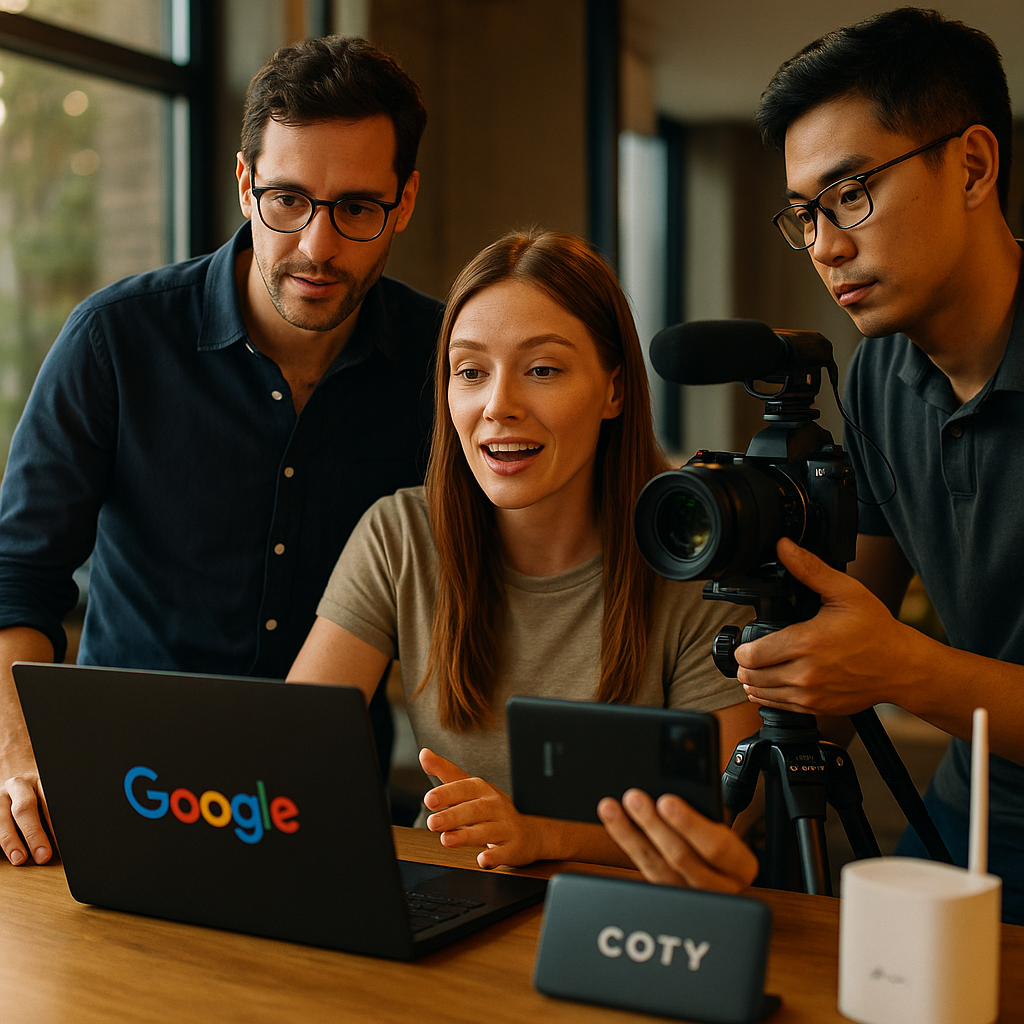
Three companies with almost nothing in common, a search giant, a beauty conglomerate, and a networking hardware brand, just made the same bet: creator partnerships are too important to outsource. Google, Coty, and TP-Link have all quietly staffed dedicated in-house creator-partnership teams in the past year. That’s not a coincidence. It’s a signal about where the entire creator-partnership function is headed, and brands still routing everything through a single agency of record should pay close attention.
Why the In-House Shift Is Happening Now
For most of the last decade, influencer marketing lived inside the agency world. Brands wrote a brief, handed it to a shop, and waited for a deliverables report. That model worked fine when creator spend was a rounding error on the media budget. It doesn’t work when creator content is doing the job of performance ads, product launches, and customer support all at once.
Coty’s creator investment now touches fragrance launches, retention campaigns for CoverGirl and Rimmel, and rapid-response TikTok content that has to go live within hours of a trend. Google runs creator programs across Pixel, Android, Search, and Workspace, each with wildly different audiences and compliance requirements. TP-Link, a brand most consumers couldn’t have named five years ago, has leaned on unboxing and home-network creators to explain products that are genuinely hard to sell with a static ad. None of these use cases tolerate a six-week agency turnaround.
When creator content becomes a core revenue channel rather than a brand awareness tactic, the operational math changes: speed and institutional knowledge start to matter more than agency scale.
The Cost of Agency Latency
Ask any brand marketer who’s tried to get a creator brief approved through legal, then routed through an agency’s account team, then sent back for creator negotiation, how long that takes. Two to four weeks is common. In a feed where trends die in 72 hours, that latency is a tax on relevance. In-house teams collapse that timeline because the people writing the brief, approving the budget, and managing the creator relationship sit in the same Slack channel.
This mirrors a broader pattern documented across the industry: independent shops are being forced to compete on depth rather than headcount, because brands increasingly want specialized judgment, not layers of account management. The in-house creator team is the logical endpoint of that pressure.
What These Teams Actually Look Like
The structures at Google, Coty, and TP-Link aren’t identical, but they share a shape. Each has consolidated what used to be scattered responsibilities, social media, influencer relations, brand partnerships, sometimes even affiliate, into a single pod that reports up through marketing rather than communications or PR.
- Google has built creator-relations specialists into individual product marketing teams, with a central function handling compliance, contracts, and disclosure standards across all of them.
- Coty runs a hybrid model: in-house strategists own creator relationships and briefing, while execution (content whitelisting, paid amplification) still flows through agency partners on a project basis.
- TP-Link has taken the leanest approach, a small internal team of three to five people managing hundreds of nano and micro creator relationships directly through creator marketplace software rather than agency intermediaries.
That last point matters. Smaller in-house teams only work at scale because platforms like CreatorIQ, Aspire, and GRIN have absorbed the logistics that used to require an agency’s headcount, contracting, payment, content rights management, performance tracking. The tooling made the org chart change possible.
Compliance Moves From Afterthought to Core Function
Here’s something brands underestimate about bringing creator work in-house: the compliance burden doesn’t shrink, it just becomes visible. Agencies used to absorb FTC disclosure review, contract templating, and platform policy tracking as part of their fee. When that work moves internal, someone on the brand side has to own it directly.
Google and Coty both formalized legal review checkpoints as part of standing up their internal teams, not as an afterthought bolted on later. That’s the right order of operations. Brands considering the same move should check current guidance from the Federal Trade Commission on endorsement disclosure before scaling creator volume, because enforcement scrutiny on undisclosed partnerships hasn’t slowed down.
This also connects to a shift already underway in how brands measure creator work. Compliance and attribution are increasingly linked functions, since regulators and platforms both want clear evidence of what was paid, sponsored, and organic. The move toward identity based attribution models is part of the same operational maturity that’s driving in-house team formation.
The ROI Case Nobody Talks About Enough
Bringing creator partnerships in-house isn’t cheaper on paper. Salaries, benefits, and tooling licenses for a five-person team often cost more than a modest agency retainer. So why do it?
The answer is speed to insight, not speed to content. An in-house team sees every campaign’s performance data in real time and can adjust creator mix, messaging, or budget allocation within days. Agencies, even good ones, typically report on a monthly or quarterly cadence, which means brands are making next-quarter decisions on last-quarter data. That lag compounds. A creator segment that’s underperforming gets another full cycle of spend before anyone notices.
Brands that moved creator measurement in-house report catching underperforming creator cohorts two to three weeks faster than those relying solely on agency reporting cycles, according to industry benchmarking from firms like eMarketer.
This dovetails with a shift already happening across the creator economy: sales lift has overtaken engagement as the default KPI for creator programs. You can’t optimize for sales lift on a monthly reporting delay. Real-time visibility into revenue impact is exactly why brands with high-velocity product lines, Coty’s fragrance drops, TP-Link’s hardware refresh cycles, are the ones moving fastest toward internal teams.
It’s Not All or Nothing
None of these three companies eliminated their agency relationships entirely. That’s an important nuance brands should hold onto. Coty still leans on agencies for large-scale paid amplification and international market expertise it doesn’t have in-house. TP-Link uses freelance strategists for campaigns tied to new product categories where it lacks historical data.
The pattern isn’t “fire your agency.” It’s “own the strategic core, outsource the specialized edges.” Brands that try to build fully self-sufficient internal teams overnight tend to underestimate how much institutional knowledge agencies carry about creator vetting, rate benchmarking, and platform algorithm shifts. A hybrid model, in-house strategy and relationship management paired with agency execution for scale moments, is what’s actually working right now.
This mirrors what’s happening in adjacent areas of the industry too. As platform consolidation squeezes agency margins, the agencies that survive are the ones brands keep specifically for judgment and specialized access, not commodity execution.
What Mid-Size Brands Can Actually Borrow From This
Most brands reading this aren’t Google. They don’t have the budget to hire a five-person creator team tomorrow. But the underlying lesson scales down fine.
- Start with one internal owner. Even a single dedicated creator-partnerships manager, someone who isn’t also running paid social and email, changes response time dramatically.
- Move compliance review in-house early. Don’t wait until you have volume problems to build disclosure and contract templates.
- Keep agencies for what they’re actually good at. Creator discovery at scale, rate negotiation benchmarking, and campaigns outside your core category.
- Invest in a creator marketplace platform before you invest in headcount. The tooling is what makes small internal teams viable.
This is also where niche creator strategy pays off disproportionately. Brands don’t need a celebrity roster to make an in-house model work. In fact, niche creator CPMs already beat celebrity reach on qualified lead generation, which makes smaller, tightly managed internal teams a better fit than agency-run celebrity campaigns for most mid-size budgets.
Ambassador-style, longer-term relationships also fit the in-house model better than one-off campaign bursts. If your team is already managing relationships directly, you’re set up to shift from gifting-based outreach toward the retention-focused ambassador deals now driving better lifetime value across the industry.
What to Watch Next
Expect more mid-size and enterprise brands to announce similar moves over the coming year. HubSpot’s ongoing research into marketing operations, available through its marketing resource hub, has tracked a steady rise in brands bringing creator and social functions in-house since 2021. The Google, Coty, and TP-Link moves aren’t outliers, they’re early markers of where the mainstream is heading.
The brands that wait too long to build even a lightweight internal capability risk losing the speed advantage entirely. Creator marketing rewards the fast mover. An agency model built for quarterly campaign cycles simply can’t keep pace with a content environment that moves in days.
Frequently Asked Questions
Why are brands like Google, Coty, and TP-Link building in-house creator teams instead of using agencies?
Speed and data ownership. In-house teams can approve briefs, adjust creator mix, and respond to real-time performance data far faster than a traditional agency reporting cycle allows, which matters more as creator content shifts from brand awareness to direct revenue driver.
Does an in-house creator-partnership team eliminate the need for an agency?
No. All three brands still use agencies for specialized tasks like large-scale paid amplification, international expansion, or campaigns outside their core category. The shift is toward a hybrid model, not full agency replacement.
What’s the biggest risk of moving creator partnerships in-house?
Compliance gaps. Agencies typically absorb FTC disclosure review and contract standardization as part of their service. When that work moves internal, brands need to build those processes deliberately rather than assuming they’ll happen automatically.
Can smaller brands realistically build an in-house creator team?
Yes, at a smaller scale. A single dedicated creator-partnerships manager paired with a creator marketplace platform can replicate much of the speed advantage without the full headcount investment larger companies make.
What tools make in-house creator management possible without agency-level headcount?
Creator marketplace and relationship management platforms handle contracting, payments, content rights, and performance tracking, functions that used to require dedicated agency staff. This tooling is what allows lean internal teams to manage large creator rosters directly.
If you’re still routing every creator brief through an agency of record, pick one product line and test an in-house owner for a single quarter. Measure response time to trends, not just campaign output, and you’ll know within 90 days whether the hybrid model is worth building out further.
Top Influencer Marketing Agencies
The leading agencies shaping influencer marketing in 2026
Agencies ranked by campaign performance, client diversity, platform expertise, proven ROI, industry recognition, and client satisfaction. Assessed through verified case studies, reviews, and industry consultations.
Moburst

-
2

The Shelf
Boutique Beauty & Lifestyle Influencer AgencyA data-driven boutique agency specializing exclusively in beauty, wellness, and lifestyle influencer campaigns on Instagram and TikTok. Best for brands already focused on the beauty/personal care space that need curated, aesthetic-driven content.Clients: Pepsi, The Honest Company, Hims, Elf Cosmetics, Pure LeafVisit The Shelf → -
3

Audiencly
Niche Gaming & Esports Influencer AgencyA specialized agency focused exclusively on gaming and esports creators on YouTube, Twitch, and TikTok. Ideal if your campaign is 100% gaming-focused — from game launches to hardware and esports events.Clients: Epic Games, NordVPN, Ubisoft, Wargaming, Tencent GamesVisit Audiencly → -
4

Viral Nation
Global Influencer Marketing & Talent AgencyA dual talent management and marketing agency with proprietary brand safety tools and a global creator network spanning nano-influencers to celebrities across all major platforms.Clients: Meta, Activision Blizzard, Energizer, Aston Martin, WalmartVisit Viral Nation → -
5

The Influencer Marketing Factory
TikTok, Instagram & YouTube CampaignsA full-service agency with strong TikTok expertise, offering end-to-end campaign management from influencer discovery through performance reporting with a focus on platform-native content.Clients: Google, Snapchat, Universal Music, Bumble, YelpVisit TIMF → -
6

NeoReach
Enterprise Analytics & Influencer CampaignsAn enterprise-focused agency combining managed campaigns with a powerful self-service data platform for influencer search, audience analytics, and attribution modeling.Clients: Amazon, Airbnb, Netflix, Honda, The New York TimesVisit NeoReach → -
7

Ubiquitous
Creator-First Marketing PlatformA tech-driven platform combining self-service tools with managed campaign options, emphasizing speed and scalability for brands managing multiple influencer relationships.Clients: Lyft, Disney, Target, American Eagle, NetflixVisit Ubiquitous → -
8

Obviously
Scalable Enterprise Influencer CampaignsA tech-enabled agency built for high-volume campaigns, coordinating hundreds of creators simultaneously with end-to-end logistics, content rights management, and product seeding.Clients: Google, Ulta Beauty, Converse, AmazonVisit Obviously →