


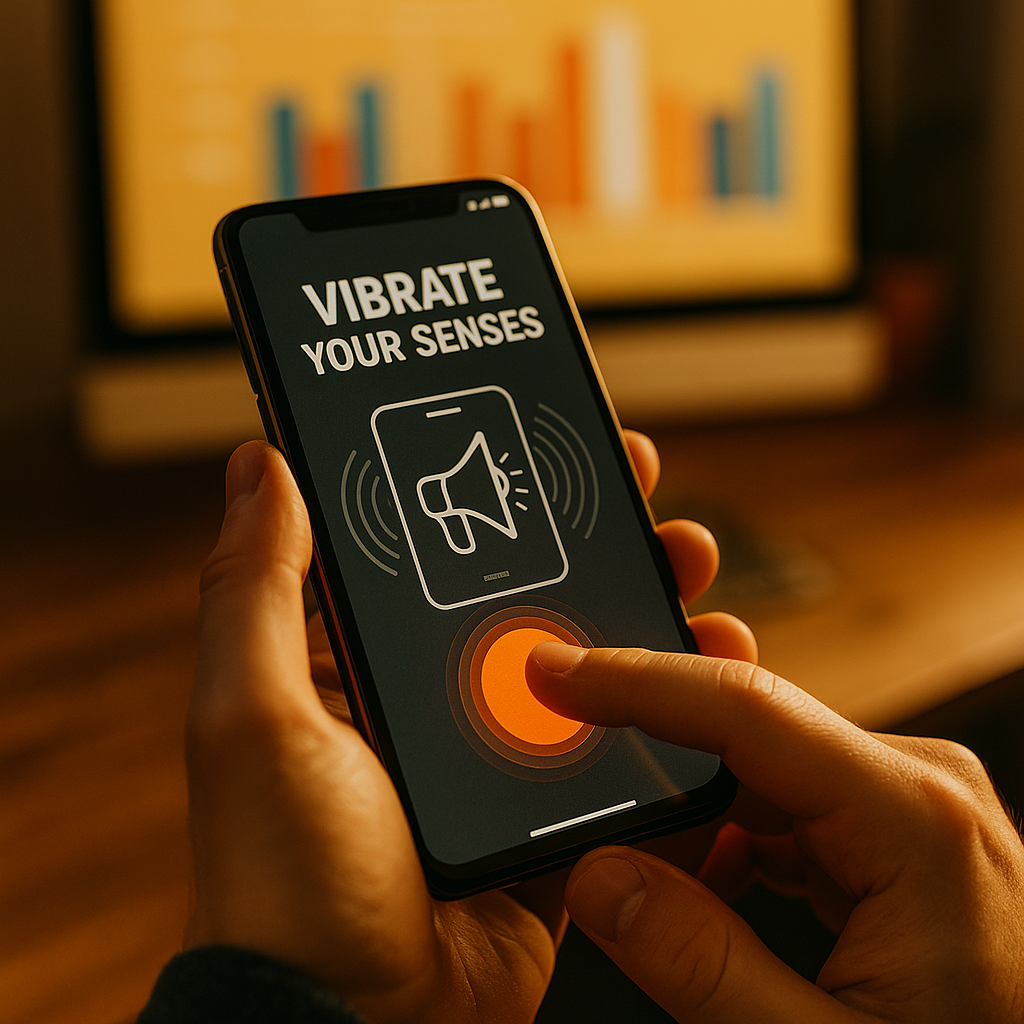
In 2025, mobile audiences expect ads to feel less like interruptions and more like experiences. A Review of Haptic Ad Platforms for Immersive Mobile Engagement helps marketers, product teams, and publishers compare today’s tactile ad options, from in-app vibration patterns to interactive touch feedback. This guide explains what matters, how to evaluate platforms, and where haptics fit in your stack—before you invest budget and development time.
What are haptic ad platforms (secondary keyword: haptic advertising platforms)
Haptic advertising platforms enable brands to deliver tactile feedback—typically via smartphone vibration motors or advanced device haptics—during an ad experience. The goal is to add a physical layer to mobile storytelling: a “tap,” “pulse,” or “rumble” that matches what the user sees or does.
Most solutions fall into two categories:
- SDK-based in-app haptics: A platform provides an SDK that app developers integrate. Ads can trigger haptics during interactive units, mini-games, product demos, or rewarded experiences.
- Creative tool + distribution partnerships: Some vendors focus on authoring tools (haptic pattern design and syncing) and then distribute via ad networks, DSP integrations, or direct publisher deals.
Haptics can support multiple objectives: increase attention in crowded feeds, reinforce brand cues (engine rev, heartbeat, drumbeat), improve perceived responsiveness in interactive units, and boost completion for rewarded formats. The best executions keep haptics subtle, optional, and synchronized with user actions so the experience feels intentional rather than startling.
If you’re wondering whether haptics “work,” the more useful question is: where do they work? They tend to perform best in interactive, opt-in contexts (rewarded, playable, or high-intent placements) where a user expects to engage—not when a user is passively scrolling.
Key evaluation criteria (secondary keyword: immersive mobile advertising)
To choose a provider for immersive mobile advertising, compare platforms using criteria that reflect both marketing outcomes and real-world implementation constraints.
- Creative capability and control: Can you design distinct patterns (short pulses vs. long rumbles), intensity, and timing? Do they support haptic “tracks” that sync to video or interaction states? Is there a preview/test environment?
- Measurement that stands up to scrutiny: Look for incremental lift approaches (A/B tests), transparent event definitions (view, engagement, completion), and retention of raw logs for validation. Ask how they filter accidental touches and bot activity.
- Brand safety and user experience: Can you cap frequency, enforce sound/haptic defaults (e.g., haptics off until user interaction), and respect device settings like “vibrate off” or accessibility preferences? Responsible platforms treat haptics as user-controlled.
- Privacy and compliance: Haptics don’t require sensitive data, but ad delivery often does. Confirm alignment with consent frameworks, data minimization, and clear roles (controller/processor). Ensure measurement works even when identifiers are limited.
- Integration complexity: Evaluate SDK size, battery impact, crash history, and how quickly a publisher can implement. Ask whether they support major mobile OS haptic APIs and how they handle device fragmentation.
- Scale and inventory access: A brilliant unit with limited distribution will struggle. Verify publisher coverage, app categories, geography, and whether you can buy through your existing DSP/workflow.
- Creative QA and accessibility: You need guardrails: maximum intensity, prohibited patterns (e.g., continuous vibration), and accessibility review. Haptics should never create discomfort or exclude users who rely on reduced motion or other settings.
Answering the likely follow-up: Do I need developer resources? If you want deeply interactive haptics, yes—at least some development or a publisher partner who already integrated the SDK. For lighter executions, some platforms offer templated units that reduce engineering effort.
Leading options and how they differ (secondary keyword: haptic ad SDK)
In 2025, the market is best understood as a set of approaches rather than a single standardized “winner.” Below is a practical review of common provider types you’ll encounter when searching for a haptic ad SDK—and what each is best suited for.
1) Haptics-specialist SDK vendors
These providers focus on tactile experiences as the core product: authoring tools, haptic pattern libraries, and runtime control. They often excel at creative fidelity—tight sync, pattern design, and interactive triggers (e.g., different haptics for swipe vs. tap).
Best for: Brands that want distinctive, repeatable haptic signatures and are willing to invest in creative QA.
Watch for: Inventory limitations and dependency on specific publisher integrations. Ask for a live app list, not just logos.
2) Rich media / playable ad platforms with haptic modules
Many interactive ad builders now offer optional haptic layers. This can be appealing if your team already runs playables or rich media and wants haptics as an add-on rather than a separate vendor.
Best for: Performance marketers and game/app advertisers running playables, rewarded, or interactive end cards.
Watch for: Whether haptics are truly configurable or simply “on/off” presets. Ensure control over when haptics trigger (only after user interaction is the safest standard).
3) Publisher network solutions
Some app publishers and networks provide proprietary immersive units that include haptics. These can deliver strong UX because the ad unit is designed around the host app’s interaction patterns.
Best for: Campaigns where premium placement quality matters more than broad reach.
Watch for: Portability. If the format is unique to one publisher, your learnings may not translate elsewhere.
4) DSP and programmatic partners with immersive formats
Programmatic access is improving, but haptic execution still often requires pre-approved creative and compatible inventory. When it works, it streamlines buying, reporting, and frequency control alongside your other media.
Best for: Teams that need centralized governance and cross-channel measurement.
Watch for: The gap between “supported” and “actually live.” Request confirmation of haptic-enabled inventory availability in your target geos and app categories.
If you need a quick shortlist process, start by selecting the distribution model you require (direct publishers vs. programmatic vs. integrated rich media builder), then evaluate creative control and measurement depth. That approach prevents you from choosing a great demo that can’t scale.
Creative strategy that converts (secondary keyword: tactile mobile ads)
Tactile mobile ads succeed when haptics reinforce meaning. Treat vibration as a design element, not a novelty.
- Use haptics as feedback, not as noise: Tie vibration to user actions (tap to start, drag to reveal, scratch to win). This feels responsive and reduces the risk of annoyance.
- Start with “opt-in” interaction: A reliable best practice is to trigger haptics only after a user taps or engages. This respects expectations and device settings.
- Match intensity to the moment: Short, light pulses work for confirmation; stronger patterns can underline impact (a slam, a beat drop) but should be brief and capped.
- Create a repeatable haptic brand cue: Just as audio branding uses consistent sonic mnemonics, you can define a short signature pattern that aligns with your brand identity—used sparingly.
- Design for silent contexts: Many users watch without sound. Haptics can replace some of what audio would convey, but don’t rely on haptics alone for comprehension.
- Localize thoughtfully: Haptics are culturally neutral compared with language, but they can still convey tone. Test patterns for perceived “urgency” vs. “calm.”
Common follow-up: Which formats work best? Playables, interactive video, rewarded units, and product demos (e.g., simulating a button press or engine rev) tend to outperform passive banners because the tactile layer has a clear role: confirming, guiding, or immersing.
Measurement, compliance, and trust (secondary keyword: mobile engagement metrics)
Haptics can raise attention, but you still need to prove impact with credible mobile engagement metrics. Prioritize platforms that support experimentation and transparent reporting.
- Define success upfront: For branding, track completed views, interaction rate, time-in-unit, and brand lift studies when feasible. For performance, track post-click and post-view conversions, install quality, and downstream events (registration, purchase).
- Use incrementality tests: The cleanest approach is an A/B split: identical creative with and without haptics, held constant across inventory, frequency, and audience. Ask vendors how they randomize exposure and avoid contamination.
- Validate attention proxies: Longer time-in-unit can be good, but it can also indicate confusion. Pair dwell time with completion rate and interaction depth (meaningful gestures, not repeated accidental taps).
- Respect user controls: Platforms should automatically honor OS-level settings (vibration disabled, do-not-disturb behaviors where applicable) and provide creative rules that prevent excessive vibration.
- Ensure accessible experiences: Provide alternatives when haptics are off, and avoid designs that require vibration to understand the ad. Clear visual feedback should always exist.
- Document roles and data flows: Under modern privacy expectations, vendors should explain exactly what device signals they use, how consent is handled, retention periods, and how you can request deletion or audits.
Trust also comes from operational transparency. Ask for: SDK release notes, crash/ANR monitoring approach, battery usage considerations, and a clear support SLA. A platform that can’t explain its measurement methodology in plain language is not ready for a serious media plan.
Implementation roadmap and vendor checklist (secondary keyword: in-app haptic ads)
Rolling out in-app haptic ads is smoother when you treat it like a product launch, not a single creative swap. Use this practical sequence to reduce risk:
- Step 1: Select a use case: Choose one primary objective (lift in interaction rate, improved completion, higher conversion quality) and one or two placements where users are receptive (rewarded, playable, rich media).
- Step 2: Confirm inventory compatibility: Verify the exact apps/placements that support haptics and the buying method (direct, PMP, or open auction where available). Confirm frequency caps and creative approval timelines.
- Step 3: Build two creatives: A haptics-enabled version and a matched control version. Keep everything else constant so your results are interpretable.
- Step 4: QA across devices: Test on a representative device set. Haptic intensity and “feel” can vary, so confirm that patterns remain tasteful and recognizable.
- Step 5: Launch with guardrails: Start with conservative intensity, limited frequency, and clear opt-in interaction triggers. Monitor user feedback, app ratings (for publisher partners), and engagement anomalies.
- Step 6: Iterate and standardize: If you see lift, codify a haptic style guide: pattern library, max durations, where haptics are allowed, and accessibility requirements.
Vendor checklist (ask these directly):
- Which OS haptic APIs do you use, and how do you handle device differences?
- Do haptics trigger only after user interaction by default?
- What are your limits on intensity/duration, and can we enforce them at the platform level?
- How do you measure “engagement,” and can we export event logs?
- What inventory is haptic-enabled in our target markets today?
- How do you handle privacy, consent, and data retention?
- What is the average integration time for publishers, and what support do you provide?
FAQs (secondary keyword: haptic ad platforms FAQ)
Do haptic ads work if a user’s phone is on silent?
Yes. Silent mode typically affects audio, not vibration. However, users can disable vibration entirely, and platforms should respect those settings. Always include clear visual feedback so the ad remains understandable without haptics.
Are haptic ads considered intrusive?
They can be if they trigger unexpectedly or too intensely. The safest approach is to trigger haptics only after a user action, keep patterns short, and apply strict frequency caps. This is also better for brand perception.
Do haptic ads drain battery?
Brief, occasional haptics have minimal impact for most users, but excessive or continuous vibration can be noticeable. Responsible platforms enforce duration limits and recommend conservative design patterns.
What ad formats are best for haptics?
Interactive units: playables, rewarded experiences, rich media product demos, and interactive video. Haptics add the most value when they provide feedback for a gesture or reinforce a key moment.
How do you measure the incremental value of haptics?
Run a controlled experiment: identical creative with haptics vs. without, randomized across similar inventory and audience, with the same frequency caps. Compare interaction rate, completion, conversion quality, and downstream events.
Do we need a separate SDK?
Sometimes. Some rich media vendors bundle haptics inside existing ad SDKs or templates, while specialist providers may require an additional SDK on the publisher side. Your choice depends on how much creative control you need and which publishers already support the technology.
Haptic ads are no longer a gimmick in 2025; they’re a practical layer for interactive mobile storytelling when deployed with restraint and clear measurement. The best platforms balance creative control, scalable inventory, and transparent reporting while respecting user settings and accessibility. If you choose one placement, run a clean A/B test, and standardize successful patterns, haptics can lift engagement without compromising trust.